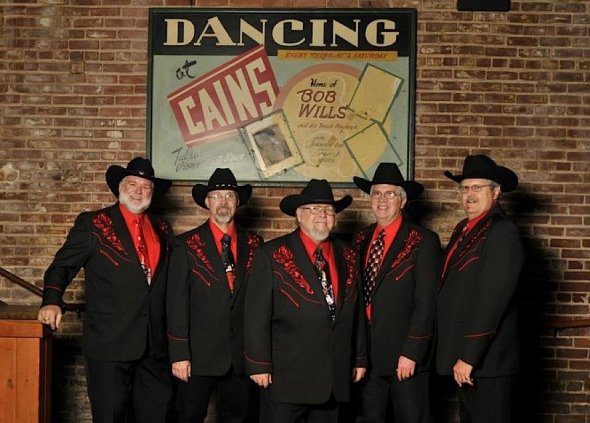
The Round Up Boys. Photo courtesy The Round Up Boys.
The Round Up Boys. Photo courtesy The Round Up Boys.
Saturday, March 1, 7 p.m.
Cain’s Ballroom became famous for Western swing because of one man and his band. Now it’s Cain’s turn to celebrate Bob Wills on what would have been his 109th. Cain’s annual Bob Wills Birthday Celebration starts at 7 p.m. Saturday, March 1, with Tulsa’s The Round Up Boys. This year’s scheduled performers include Leon Rausch, Tommy Allsup, Johnny Cox, Monte Gaylord, Shaun Howe, Mac MacRae, Spencer Sutton, Mike Bennett, Steve Ham and Terry Thompson. Tickets are $20-$32, available at the box office at Cain’s, 423 N. Main St., Tulsa. For more, visit www.cainsballroom.com.
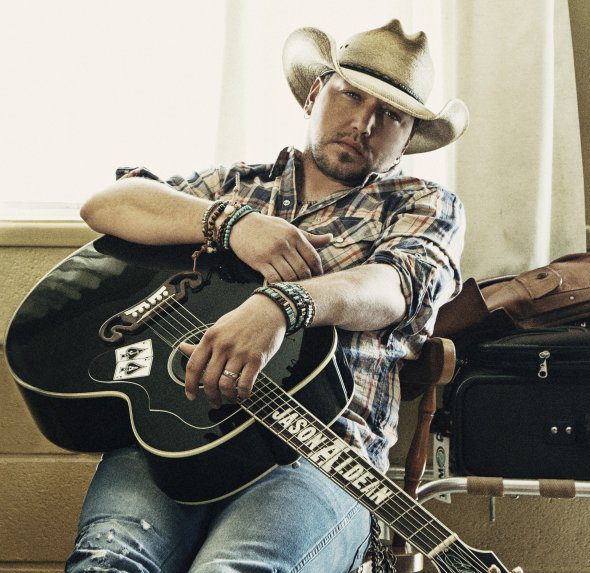
Photo by James Minchin III, courtesy Green Room PR.
Saturday, March 1, 7:30 p.m.
The Relentless Jason Aldean returns to the Chesapeake Energy Arena this weekend, and he’s taking the Night Train. Touring for his fifth album, Aldean welcomes opening acts Florida Georgia Line and Tyler Farr for the 7:30 p.m. show on Saturday, March 1. Tickets are $29.75-$59.75, available at www.chesapeakearena.com. The Chesapeake Energy Arena is located at 100 W. Reno Ave., Oklahoma City.
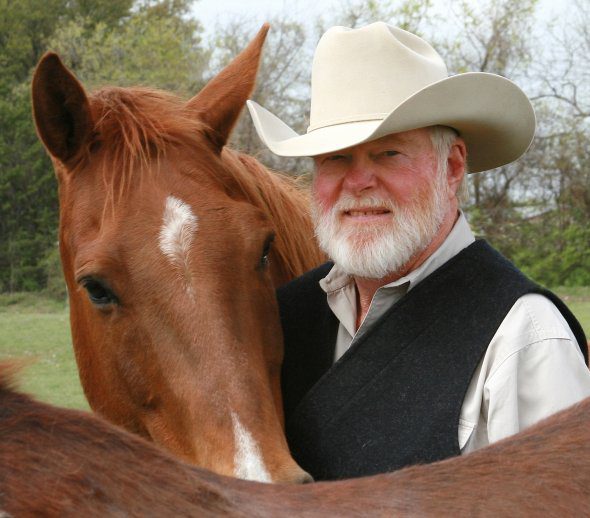
"Ride for the Brand" will feature cowboy storyteller Red Steagall. Photo courtesy Red Steagall.
“Ride for the Brand” will feature cowboy storyteller Red Steagall. Photo courtesy Red Steagall.
Friday, Feb. 28, 5:30 p.m.
Last year’s spring concert was so popular that the National Cowboy & Western Heritage Museum is bringing back singing cowboys and storytellers to the stage. Saddle up for Ride for the Brand, a night featuring Red Steagall and his tall tales along with balladeers Don Edwards, Jean Prescott, Dan Roberts and The Boys in the Bunkhouse. Last year’s concert also presented the photographs of contemporary Western photographers, and this year is no different. The images of Wyman Meinzer, Bob Moorhouse and David Stoecklein will be the projected backdrop for this evening that includes a buffet dinner and outstanding line-up of classic Western entertainment. Dinner starts at 5:30 p.m. Friday, Feb. 28, and the concert begins at 7 p.m. Tickets are $50-$100 (depending on museum membership and if you’re hungry). For more, visit www.nationalcowboymuseum.org.
A handmade faux rock grotto features a swim-through entrance and utilizes color kinetics lighting for dramatic effect. Photo courtesy Caviness Landscape Design.
Climbing the Walls
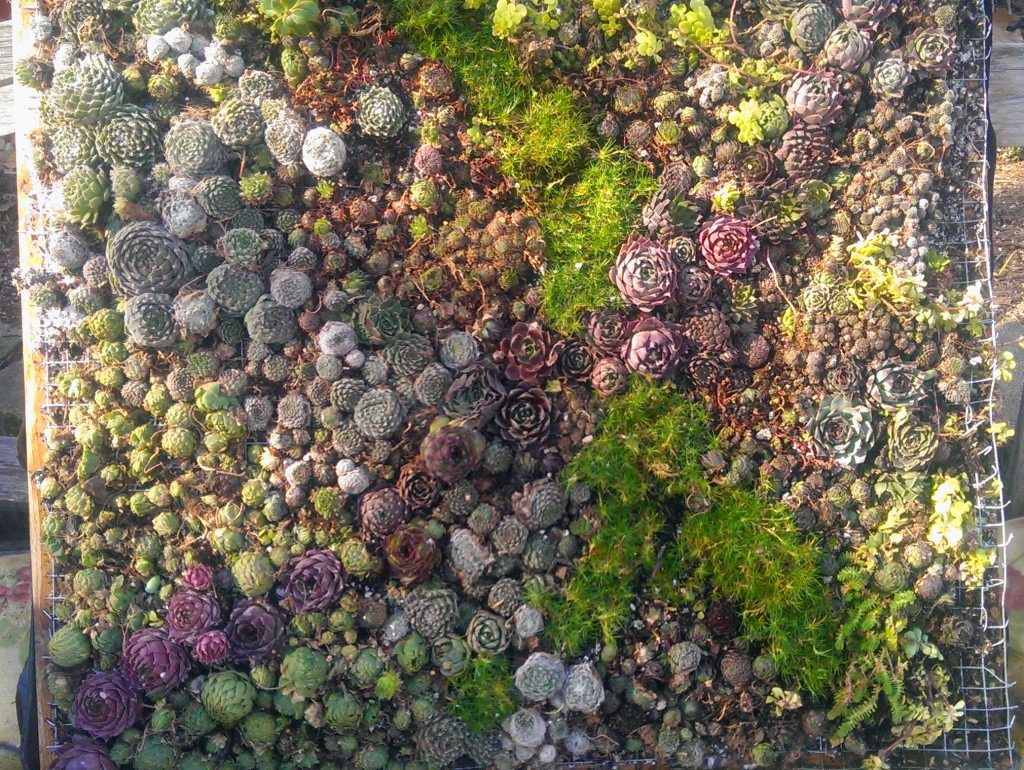
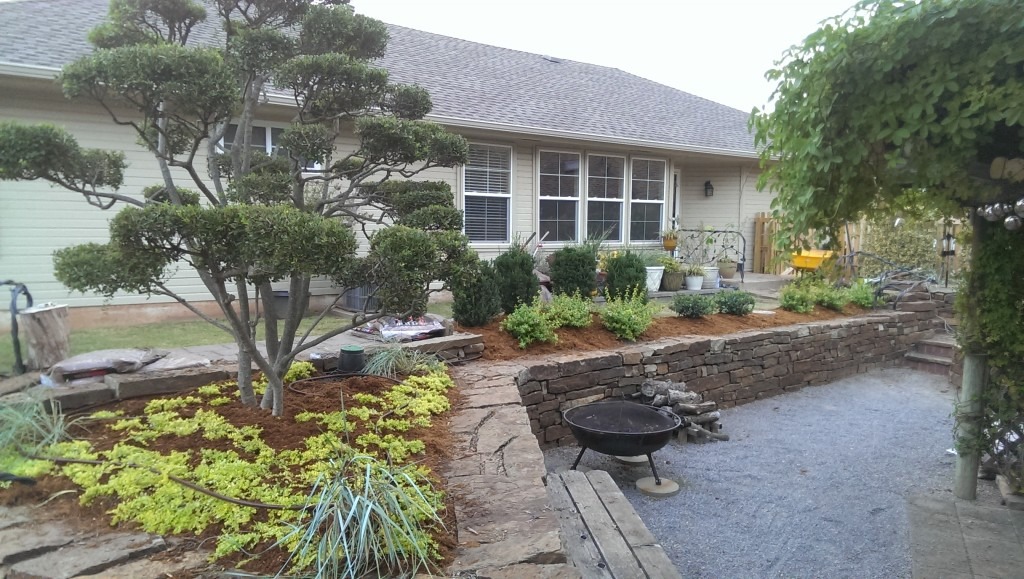
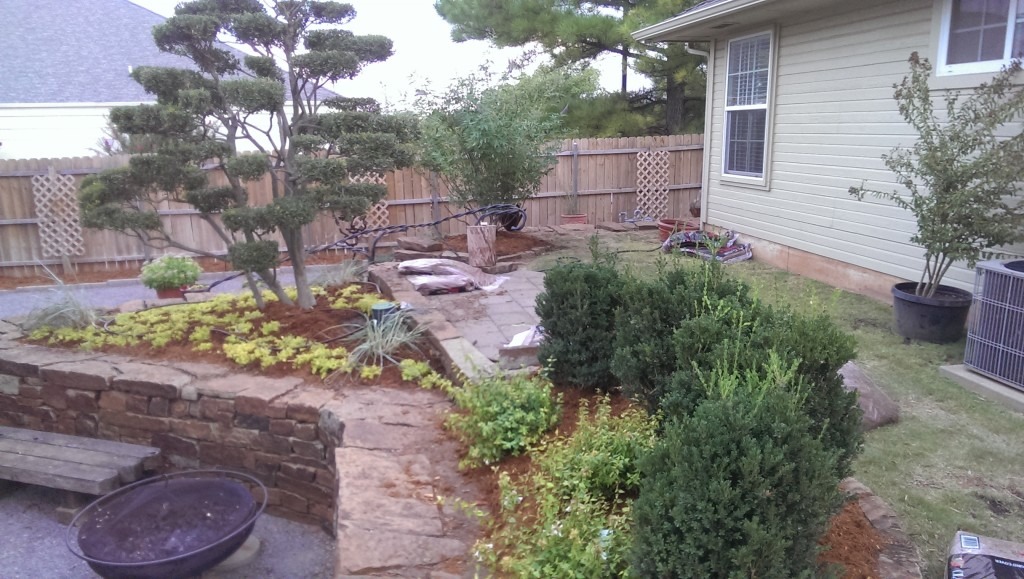
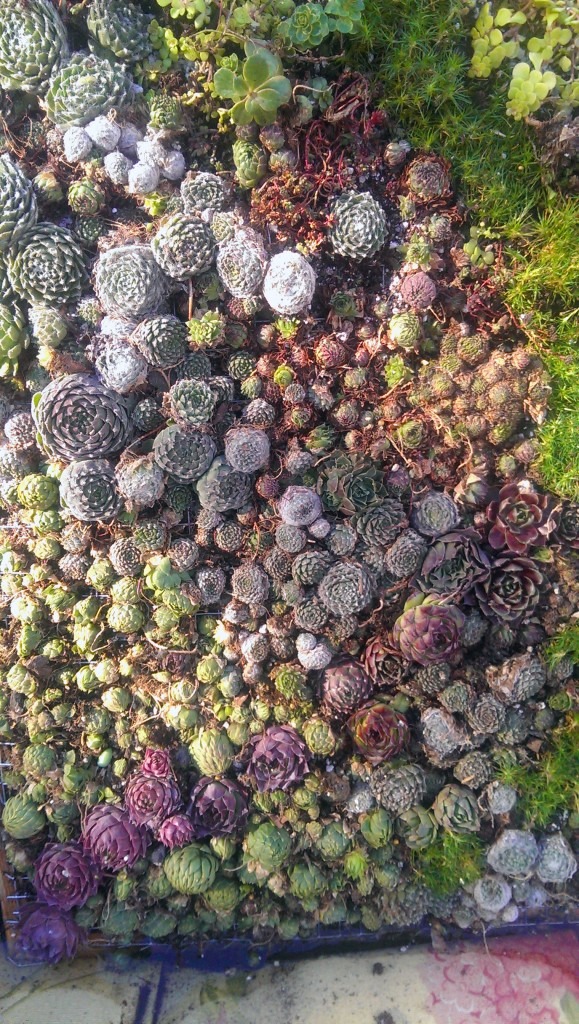
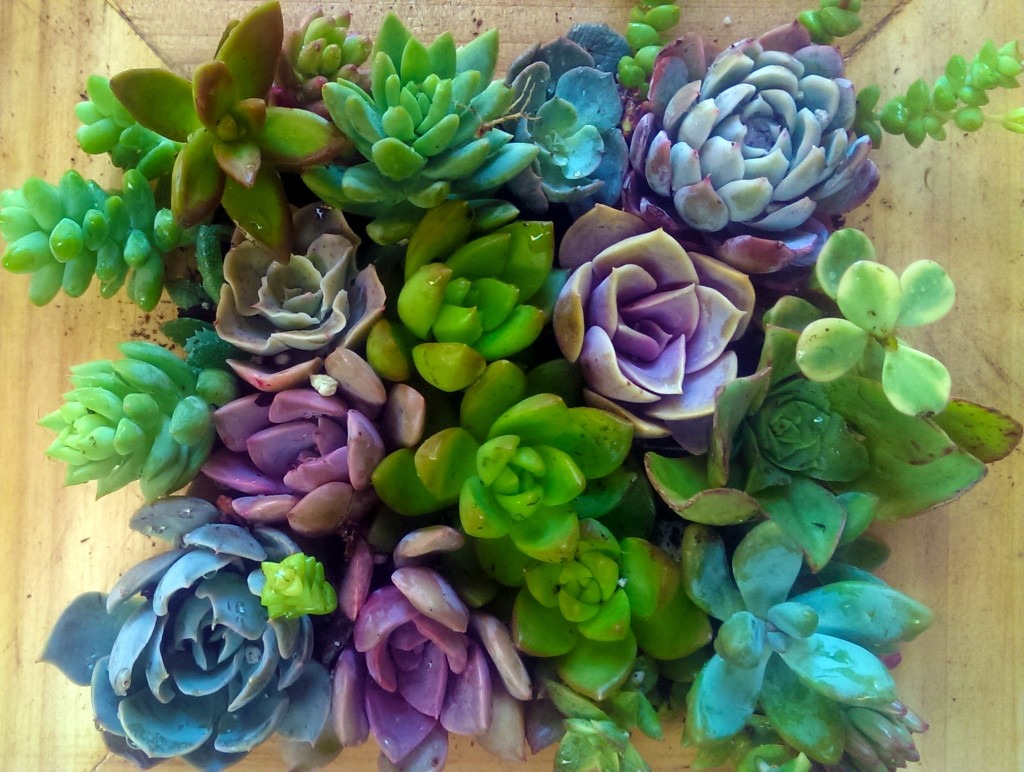
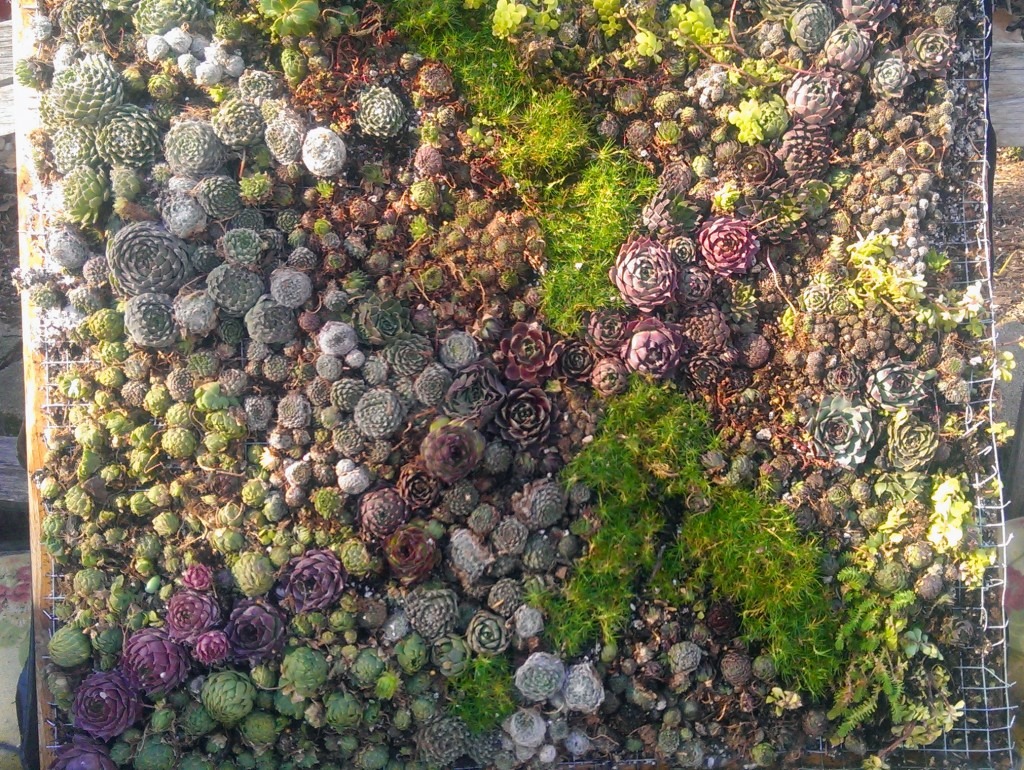
Daniel Meunier, owner and operator of Laurel Leaf Landscape, might be a newcomer to the Oklahoma gardening scene, but he’s already made quite a splash. While widely experienced in many types of landscape architecture, Meunier also specializes in a form of landscaping known by many names, including “vertical gardening” or “living walls.” Meunier himself calls it “living art.”
He believes the use of walls as planters adds an entirely new dimension to gardening. But, he says, “I took it a step further. I design these picture-like planters and arrange plants in them to either hang outside, inside or both, depending on the hardiness.” The result is a visual masterpiece.
Meunier studied horticulture at Oklahoma State University-Oklahoma City (a program famed for the quality of landscaping artists it produces) before going to work for the Oklahoma City Zoo and Botanical Garden. Before that, however, he apprenticed under a very special mentor: His grandmother.
“My grandmother was a very passionate person for life, family and about horticulture. I shadowed her as a child in the gardens that she had, and she shared with me little things about life, God and the ways of the world while we were gardening. It was something very special to me, and after her passing in my early 20s, my passion and gift for horticulture ignited into my full-on passion and purpose in life,” he says.
Meunier recently worked on a Zen garden for clients that included one of his hanging pieces – a 3-by-3-foot cedar box with a stunning yet peaceful array of succulents, completely self-sustaining and hardy, even in the most frigid temperatures.
“Using nature as my medium and the garden space as my canvas, I found I could create such elegance and beauty with design and affect not only me but others around me in such a positive way,” he says.
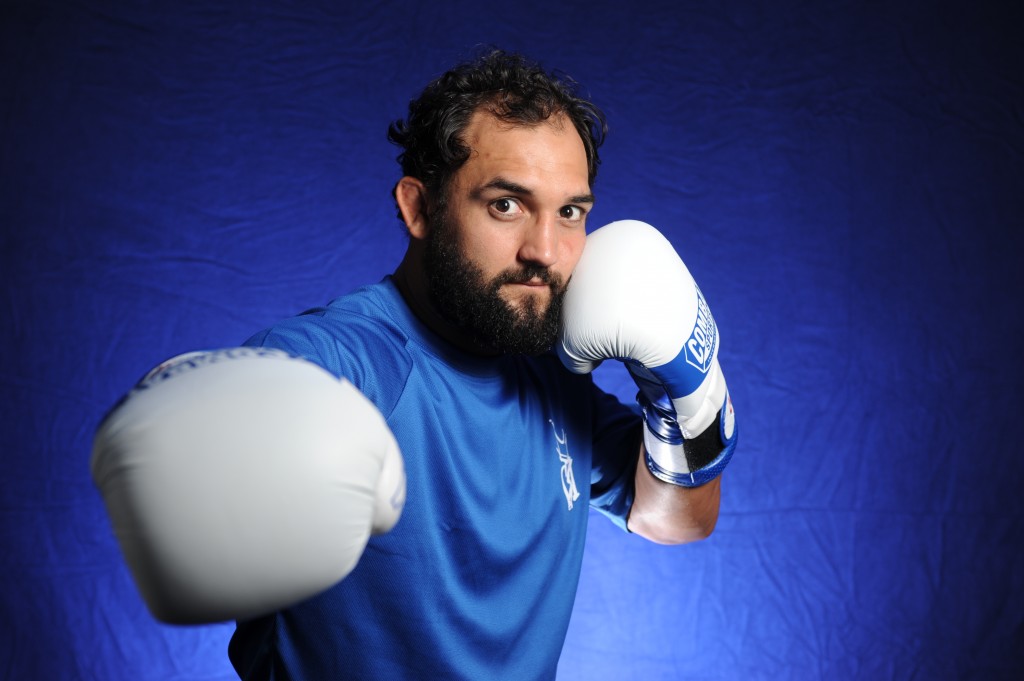
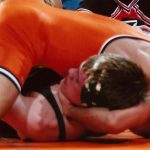
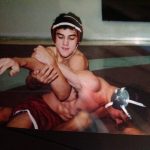
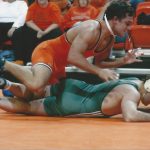
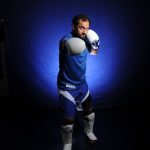
Johny "Bigg Rigg" Hendricks. Photo courtesy of Team Takedown.
Photo courtesy of Team Takedown.
One of the fastest growing sports worldwide, the UFC – Ultimate Fighting Championship – began as a brutal, no-holds-barred sideshow experiment in 1993 and has since evolved into a multibillion-dollar fight industry.
Repackaged and thriving after the days when the emphasis was on violence alone, UFC bouts now focus more on the athleticism, strategy, appreciation for mixed martial arts (MMA) and the background of the sport itself.
MMA fighters are tremendous athletes, and the level of talent among budding prospects coming onto the scene has undoubtedly played a role in the growing popularity and improved reputation of the UFC.
Slated as UFC’s top contender to take over the prestigious welterweight championship title, Oklahoma native Johny “Bigg Rigg” Hendricks is a hungry contender whose down-to-earth, professional attitude is helping change the face of the industry.
“It’s important to stay true to yourself and never think you’re better than the sport. This is a job, and you’ve got to enjoy it and represent it the best way possible,” he explains. “I try to stay positive as much as possible. I’d say I’m about 95 percent positive. I have my bad days, but life’s too short to be grumpy. If I wake up tomorrow, and I don’t want to do this anymore, I’m not going to do it. Life is too short to not love what you do, so I want to make sure I enjoy myself.”
Hendricks’ journey to the top ranks of the UFC has been one of organic proportions.
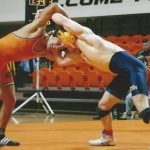
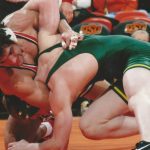
With the guidance of his father, he started wrestling in Jones, Okla., when he was 5 years old. Hendricks credits the sport with instilling in him responsibility and accountability for his own actions at a young age.
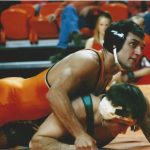
During his wrestling career at Memorial High School in Edmond, Hendricks won three Oklahoma state titles and later went on to become a four-time All-American, three-time Big 12 Conference champion and two-time NCAA champion at Oklahoma State University.
To become a champion, he stresses the importance of being willing to learn something from everyone.
“That’s a big misunderstanding by a lot of people, that once they get to a certain level they think they shouldn’t learn from somebody ‘below’ them,” he says. “Whether it’s someone who’s just started fighting or people who have been training for a long time, I’m always open to suggestions.”
Despite his elite wrestling background, Hendricks says that he never had any intention of becoming a professional fighter because he didn’t think he’d be good at it.
“Even today it’s still a shock to me. I’ve been very blessed. When I started, my first session didn’t go very well. I told myself that I really couldn’t protect my family the way I wanted to, so I wanted to learn more,” he recalls. “I told myself I’d give it a year to develop the skills and training I needed to find out if I was going to do this or not, and if it didn’t go the way I wanted, at least I’d have learned some new skills.
“I knew everyone knew I was a wrestler, so I needed to be able to hurt someone on foot before I went any other avenue. I started boxing right off the bat, working on striking and striking only, because that’s where every fight starts. Then over time I sort of fell in love with it all.”
Now incorporating jiu-jitsu, kickboxing and muay tai into his skills set, Hendricks has successfully fought his way up the ladder with a 15-2-0 record and grown closer to the prize that has fueled him along the way: the UFC welterweight title.
In November 2013, he almost had it; but in a controversial split decision, where fans and even UFC President Dana White believed he should have won, Hendricks experienced only his second career loss to one of MMAs all-time great fighters, Georges St-Pierre (GSP), who held the title for five years before vacating it in December 2013.
On the cusp of solidifying his place in UFC history and securing his family’s future, Hendricks is ready for the responsibility that comes with being a world champion and isn’t at all concerned about a rematch with GSP.
“If you’re just fixated on one person, you’ll only be as good as that one person. GSP is a great fighter, but it was never about him. It’s about the belt. It’s what he carried around and fought for every fight; that’s what made me want to beat him. Now that it’s open, I gotta beat Robbie Lawler. That’s the guy that I need to beat because he’s standing in the way of that belt,” Hendricks says.
“Being a champion means you gotta work your tail off. Half the battle is getting here. The other half is maintaining it. I’m fighting the best guys in the world, so every fight is going to be the best fight in the world. When I got into this, that’s what I wanted from the very get-go. Now that I’m here, it hasn’t changed. I want that kind of pressure – I enjoy that kind of pressure. The more difficult the fight the better I shine.”
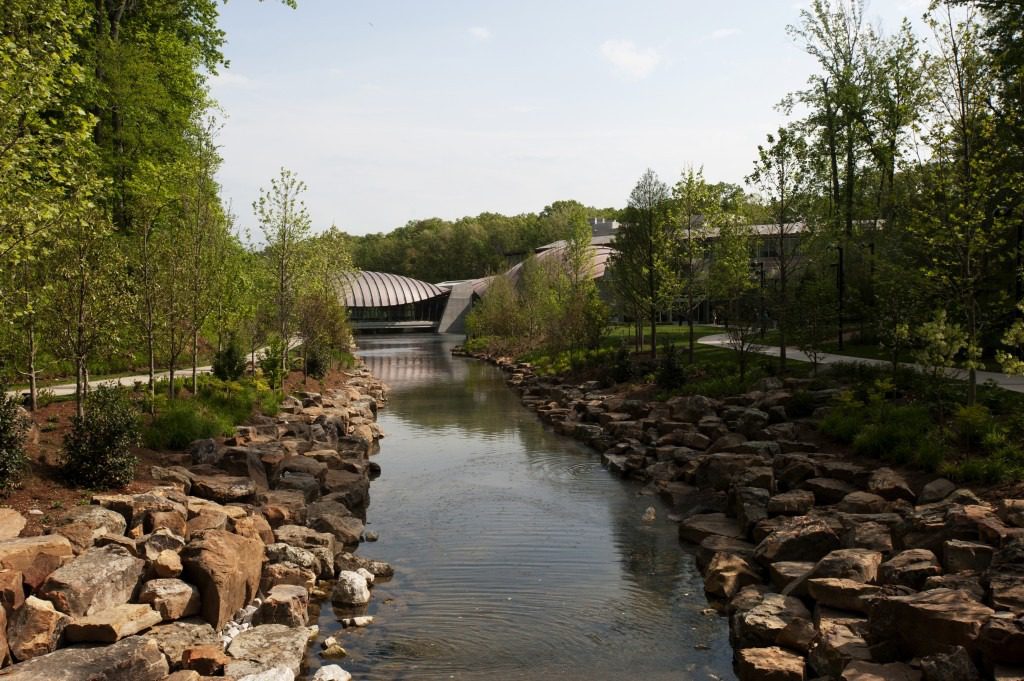
Cyrstal Bridges Museum of American Art in Bentonville, Ark.
Crystal Bridges Museum of American Art, Bentonville, Ark. Photo courtesy Arkansas Department of Parks and Tourism.
Any place that calls itself “The Natural State” has a lot to live up to. Lucky for Arkansas, the state has the vistas to back up its claim, especially true in the western half of the state. From mountain views in the north to the resilient and rustic timberlands flowing south to Texas, western Arkansas’ topographical diversity is a sight to behold and one worth exploring. Some attractions make the most of The Natural State.
Crystal Bridges Museum of American Art, Bentonville: Fine art and nature play in perfect unison at Crystal Bridges Museum of American Art. Home to a permanent collection spanning five centuries of American art, Crystal Bridges features work by such artists as Georgia O’Keeffe, James Turrell and Roy Lichtenstein. As amazing as what it contains, the museum’s architecture is a wonder in itself with glass, sculpture-like pavilions, galleries and bridges wreathed by ponds and old forest. www.crystalbridges.org
Opera in the Ozarks at Inspiration Point, Eureka Springs: Inspiration Point doesn’t boast a grand opera hall (it’s in the plans), but then, it doesn’t need one to impress. Home to Opera in the Ozarks, Inspiration Point outside of Eureka Springs took on its present context in the 1950s when a Phillips University professor was given the land and an unfinished castle. A fine arts colony was established and became a training ground for opera students from across the country honing their vocal chops. Summers, the mountains echo with Puccini’s Madame Butterfly and Rossini’s The Barber of Seville from the covered stage overlooking lush, rolling majesty. www.opera.org
Arkansas Wine Country, Altus: The right climate, fertile soil and ingenuity produced the first wines to come out of Altus in the Arkansas River Valley region. When the Wiederkehr and Post families arrived in the late 1800s, they planted vineyards and created new recipes of white, red and blush perfection. Today, Wiederkehr Wine Cellars and Post Familie Vineyards are an agribusiness and tourism boon. Both, as well as Chateau Aux Arc, welcome visitors to try new blends and old favorites year-round. www.postfamilie.com, www.wiederkehrwines.com, www.chateauauxarc.com
Garvan Woodland Gardens, Hot Springs: Fairytales are set in places like Garvan Woodland Gardens, University of Arkansas’ 210-acre botanical garden, created to preserve and enhance the uniqueness of this Ouachita Mountain region. From the sculpted Japanese garden (one of the best anywhere) to the stunning Anthony Chapel, airy effortlessly whittled out of the surrounding forest, Garvan is cultivated nature at its finest. www.garvangardens.org
Mount Magazine State Park, Paris: No article on Arkansas scenery is complete without mention of Mount Magazine State Park, a rugged range overlooking the Petit Jean River Valley and Blue Mountain Lake to its south. Mount Magazine is the state’s highest peak, which has made it the outdoor sportsman’s dream for paragliding and other extreme hobbies.
Anthony Chapel at Garvan Woodland Gardens in Hot Springs. Photo courtesy Arkansas Department of Parks and Tourism.
At A Glance
Access: Tulsa to Fort Smith via Muskogee Turnpike and Interstate 40 is about two hours; approximately three hours from Oklahoma City to Fort Smith.
Climate: Warm, humid springs and sultry summers followed by temperate falls and generally mild winters. Northern highland areas tend to be cooler.
Main Attractions: A vast state parks system attracts millions of visitors annually and offers plenty of outdoors activities, lodging choices and paths to nature.
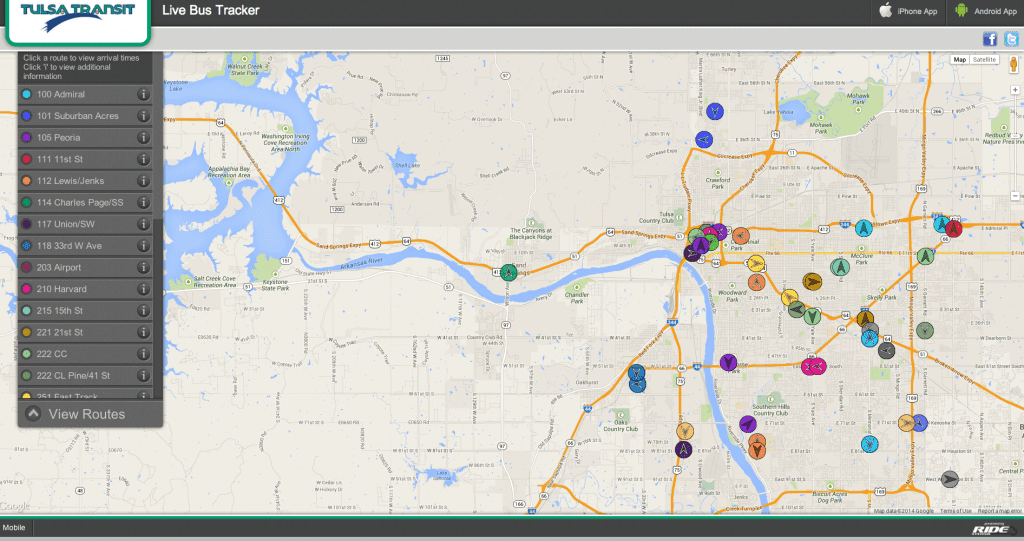
For those who have ridden the city bus, it’s a common ritual: Standing at a bus stop, checking your watch, peering down the street hoping you’ll see your bus round the corner or crest that hill. In 2013, Tulsa Transit unveiled its Bus Tracker program to take a lot of the guesswork out of using public transit.
Bus Tracker is a program available on computer, smartphone or tablet. Tulsa Transit partnered with Ride Systems to implement the program. Every Tulsa Transit bus is fitted with a GPS tracker that relays that bus’ position and direction to an online map that is updated in real time. Riders can go to www.tulsatransit.org and click on Bus Tracker to see the map with each bus’s position on every route in Tulsa.
There is also a Ride Systems app available at smartphone app stores that delivers real-time updates.
So far the system has been a great success for Tulsa Transit and its riders.
“I’ve personally been out for events, and people tell me they love it,” says Liann Alfaro, planning manager at Tulsa Transit. “Especially if it’s cold or rainy, they know when they need to get to the bus stop to be able to catch the bus.”
Tulsa Transit also released an online trip-planning program that allows riders to plan their journeys on a map with personal schedules; Tulsa Transit has also put its route schedules into Google Transit, allowing users a multitude of ways to plan their journeys around Tulsa.
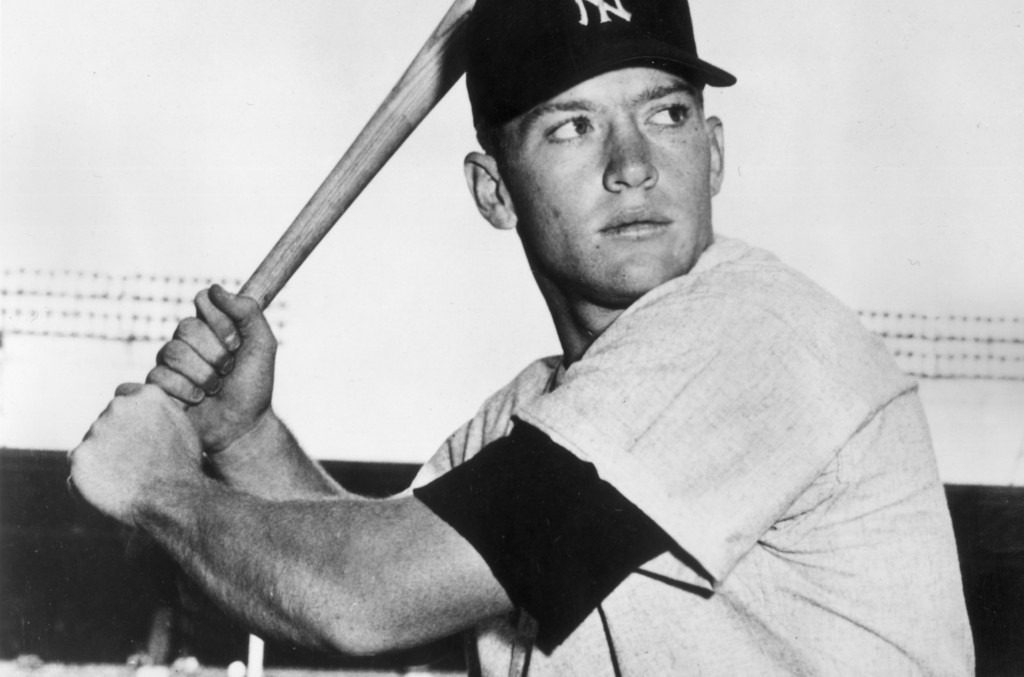
This spring marks the 40th anniversary of Mickey Mantle’s induction into the National Baseball Hall of Fame. Mantle left his mark on baseball as a switch hitter for the New York Yankees from 1951 to 1968. Over his 18-year career, the 20-time All-Star hit 536 career home runs, had 1,509 RBIs and a .298 batting average. He helped the Yankees reach 12 World Series and win seven.
He had a dramatic effect on fans, says Max Nichols, an Oklahoma native who was a baseball writer for the Minneapolis Star from 1961 to 1980.
“Fans respected Mantle and were awed at his home runs,” says Nichols. “He brought Oklahoma into national headlines and helped make Oklahomans proud as we came out of World War II and began to grow. I remember when ‘Okie’ was not a term to be proud of. Mickey Mantle helped change that.”
Mantle was born in Spavinaw, Okla., on Oct. 20, 1931, and at age 4, he moved with his family to the nearby town of Commerce. This is the inspiration for Mantle’s later nickname, “The Commerce Comet.”
Mantle had an accomplished career despite playing many of those years with injuries, says Nichols.
“He damaged his left leg during a high school football game at Spavinaw and suffered (a bone infection),” says Nichols. “That injury kept him out of the Army.”
Injuries continued to plague Mantle, even in the big leagues.
“During his first season as a Yankee, he stepped in a drainage hole in the outfield during the World Series,” says Nichols. “(His knee) bothered him off and on the rest of his career.”
On the field, he was best known for his home run hitting power. He was equally known for his friendly nature and practical jokes.
“I would see Mickey during batting practice. He always yelled at me: ‘Hey Okie,’” says Nichols.
Once, Nichols accompanied Mantle and Mantle’s former teammate, Billy Martin, on a hunting trip.
“Mickey put blanks in Billy’s gun,” recalls Nichols. “Billy was blazing away at the birds a few feet away, and the birds flew away. Mickey laughed so hard he rolled over in three feet of snow.”