Home Blog Page 882

The Long-Lost Oklahoma

If you enjoy this story, you have Samantha Powell and her mother, Leigh Powell, to thank. A student in one of my American Studies classes on Oklahoma music and movies at OSU’s Tulsa campus, Samantha brought a Capitol Records album titled Oklahoma to school one night. It belonged to her mother, who had purchased the disc the year it came out – 1977 – while attending OSU in Stillwater.

I was stumped. Even though I’ve written about our state’s music for somewhere around three decades, I’d never heard of this band. (It’s instances like this that keep you from thinking too highly of yourself and your “expertise.”)

The liner notes told me that the production end was handled by a couple of West Coast heavyweights: Terry Melcher – who produced the Byrds, The Mamas and The Papas and Paul Revere and the Raiders, among many other acts – and Mark Lindsay, the vocalist on all of Paul Revere and the Raiders’ ‘60s hits, as well as a successful early ’70s solo artist. As far as I knew, neither Melcher nor Lindsay had any ties to our state.

Here was a mystery that demanded answers. And luckily, I found just the guy who could provide them. He’s guitarist-vocalist-songwriter Steve Crossley, formerly of the band Oklahoma, who’s still a busy performer in and around Oklahoma City. Engaging and upbeat, he seemed happy to talk about the group and its brief turn on the national stage.

Interestingly, Crossley says that Oklahoma’s formation was tied to the end of another major-label act from the Sooner State – Buckwheat, a group out of Erick, Okla., that recorded four albums for London Records in the late ‘60s/early ‘70s. Its personnel included a young woman who would become one of Tulsa’s best-known pop vocalists, the late Debbie Campbell, along with her then-husband, Dub Campbell.

In the mid-‘70s, after Buckwheat split up, “their drummer, Sonny Ray Griffiths, came back to Oklahoma City, supposedly looking for a replacement band for London Records,” Crossley remembers. “So I moved out to L.A. with him. We got a house gig in Costa Mesa at the Lucky Lion, and Dub Campbell came down and saw the band and was interested in playing with us. He plays great fiddle and guitar. So he signed up with us.”

Oklahoma’s formation was tied to the end of another major-label act from the Sooner State – Buckwheat.

Unfortunately, London Records didn’t make a deal with the group, and neither did any other record company. Although the band, dubbed Pearly Hawkins, was getting plenty of work on the West Coast, Crossley opted to return to Oklahoma City, where he soon joined another rock outfit, Ringes. After several personnel changes, Ringes would become Oklahoma.

“The original Ringes members were Dwight Trahern on drums, Ben Blakemore on bass and vocals, Danny White on vocals and percussion, Speedy West Jr. on guitar, Joe Intrieri on keys, and myself, with Michael Slack and Lynn Bailey as our sound engineers,” Crossley says.

“We made a demo, and I played it for Dub. Dub knew Mark (Lindsay) and got it to him somehow, and then Mark and Terry Melcher came and saw us. They really liked it, went back to L.A., and brought Mike Curb back with ‘em. We did a showcase for Mike at the old Long Branch Saloon in Oklahoma City. They were excited and signed us to a deal.

“Whenever they got the money to do the deal,” he adds, “they moved back here (to Oklahoma City) for about a month, and we cut that stuff over at the old Producers Workshop, most of it. Curb was just starting Curb Records at that time, and he subbed us out to Capitol.”
While Curb (who’s not credited on the disc) was on his way to becoming a famous music-business executive, and Melcher was a very well-known producer, the star name in the production team belonged to Lindsay, the voice on such rock ‘n’ roll classics as “Kicks” and “Hungry.”

At the time of his affiliation with Ringes, Lindsay’s last charted single as a solo act was several years behind him (although he continues to tour and record to this day). For Oklahoma, he was all over the place, not only co-producing, but also singing background vocals, engineering and mixing the record.

“Oh, he was really working hard,” recalls Crossley. “He’d quit refined sugar, gotten on this hopped-up diet, and he had a lot of energy. The neat thing was that when those guys came back here for a month, staying at the house of a friend of ours, we got to know them pretty well, and pretty quickly. We became pretty good buddies. It was cool.”

But the producers also made some changes, cutting the band to four members: Crossley, Blakemore, guitarist Don Juntunen (who also continues to perform music around Oklahoma City) and drummer Sam Flores. They also changed the name of the group “because they thought Ringes sounded too much like Wings,” Crossley notes with a chuckle. He believes the new moniker may also have been influenced by the band Kansas, which was becoming hot at the time.

Unfortunately, nothing similar happened with Oklahoma. Capitol released a single from the disc, the Crossley-penned “What You Treat Me So Bad For,” and then the album; neither made much of a showing. Talk of a national tour fizzled, and Oklahoma played only a handful of dates.

As often happens in these sorts of situations, frustration and unmet expectations led to friction within the group, and Crossley left after a New Year’s Eve date in Oklahoma City at the end of 1977. Although the band went on for a while with replacement members, including Steve Hardin, the noted keyboardist and songwriter from Bartlesville, Capitol Records soon dropped the act and it broke up for good.

“You know how it is, with egos and everything,” says Crossley with another chuckle. “It just goes from, ‘We’re on top of the world’ to ‘Hey, man! You’re not playing the right notes!’ Some of the guys kind of got ‘egoed’ out and thought it should have been way bigger than it was. I was lucky to know guys like Dub (Campbell) and Michael Smotherman, who’d already had major-label deals. If I had a question about something, I could call ‘em and say, ‘Here’s what’s going on,’ and they could tell me pretty much what to expect.”

Crossley ended up playing with Smotherman, another Buckwheat alumnus who went on to make his own significant mark in the industry. That job led to a songwriting and performing deal with Glen Campbell, and Crossley worked with a number of other music stars as well, returning to Oklahoma City for good in 1982, when his son, Steven, was born.

These days, he’s getting plenty of gigs both as a solo artist and with OKC bands like the Blue Cats and Hoppy Niles’ One-Armed Bandit. He even played a couple of jobs with Mark Lindsay when Lindsay’s touring brought him to the area. Obviously, Crossley harbors no ill feelings toward his former producer – or, it appears, about the one-off performance of Oklahoma as a big-time recording act.

“Because I was getting that advice (from Smotherman and Campbell),” he reflects, “I think I was a little bit cooler about it than some of the other guys. It was just hard for them to understand why the wheel wasn’t turning as fast as it should’ve been. I really didn’t know either, but I was a little bit more prepared, because I knew a little more about the reality of it.”

Thirsty Cake

A proper Tres Leches cake is thirsty. Really thirsty. Each dry pocket of cake crumb soaks up more milk than a stray kitten. A basic 11-by-13-inch cake can absorb more than three cups of milk as it sits in the fridge overnight. While the texture is decidedly moist, a good Tres Leches cake will never be soggy or mushy. It will – against all odds – retain a discernible crumb in spite of the milk within.

The secret is a long, slow soak. The unexpected benefit? Fuss-free entertaining. You can wake up in the morning, frost the cake and be on your way. Creamy white and delicate, the cake begs to be served at baby and wedding showers. Choose the prettiest pan you have because this cake is never unmolded – the weight of all the liquid makes it impossible. Instead, slice and serve straight from the baking pan – either on the buffet table or in the back room.

While often thought to be uniquely Mexican, the truth is Tres Leches cakes are popular all over the Caribbean and Latin America. Each community makes their cake slightly different, with their own unique twist. In Central America they like to soak the cake with sweetened condensed milk, evaporated milk and heavy cream. This is probably the most common version. There’s also the Drunken Tres Leches cake, which is soaked with a mixture of water, rum and sugar. Thus far, my favorite is the Caribbean Tres Leches cake – made with a shot of rum and healthy dose of coconut milk, as well as the traditional evaporated and sweetened condensed milks.

Part of the fun is deciding on the toppings. While I recommend toasted, shredded coconut, it is also incredible with maraschino cherries and fresh berries.

Caribbean Tres Leches Cake

Are you looking for the perfect cake for your next potluck? One bite of this ultra moist cake and your friends will soak up the flavors of the Caribbean – coconut milk and rum – and they’ll think they’re lounging on a beach.

While easy to make, the cake does need an overnight “bath” in the three milks, so plan your time accordingly. Keep refrigerated and serve cool.

For the cake:
6 eggs, separated?
2 c. sugar?
2 c. flour?
1 tbsp. baking powder?
Pinch of salt?
1 tsp. vanilla extract
?2/3 c. milk

For the milk mixture:
12 oz. can evaporated milk
5.5 oz. can coconut milk
1 c. heavy cream or sweetened condensed milk?
1 shot rum

Topping:
2 c. heavy cream
1/4 c. sugar
1/4 c. shredded, toasted coconut ?or fresh berries to taste

Preheat the oven to 350 degrees. Whisk together flour, baking powder and salt. In the bowl of a standing mixer, beat egg whites on medium until soft peaks form. Stream in sugar until stiff peaks form. Incorporate egg yolks, one at a time. Add vanilla extract to milk. Alternate between incorporating milk mixture and flour mixture into the egg mixture, about one-third at a time. Pour into greased 11-by-13-inch baking pan. Bake for 35-40 minutes. Let cool for at least 30 minutes.

In a medium bowl, whisk together three milks. Using a fork or toothpick, prick holes all over the top of the cooled cake. Pour milk mixture evenly across the top, cover and refrigerate. The milk will soak in overnight and virtually disappear.

The next day, whip up the cream with sugar and spread on top of the cake. Top with toasted, shredded coconut or fresh berries. Slice and serve. Keep chilled.

Sasha Martin is cooking one meal for every country in the world at www.globaltableadventure.com. Her picky husband and baby girl are along for the ride. Join the adventure for recipes, reviews and more.

Marketing Magician

The way that Fred N. Davis III sees it, there isn’t much difference between promoting burgers and promoting potential presidents.

“I’ve said that there is no difference between marketing products and marketing political candidates, but that’s an overstatement,” says the Tulsa-born media strategist.

“They are very, very similar. In both cases, research shows what people like and what they don’t like about a product. You then find a striking way to make people focus on what they like and overlook what they don’t.”

There are some differences.

“You don’t have much say in what’s in a Burger King burger,” Davis illustrates. “(In politics) you have more input into the actual product.”
That sense of creative input reminds Davis of his early days as “the kid in the neighborhood who was always putting on plays.”

“I’m doing exactly the same thing today, only I get paid and the productions are more elaborate,” Davis quips.

In a field in which risky and daring are anathema, Davis and his cohorts at Strategic Perception, Inc. have garnered success and acclaim for applying corporate marketing techniques to the staid world of political campaigns.

As chief creative consultant to John McCain’s presidential campaign, Davis tailored the commercial featuring Barack Obama as “the biggest celebrity in the world,” comparing him to Paris Hilton and Britney Spears, which went viral online. Davis was also responsible for Carly Fiorina’s “demon sheep” ad in California and Christine O’Donnell’s “I am not a witch” effort in Delaware, among numerous others.
The industry takes notice of Davis’ work. He’s garnered numerous industry awards.

“The thing I like about politics is the immediacy,” says Davis. “In politics, you write it at 4 a.m. and it gets on television at 6 p.m. Contrast that to a (commercial) campaign I’ve been working on for a year and a half.”

Davis’ penchant for theatrics could have been confined to theater. At 19, his father died and Davis took over his public relations firm. The firm had grown dramatically with big-name corporate clients, when his uncle, Oklahoma Congressman James M. Inhofe asked Davis to help save his ailing U.S. Senate bid.

“He couldn’t afford to pay me, so the deal was that I would do it but that he wouldn’t get much say in what was in the ads,” Davis says. “I wanted to apply corporate marketing strategies to politics.”

After a dramatic ad featuring dancing felons, Inhofe claimed a 30-point swing in the polls – and victory.

“The phone started ringing off the hook,” he says.

Davis says that he has no regrets for his work’s colorful nature – even the controversial “I am not a witch” ad that was lampooned nationally.

“It was a success,” he says. “(O’Donnell) was down 17 points before it and we cut that to 11 points in four days. It was supposed to be the first in a series of ads, but she decided she needed to attack her opponent instead.”

Davis credits his success largely to being in the right place at the right time – which today still includes offices in Tulsa.

“I’ve got the greatest job in the world – it’s all luck,” he says. “I’ve been in the right place at the right time, like Forrest Gump.”

Dragging The Strip

Go down any popular cruising strip in Oklahoma – say, Tulsa’s Memorial Drive – on any given weekend after the sun goes down, and the lanes are crowded with kids cruising and parking lots full of teens just hanging out.

It’s not a new thing. The technology’s changed, but except for smaller cars and bigger speakers, it is a scene that would be right at home on Brookside’s Restless Ribbon in the ‘60s and ‘70s, or around burger shacks and drive-in theaters in the ‘50s.

Jerry Conrad stops at a red light on Brookside in Tulsa. His powerful V-8 hums its soothing rumble. A car pulls up beside him and the light turns.

“That light turned green and away you’d go, laying rubber all the way,” Conrad says.

Except he doesn’t. Conrad takes off at a reasonable, law-abiding pace. He’s in a Dodge Ram pick-up now, and it’s not a crowded Brookside strip in the 1960s and ‘70s – the old Restless Ribbon days.

Back in high school at Central in Tulsa, Conrad could be found making the loop on Brookside. Cars would cruise back and forth, trying to see who was driving what and who was riding with whom, and turn around and do it all over again.

He drove a 1968 LeMans back then. Still has it.

“The drive-in restaurants were pretty much the hub of the social activity at night.”

“Almost anybody you talk to is going to tell you there were no better times for muscle cars than the ‘50s and ‘60s,” Conrad says.

Cars were part of the equation for cruising back then, cruisers say. The friends were the other part.

Hank Moore’s cruising days spanned much of the 1950s. High school kids would hit their particular hangout – nearly always a Pennington’s drive-in restaurant, for some good food, sodas and to see who else was out.

The soundtrack of their Friday nights was provided by KAKC, Moore says.

“The music of the time was absolutely huge – very much a part of young people’s culture,” he says.

“The drive-in restaurants were pretty much the hub of the social activity at night.”

But they weren’t the only spots. Drive-in movie theaters would draw a crowd and were fine places for a date. A movie and snacks, followed by dinner at Pennington’s, would only cost a fellow about $5 at that time.

“If you had a half tank of gas, a nice lady and a six-pack of beer in your trunk, you were in heaven,” Conrad recalls.

Moore left Tulsa, and his cruising days, in 1960.

Conrad went away to college in 1972, leaving behind the scene to the high schoolers behind him.

Pennington’s owners closed up the drive-ins. Judy Pennington died in 2010.

The last drive-in theater, the Admiral Twin, burned to the ground in 2010.

All signs, for some, the era of their cruising has passed.

But it’s not over. Somewhere, some weekend night, some kid is keeping the tradition, changed though it has, alive.

(Not So) Dirty Dancing

When Shirley Hazlett’s children moved out of her home, she and her husband, George, found themselves at a loss for activity. Shirley felt restless and urged George to take dancing lessons with her, but he hated to exercise. After reading about the many health benefits of square dancing, he reluctantly agreed to taking classes. And what started out on a whim for the couple became a passion.

“I love the dancing and the fellowship,” Shirley says. “You meet so many neat people. And it’s good exercise.”

The Hazletts are the past presidents and current insurance chairmen of the Oklahoma Square Dance Federation, a conglomerate of nine districts and some 75 individual square dancing clubs from across the state. Since 1947, members of the federation dosado’d their way across the dance floors of Oklahoma, and have picked up some serious devotees along the way.

No one can quite agree where square dancing originated. Many credit English and French dances of centuries past, while the Scots, Scandinavians and Spanish are also said to have made contributions. The term dos-a-dos is French in origin, meaning “back-to-back.” Regardless of the roots, it has indisputably become a fixed part of American – and Oklahoman – heritage.

“They call a square dance in English, no matter what country you dance in,” jokes Ray Mills, co-president of the Oklahoma federation.

Jim Reese credits the family atmosphere of the gatherings and the friendliness of Oklahomans for square dancing’s popularity in the state.
“Oklahomans are naturally a social people and this is a very sociable activity,” he says.

“They call a square dance in English, no matter what country you dance in.”

Reese and his wife, Julia, are the immediate past presidents of the Oklahoma Square Dance Federation. They have attended three out of the past four national square dancing conventions that the Oklahoma federation has hosted, and have been active in the group for more than 30 years.

“We started dancing in 1976,” he says, “and plan on many more years of fun and fellowship.”

Mills agrees with Reese that the family-friendly nature of square-dancing gatherings – no drinking or misbehaving – is part of the attraction for so many Oklahomans.

“They’re good, wholesome activities,” he says. “You can even bring your children and teach them to dance.”

Many, like the Hazletts, join their local square dancing clubs for the numerous health benefits, such as reduced risk of heart disease, bone-loss, depression, diabetes and even memory loss. The physical dancing itself keeps the body active and in shape, while the intricate calls of the dance – 32 in just the most basic set – helps keep the mind sharp. In addition, the camaraderie of the groups keeps participants happy and socially fulfilled.

“Many doctors recommend square dancing as a form of exercise and a way to deter the aging process,” Reese says. “It’s one of the healthiest activities a person can participate in.”

While everyone seems to have his or her own reason to join, this fall, the lure will be all about the car. During the first week of November, the Oklahoma Square Dance Federation will host its annual shindig at the Biltmore Hotel in Oklahoma City. Citizens are invited to dance, take one of the many classes offered, or just to watch. And one lucky attendee will drive away with the prize from this year’s classic car giveaway – a 1978 white Corvette – an annual tradition at the event. This year’s theme is as down-to-earth and heartfelt as many of the federation’s members seem to be: “From Our Hearts to Yours, We Hope You Dance.”

In the summer of 2013, the Oklahoma square-dancing scene will heat up even more as the federation hosts the 62nd annual National Square Dance Convention. Dancers and callers from around the nation will converge on Oklahoma City for four days of clogging, sashays and allemandes. Mills says that during the last convention, most of the hotels in Oklahoma City were booked; he anticipates a similarly large gathering in 2013.

“It’s a whole lot of work to get everything put together on the national level,” he says, citing the help of the Oklahoma City Convention and Visitors Bureau.

Playing It Smart

Stephne Snipes tried to enter a homeless shelter that also offered an addiction treatment program, and her life – already in tatters – went from bad to worse.

“They did a background check and found I had a warrant, so I ended up in Oklahoma County jail,” says Snipes, 52.

Snipes says that the warrant was issued when she did not pay fines and fees stemming from her second DUI. It was not a freak occurrence for Snipes, who has a master’s degree in social work and who has struggled with alcohol addiction for decades. A 30-day treatment program and a 12-step program had helped Snipes stay sober from 1988 to 2001.

“After that, I had a lot of different losses in my life, including both my parents and a divorce,” Snipes says. “My life started falling apart again and I didn’t do the things I needed to do to help with my recovery. I was under a lot of stress. It doesn’t take long to fall back. Within five years, I had lost everything.”

Snipes had spent 10 days in jail when representatives of Oklahoma City’s NorthCare Day Reporting Center contacted her. The NorthCare Day Reporting Center is a pre-trial program that is designed to serve mentally ill persons and individuals with co-occurring mental health and addiction disorders that are in the custody of the Oklahoma County Sheriff and are awaiting sentencing for appropriate criminal offenses.

Seventy-nine percent of female inmates and 46 percent of male inmates have been diagnosed with a mental illness.

NorthCare’s program permits clients to live in the community and helps them enter programs to face their challenges – so long as the client checks in regularly in person, phones in several times a day and continues to follow program parameters.

“I thought, ‘Why not try it?’” Snipes says. “At first I thought that I couldn’t check in every day in person and call three times a day. But it was very, very helpful.”

Today Snipes has undergone treatment, is sober, has reformed her relationship with three grown children and is working on rebuilding her life.

“It was a real blessing,” Snipes says of the program.

Snipes isn’t the only one who has benefited from day reporting – not by a long shot.

“The day reporting program has about an 87 percent success rate,” says Randy Tate, chief executive officer of NorthCare.

Tate describes the parameters for potential clients for NorthCare’s pre-adjudication programs.

“The program excludes anyone with a violent criminal history,” he says. “We have staff that go to the jail every day to see if new admissions meet the criteria for the program and if they want to participate. We have the D.A. release them to us, we evaluate them, get them into the programs they need and create a schedule for them.

“A lot of times, if they do well in the program, the charges go away,” Tate adds.

Blake Tabler, 19, also knows how the program works. He’s come a long way in a short period of time.

“I was 15 when I started smoking, and I fell in with the wrong crowd,” Tabler says. “That led to drugs, and I used meth when I was 17. I was hooked from the first time.”

Tabler says his parents knew he had developed a drug habit and that he moved away from home as soon as he turned 18.

Shortly thereafter, Tabler was arrested and charged with two counts of possession of meth and marijuana.

“My parents were relieved when I got arrested, because they thought I was going to die,” he says.
Tabler was headed toward a youth boot camp-type program in the state prison system when he too was offered the opportunity to enter NorthCare’s day reporting program.

After eight months in a sober living environment, Tabler has now moved back in with his family. He just earned his GED and is looking forward to starting college in June to study nursing.

“I’m really excited about school, and things have been going great,” Tabler says. “The day reporting program has been very helpful. It gets you into routines and helps you discipline yourself.”

Tate says that only one thing prevents the 30-year-old nonprofit agency from contributing to the success stories of more Oklahomans like Snipes and Tabler: money.

“There absolutely is demand, but it takes funding,” Tate says.

Funding is exactly what the Oklahoma Department of Mental Health and Substance Abuse Services is looking for in its current budget proposal, to enable a Smart on Crime initiative that has garnered near-universal support from around the state.

Smart on Crime, endorsed by the Oklahoma Sheriff’s Association and the Oklahoma District Attorney’s Council, proposes to use evidence-based programs in the areas of criminal justice diversion, pre-sentencing engagement and reintegration to reduce recidivism and decrease demand for correctional beds. If fully enacted as proposed by ODMHSAS, Smart on Crime would dramatically expand funding for myriad programs to try to take the pressure off the state’s prison system, save taxpayer dollars and save lives. Programs would include the expansion of day reporting opportunities, drug courts and those that specifically address Oklahoma’s shocking rate of women in prison.

Those in the penal system would receive the treatment needed for mental health and addiction issues; and those leaving the system would warrant “soft landing” programs to help with reintegration into society.

Oklahoma Commissioner of Mental Health and Substance Abuse Services Terri White makes a strong argument for the wisdom of Smart on Crime.

“My parents were relieved when I got arrested, because they thought I was going to die.”

“Programs like these are extremely successful in Oklahoma,” White says. “With the money we have, we do incredible work. We were one of only six states to earn a ‘B’ grade from the National Alliance on Mental Illness in terms of services – and no one got an ‘A’. Our drug court is a national model. Oklahoma City has an amazing day reporting program, but it’s only in Oklahoma City. Our 24/7 first responders program has a 97 percent success rate in keeping people from being arrested – but it’s only in Tulsa.

“What Smart on Crime does is to make these many services available statewide, or at least widely available,” White continues. “We want to expand these programs into local communities that don’t now have access to them. We want to make sure they are available at the local level.”

White points out that Smart on Crime is not about being soft on crime.

“No one is saying that no one belongs in prison,” White says. “There are people who are scary and dangerous and need to be in prison.”

However, there are also many people in the criminal justice system that are better serviced by mental health and addiction treatment – and it is this group that causes prison overcrowding.

“We’ve realized that there is a much more efficient, less expensive way to deal with people with criminal justice for non violent and mental health issues,” White says.

Evidence strongly supports the Smart on Crime approach.

Out of 25,000 inmates, the Oklahoma Department of Corrections estimates that nearly 12,000 have a history of – or are currently exhibiting – symptoms of severe mental illness. Seventy-nine percent of female inmates and 46 percent of male inmates have been diagnosed with a mental illness. Of these individuals, 57 percent were incarcerated for non-violent offenses. Out of all inmates in DOC custody, 33 percent were imprisoned for drug and alcohol offenses, and at least 50 percent were incarcerated for a crime related to substance abuse.

“We deducted the cost of services and found that we’d saved the county $850,000.

The average cost to maintain an inmate in prison is $48 per day. For someone in a prison mental health unit, the cost jumps to approximately $175 per day. Providing appropriate mental health services to someone in the community to keep them from entering the criminal justice system costs approximately $25 a day; and, providing appropriate substance abuse services to someone in the community to keep them from entering the criminal justice system costs less than $15 a day.

White says that the demonstrated cost savings is a key reason why Smart on Crime has the support of law enforcement and political leaders.

“Oklahomans are fiscally conservative, and this is a fiscally responsible way to deal with non-violent offenders,” she says. “Why spend $19,000 a year keeping a non-violent offender in prison when a program costs an average of $5,000 a year?”

The price tag for the entire slate of Smart on Crime initiatives is more than $95 million. But supporters assert that savings would offset the cost in just three years and that those savings would only continue to increase as more appropriate clients were reached.

Consider just the savings provided by NorthCare’s prison alternative programs.

“We looked at a five-year period and counted the number of jail bed days we’d saved the county,” says NorthCare Chief Operating Officer Clark Grothy. “We deducted the cost of services and found that we’d saved the county $850,000. If you looked at Smart on Crime in the same way, the savings would be tremendous.”

But it isn’t just the financial prudence of Smart on Crime that engenders support for it.

“Sure, we look at the stats, we see the money that can be saved,” says State Rep. Pat Ownbey (R-Ardmore). “But it’s a chance to save lives, to save families and to save children. Children with a parent in prison are more likely to go to prison themselves. It’s a cycle we haven’t been able to break.”

Ownbey prompted a study last year on prison reform and was stunned with what he discovered.

“Some politicians might feel like, ‘Let’s just lock people up and throw away the key’, but today you can’t afford that,” he says. “And these are people who don’t need to be in prison. There are a lot of women in prison who don’t need to be there, and who other states would not have incarcerated.”

Ownbey says he learned a lot in meetings with Texas officials.

“Texas has been a model for prison reform,” Ownbey says.

When White and her staff initially introduced the Smart on Crime proposal, Ownbey was impressed and pleased. He’s been a vocal supporter ever since.

“When you look at the success of the programs, whether it’s drug court or psychiatric intervention – they work,” Ownbey says. “You can’t help but be impressed with the stats.”

Indeed, based on statistics compiled by ODMHSAS, Smart on Crime programs are effective. The re-arrest rates for drug court graduates after four years are less than half those of released inmates. Mental health courts have reduced jail bed days by some 90 percent.

Smart on Crime also is structured to reach individuals at varying points of contact – from early interception to reintegration after incarceration. White says the proposal is like a menu.

“If we’re given a certain amount of money, we will have a dialogue with the governor and legislature about what to invest in,” White says.

“They will be able to look and see that if they invest in this, the return will be this. We’ve been able to show them what the returns are.”

That cafeteria approach to funding Smart on Crime is likely to come in handy. White and Ownbey say that Gov. Mary Fallin has proposed investing $3 million in it this year.

“Ninety-five million was not realistic, but I am encouraged that we will see some investment in Smart on Crime,” White says.

While Ownbey says he also thinks $3 million is possible, he also would like to see the legislature look at the bigger picture of the whole fundamentals of the budget.

“I wish we could look at it like, ‘Do we really need government to do this?’” he says. “We really need to ask tough questions about what we want government to do.”

In the meantime, supporters hope for some funding to start the process of Oklahoma becoming smart on crime.

“We’re 46th in the country in per capita funding,” White says. “The challenge is are we doing enough?”

Living in Color

A good designer has to know who his client is at the core; it’s arguably a great designer who can be his own client.

“For many designers, their own home is the hardest project to tackle,” says Christopher Murphy of Christopher Murphy Designs.

The three-level townhouse he shares with partner Benjamin Stewart tells a story of those who make their life there. An array of striking art, unique figures and pops of color fill the spaces of each room.

“It’s my style,” Murphy says. “It’s not Oriental or retro-inspired. It’s just wholly my own aesthetic.”

It’s with self-awareness and sense of humor that Murphy has created this Midtown Tulsa haven.

“We like to entertain, but we love our quiet time, too. This place is like a cocoon. It’s comfortable while being inspiring,” he says.

Murphy finds color and juxtaposition energizing, which explains the combination of a vintage hot-pink rug against white pebble flooring in the entryway.

That love of playfulness and humor is a common theme that can be seen in the furniture choices for the third-floor terrace that features a traditionally shaped sofa and seat that are made of plastic for year-round use.

“It’s that new and old, humor and seriousness, that I like to mix together.”

One of Murphy’s favorite pieces in the house is the red Craftsman tool chest that holds French silverware.

“I love the fun and play of it. And it’s perfect for the silverware because of the separate drawers,” he says. “People are tickled by it.”

The second floor opens up into a living, dining and kitchen area. A mirrored wall with a mounted fireplace serves as an anchor in the living room.

The high-style Italian furniture pieces, such as the sofa and ottoman, both from B&B Italia, and the boiled leather custom colored chairs serve as the serious side juxtaposed with the giant pick-up-sticks game located next to the ottoman.

“It’s that new and old, humor and seriousness, that I like to mix together,” Murphy says of his choices.

The walnut cabinetry, Caesarstone quartz countertop and stainless steel appliances help make the galley-style kitchen functional yet attractive.

Extending from the kitchen, the dining room holds an Italian table and new captain’s chairs that are sleek and modern and work wonderfully with recovered 1970s conference chairs that line each side.

Lighting plays a big part in design, and of Murphy’s design in particular.

“I believe lighting should create highs and lows; (I enjoy) mixing recess with direct lights and blending ambient and reading lights,” he says.

Ambient lighting, such as the two snake candle sconces in the master bath, highlights a five-piece square art feature, which is part of a collective artistic endeavor. Throughout the room, Murphy created a pattern of squares to please the eye that coincide with the square window and painting as well as the Italian glass mosaic tiles in neutral shades.

A figurine collection found on a nightstand tells the story of the trips the couple have taken.

“These are from our travels, but they also mean something,” Murphy says of the figurine collection that ranges from cultures such as ancient Egypt and 15th-century Mexico to little trinkets given out at a new sushi restaurant.

“Each and every piece holds a special memory of either the place I got it or the people I was with,” he says. “It’s great. I’ll walk by and get a smile because it triggers a memory.”

No matter the art form, Murphy recommends that people not just try to find something to fill a space.

“Buy what you love,” Murphy says of art choices. “Edit carefully. The trick is that sometimes less is more, and showing something in an unexpected way can be even more interesting.”

Simply Healthy

The average American household probably doesn’t eat lentils on a regular basis. However, lentils are a great source of fiber, offering 16 grams per one cup serving. The ratio of fiber in lentils is filling and aids in cholesterol removal. Because of its low glycemic value, lentils help control blood sugar levels. Lentils also contain an excellent amount of protein, folate, magnesium, zinc and iron.
You will find the lentil at the bottom of the food pyramid, ranked as one of the healthiest foods a person can eat. The Great Food Almanac by Irene Chambers offers a clever anecdote that rings true: When Jack traded the family cow for the handful of legumes that grew into the beanstalk, he ended up with the goose that laid the golden egg. The moral: He who eats low on the food pyramid will end up on top of the heap.

Snobby Joes

1 c. uncooked lentils (brown or French)
4 c. water
1 tbsp. olive oil
1 medium yellow onion, diced
1 green pepper, seeded and diced
2 cloves garlic, minced
3 tbsp. chili powder
2 tsp. dried oregano
1 tsp. salt
8 oz. tomato sauce
1/4 c. tomato paste
2-3 tbsp. maple syrup
1 tbsp. yellow mustard
Cook the lentils until soft. Drain and set aside. About 10 minutes before the lentils are done, preheat a medium saucepan over medium heat. Sauté onion and pepper in oil about seven minutes, until softened. Add garlic and sauté for one minute. Stir in cooked lentils, chili powder, oregano and salt. Add tomato sauce and tomato paste and cook for 10 minutes. Add maple syrup and mustard and heat through. Turn off heat and let the pot sit for 10 minutes so that the flavors can meld. Serve open-faced with a hearty piece of whole grain bread.

Recipe from Veganomicon by I.C. Moskowitz and T. Hope-Romero

Oklahoma's Wildest Places

Oklahoma is wild. More than 150 years after settlers began arriving, there are still areas with landscapes that have remained virtually unchanged. Some areas are remote, isolated and difficult to explore but offer rewards of spectacular scenery and natural experience. Other areas are being restored to primal state after decades of serving as ranches. Still others are less remote but no less wild.

Glover River

The Glover is Oklahoma’s only untamed river. It flows freely for 32.6 miles in southeast Oklahoma’s McCurtain County, unfettered by dams or obstructions, through pristine forest. There are few inhabitants, no communities, convenience stores or formal campgrounds, just a few primitive camping sites.
Traveling the Glover requires training and preparation. Only experienced whitewater canoeists and kayakers with advanced skills should attempt the trek. And it requires knowledge of weather and river conditions. Sudden storms can cause dangerous flash floods.
The upper river flows through high bluffs with steep sides. The lower river is floatable most of the year and sections can even be traversed on tubes. But even here, there are whitewater rapids.
The Glover flows through private land, much of it owned by the Weyerhauser timber company. The Department of Wildlife Conservation requires a permit for these areas, $16 a year for Oklahomans, $25 for out of state with a special $5 three-day permit for non-fishing and non-hunting use.
The best times to traverse the Glover are October through May or June. The upper river is almost always too low in summer.
The Glover flows through an isolated area from the town of Battiest to a junction with the Little River at Glover. The dense woods are scenic, especially in spring.
It also offers fine fishing, especially in upper sections, which have protected pools with perch, small mouth and large mouth bass and other species.
The Glover also can be run in short sections, utilizing eight access points. But remember there are no pickup services – you have to make your own arrangements to get in and out of the river.

Charon’s Garden Mountain

Charon’s Garden Mountain isn’t much of a mountain – until you get there. Then it’s a grand and rugged 1,905-foot granite peak that offers rare beauty and great challenge to a climber.
It is in a remote 4,500-acre section of the Wichita Mountains Wildlife Refuge, which is quite a wild place itself, called Charon’s Garden Wilderness, named for a Greek mythological character.
It is not an easy area to reach. It is, says Refuge Manager Jeff Rupert, “very rugged, very remote.” One climber called it “the epitome of isolation.”
It is not much visited. Other mountains, wildlife viewing areas and attractions in the 60,000-acre Refuge are easier to reach. The 22,000-acre public use area includes 15 miles of hiking trails, plus several lakes and a number of designated climbing routes in various places. A million and a half visitors come every year. But only 550-600 venture into the Wilderness.
A commenter at www.sumitpost.org, a website for climbing enthusiasts, describes the mountain as such, “Perhaps the most appealing attribute of this mountain is its elusive nature – it truly is hardly even identifiable until you’re standing directly beneath it, and then it is monolithic, rewarding the climber for his extended approach with terrific views.” Backcountry camping permits are required at $2 per person. Only about 1,000 can be issued in any year. And there is no camping at Charon’s Garden Mountain.
Late fall to early spring is the recommended period to visit. Summer temperatures can exceed 100 degrees and winter weather can be harsh, although there will be periodic 70-degree days. The Wichita Refuge began in 1901 – six years before Oklahoma statehood – and was expanded to a game reserve in 1905 by President Theodore Roosevelt and became the Wichita Mountain Wildlife Refuge in 1935. It’s the oldest of the 550 refuges administered by the Fish and Wildlife Service.

Nickel Preserve

Tucked in Oklahoma’s famed Cookson Hills is the largest privately protected conservation area in the Ozarks region.
It is the J.T. Nickel Family Nature and Wildlife Preserve, formed by The Nature Conservancy in 2000 with a gift from John Nickel. The 17,000-acre preserve overlooks the scenic Illinois River. Spring-fed creeks meander its steep slopes and valleys, through oak and hickory forest and pine woodlands. Its diverse blend of prairie, shrubland and savanna provides habitat for many bird species.
Visitors can drive through it on a six-mile county road. There are also three hiking trails, two self-guided, which begin at Preserve headquarters six miles off Highway 10 near Eagle Bluff.
The land was assembled by Nickel, a native of Muskogee who first visited it on an agriculture field trip while a student at Connors State College.
Nickel studied architecture and was involved in a number of businesses, including a vineyard and winery in Napa, Calif., before returning to Oklahoma and a family nursery business.
In 1958, he formed Greenleaf Nursery, which became one of the largest wholesale nurseries in the country, shipping trees and plants to garden centers and landscape contractors across the country.
And he bought the land for a ranch.
But he also began talking with the Nature Conservancy about preserving it. That led to his donation.
Before the Conservancy took over, invasive and non-native grasses and plants had proliferated. It has replaced Bermuda and fescue fields with native prairie tallgrass and used prescribed burns to restore historic conditions. The result has been, the Conservancy says, “an astounding increase in botanical diversity and abundance.”
The Conservancy calls it “perhaps the last landscape-scale opportunity to address these threats” of invasive species and other threats to the ecosystem.
Among other things, the Conservancy is re-introducing elk, an animal absent from the area for half a century.

Chickasaw Recreation Area

What is now the Chickasaw National Wildlife Recreation Area was once America’s seventh national park.
It was initially designated Sulphur Springs Reservation in 1902, five years before Oklahoma statehood – and the town of Sulphur was actually relocated to make way for it. Then in 1906, it became Platt National Park and once was the most visited park in the national system.
But the character of the area changed over the years and shifted dramatically after Lake of the Arbuckles was built in 1966. In 1976, all park and recreation areas were consolidated into the Chickasaw Recreation Area.
Today, many of the springs no longer flow, and the lake is perhaps the biggest tourist draw.
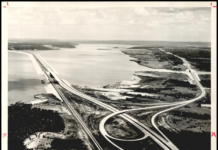
With 36 miles of shoreline, 2,300 acres of crystal clear water and deep rock cliffs, Lake of the Arbuckles is one of Oklahoma’s best fishing lakes, with white bass, catfish, crappie and other species. It also is popular with divers because of its clear water. The wildlife area is also home to deer, wild turkey and game birds.
But the region has been a popular spot to visit for centuries, largely because of its water.
The first land was bought from Choctaw and Chickasaw tribes to preserve the sulphur springs believed to have medicinal properties. At one time there were 33 named springs; today only five still flow, as development and weather have changed the aquifer supplying the water.
But it still draws 1.2 to 1.4 million visitors a year, mainly from Oklahoma and Texas, and some families have had regular gatherings there for decades.
The original 640 acres is still part of the park and it still offers spectacular wooded hills in what is not a remote area.

Cooper Wildlife Area

In far western Oklahoma on nearly 17,000 acres of rolling sand hills and river bottomland is the Hal and Fern Cooper Wildlife Management Area, which fronts four miles of Highway 3-183.
It’s the kind of land Western movies often depict and many people think of when they hear Oklahoma. It is grass prairie and sagebrush and sand plum thickets. The 5,400 acres of bottomland has cottonwood, American elm, hackberry and eastern red cedar trees intermixed with grassland, salt cedar and sand plum.
The area is where the Canadian River begins, formed by the union of Wolf Creek and the Beaver River.
Hal Cooper ranched there for decades. After his death, his widow Fern arranged to transfer the land to the state for the wildlife area in 1992. It’s one of Oklahoma’s best quail-hunting regions but also has fair numbers of wild turkeys and other wildlife.
The area is northwest of Woodward, adjacent to the Fort Supply Reservoir.
It’s fairly dry – about 20 inches of rain per year. The sandy bottomlands have bluestem grasses, sagebrush and sand grasses. Dunes have thickets of sand plum. Some trees grow along the river, mostly elm, black willow, soapberry and cottonwood, with some hackberry.
The area is managed for wildlife, although some cattle run through grazing leases in the summer. Windmills and solar pumps provide water for wildlife and a few areas are planted with ragweed, croton and sunflower to provide wildlife food.
Fort Supply draws the most visitors. Most of Cooper’s visitors are hunters, mainly in the fall, seeking quail and dove.

Wine Notes

In this time of flux – the last weeks of winter that are a little too warm to be considered part of that cold season, yet there’s still a nip in the air – it’s tough to pick out wine that is truly satisfying. A red may provide a little too much heft for the warmer temperatures, yet a white wine may not warm your belly quite as much as you would need. What do we do? Perhaps a compromise is in order.
Pinot noir, a light-bodied red wine, provides just enough weight to feel comforting, yet the fruity overtones of the grape provide a crisp, refreshing taste on the palate.
“Pinot noir has gained in popularity in Oklahoma over the past several years,” notes Steve Kennett, manager of Old Village Wine & Spirits.
The recommendation: Kennett says his customers most often prefer Angeline ($17), a moderately priced pinot noir from California. This wine pairs well with fish and grilled meats.
If you like that, try this:
Mirassou Pinot Noir ($10): A solid wine from a reliable California winery.
Hob Nob Pinot Noir ($12): This French wine is popular as much for its great taste as its affordable price.
Whetstone Pinot Noir ($47): This California wine is a great choice for a splurge.