
















Home Blog Page 510

Poems Made To Order

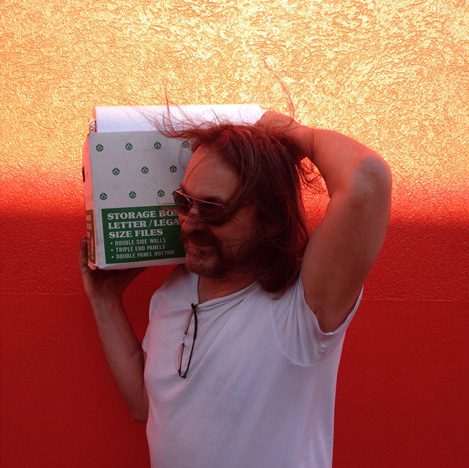
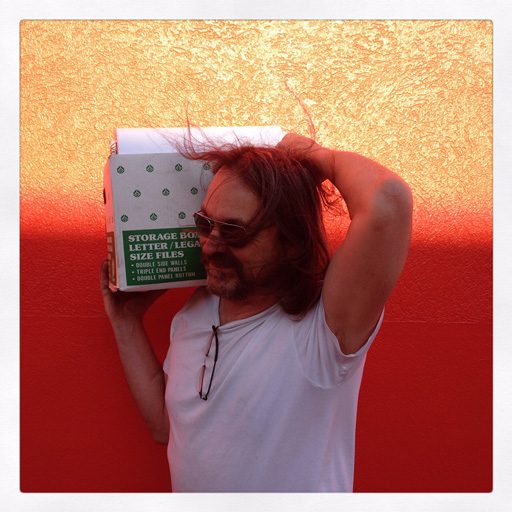
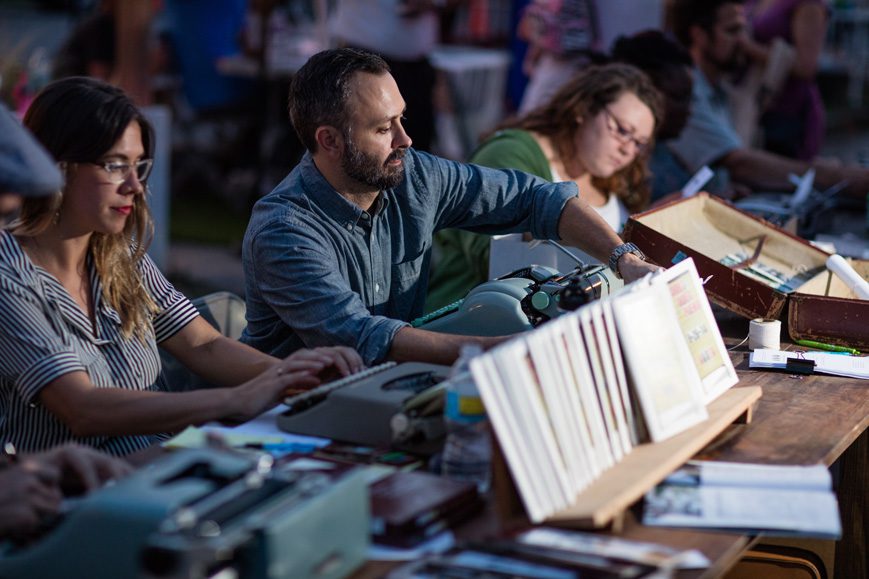
Chad Reynolds (center) writes made-to-order poems at a recent H & 8th event. Photo by Brent Fuchs.

[dropcap]What’s[/dropcap] on the menu today? Love and mercy? The promise of tomorrow? A sonnet with a side of iambic pentameter? Tennyson sauce or Whitman dressing? Not quite, but almost. It’s not Burger King, and you can’t always have it your way. And every poem cooked up by Short Order Poems is served well-done.

Short Order Poems sits at the corner of Hudson and Eighth Street during Oklahoma City’s popular H & 8th Night Markets. In the middle of the chaos created by 30,000 people, music, food, alcohol and stars, two poets – Chad Reynolds, 39, and Timothy Bradford, 45 – along with three or four guest poets, are creating food for the soul.

“It’s not like they’re bankers that think it’s fun to sit down and write poems. They’re poets. That’s what they are. This isn’t them trying to have a shtick. This is them looking for a great way to express, at the core, who they are. That’s why it works. It’s honest. It’s not about what sells. It’s them doing what they love. What they love is writing,” says H & 8th Market Night organizer Brian Bergman.

Waiters take orders – topics – and briskly deliver them to the waiting cooks. Patrons won’t hear the sizzling of a grill, but they will hear the clicking and clacking of the keys of a manual typewriter, perhaps a Hermes 3000 or an old Smith Corona. Nor will customers hear a bell signaling that their order is up, but if one of the poets is rolling, they’ll hear the ding of a manual typewriter that’s reached the end of a line.
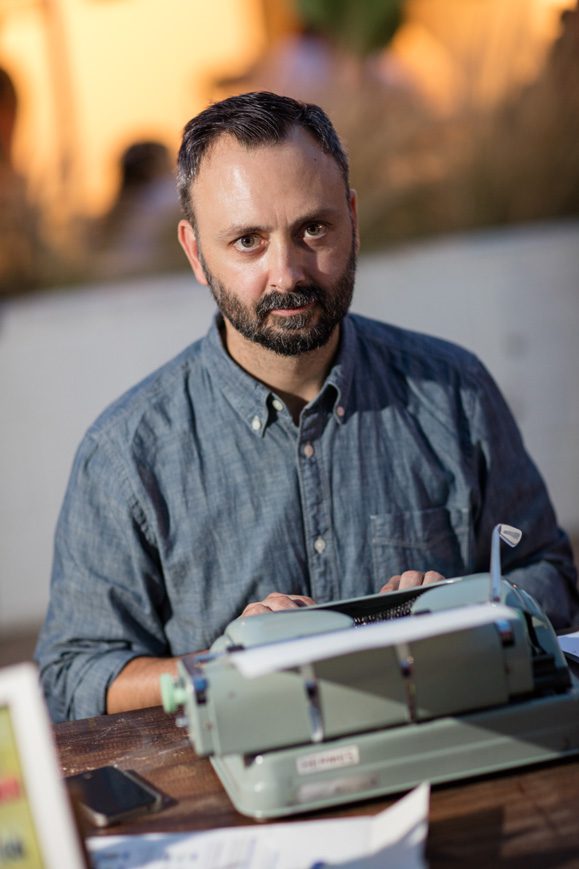
Reynolds is the author of Buenos Aires, a chapbook of travel poetry. Photo by Brent Fuchs.

Both native Oklahomans, Reynolds and Bradford are serious poets. Reynolds, an insurance broker by day, is the author of Buenos Aires, a collection of travel poems. He’s also published six chapbooks, completed two full-length manuscripts and been published in more than 30 journals and literary reviews, including Washington Square and Cutbank. His time with Short Order has given him more than 200 poems that he plans to revisit, more than enough for his third manuscript.

Bradford is the author of Nomads with Samsonite, a poetry collection published in 2011. His work has also appeared in several journals and literary reviews, including 42opus and Diagram. Bradford has served as the assistant editor of the Oklahoma State University literary magazine, Cimarron Review. With a Ph.D. in creative writing, he now teaches literature and composition as a visiting assistant professor at the university.

The poetic pair developed Short Order to feed Oklahoma City’s starving poetry community. It was an on-the-spot recipe hashed out in early 2014 at midtown Oklahoma City’s Elemental Coffee Roasters with its owner, Brian Bergman, also well-known as the organizer of H & 8th Night Market. He listened as the two tossed ideas back and forth for bringing poetry readings to Oklahoma City.

“It’s a constant struggle wherever you are, no matter how much money or pull you have, to get people to come out and listen to people reading poetry. We decided not to create that,” says Bradford. “We decided Oklahoma City’s not ready for that. Even if it was, that wasn’t what we wanted to do because it would just be the same thing we’ve seen everywhere else.”

As an aside, Reynolds mentioned something a friend of his, poet Kathleen Rooney, experimented with in Chicago. Rooney created Poems While You Wait, a public setting where writers craft poetry on the spot using manual typewriters and topics randomly taken from the crowd.

[pullquote]They had to stop taking orders early in the evening because they had more than they could do. That’s spectacular. It definitely surprised me.[/pullquote]“As Chad described Poems While You Wait, Brian’s listening, and you could just see that he was getting excited. He said, ‘That – that’s the idea.’ This was what pushed us to do it. Brian said, ‘If you guys can put this together, I’ll give you a table right there on the corner of H & 8th. He was willing to feature us at the heart of this festival. At that point, we couldn’t back down unless we were really wimps. What’s the worst that could happen? We go, we suck, nobody buys anything and we shut it down,” says Bradford.

Bergman, who also owns a branding company, Whiteboard Labs, is known around town as an idea guy. The enthusiasm he displayed masked a bit of hesitancy.

“I knew they were charging for the poems,” he says. “I wasn’t sure how people would react to it. This could be a runaway hit. Or it could be a slow slog up a trail. You never know. The first time they did it, they had a waiting list. They had to stop taking orders early in the evening because they had more than they could do. That’s spectacular. It definitely surprised me.”

The popularity they garnered quickly forced them to put basic economics into action. When demand exceeds supply, the price goes up. Every meal served by Short Order now costs $10.

“It started out at five bucks, and the demand was too high. We couldn’t meet it. A couple of times last year, we had to leave and fill orders at home, which was not fun. The last thing you want to do after spending five hours writing poems is to go home and write 10 more. So this was a very simple example of supply and demand. This was economics playing itself out in a field that is so non-commercial. It’s great. It’s lowered demand a little bit and allowed us to right-size ourselves,” says Reynolds.

Short Order Poems appears regularly at the H & 8th Market Night on the last Friday of every month, March through October. Now in its second year, Short Order’s popularity isn’t waning. The duo has performed at other events and venues and will appear in Tulsa in December, time and location to be announced.
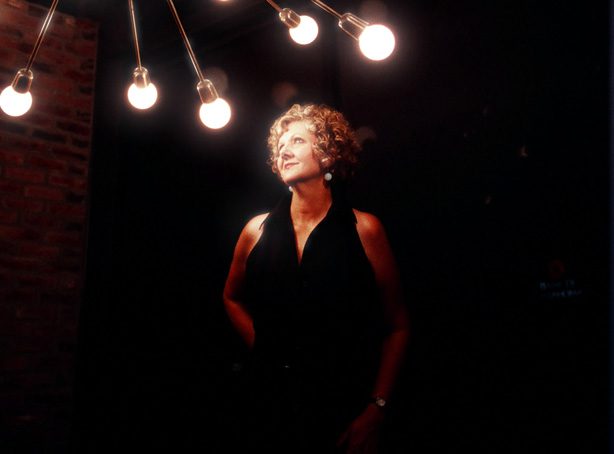

Swingin’ for a Good Cause

Vocalist Cindy Cain will lend her talents to this year’s Uncorking the cure, which raises money for the National Multiple Sclerosis Society. Photo courtesy Cindy Cain.

[dropcap]In[/dropcap] her years as a leading light on the Tulsa music scene, vocalist and songwriter Cindy Cain has never called attention to the fact that she suffers from multiple sclerosis. It’s not that she’s gone out of her way to cover it up. It’s just that she hasn’t made it a part of her public persona.

For that reason, most of the people who’ve seen her shows and bought her CDs have likely been unaware that MS has been a major factor in the choices she makes in her life and career. That fact goes a long way toward explaining why you haven’t seen her doing any club appearances for the past couple of years – especially since her favorite place to perform in Tulsa went out of business.

“Fatigue is probably the biggest and most invisible issue I deal with,” she says. “And due to that, I made a decision after Ciao closed [on Oct. 15, 2012] to just do special shows, like Janet [Rutland] and I did this year at SummerStage. I’ll do shows at the Jazz Hall of Fame again, too, but I’m now at a point where it’s just too difficult to haul my P.A. all over town. Most musicians know that you get tired of hauling your crap around; for me, it’s become so difficult that I don’t want to do it anymore.”

As she indicates, this does not mean that the days of catching Cindy Cain in concert are over. It just means that she’s going to be picking her appearances more judiciously, and they’re going to be a bigger deal. That brings us to her sole booking this month, as the headlining act for this year’s Uncorking the Cure event, set for Tulsa’s Cain’s Ballroom on Oct. 15. Begun in 2002 by Oklahoma members of the National Multiple Sclerosis Society, Uncorking the Cure raises funds that help improve the quality of life for Oklahomans afflicted with MS as well as assisting with research into the disease.

Named this year’s MS Ambassador, Cain is also serving on the steering committee for the event.

“This wasn’t really something I set out to do,” explains Cain. “Donna Leming, who’s a huge music fan as well as a good friend of mine, started having a group of our friends do the MS walks in Tulsa. Maybe you could say I was the inspiration, but she was the motivating force. She’s been doing the MS Walk for about seven years, and every year, she’s the one who’s continued to rally the troops. Because of getting involved with the walking team, I became more aware of the things the National MS Society was doing within Tulsa. Then, last year, I finally bought a ticket and went to Uncorking the Cure, the big fundraising event. The lady who sold me my house has MS, and she’s involved with the Society, and along with a number of other folks she said, ‘Oh, you should sing for us sometime.’ So it really just coalesced into this.”

[pullquote]When you listen to my original music, you can hear that it doesn’t come out of any one place,” she explains. “But it’s certainly Oklahoma-influenced, and partially country-influenced.[/pullquote]Because the venue is Cain’s Ballroom (named after former owner Madison “Daddy” Cain, to whom Cindy Cain is not related), the longtime home of western-swing king Bob Wills and his brother Johnnie Lee Wills, the board members suggested to Cain that she put together a band and program that fit the venue. It wasn’t much of a stretch for her to put a western-swing angle on the evening. Although she’s best known in town as a jazz and blues singer, Cain is the kind of artist who doesn’t consider any musical genre off-limits.

“The very first gig I ever had was when I was in the Peace Corps, in Yaounde, the capital of Cameroon, and I sang at a restaurant across from the U.S. Embassy, owned by a French-Canadian woman,” she recalls. “I sang with a house band that included a couple of members of the national orchestra. We did ‘The Lion Sleeps Tonight,’ ‘Your Cheatin’ Heart,’ ‘Walkin’ after Midnight’ and Roberta Flack’s ‘The First Time Ever I Saw Your Face.’ It was just a little bit of everything.

“Later on, when I moved to D.C., I knew I wanted to sing, so I went to an open-mic night at Whitey’s on Washington Boulevard, watched all the bands, picked out the best one – which was a country band – and went up and said, ‘You need a female singer.’ We did songs like ‘Mama Tried,’ with me backing up the male vocalist, and probably some Highway 101 stuff, because they were very big at the time. We rehearsed for a year, did one wedding, and then the band fell apart.”

Despite that, she says, her months of rehearsing with that group helped add another influence to her singing and songwriting, which she kept after returning to northeast Oklahoma in the early part of this decade. She’d actually been exposed to country much earlier, as a young girl growing up in Pryor.

“When you listen to my original music, you can hear that it doesn’t come out of any one place,” she explains. “But it’s certainly Oklahoma-influenced, and partially country-influenced.”

Western-swing music contains those same influences, along with others familiar to Cain: classic pop, big band, blues and jazz. And all but one of the members of the band she’s assembled especially for this event, the Red Hot Pokers, can boast of having impressive credentials in the genre. (The only one who doesn’t, Scott McQuade, is an internationally known jazz pianist whose skill and versatility make him a perfect fit.) The group includes fiddler Shelby Eicher, trumpeter Mike Bennett and trombonist Steve Ham, all current members of the high-profile Tulsa Playboys; bassist Dean DeMerritt, who toured and recorded with the veteran western-swing group Asleep at the Wheel; and drummer Wade Robertson, whose extensive credits include work with western-swing king Hank Thompson.

It wouldn’t be a Cindy Cain show, though, if she didn’t bend a few genres.

“We’ll probably do [the Bob Wills classic] ‘Take Me Back to Tulsa,’” she says. “But we’ll also do some Patsy Cline, Wanda Jackson and Hank Williams. We might even do a Hank Williams III song. There’ll be swing and waltzes and, you know, other things. To me, it’s like jazz, swing, western swing – how do you parse those away from one another?”

Before Cain and the Red Hot Pokers take the stage, Cain’s friend and fellow vocalist Janet Rutland will open with what Cain calls “a cocktail set,” backed by McQuade, DeMerritt and Robertson.

Lambrusco’z to Go caters the event, with wine from Calistoga Cellars as well as a silent and live auction. Cain plans to give all attendees two of her CDs, 2006’s In My Impala and 2009’s Live at Ciao: Rhythm and Romance.

The primary reason she’s throwing in the bonus discs, she says, “is that my window of opportunity for selling CDs has further diminished by the scaling back of my gig schedule. I don’t realistically envision being able to sell that many down the road, so what better community to give them to than those who support raising funds for an MS cure and for MS patients and their caregivers?”

Individual tickets are available for $125, with table reservations available as well. Those attending must be at least 21 years of age. For more information on this year’s Uncorking the Cure, visit www.nationalmssociety.org.

Young Talent

Kristian Doolittle is the top-ranked high school basketball player in the state and suits up for Edmond Memorial High School. Photo by Brent Fuchs.

[dropcap]When[/dropcap] he was just a toddler, Kristian Doolittle leapt as high as he could to pitch a full-size basketball toward a full-size goal, only for it to plop back down. Undeterred, he tries again and again, doing his best to keep up with his older brother, Kameron.

Doolittle is now known as one of the top-ranked high school basketball players in Oklahoma. It is apparent that the now-17-year-old, six-foot, seven-inch Edmond Memorial senior feels great about his accomplishments, yet he is very humble in speaking about it.

There are a lot of good players in Oklahoma, he says, so to be top ranked is pretty cool and feels like an accomplishment.

Basketball isn’t the only extracurricular activity in which Doolittle has exceptional abilities. He began his athletic career playing football, because his brother Kameron played. In fact, he says he always wanted to try every sport his brother played. He tried baseball as well, but he remembers getting bored in the outfield, so he would watch other games going on behind him.

In those earlier years, it was already apparent Doolittle was very athletic, as he attended many camps, played on several teams and won multiple awards while doing so. Because of his height and talent, he would often be placed on older teams.

When he talks about his involvement in those camps and teams, Doolittle speaks highly of coaches who have taught him much from such an early age. He recognizes the coaches from his early years as having great influence on his path. He recalls playing on one little league basketball team in particular; nearly every single boy from that team has gone on to experience great success and recognition among high school basketball players in the state.

His involvement in most other activities and hobbies eventually took a backseat to basketball. Doolittle admits he’s not too sad about having put piano aside. He did, however, play football through his freshman year. He played quarterback and was named MVP that year. Unfortunately, his football career came to a halt when he broke his ankle playing summer basketball the summer before his sophomore year.[pullquote]I always tell Kristian that you’ve got to play your best because you never know who’s watching.[/pullquote]

Although he excelled in football, “I didn’t like getting hit that much. That was the only downside,” he says.

But by that point, the University of Oklahoma had discovered Doolittle’s basketball talent. It just feels like a second home, really.

He has committed to play for OU in 2016. When he was a freshman, Doolittle was already playing on the varsity basketball team at Memorial. Recruiters from OU came to watch another teammate, Jordan Woodard, and discovered Doolittle, as well.

“I always tell Kristian that you’ve got to play your best because you never know who’s watching,” says Denise, Doolittle’s mother.

Since being recruited by OU, he has become familiar with the basketball program there. He’s met the coaching staff and players, gone to games and has gotten comfortable with the idea of Norman being his future home.

That’s why this past year, Doolittle, an Oklahoma State University fan, had no qualms about fully committing to OU.

“They’ve always been talking to me since my freshman year,” he says. “It just feels like a second home, really. ”

Despite that, he finds humor in the fact that his brother, Kameron Doolittle, grew up rooting for OU but now plays wide receiver for OSU.    

He ultimately wants to make it to the NBA. Although he doesn’t have a lot of time to watch NBA games, he is inspired by LeBron James’s work ethic and Kevin Durant because “he’s just good,” he says.

Of course, there is still his senior year to focus on, and he has goals for his team and for himself. Edmond Memorial was ranked number three this past year in 6A basketball. This season, Doolittle hopes the team will win the state championship.

As for himself, he knows he must stay healthy so that he can continue to improve. With that, it’s obvious not much has changed since he was a toddler. He may not be trying to keep up with his brother these days, but Doolittle still strives to be better each and every time he plays.

The Science Of Studying Sasquatch

squatch

[dropcap]It’s[/dropcap] shortly before midnight on a foggy fall evening in 1988. My mother is driving us through the backcountry roads of Newalla. I am dozing in the back seat, when suddenly I lurch forward as my mother slams on her brakes, screaming wildly. Being a supportive daughter, I start in with my own bloodcurdling shrieks. Then, as abruptly as she began, my mother goes silent and calmly resumes driving. When I can open my mouth without my heart jumping out, I demand to know what’s going on.

“Oh nothing, baby,” my mom says, serenity personified. “It was just a bigfoot that ran across the road.”

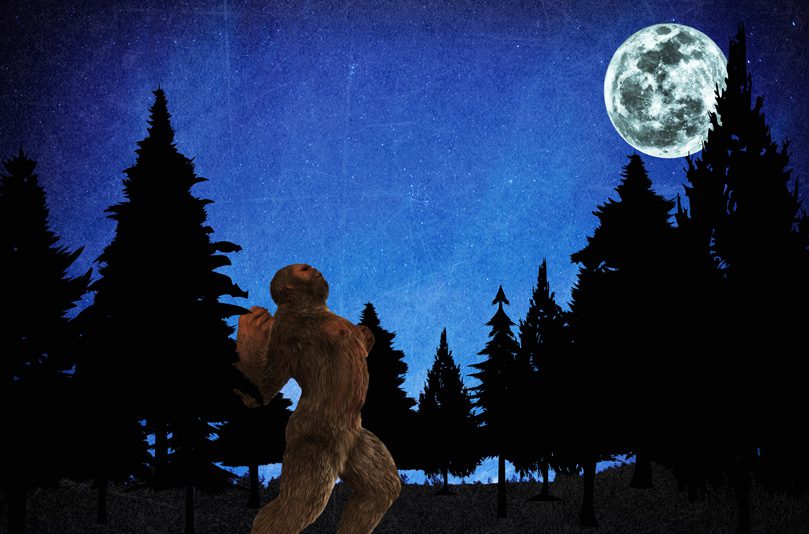
Like many Oklahomans, I have grown up with tales of the creature. In southeastern Oklahoma, he is known as the Boggy Bottom Monster. Others call him bigfoot, sasquatch, hairy man, even the North American wood ape.

Recently, the North American Wood Ape Conservancy, a nonprofit organization of scientists, naturalists and investigators, published a comprehensive 230-page report on their findings from a long-term research study conducted regarding mysterious primate activity in Oklahoma’s Ouachita Mountains. While definitive results from photograph and lab analysis failed, the research group documented thousands of incidents, including rock hurling, knocking on wood and various unusual vocalizations, of which the group obtained several audio clips.[pullquote]With more and more people moving outward into those areas, more encounters with bigfoot is inevitable as humans encroach on [the creature’s] habitat.[/pullquote]

So how exactly does one “research” bigfoot? And why is Oklahoma such a hotbed of sasquatch activity and folklore?

We asked D.W. Lee, executive director of the Mid-America Bigfoot Research Center (MABRC). Although ostensibly a regional organization, it has attracted more than 500 members from three continents, seven nations and 42 states. Each year at the beginning of October, the center hosts the Oklahoma Bigfoot Symposium in Stilwell, where it presents the results of research and other expeditions in the quest to investigate the creature’s existence.

“I have been unfortunate enough to have 25 sightings of the bigfoot, out of being in the woods nearly 4,000 times during my time as a researcher,” Lee says. “I say ‘unfortunate’ because once you see these animals, you become obsessed with seeing them again.”

Lee attributes the high rate of bigfoot sightings in the state to a couple of different factors.

“Oklahoma has a larger concentration of lakes, watersheds and forests than many other states,” Lee says. “With more and more people moving outward into those areas, more encounters with bigfoot is inevitable as humans encroach on [the creature’s] habitat.”

A self-described armchair researcher and lifelong bookworm, MABRC researcher Glen McDonald first became intrigued when, as a teenager, he saw an unidentifiable creature stand up from a creek bed.

“I couldn’t see it clearly since I’d left my glasses at home,” McDonald says. “Whatever it was really scared the guys I was with.”

McDonald was hooked.

When asked why Oklahoma is indeed “Bigfootville,” McDonald agrees with Lee.

“I think this may be because Oklahoma has a lot of great habitat if bigfoot actually exists,” he says. “Oklahoma has a lot more water available year round in reservoirs and farm ponds than it did 100 [years] ago, for instance.”

He also believes that an upsurge in deer populations might make the Oklahoma forests and mountains attractive real estate for the creature.

Through their years of research with the MABRC, Lee and McDonald have made surprising discoveries about the cryptid during their numerous expeditions into some of the most remote areas of the state. And while McDonald admits that an expedition can be a great reason to go camping, both he and Lee emphasize that there is a lot more involved than just setting up tents and hunting for footprints.[pullquote]A creature similar to bigfoot was part of American Indian culture long before Columbus supposedly discovered our continent.[/pullquote]

“An expedition is not just an impromptu affair,” Lee says. “It’s planned out and detailed down to the last minute.”

Each potential research expedition, Lee explains, begins with scouting a location. When deciding on a potential area, teams search for such telltale signs as wooden structures and footprints and talk to locals about sightings.

“An expedition brings multiple researchers together, with their resources and with a common goal in mind,” Lee says. “It usually takes about two months prior to plan, coordinate and gather the resources together. Maps and aerial photos are studied, moon phases, sunset and sunrise [times] are collected. Sighting reports for the general area are reviewed. Several meetings are held by all the attendees online.”

Once an area is suspected as a likely spot for an expedition, the team conducts further research, setting up listening devices and recorders and thermal cameras. If the area shows great potential, a full expedition may be planned. Researchers arrive and set up trail and thermal cameras, audio recorders, parabolic devices and sometimes even military-grade motion sensors, Lee says.

Daytime activities include searching for tracks or other physical evidence. In the evening and nighttime hours, team members set up listening posts in the area and take four-wheelers into the woods. Even a short expedition of a few days can lead to hundreds of hours of video and audio that, along with any physical specimens collected, must be analyzed by members at the center.

“I’m still a skeptical agnostic on the existence of bigfoot,” McDonald says. “I’ve met a lot of folks who’ve had sightings. I don’t think everyone who has had a sighting can just be cynically dismissed as a nutcase. A creature similar to bigfoot was part of American Indian culture long before Columbus supposedly discovered our continent. I got involved in bigfoot research after I got acquainted with Ph.Ds, former police officers and a wide variety of other folks who are researching the bigfoot enigma. I know a lot of folks who absolutely believe that bigfoot exists.”

For those interested in conducting their own research expeditions, Lee has some words of wisdom.

“Bigfoot tends to stay close to water and food sources, and if you can locate good sources of this, you can find bigfoot activity,” he says. “Bigfoot is a flesh-and-blood animal, that is, a primate. No DNA study has since proven their existence, contrary to some folks who claim it has. They also do not cloak, disappear into portals into other dimensions or ride in UFOs.”

For those interested in learning more, the MABRC has a comprehensive database of bigfoot research and information at www.mid-americabigfoot.com.

Haunted History

FortReno

[dropcap]Fifteen[/dropcap] years ago, the individuals who maintained the Fort Reno property needed to come up with a way to raise enough money to restore the timeworn buildings while sharing the fort’s history with the public.

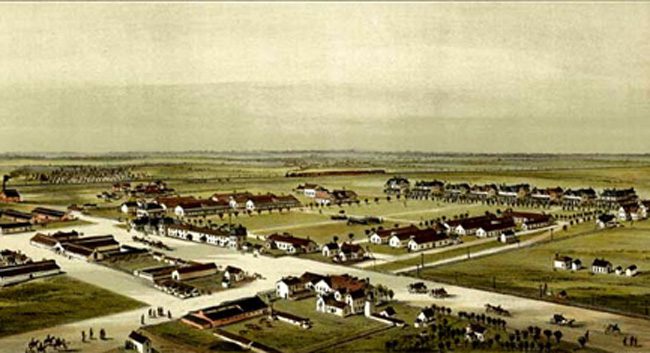
“Fort Reno was a military camp in 1874 and was established as a military post in February of 1876,” says director Karen Nix. “Fort Reno and the Darlington Agency, which served the Cheyenne and Arapaho Indians across the Canadian River, together preserved the peace and directed the orderly transition of this part of the Indian Territory from reservation to individual farms and ranches. Troops from Fort Reno supervised the first great Land Run of 1889 that opened the Unassigned Lands for settlement.”

With that history spanning more than a century, Fort Reno has had its fair share of suicides and unsolved murders, and those unsettled souls have piqued the interest of the living. So, in 2000, the ghost tours began, bringing in guests on the third Saturday of each month from March through October to witness the unusual occurrences.

For the last four years, those tours have been led by Grandma’s Paranormal Society. The group of volunteers has spent many hours investigating the site, comparing their findings to the fort’s documented history.

Paranormal investigator and tour guide Ruth Ann Crawford says the group has developed a relationship with some of the spirits and can count on them to make their presence known during the live investigations held on each tour. One such encounter occurred in the chapel.

“The chapel windows are at least 15 feet off the ground. In others words, so high that there’s no way a person could be standing there in front of those windows,” explains Crawford. “The person on the tour took a picture, and, very clearly, there was a human face and upper chest looking in that window. Not only was it so clear that you could see all the details, we believe – compared to the pictures that we have seen there at the fort – that it was Ben Clark. Ben Clark was a big part of the fort’s history, and he committed suicide here at the fort.”

The investigators strive to be as accurate as possible as they intertwine history and mystery to entertain and intrigue the guests – even the non-believers.

The Ghost Wears Green

ghost
Artwork by Ben Albrecht.

[dropcap]A[/dropcap] chilling ghost story always starts with a mysterious, gruesome murder. This is certainly the case of Avard’s Woman in Green.

Mildred Anne Reynolds, formerly Anne Newlin, was a new wife, married to Dee Reynolds, the basketball coach at Avard High School, in Woods County.

The morning of March 13, 1956, she was following her usual routine of driving into Alva for her classes at Northwest Oklahoma State University while wearing a green dress. But on this day, she left class early, driving back to the couple’s farmhouse located just north of Avard, about 15 miles away.

Hours later, Anne Reynolds’ car was found less than two miles from her house, smoldering from a fire. Her body was charred beyond recognition. The fire had been so intense that her right leg from the knee down had been burned off. One of her shoes, spattered in blood, was located 250 feet from the car, and her coat was 10 feet from the vehicle. There was an extra set of car tracks near the scene.

Her death certificate, No. 005081, has both homicide and accidental death listed as causes of death. It does state that there “was a lots of blood stains” at the crime scene. But investigators in 1956 noted the woman had previously suffered from dizzy spells, and there was the possibility the brake drum overheated, ignited the fuel tank and set off an explosion.

Woods County Sheriff Rudy Briggs Jr. still has three pieces of evidence from the crime scene: a gas tank from the car, a limb from where the car supposedly hit a tree, and Reynolds’ rosary beads.

Briggs says it is a cold case that his office is still treating as a homicide.

Lifelong Avard resident Nan Wheatley, now in her 60s, will tell visitors that somebody local did it.

She also will tell visitors she met Reynolds 46 years later.

Wheatley operated a café called Vina Rae’s Grill in the former Avard High School gymnasium when she says the headless figure of a woman came through the walls and then vanished. That was on Memorial Day 2002.

Culture1015-3

Wheatley claims to have heard unexplained noises and seen wisps of an image passing by the view of students when the building was the high school gym where Dee Reynolds coached. Earlier in 2002, a café employee attempted to serve a woman in a green dress at the counter; the employee looked away to grab a pad to take the woman’s order, but when she turned back, the woman was gone.

Wheatley claims she would hear sounds resembling someone walking with a peg leg in another part of the old gym, only to find no one there. She only read later that Reynolds’ leg had been burned off.

The reported sightings led paranormal groups from both Tulsa and Enid to record what they saw in the gym on Halloween night 2003. Glowing orbs and a faint image at the end of the hallway in a photo was the extent of the two groups’ findings.

Wheatley says the two investigating groups told her there was more than one ghost in the old gym. One is a male ghost named Isaac, who Wheatley claims tried to push her down a flight of stairs. She says the paranormal groups chased him off to a nearby vacant building.

Most of the businesses in Avard have closed up. The grain cooperative closed some time ago, and with no one left to serve, Wheatley closed her café five years ago.

Today, 26 people live in Avard among the vacant buildings of the town. The gym where Dee Reynolds coached after the mysterious death of his wife is locked up and rarely entered – the building’s contents left alone to the creaks and moaning caused by the wind.

An Inspirational Voice

Photo by Stephen Jones.

[dropcap]“[/dropcap][dropcap]Do[/dropcap] you feel big and strong when you make me feel small. Does it give you joy to see me when my back’s against the wall. Your tongue cuts like a razor with every word you say. Just know before you judge me, that God makes no mistakes. I am beautiful.” These opening lyrics of 18-year-old, Tulsa native Anastasia Richardson’s “I Am Beautiful” is her call to end bullying and a message of hope for all those who’ve felt the devastating effect of its grip and aren’t sure where to turn.

In April, “I Am Beautiful” arrived on three national digital music charts – the Independent Artist chart, the Hip-Hop/R&B chart and the Rock chart – an indication that her message is being heard, an anthem for many in helping to overcome hurt.

An avid singer-songwriter, Richardson hopes her music will encourage others to learn to use their voice instead of hiding it inside, she says, something she did before being inspired to stand up for herself and others going through a similar situation.

During Richardson’s Freshman year at Edison High School, she suffered the crippling control that bullies many times obtain over their target. Richardson often spoke with her mother, Susan Dale, about her experiences at school, but Dale didn’t know how bad it was until her daughter wrote, “When can I stop being bullied on” on a social media site. With the help of the school dean, the problem was resolved, but that wasn’t enough for Richardson. Her dreams were on a much larger scale: sharing her story in hopes it would inspire others. And, it was remembering back to a Justin Bieber concert the year before that drove her momentum.

“[He said to the crowd], ‘If you didn’t believe in me, I wouldn’t be performing in front of you guys,’” Richardson recalls. “That really engaged me.”

That fall, Richardson, in the 8th grade, joined the school chorus. She wrote in her journal, where eventually all her creations would find birth, that she loved singing, and she wanted her songs to mean something. “Note to self,” she wrote. “Write feelings and what happens around me. Maybe I will find something that inspires me.”[pullquote]Earth is raw, and we’re going to make gems out of raw stones.[/pullquote]

Richardson’s first encounter with bullying at Edison began shortly after. And, like she always did, she journaled her experience, saying, “Music is my only friend … hate school.”

A few months later, Richardson told her mom, “I’m going to be a country/pop singer. I’m going to write songs that inspire others and have my first album out in five years.”

“She took it by the horns and ran with it,” Dale says of what happened next.

After one of Richardson’s Youtube videos was retweeted by N’Sync’s Lance Bass in 2013, Curt Ryle, a Nashville producer (originally from Oklahoma) happened upon it as well. Ryle would become another influential force behind Richardson’s success, and while collaborating on “I Am Beautiful” with Ryle, Richardson began molding her talent into other powerful compilations.

Richardson’s first album, I Am Beautiful was self-released in September 2014, three years short of her five year goal, and sharing her story online leading up to its release, she already had 40,000 followers on Twitter by the time she debuted.

“Where Would We Be,” another of Richardson’s pieces on the album that reached the charts, shares her appreciation and gratitude for the military, saying, “Where would we be … without American soldiers who die for you and me. … They sacrificed, ‘cause freedom isn’t free.”

“We’ve had some people point out, ‘That’s my son … that’s my husband,’ Richardson says of her music video made for the record.

Powerful words from such a young soul, Richardson’s music always seeks to connect with its listener, to dissect important and relevant issues and lend a supportive message. Other songs off Richardson’s album include “Big Bad Wolf,” a rebel song about teenagers’ relationships with their parents; “Motions,” about all the things you go through in middle and high school, “boys just don’t get it sometimes,” Richardson says; and “I’ll Do Anything,” a song she wrote for a friend who was struggling with a relationship.

“I pick them up from things I’ve been through,” she says of her lyrics. “Things I hear going on. … I’ll be at a restaurant or laying in bed, and something will pop in my head.”

Her mother recalls Ryle once asking her daughter what inspired her with some notes they were working on, and she replied, “I was watching this movie, and it needed a better theme song.”

Wherever it is that her inspirations come from, Richardson is making a difference, and she’s excited she can encourage others through her passion.

“Music is just my everything,” she says.

Currently working on a new album set to release next year, her ambition offers other exciting goals to work toward.

“Two years, perform in Madison Square Garden and [London’s] Wembly Stadium,” she says. “Five years, go anywhere in the world to perform. To be able to sell those shows out and tell my story.”

In September 2014, along with the release of I Am Beautiful, and with the help of Ryle, Richardson created Earth Made Records, her own record label.

“She said, ‘Earth is raw, and we’re going to make gems out of raw stones,’” her mother recalls of naming the label.

For now, Richardson is focusing her efforts on October: anti-bullying month. She hopes all the TV and radio stations will help her on a campaign to combat bullying by playing “I Am Beautiful” each day throughout October. She and her mother are tackling that goal one email at a time.

https://www.youtube.com/watch?v=_YUSJj_l3Ts

Life In Full Speed

Joe Andoe’s art is inspired by his early years in Tulsa. Photo courtesy Joe Andoe.
Joe Andoe’s art is inspired by his early years in Tulsa.
Photo courtesy Joe Andoe.

[dropcap]Joe[/dropcap] Andoe no longer lives in Tulsa, but a little piece of Tulsa resides in everything he paints.

Take one of his more recent exhibits, Super Highway, for example: Andoe used images from Google Street View as a direct inspiration for characteristically stark landscape paintings of places he remembered from his past, growing up in the 1960s and ‘70s in an east Tulsa neighborhood that never seemed far from undeveloped fields full of horses.

This particular approach to the Internet – using it “like a periscope to look at these old places that haven’t changed much,” he says, save perhaps for the broadband cables that convey the images themselves – is merely the latest iteration of an artistic process that seems to be perpetually gazing back into a specific time and an even more specific geographical location.

“Tulsa is still my home, even though I have lived in New York for 32 years,” he says.

But the path from the lonesome roads of east Tulsa to the fashionable art galleries of the Lower East Side was never an easy one, nor was it always paved with the most sober of intentions. Andoe’s 2007 memoir, Jubilee City, details a life of drug- and alcohol-related experiences, relationships with beautiful but emotionally unstable women and a tendency toward self-destruction which, more than once, came close to costing him his career, but which he has since succeeded in conquering.

Born in 1955, Andoe began drawing extensively early on – a habit shared by most kids, but with Andoe, it gradually took the shape of something greater, persisting as childhood gave way to the teens against a backdrop of sex, drugs, and rock ‘n’ roll.

[pullquote]My story was just so much more interesting than some kid whose parents drove him down the Merritt Parkway and set him up in a loft in Tribeca,” he says. “I was blown away to meet guys who had never held a shovel or even knew how to drive.[/pullquote]Andoe’s book recalls a pre-digital era when young adults seemed to live more in the present moment, determined to find whatever forms of physical pleasure life had to offer them. He writes of driving to the outskirts of town with an older friend to get drunk on cheap wine at age 14, concluding, “At last I had mastered the low art of coming unmoored.”

A later experience, hitchhiking from Tulsa to the Mexican border near the end of his high school days, feels like something out of Jack Kerouac’s On the Road.

“I remember that I was lucid and in the moment, and how flat and warm I-35 was against my back, and how big, wide, and deep the south Texas sky was and how I had never seen so many stars, and how I had never been so free,” he writes.

Meanwhile, Andoe’s family and friends and classmates continued to respond favorably to his drawings – all the way up to his time at Tulsa Junior College, where he initially majored in agricultural business with the intent of opening a feed store. Faring poorly in those classes, but wanting to stay in school because he had a new girlfriend there, Andoe changed his major to art.

A significant moment occurred when his art teacher hung up students’ still lifes in the classroom, and Andoe did not see his among them. He knew something was going on, he says.

“I asked why he didn’t hang my still life up, and he said it stood out too much,” Andoe recalls.

From there it was on to the University of Oklahoma’s art school. In Norman he met the woman with whom he would share a troubled marriage and relocate to New York City, where further misadventures lay in store, including tragicomically abortive attempts to establish a home in nearby Jersey City.

The thought of being ashamed of his origins never occurred to him, he says; in fact, his roots played to his advantage. There are even points in his literary self-portrait where he refers to himself in the third person as a “cowboy.”

“My story was just so much more interesting than some kid whose parents drove him down the Merritt Parkway and set him up in a loft in Tribeca,” he says. “I was blown away to meet guys who had never held a shovel or even knew how to drive.”

His reception was, at least for a time, less favorable in his own state. Back in Tulsa, years after he had accumulated a body of work and made a name for himself, the Philbrook Museum of Art refused a gift of one of his paintings. He attributes this to a lack of willingness to accept artists from lower socioeconomic backgrounds.

[pullquote]I know what it’s like to own things. I know what it’s like to spend money. I know what it’s like to buy cars by impulse. And that’s all overrated.[/pullquote]“I guess it would have seemed weird to me, too, once upon a time to see a guy from east Tulsa calling himself an artist,” he says.

But he thinks that Oklahoma is changing for the better as far as those attitudes are concerned. His work eventually appeared at Philbrook as part of a traveling show comprised of still lifes from New York’s Metropolitan Museum of Art.

So goes the upward trajectory of Andoe’s life story – and if the cinematic potential of that story has yet to be realized, it is not necessarily for lack of effort. A condensed version of the book nearly saw life as a movie – not so much A Memoir at Full Speed as A Memoir on Crack, Andoe says – but, after various fits and starts, the project failed to reach fruition.

Fellow Tulsa native Larry Clark was slated to direct, he says.

“He got me to write the screenplay so we didn’t lose control of the story,” he says. “Just like a couple of Okies, we got the same lawyer, a Hollywood lawyer that we were sharing, so we were on the same team, you know? But it just didn’t happen.”

Andoe is a man of the 20th century who made it, against improbable odds, to the 21st with body intact and mind expanded. He is also an artist who gained international recognition through sheer force of creative will – a testament to the idea that, even in a crowded field like professional painting, success may be achieved on merit alone, and not just as a result of knowing the right people or being born into the right milieu. Viewed from a certain angle, his life assumes Horatio Alger-esque dimensions.

“Nobody really gave anything to me,” he says. “I never expected it. Nobody ever gave me a thing besides my folks.”

Now approaching age 60, he is in a position to look back as one of the lucky ones. A question naturally arises as to what advice he might dispense to young, aspiring artists.

“Don’t do it,” he says, tongue at least partly in cheek, and knowing full well that people will ultimately do what they want, that any valid art inside of a person will find its way to expression.

What makes him happy now, he says, are the simpler things – seeing his children, talking to his friends, working.

“I know what it’s like to own things. I know what it’s like to spend money. I know what it’s like to buy cars by impulse. And that’s all overrated,” he says.

“Maybe that’s a piece of advice in itself,” I suggest.

“I guess so,” he replies, toward the end of a conversation in which no attempt had been made to hide his Oklahoma accent.

Happening

shutterstock_100336682Because Science

Peter J. Heinzelman, an associate professor in the Department of Chemical, Biological and Mechanical Engineering at the University of Oklahoma, was the recent recipient of a $75,000 grant from the Oklahoma Center for the Advancement of Science and Technology to further study and develop a new therapy that may address Alzheimer’s disease by destroying plaque that builds up on the brains of patients. The treatment, which utilizes biopharmaceutical proteases, if effective, would have lower costs with a more effective outcome compared to current therapies available.

Go Fly A Kite

When you think kite-flying in Oklahoma, the first place that comes to mind is Enid, right? The northwest Oklahoma city will welcome back the shutterstock_101193772American Kitefliers Association’s national convention Sept. 28-Oct. 3. The convention is an annual gathering of kite enthusiasts, artists and competitors and is one of the largest kite gatherings in the world, according to Marcy Jarrett, director of Visit Enid. The city hosted the convention for the first time in 2012. American Kitefliers Association director Mel Hickman says the hospitality the group received in Enid was a primary factor for the convention’s return. During the convention, the association will have flying exhibits open to the public, including mass ascensions each day with more than 100 kites. Kite makers will vie for top prize in beauty and construction. For a complete itinerary, visit www.visitenid.org.

brushWhat She Shed

If several hairs come out when you take down your ponytail, don’t freak out: According to the American Academy of Dermatology, it’s normal to shed between 50 and 100 hairs a day. Shedding more hair than this could mean that a person has telogen effluvium, or excessive hair shedding. Causes can include dramatic weight loss, giving birth, stressful events, high fever or a recent operation. If excessive shedding does not correct itself within six to nine months of these events, it’s best to see a doctor.

Time For The Circulator

Tulsa Transit recently launched its latest downtown circulator, The Loop, a bus that will run Fridays and Saturdays from 5 p.m. to 2 a.m. A sleek, black exterior, sporting LED lights and a sound system within, The Loop, previously known as the downtown trolley, costs 25 cents to ride; if you show your receipt from a downtown business, the ride is free. For more information, visit www.tulsatransit.com.

bed

Pillow Talk

Sleepless nights can have many causes: stress, illness, jet lag, poor mattress quality. It could also be a pillow. According to the Better Sleep Council, a nonprofit organization dedicated to education about sleep quality, a pillow should hold the head in the same relation to your shoulders and spine as if you were standing with correct, upright posture. That means a pillow should have adequate mass, density and support to do its job correctly. The type of pillow that’s best depends on how one sleeps: A medium-firm pillow is best for back sleepers, while side sleepers will do well with a firm pillow. The Better Sleep Council says that generally, pillows should be replaced each year. If you can fold your pillow in half, squeezing out all the air, and it doesn’t spring back to shape, it’s time to replace.

Museum To Go

Gilcrease Museum now offers a mobile version of its brick-and-mortar establishment. Gilcrease on Wheels debuted last fall at the Poteau Upper Elementary School in tiny Poteau, Okla. Then a pilot program, the mobile museum was so successful that it has been made a permanent part of Gilcrease’s educational outreach. Gilcrease on Wheels travels for presentations in third-grade classrooms across the state. An exhibit walk-through is available for fourth- and fifth-grade classrooms, after-school programs and community events.

Letter From the Editor

A Living Legend: Dr. Nazih Zuhdi. Read about how he blazed a trail of medical discovery in Oklahoma. Photo by Brent Fuchs.

[dropcap]This[/dropcap] month, we take a look at the pulse of Oklahoma.

I recently read a study that indicated that Americans, on average, have visited more than 18 doctors in their lifetimes. This sounds like a staggering figure, but when I think about all the times I have wandered into a doctor’s office for everything from a sore throat to a pain in my back, it seems very feasible. There are primary care physicians, specialists, sub-specialists, and on and on. We see doctors for both physical and mental health. Some of us require specific care for bones, for lungs, for the heart or for the brain.

The Centers for Disease Control report that the national health expenditures for 2013 were $2.9 trillion, a figure that accounted for 17.4 percent of the country’s Gross Domestic Product. Of that figure, roughly 20 percent was spent for physician and clinical services; the rest was paid for hospital care (32 percent), nursing home and continuing care facilities (five percent) and prescription drugs (nine percent). That’s more than $500 billion spent to either get us healthy or keep us there.

With all the money we spend on health care, it’s no wonder we want to find the best available. On page 71, we present the 2015 Best Doctors of America list, a guide to the top peer-reviewed physicians in the state. It’s a great resource for those who are looking for a physician for new or continuing care. Use the information however you see fit. If you see your physician in the list, congratulate him or her by tweeting a picture of it to @OklahomaMag, and we’ll share your photo with our followers.

Also in this issue: There’s nothing more satisfying to hear than a true success story, and, boy, do we have a success story for you. Dr. Nazih Zuhdi is an inventor, innovator and medical pioneer, and he’s spent most of his storied career in the Sooner State. Read about his discoveries and inventions and about the first heart transplant performed in Oklahoma, which was executed by Zuhdi and his staff at Baptist Hospital, now a part of INTEGRIS Health (“A Life Of Discovery,” p. 79).

We also look at five major health epidemics impacting Oklahomans and ways to mitigate or prevent them from getting worse (“5 Issues Affecting Oklahomans’ Health,” p. 64). These issues are momentous, but if we all do our part to make the healthiest decisions possible for ourselves and our families, we can begin to change the overall health of the state and its residents for the better.