


















Home Blog Page 590

The Emerald Isle

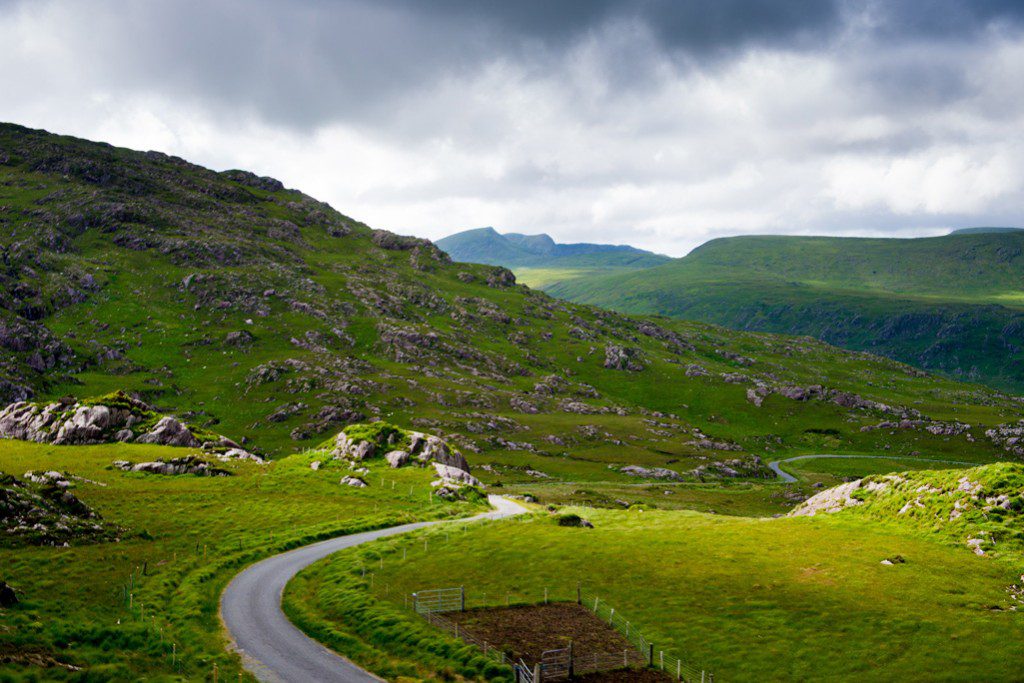
The scenic route of the Ring of Kerry – a 160 kilometer drive. Photo by Nathan Harmon.

Every year, Tulsa’s Honors Orchestra ventures to a new part of the world, and the only criteria is that the adventure take the orchestra to a place rich in musical history. Members of the orchestra have explored the tunes of Italy, Austria, Germany and Argentina. For a second time, the orchestra recently landed on the small island off the western coast of Great Britain: Ireland.

Photographer Nathan Harmon tagged along with his wife, Karen, and daughter, Lexy, to capture the imagery the trip offered. Karen, director of Tulsa’s Honors Orchestra and organizer of their yearly trips, learned everything from her mother, who started the Orchestra 35 years ago.

On this adventure, students between the ages of 7 and 25 traveled some 1,200 miles, by bus, across Ireland’s green landscape. They visited churches, famous cafés and restaurants, castles, farms and, of course, for those of age, pubs.

“It was a great chance to make sure Guinness was still making [its beer] right,” Harmon says, agreeing with the popular belief that Guinness tastes different in Ireland.

“They don’t pasteurize it like we do in the United States. They simply write the date it was made on the keg, and by the time that date comes around it better be empty because it will get thrown away either way,” he says.

The group touched down in Ireland at the Dublin Airport and spent the next nine days enjoying the food, scenery, music and history that Ireland has to offer, with stops in Waterford, Killarney, Co. Kerry, Galway and County Meath.

Welcome to Ireland

Upon the group’s arrival to Dublin, they met with a local guide for a Panoramic City Tour, which would introduce them to the principal sites the city has to offer: elegant Georgian squares, Trinity College, St. Patrick’s Cathedral (Ireland’s largest cathedral), Christ Church Cathedral and The Guinness Storehouse. The orchestra would delve deeper into these sites’ histories when they’d return to Dublin on the last leg of their trip.
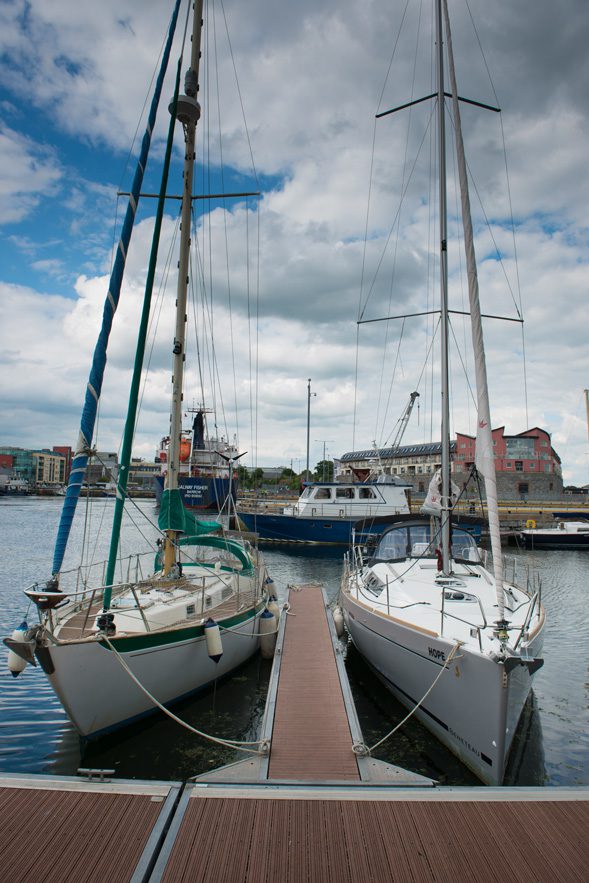
Boats in a sheltered port in Galway Bay. Photo by Nathan Harmon.

From Dublin to Waterford

On the group’s second day in Ireland, after a full Irish breakfast, many times including bacon, sausages, black and white puddings, eggs, vegetables and potatoes all fried in creamery butter with homemade Irish soda or brown bread for soakage, the group departed to Waterford. On their way, they made a quick pit-stop in Kilkenny to see the famous Kilkenny Castle.

Built by the Anglo-Normans in the 12th century, the castle stood tall and strong as the orchestra toured its grounds and renovated interior. Afterward, the group boarded the bus and traveled south to Waterford, Ireland’s oldest city.

After reaching Waterford, “By hook or by crook,” – a slogan coined by Henry II when searching for the city in 1170 – the group took a walking tour with a local guide. They sneaked through Waterford’s narrow alleyways that jet off its larger streets exploring the still present Viking culture that has survived the centuries. The group ventured to Reginald’s Tower, Ireland’s oldest civic building and part of the historic Viking Triangle, as well as the French Church.

Before leaving Waterford, the Orchestra toured the Waterford Crystal Visitor Centre, where they walked through the factory getting an up-close view of the centuries-old tradition of making Waterford Crystal. Blazing furnaces and wooden mold-making and crystal blowing production areas filled the space that creates the world’s most famous crystal.

Scroll left and right to see more photos in the gallery.

Waterford to Killarney

As the orchestra watched Waterford fade in the distance, the bus drove onward toward Blarney Castle, one of Ireland’s oldest and most historic castles situated in Blarney Village, just outside Cork City.

Here, the group joined tourists from all over the world in kissing the stone the castle is made of.

“It’s a tourist trap,” says Harmon. “We had to [kiss the stone].”

The current standing castle, built in 1446, is famous for its Blarney stone, The Stone of Eloquence. The legend says that the stone has the power to bestow the gift of eloquence on all those who kiss it. And that’s just what they did.

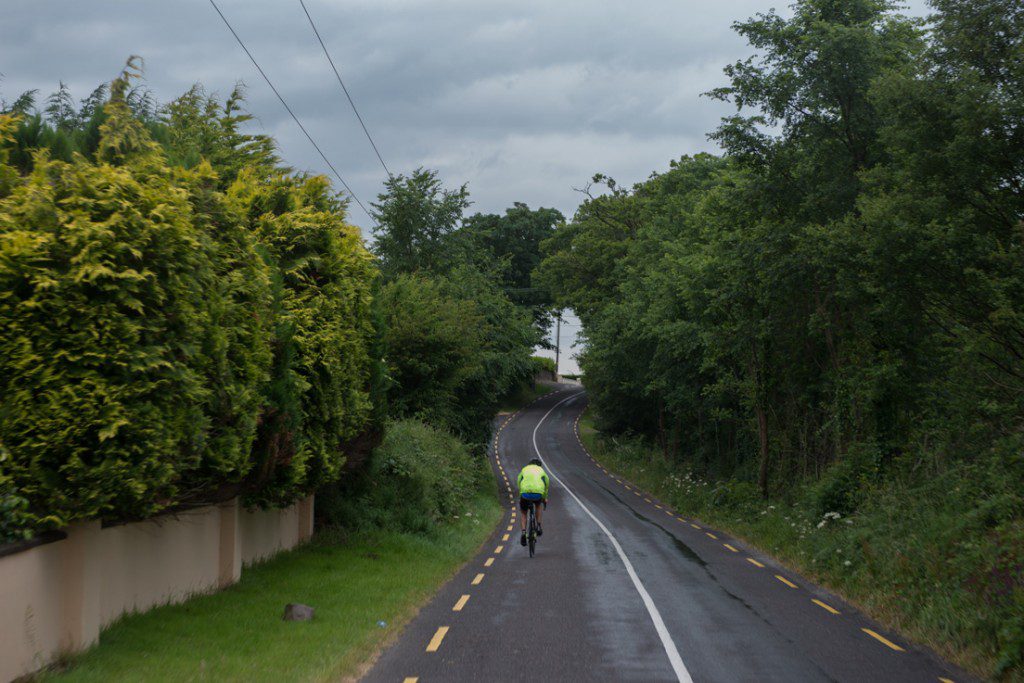
The route to Killarney ventured onto the Iveragh Peninsula, also known as the Ring of Kerry, where they enjoyed the most panaramic drive in Ireland: beautiful mountains, bogs, lakes and views of the Atlantic ocean stretch the 166 kilometer, roughly 103 mile, route.

Scroll left and right to see more photos in the gallery.
 

A cyclist enjoys a ride outside the Ring of Kerry near Killarney. Photo by Nathan Harmon.

Kerry to Galway

Traveling up to Galway, the group crossed River Shannon by ferry continuing to the Cliffs of Moher, whose sheer face dips 213 meters down into the waters of the Atlantic. Farther north, they entered the Burren Regions, famous for its limestone pavements, which have, over the years, eroded into a distinctive pattern.

Once in Galway, the group enjoyed dinner, music and entertainment at Padraicins Seafood Restaurant. Later, they visited the Connemara region. Made up mostly of the Twelve Bens mountain range, this region’s position on the Atlantic coastline also welcomes many creeks, bays and harbors for sightseers to indulge in.

Back to Dublin

As the group headed back to Dublin, they stopped by Rathbaun Farm, where the Connolly family farms its 80 acres. Sheep, cows and horses inhabit the land. Time spent here gave students a glimpse into the daily workings of an Ireland sheep farm.

Arriving in Dublin later that night, the group would wake the next morning to explore the famous, Gothic style St. Patrick’s Cathedral. One of the few buildings left from Medievel Dublin, the present structure was built in 1220. They also toured The Guinness Storehouse, Europe’s largest stout producing brewery, and its seventh-floor Gravity bar where they could sample “first-hand, the elixir of life – a pint of Guinness,” as the orchestra’s itinerary described it. To cap off the day, a dinner at Merry Ploughboy Pub awaited the group. The nightly shows are “undoubtedly the must-do Irish music experience on any Dublin trip,” the group’s itinerary also mentioned.
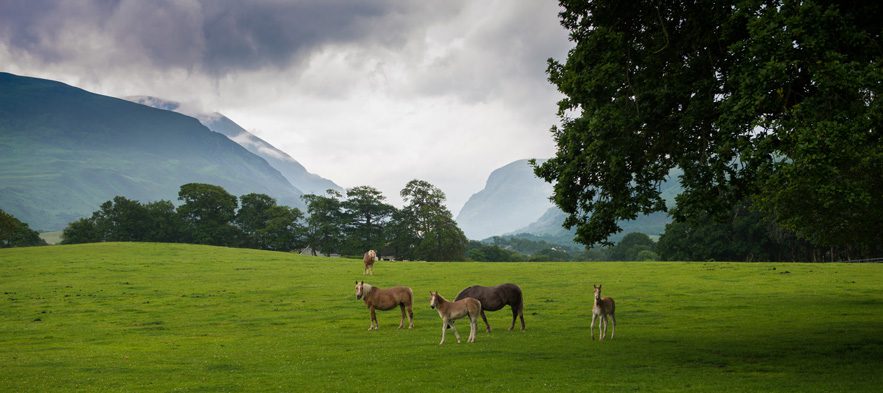
 Wild horses in Killarney overlooking the famous Gap of Dunloe in county Kerry, on the grounds of the Dunloe Hotel. Photo by Nathan Harmon.
Wild horses in Killarney overlooking the famous Gap of Dunloe in county Kerry, on the grounds of the Dunloe Hotel. Photo by Nathan Harmon.

Farewell to Ireland

The day of departure, the group said goodbye to Ireland in the only way they saw fit – a final Irish breakfast.

Tulsa’s Honors Orchestra’s next stop? Quebec City, Canada.

Bringing Light And Life

Photo by Shannon Ledford Photography.

California casual was the style these homeowners wanted to create with the renovation of this 1980s south Tulsa home.

“They were moving from a home that had a dark interior,” says Tracy Huntington, owner of ELEMENT360 Design.

The house was in desperate need of an update, especially to create the light and bright space the homeowners desired. The oak wood flooring, which ran throughout the open spaces, was refinished. Huntington had the extensive amount of light oak crown molding and paneling painted white. By using the same color on the trim and walls, the space appears even larger.

“One of the goals was to bring the outside in,” says Huntington.

Since the expanse of living room windows face the back yard, they were left without window coverings. Local artist and family friend, Kelsey Newman, custom painted tree silhouettes on opposite walls. Matching distressed wood consoles were selected to simulate the feeling of tree bark. Wooden benches look like tree trunks and are tucked under the consoles to provide additional seating, if necessary.

“Creating a conversation area in the living area was a main goal,” says Huntington.

So instead of a traditional sofa, Huntington selected four custom chairs from Norwalk Furniture that are upholstered in tan velvet with a soft white Mohair used on the back and seat cushions. To add an accent, she had pillows made for each chair.

Centered on the round custom white shag rug is the clients’ favorite piece among the new furnishings. The oversized 45-by-40-inch resin cocktail table, fashioned as a tree trunk, is finished in silver leaf.

Photo by Shannon Ledford Photography.

The white walls and trim continue in the adjacent dining room, and Huntington repurposed the existing brass chandelier, painting it white. The large wood table was fabricated in California and is surrounded by the homeowners’ existing white leather and chrome chairs.

The black-and-white geometric rug was selected for two reasons.

“Since the rooms are so light and open, I used some black in each room to help ground the space,” says Huntington. “Plus, it’s functional.”

With a family including four children, a dark rug in the dining room seemed practical. The two light wood consoles are from Noir Furniture, and the homeowners’ blue-and-black, round mirror is centered above.

Although the homeowners prefer no window coverings, because the dining room window faces the street, Huntington was able to keep the feeling of light but provide privacy by using cream silk linen for window coverings.

Photo by Shannon Ledford Photography.

In the entry area that leads into the living room and dining areas, Huntington utilized the homeowners’ existing black console and painted the existing brass chandelier white. She selected a pair of ceramic lights for the console.

“The owner likes the feeling of symmetry, and there are several areas where I’ve used matching furnishings and accessories,” says Huntington.

One exception is the series of varying sized dimensional round mirrors that Huntington randomly placed all the way up to the 12-foot ceiling, adding to the feel of the light, open space. The circular motif is repeated in each room with the living room area rug and dining room mirror.

“We enjoyed working with Tracy and her team,” say the homeowners. “Their light and airy design has brought a relaxing feel to our home.”

The 2015 Oklahoma Wedding Show

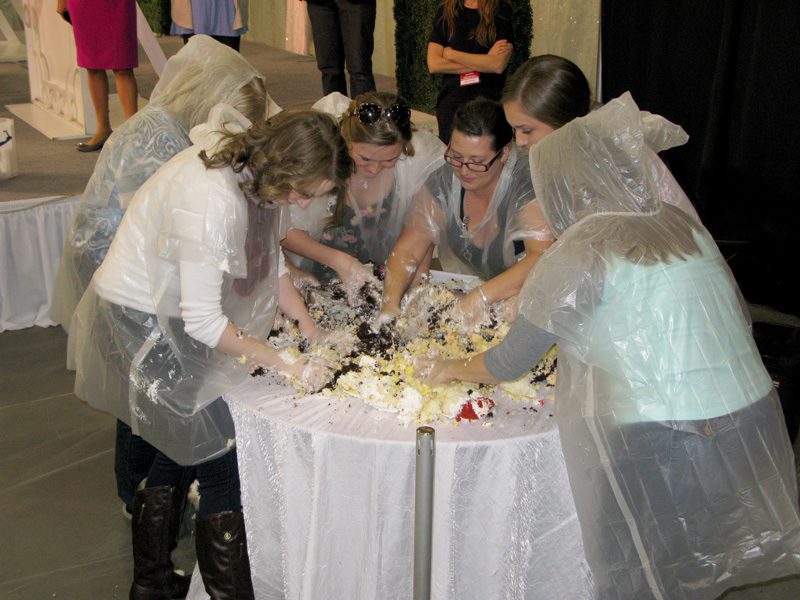
Six brides-to-be dove into the cake during this year’s cake dive, digging for the diamond ring that would secure their grand prize.

Hundreds of brides and grooms-to-be gathered in the Expo Square Central Park Hall to talk with dozens of wedding professionals at Oklahoma Magazine’s annual Oklahoma Wedding Show.

Scene

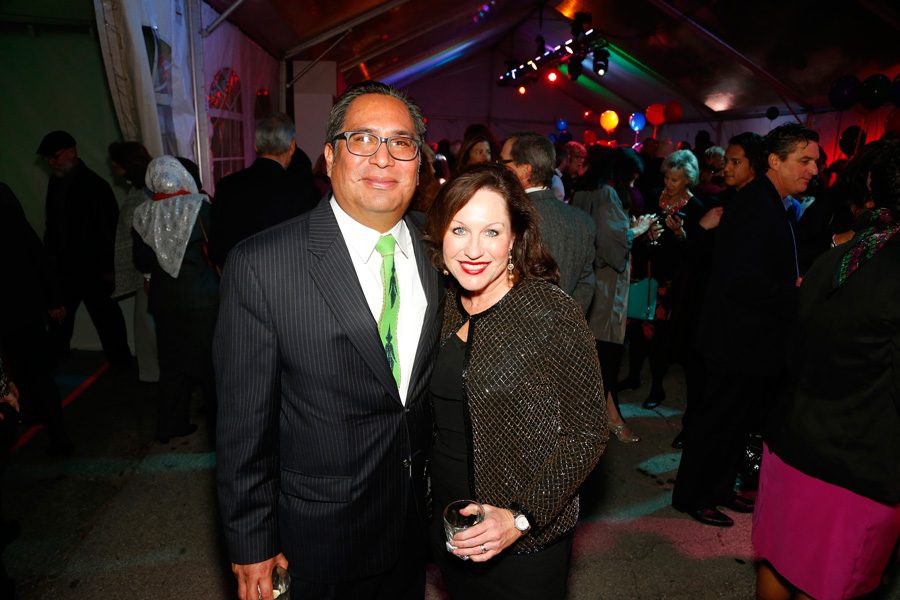
Honoree Alison Anthony and her husband, Mark Wilson, celebrate YWCA Tulsa’s Centennial year at the 100 Women with Moxie event on Dec. 2 at the DoubleTree in downtown Tulsa​.

Works In Progress

Photo by Cecil Cloud.
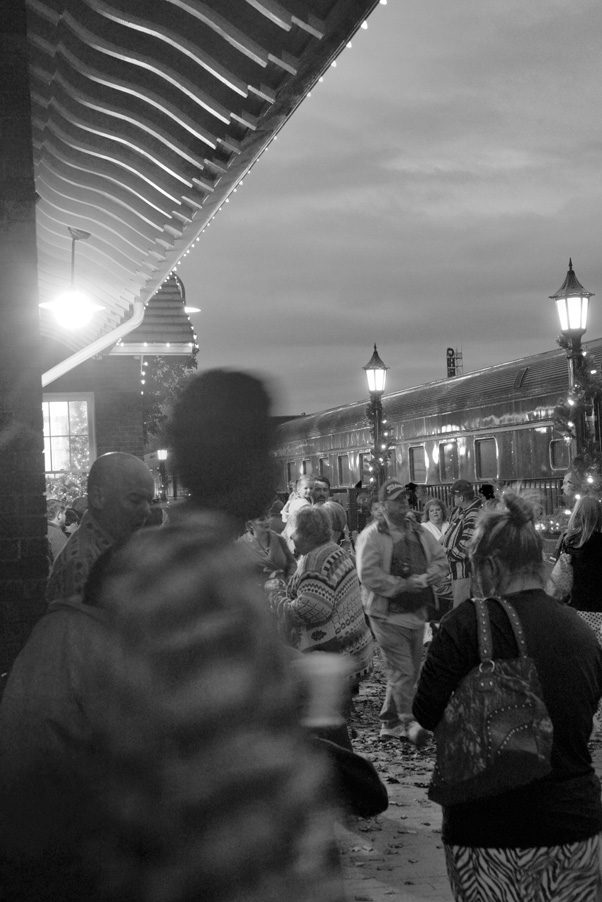
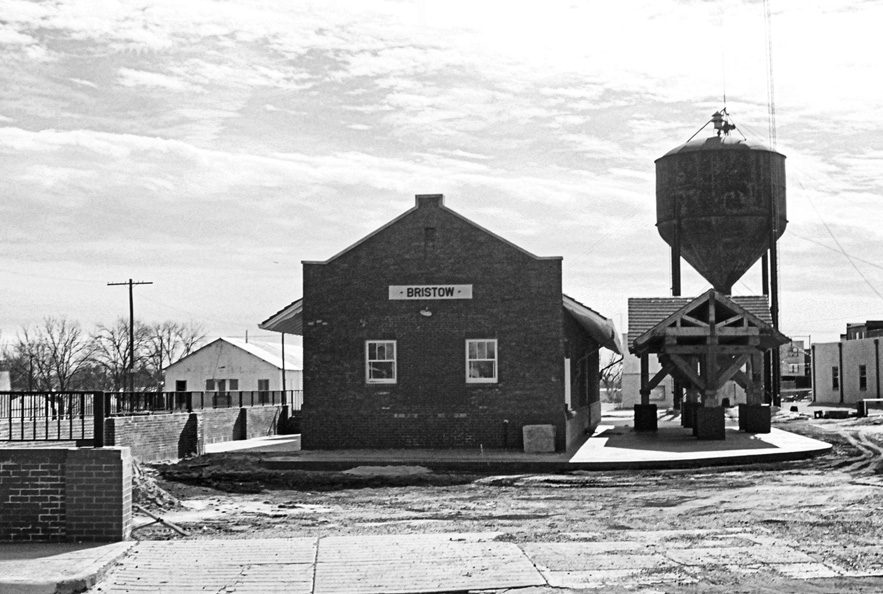
Cloud has photographed the demise and resurrection of several train stations in Oklahoma. Pictured are photos of the Bristow train station before, during and after its renovation. Photos by Cecil Cloud.

Tragedy catalyzed Cecil Cloud’s photographic quest. Technology – and his own drive – kept it going.

The result is Oklahoma Stations: Work in Progress, an exhibition offering 17 black-and-white images of surviving state railroad stations selected from more than 5,000, all taken by Cloud over the past few years. Opening Feb. 12 at Tulsa’s Coffee House on Cherry Street, the exhibition represents not only a proposed book – hence the name – but also the photographer’s near-lifelong fascination with trains and their Oklahoma stopovers.

“I was a sickly kid,” he notes. “I had a chronic, ongoing ear infection that made me miserable. My family discovered that I was a little more comfortable at times in a moving car, so when I was cranky and not feeling well, my father would take me out for rides to soothe me. He very quickly discovered I was fascinated by the railroad. I was intrigued by where the trains came from, where they were going and who was riding them. I was fascinated with the vision of the lights of a night train as it wound its way across the countryside.”

So, of course, the elder Cloud and his young passenger would often end up at the train station in their hometown of Sapulpa.

“It was such an elemental thing with me that I’ve almost lost the conscious memory of how it started,” he says. “I was 2 and 3 years old when these impressions were formed.”

He’s certain, however, that those visits first ignited his passion for the rails. Sapulpa was, according to press material for the exhibit, “a stop for the Meteor-Frisco’s St. Louis-to-Oklahoma City streamliner. The train only stopped there for a minute, but it was long enough to fire a boy’s imagination.”

Photo by Cecil Cloud.

“That old station was a huge structure that housed a 40-room hotel, a Harvey [House] dining room and lunch counter, a Harvey newsstand and the railroad operations,” adds Cloud, explaining that the restaurants run by the Fred Harvey Company were “the ne plus ultra of the railroad dining house, and in many ways the rootstock of commercial dining across America.”

In 1963, however, with rail service drastically diminished, the whole building fell to the wrecking ball.

“I was one indignant 4-year-old,” Cloud recalls.

Perhaps seeing his favorite place in town demolished ultimately led him to try to save Oklahoma’s railroad stations, if only by capturing their images for others to see. But while his love of trains and the railroad culture persisted throughout his youth and into adulthood, Cloud didn’t make a real commitment to the Oklahoma Stations endeavor for several decades. And during those dozens of years, many more stations throughout the state were torn down, abandoned or turned into something other than depots.

[pullquote]“This is an era of our history, a face of our state that’s dwindling, declining, disappearing,” he says. “I’m trying to preserve as much of it as I can.[/pullquote]

“This was a project I had toyed with on and off throughout the ‘80s and early ‘90s,” he says of Oklahoma Stations. “It was something I’d worked toward – I’d compiled a very limited partial list of surviving stations from newspaper articles and things like that – but prior to the widespread availability of the Internet, it was very hard to track down where the surviving stations were and what condition they were in.”

Then came the tragedy that led him to really begin working on the project.

“Five years ago, a friend of mine was out riding his bicycle between Shawnee and Seminole when he was struck and killed by a gentleman who had looked down to check a text on his cell phone,” Cloud explains. “My friend’s funeral was held in Shawnee, which is the home of one of the most beautiful and unique station buildings we have. It looks like a little castle. I knew that I would need something to occupy myself in the afternoon following the funeral, and I realized there was a group of about five little stations near the route I would take to and from the funeral.

“So I took a couple of cameras with me, and when I left the funeral, I just went to the Shawnee station and started taking pictures. I moved on to Wewoka and worked my way back through Holdenville, up to Bristow, and eventually home. And in reviewing the pictures I took that day, I realized I had a viable project.”

By that time, also, the advance of Internet technology had made it much easier for Cloud to find the structures he wanted to photograph.

Photo by Cecil Cloud.

“I turned to a number of websites to get information on what was still standing,” he says. “By collating about three rail-fan-oriented sites, I was able to develop a fairly comprehensive list of what was available, and I just set out trying to shoot as many as I could.”

Since then, he adds, his quest has been aided by both the archives of the Oklahoma Historical Society and the virtual-map program Google Earth.

“Google Earth has been invaluable in being able to settle questions about whether something is still there,” he notes. “With access to Google Earth, I can actually pull up a satellite view of a town, look for an old rail line, and see if there’s any trace of a structure left.”

Many, unfortunately, have barely left a trace at all. The exhibit’s promotional material indicates that there were more than 1,000 railroad-station buildings in Oklahoma in 1938, when rail service was at its peak in the state. Now, Cloud believes there are only 154. He feels that he’s got all but 20 of those captured on film – and, as visitors to the exhibition can see, many are in pretty sad shape.

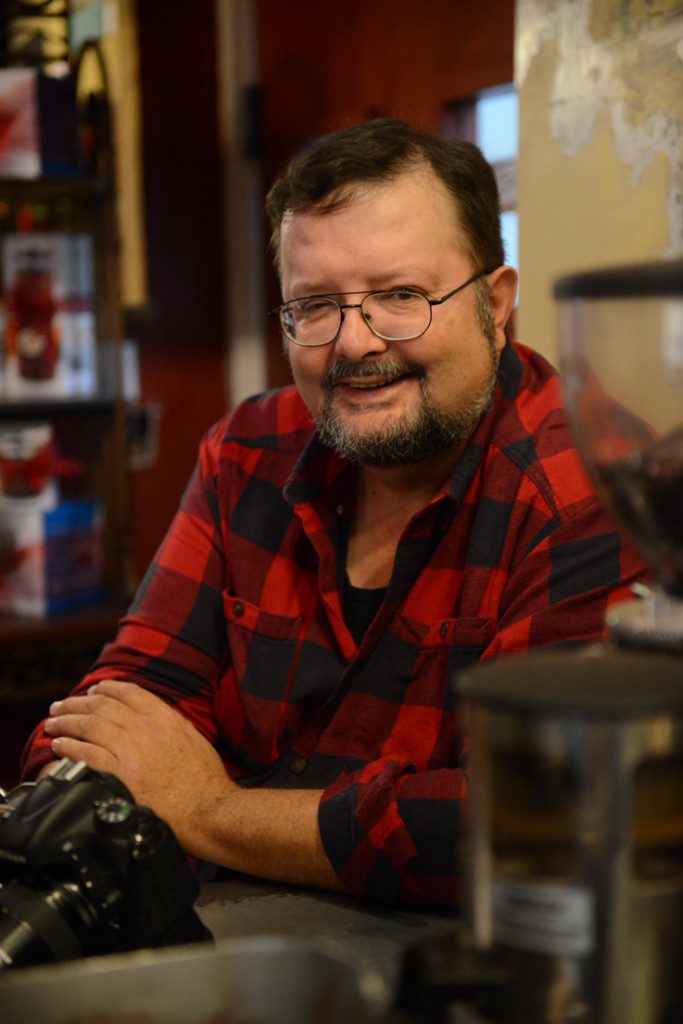
Photographer Cecil Cloud. Photo by Natalie Green.
Photographer Cecil Cloud.
Photo by Natalie Green.

“This is an era of our history, a face of our state that’s dwindling, declining, disappearing,” he says. “I’m trying to preserve as much of it as I can. One of my regrets is that I didn’t start seriously on this project 20 years earlier.

“I’m doing this because there’s a remarkable diversity in our state, in our towns, in our railroad stations, in our people,” he adds. “I’m trying to catch the closing of an era.”

And so far, he says, he’s been able to do a pretty good job of running down those diverse depots.

“There have been a couple of wild-goose chases and a couple of things I’m still trying to pin down conclusively,” Cloud says. “A good example is the alleged Fort Smith and Western [Railway] station in Okemah. There are a couple of rail-fan-oriented websites that insist part of a feed store down there is the remains of that old station. But the county historical society there, the chamber of commerce there, local residents there, tell me no, it’s gone.

“Also, there are some [stations] I would like to visit that I’m having trouble getting access to,” he adds, “because they’re in the middle of private property that’s probably tied up in bankruptcy or in an estate. But I’ve had surprisingly few surprises. The biggest surprise I’ve had is how friendly the people of this state still are, how interested they are in what I’m doing and how supportive they are of the project.”

Humble Brags

We all know that Oklahomans are a proud people. Whether it’s in connection with sports, chicken fried steak or the state’s pioneering spirit in the face of disaster – natural or otherwise – we like to show our state pride on social media and through the cunning use of T-shirts. It should be no surprise, then, that a new social media app called HeyLets found that Oklahoma ranks no. 8 in the list of the Top 20 Most Braggadocious states in the U.S. The study analyzed the nation’s self-promotional habits and asked 2,500 Americans who participate in social media to rate the number of posts they typically make on potentially self-promotional topics, according to Ann Murray, a spokesperson for HeyLets. The study found that about 64 percent of Oklahomans who interact using social media regularly post positively about Oklahoma and its people. California is no. 1 in the country, with 77 percent of its residents posting positive messages regarding their state. The most humble state is Utah, with just 22 percent engaging in positive state talk. The study proves what we’ve known all along: Oklahoma and its citizens are more than just OK.

Taking Aim

shutterstock_149525366

Students across Oklahoma are setting their sights on a sport that may be new to them but has ancient roots. Whether it is because of adventurous Merida in Brave or the defiant hero that is Katniss in The Hunger Games, kids today have been inspired to grab a bow and arrow and give archery a shot.

Helping facilitate this growing interest is Jay Rouk, the information and education specialist for the Oklahoma Department of Wildlife Conservation.

“Archery has definitely received a boost from the movies, especially from females and recreational archers,” he says.

Since 2004, Rouk has helped introduce archery to 450 schools across Oklahoma through The National Archery in Schools Program, allowing more than 30,000 students in fourth through 12th grades to reap the benefits.

[pullquote]Archery gives students a boost in self-esteem and personal success,” says Rouk. “It allows them to set a goal and accomplish that goal on a small and larger scale.”[/pullquote]

“Students love it,” he says. “Schools contact me regularly to bring this program to their school.”

Once the curriculum is in place, students learn about archery history, safety practices and shooting techniques. The program is designed to improve mental concentration and self-discipline.

Shooting in teams of up to 16 members or as individuals, students compete at the local level to qualify for one of six regional shoots. The young archers work toward a perfect score of 300, and those who come closest go on to compete at the state shoot, which is scheduled for March 27 in Tulsa.

In the interest of fairness, there are equipment requirements that have to be met.

“Archers in the NASP program shoot only one type of bow: a Mathews Genesis that has universal draw length and light draw weight,” Rouk explains. “Young and old all shoot the same model of bow.”

The resurgence of this sport at the hands of pop culture has provided a great platform for positive social interaction as students share their passion and gain self-confidence.

“Archery gives students a boost in self-esteem and personal success,” says Rouk. “It allows them to set a goal and accomplish that goal on a small and larger scale.”

The small goal is to hit the bull’s eye; the larger goal is to become state champion, Rouk explains. The unique characteristic of archery is that virtually all students have a chance to achieve those goals if they are willing to put in the time.

“It differs [from] other sports by not selecting for a particular gender or body type or particular athletic ability,” says Rouk. “It is hard to predict what student will make a great archer.”

Made for You and Me

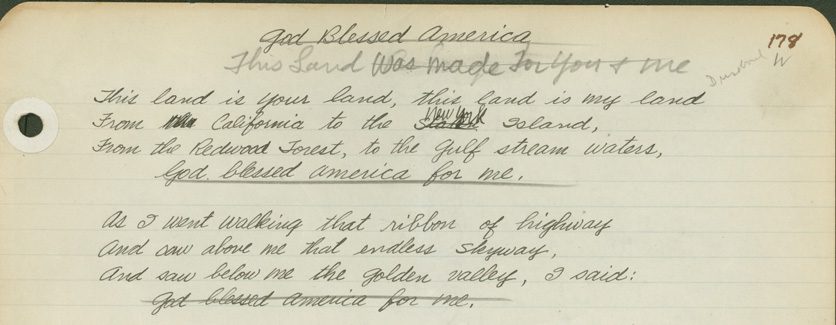
The handwritten lyrics to what we now know as “This Land Is Your Land.” copyright Woody Guthrie Publications. Photo courtesy Woody Guthrie Center.
The handwritten lyrics to what we now know as “This Land Is Your Land.”  copyright Woody Guthrie Publications. Photo courtesy Woody Guthrie Center.
The handwritten lyrics to what we now know as “This Land Is Your Land.”
copyright Woody Guthrie Publications. Photo courtesy Woody Guthrie Center.

Woody Guthrie didn’t set out 75 years ago to write the most iconic folk song of all time. It just sort of happened. Disgusted by what he saw as the tidy patriotism of Irving Berlin’s “God Bless America,” Guthrie penned a response song, originally titled “God Blessed America.”  Though he dropped the direct reference to Berlin’s work in the final draft, Guthrie kept the biting wit and social commentary.

“This Land Is Your Land” has all the components of a great folk song. The tune, borrowed from an old Baptist hymn by way of the Carter Family’s song “Little Darlin’, Pal of Mine,” is catchy and propulsive. Since the verse and chorus have the same tune, even the least musically inclined people can pick it up in a matter of minutes, which makes it ideal for that staple of folk music performance, the sing-along. That sense of inclusiveness carries over to the lyrics, where Guthrie welcomes the audience into an America governed by everyday people.

[pullquote]“The sounds of the crowd singing along to that song is what the country is all about: Work together, sing together and make a difference in our society,”[/pullquote]

According to Deana McCloud, executive director of The Woody Guthrie Center, Guthrie wrote the song while living in a rundown boarding house in New York City. He based the lyrics on experiences he had and sights he saw crossing the country. This personal touch extended to the way Guthrie wrote the song.

“Woody used a typewriter to compose many of his lyrics; however, on this song, he handwrote the lyrics,” says McCloud.

No doubt the down-to-earth familiarity of “This Land Is Your Land” is part of what has made the song an enduring classic. Though Guthrie at first neglected the song – he didn’t record the song until four years after he had written it – it soared in popularity when it got picked up by the protest movements of the 1960s. Since then it has become a staple in multiple contexts, sung in classrooms and rallies everywhere. It has been covered by many musicians, including folk legends Peter, Paul and Mary. As American as the song is, it has also spread across the globe, with groups from Britain to Sweden to Turkey making the song their own, tweaking the lyrics to fit their respective countries.

In some ways, though, success has diminished the core message of the song, which is about the hardships facing everyday Americans. McCloud notes that most people do not sing the fourth verse, about the evils of capitalism, or the final verse, in which Guthrie reflects on the lines of people he sees outside the relief office: “I stood there wondering if/This land was made for you and me.” It’s a dark thought, but one more in line with Guthrie’s original intent than the sanitized version many sing.

The power of the song continues to this day. It has such meaning for so many that it was even sung by Guthrie’s old friend, Pete Seeger, at the first inauguration of President Obama. Seeger insisted on singing the original version, with all the verses. McCloud points out the significance of Seeger’s performance.

“The sounds of the crowd singing along to that song is what the country is all about: Work together, sing together and make a difference in our society,” she says.

Maybe, in an age of renewed economic trouble, Guthrie’s song, with its mixture of despair and hope, is more important than ever.

Dog Days Of Sundogs

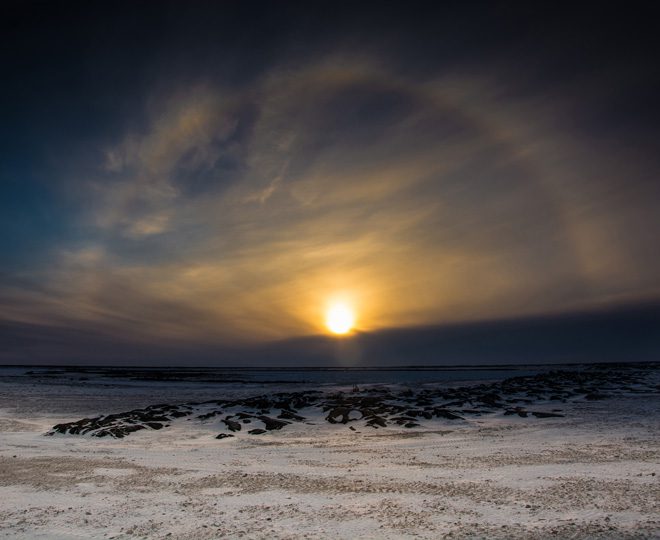
A sundog spotted in Manitoba, Canada.


Ten years ago, a weather phenomenon occurred in Norman skies that left many baffled. The phenomenon, known as sundogs and halos, occurred in the late afternoon of Feb. 10, 2005, and produced bright spots and arcs that resembled halos.

“Sundogs and halos are fairly common but are most often observed in the winter when the clouds that produce them occur most frequently,” says David Andra, meteorologist in charge at the National Weather Service’s Norman office. “Both are caused by thin, high-level clouds composed of ice crystals. Hexagon-shaped crystals refract, or bend, the light to create the bright regions we know as sundogs and halos.”

The sundogs refer to the bright “mock suns” that appear around 22 degrees on either side of the sun. The arc that connects the sundogs is known as the halo.

Pretty Women

A Tulsa businesswoman helps women of all ages feel good in their skin. Photo by Brandon Scott.
A Tulsa businesswoman helps women of all ages feel good in their skin. Photo by
Brandon Scott.

Oklahoma native Nancy Owens is helping women everywhere feel beautiful with her luxury botanical skin and body care line, La Chemie.

The Tulsa resident began La Chemie three years ago after feeling dissatisfaction with her own skin.

“I was inspired to start my line because I had never really found a skincare line that worked for me, so I decided to develop one myself,” Owens says.  “I wanted pure, natural and nourishing products made from the best possible ingredients.”

Owens began research on how to develop her own line and ended up with extensive knowledge in several areas and earned a master’s level certification in clinical aromatherapy, a master’s degree in health policy as well as knowledge in biology, microbiology, anatomy, physiology, chemistry and nutrition.

“These credentials have helped in forming my skincare line because in order to develop a product line that is effective, particularly using essential oils, it is important to understand and respect how the body works,” Owens says.

Photo by Brandon Scott.

The La Chemie line consists of a variety of moisturizers, scrubs, bath salts, eye creams and balms, all infused with natural ingredients like Frankincense oil or Dead Sea salts.

The products worked so well on her own skin that Owens began providing samples to her friends.                      

“When they told me how much they loved the products and started asking me where they could buy them, I knew I had something really worth pursuing on a larger scale,” says Owens.

La Chemie is offered in some of the nation’s finest luxury hotels and as gifts for Hollywood celebrities during VIP events. For a second year in a row, La Chemie products will be given out at the Beverly Wilshire Hotel’s pre-Oscars event, says Owens.

Additionally, La Chemie products are available in Tulsa at Nourish Drink Cafe and both SALT Yoga locations as well as online. In the future, Owens hopes to expand her line into more hotels and other brick-and-mortar locations. Owens also plans to keep giving back to the environment through her business.

“I am grateful that nature provides the exceptional ingredients needed to produce La Chemie,” Owens says. “So I feel a strong duty and responsibility to give back to nature to help replenish the earth’s natural resources.”