Eating a big plate of greens and black-eyed peas may not appeal to everyone, but for millions of Americans – particularly in the south – these foods, traditionally served with pork on New Year’s Day, represent good luck, prosperity and fortune.
Hosting friends and family for a New Year’s Day feast can be a fun way to celebrate the upcoming year and also keep tradition alive. Keep the menu simple, and focus on the
classics. Just be sure to have plenty of cornbread to serve alongside the ham, greens and black-eyed peas.
Maple and Brown Sugar Glazed Ham
Recipe courtesy Farmer’s Almanac.
1 fully cooked ham, about 6 to 8 pounds
1/2 c. pure maple syrup
1/2 c. brown sugar
1/2 c. apple juice
1 tbsp. brown or Dijon mustard
Dash cinnamon and ginger or allspice
Place ham, fat side up, on rack in foil-lined roasting pan; score fat and stud with cloves, if desired. Bake at 325 degrees for approximately 18 minutes per pound, until meat thermometer reads 148 degrees. Combine glaze ingredients in saucepan; boil approximately two minutes. Twenty minutes before ham is done baking, spoon about half the glaze over top of ham, then about 10 minutes before done, spread remaining glaze over ham.
Black-eyed Pea Salad
1/2 medium red onion, finely chopped
1 small red bell pepper, finely chopped
1 jalapeno, finely chopped
2 tbsp. chopped green onions
2 tbsp. chopped fresh parsley leaves
2 (15-ounce) cans black-eyed peas, drained
1/4 c. unseasoned rice wine vinegar
1/4 c. canola oil
1/2 tsp. sugar
salt and freshly ground black pepper
Combine the first six ingredients in a bowl. In a separate small bowl, whisk together the rice wine vinegar, canola oil, sugar and salt and pepper. Toss all together and let marinate for up to 8 hours in the refrigerator before serving.
Brunch at in the raw consists of sweet treats like the fruit and greek yogurt parfait. Photos by Brandon Scott.
Brunch at in the raw consists of sweet treats like the fruit and greek yogurt parfait. Photos by Brandon Scott.
The sushi-serving staple that originated on Brookside has now become a statewide favorite. In The Raw boasts a location in Oklahoma City’s popular Bricktown district, as well as two locations in Tulsa and one in Broken Arrow. In an effort to further wow diners, the Brookside location now offers brunch. Favorites are given an Asian flair, like the sake poached king salmon served with lemon-dill yogurt sauce and crostini, as well as the raw gulf oysters and select sushi rolls. Eating from the buffet allows diners to sample lots of other favorite dishes, including buttermilk biscuits slathered with southern style sausage gravy and an omelet with lump crab, tomato, spinach and avocado-cilantro sauce. And what brunch is complete without a little booze? Bloody Marys, mimosas, Irish coffee and other cocktails are on the menu at ITR. 3321 S. Peoria Ave., Tulsa. www.intherawsushi.com
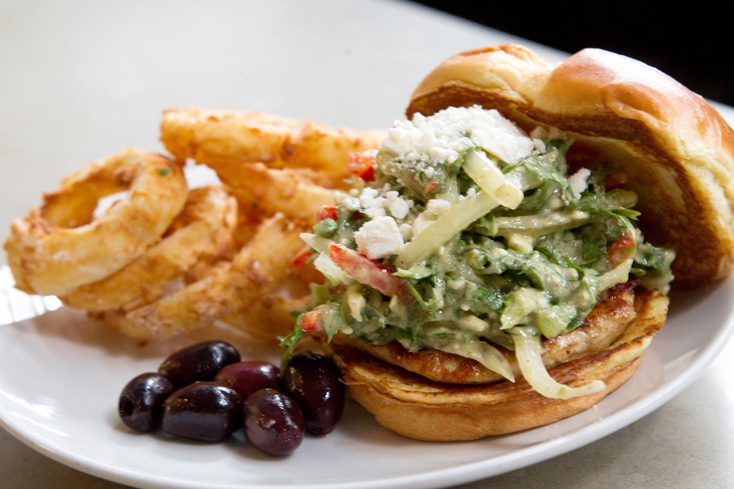
Johnnie the Greek, a chicken burger, is served with olives and onion rings at Urban Johnnie. Photo by Brent Fuchs.
Johnnie the Greek, a chicken burger, is served with olives and onion rings at Urban Johnnie. Photo by Brent Fuchs.
The name “Johnnie” in Oklahoma City evokes images of juicy burgers piled high with shredded cheese, pickles, lettuce, tomato and onions. Indeed, when founder Johnnie Haynes opened his first Johnnie’s Charcoal Broiler in Oklahoma City more than 40 years ago, the goal was simple: Provide charcoal-grilled burgers that are hearty, tasty and affordable.
Haynes’ goal was realized; the Oklahoma City area now boasts seven Johnnie’s locations.
Urban Johnnie is the latest incarnation in the Johnnie’s empire. The restaurant, located in the city’s trendy Deep Deuce district, offers a menu that is wide-ranging and upscale. Soup and salad, tacos, sandwiches and, of course, burgers are all on the menu. Four different burger patties are available: beef, chicken, crab cake and veggie. Gourmet burger toppings include blue cheese, roasted poblano peppers, mushrooms, hummus, vegetarian chili and fried egg. Highlights of the menu are the pot roast, served with roasted vegetables and mashed potatoes; chicken fried chicken, served with mashed potatoes; and, of course, Johnnie’s Cheese Theta. This favorite is comprised of a beef patty, shredded American cheese, hickory sauce, house-made pickles and mayonnaise. It’s a crowd-pleaser made famous by the original Johnnie’s more than 40 years ago. 121 NE Second St., Oklahoma City. www.urbanjohnnie.com
The Thunder roll – tempura shrimp, avocado and crabsticks drizzled in spicy mayo – is Nhinja Sushi & Wok’s homage to the Oklahoma City Thunder.
Photo by Brent Fuchs.
The Thunder roll – tempura shrimp, avocado and crabsticks drizzled in spicy mayo – is Nhinja Sushi & Wok’s homage to the Oklahoma City Thunder. Photo by Brent Fuchs.
Several years ago, Kang and Mary Nhin opened their first Nhinja Sushi & Wok in Oklahoma City. With a goal of providing high quality, healthy food in a fast-casual environment, the concept of Nhinja quickly took off in the metro area, and several more locations were opened. Today, Nhinja Sushi & Wok operates five establishments, including the newest one located in Tulsa. The menu at all locations is the same: Traditional Asian staples such as miso soup, seaweed salad, rice and noodle bowls and, of course, sushi. Nhinja’s take on the roll is decidedly non-traditional but nonetheless adventurous. The JoJo is made of grilled steak and asparagus topped with eel sauce, while the Fish Lips includes tuna, salmon, yellowtail or crabstick. The Thunder, homage to Oklahoma City’s favorite sports team, is a concoction of tempura shrimp, avocado, crabsticks and spicy mayo. Five locations statewide. www.nhinja.com – Jami Mattox
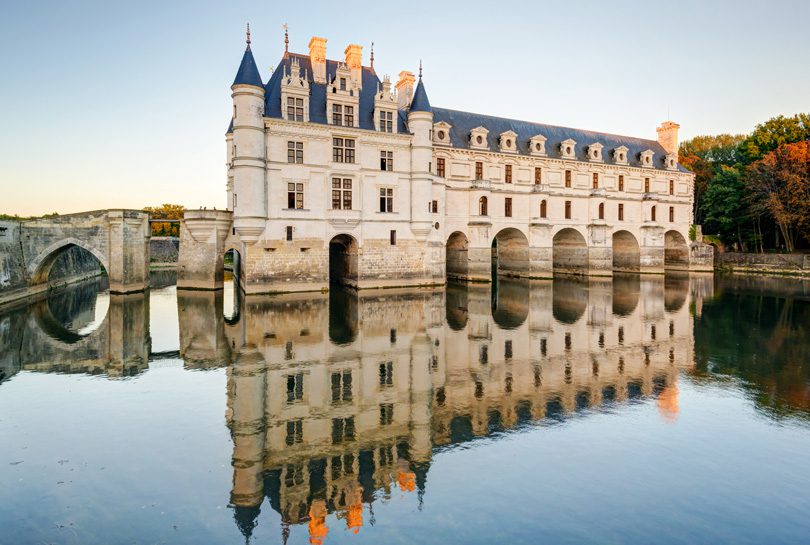
Chateau de Chenonceau was built on a bridge to be reflected in the River Cher.
The three-story Castle of Chambord is among the great architectural master works in the Loire Valley.
Extravagant châteaux and country villages standing along ancient waterways mark France’s Loire Valley as a must-visit destination on any French vacation. While Paris and the French Riviera may get all the holiday headlines, tourists who roam the region are rewarded with royal residences and a slice of French country life.
Nestled along the Loire River, the town of Amboise is a handy base for touring the area. Just two hours southwest of Paris by train, Amboise and the surrounding countryside make for a slow-paced escape from the big city frenzy.
Dry, just one of many popular tourist stops in the River Valley region.
The tourism highpoint in Amboise is the royal Château d’Amboise. Rising mightily above the valley below, the château’s buildings date from the 15th and 16th centuries. A former residence of kings, the château’s terraces and ramparts offer commanding panoramic views of the river and the town. Among the château’s highlights are the Gothic spire of the St. Hulbert Chapel, the council chamber, King Henri II’s chamber and the Orléans chamber.
Just a short walk from the royal château is Clos Lucé, the home of Leonardo da Vinci, who died in Amboise in 1519. His final residence is home to an exhibit celebrating his life and work.
While Amboise is known for its royal château and as da Vinci’s final home, a visitor can easily find other opportunities to explore the narrow and winding streets of the old town. Along the road from the royal château to Clos Lucé are numerous cave dwellings, former limestone quarries that have been fashioned into tiny homes. The pedestrian commercial center houses shops and cafes. An evening stroll across the bridge to the Ile d’Or provides views of the lighted château looming high above the river.
Amboise is also home to a bustling Sunday market, one of the largest in the region, which draws tourists and locals alike. With vendors peddling everything from leather belts to live chickens, the market is a carnival of sights, sounds and smells.
With many majestic châteaux dotting the valley’s landscape, it can be hard to choose which to visit. While a true architecture or history buff may want to rent a car in order to visit many of the fine estates in the region, a guided day tour is likely the easiest route for the casual tourist. Numerous companies operate from Amboise and visit a sampling of châteaux in the course of a day. The region also boasts several vineyards, and tours and wine tasting opportunities abound.
Chateau de Chenonceau was built on a bridge to be reflected in the River Cher.
The grandest of the Loire châteaux, Chambord is a three-story goliath. With more than 400 rooms and almost 300 fireplaces, the château’s rooftop is a mass of chimneys, domes and spires. Chambord also boasts almost 80 staircases, including a fascinating double-helix staircase, which was an architectural marvel of its time.
Constructed in the 16th century, the Château de Chenonceau, quite literally, straddles the River Cher. The château’s gallery, which spans almost 200 feet across the river, was built atop a bridge in the late 1500s. Unexpectedly, the château’s kitchens are located in the base of the bridge piers built into the river. Chenonceau’s rooms are elegantly decorated and display a fine collection of furnishings and tapestries.
Built on an island in the Indre River, the Château Azay-le-Rideau could not be more fanciful. Pointed towers and lacey stonework are reflected in the water, an effect intentionally created by restricting the river’s flow to create a water mirror, highlighting Château Azay-le-Rideau’s architectural splendor.
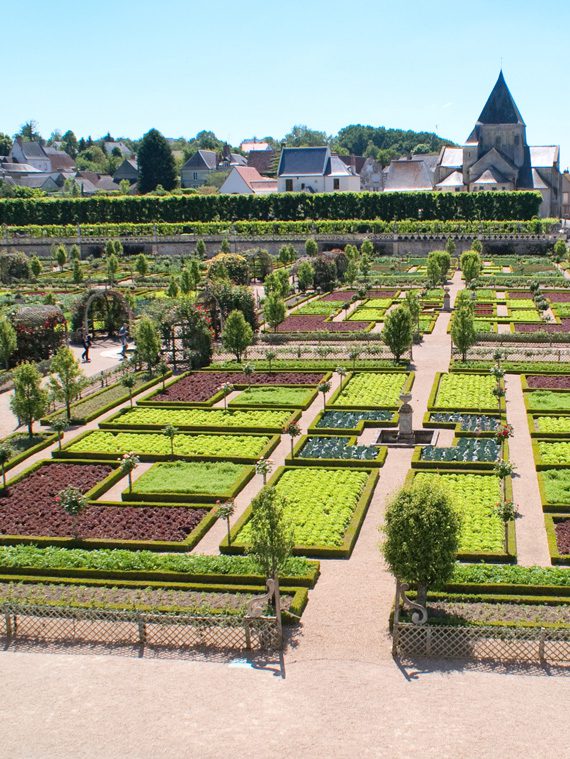
The château at Villandry is best known for its acres of elegantly manicured gardens. Designed in intricate geometric patterns, Villandry’s gardens are an explosion of color and coordination. With everything from shrubs and hedges to flowering plants and vegetables, these gardens are a spectacular sight.
The Gardens at the Chateau in Villandry are famous for their manicured elegance and color.
Back in Amboise, lodgings are plentiful, including the 17th-century manor house, Le Clos d’Amboise. Situated just outside the tourist zone, Le Clos d’ Amboise allows for an easy stroll to local restaurants and shops without the bustling noise of the city center. Rooms are available in the manor house itself or in the home’s renovated horse stables. The back of the hotel hides a peaceful courtyard with landscaped gardens and a heated pool.
One simply cannot visit France without sampling the local delicacies. Several restaurants huddle at the base of the chateau and offer tasty local dishes with views of the chateau looming above. Enjoy the escargot and foie gras while taking in the fine French atmosphere.
With its magnificent châteaux, royal history and the crooked lanes of its villages and towns, the Loire Valley is sure to captivate even the most-traveled visitor.
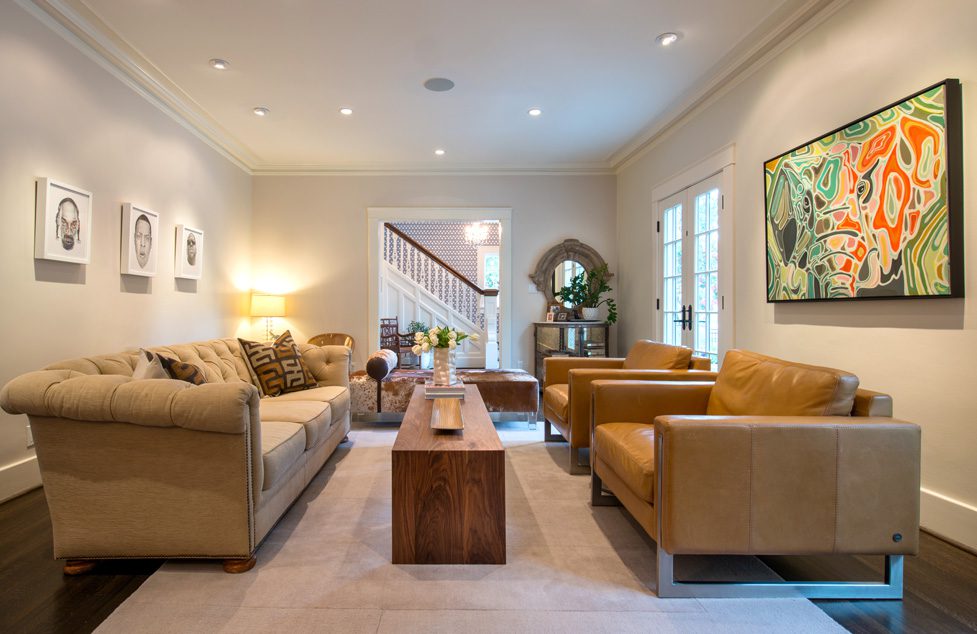
An existing sofa was used and new leather chairs purchased for the living area. Three pencil drawings by Tim Moore of rap stars are the conversation starters in the room.
An existing sofa was used and new leather chairs purchased for the living area. Three pencil drawings by Tim Hearne of rap stars are the conversation starters in the room.
When Tyler Mosher and her husband, William, first saw their Tulsa Maple Ridge home, the project seemed insurmountable.
“There were unrepaired roof leaks, and some of the ceilings had collapsed,” says Tyler Mosher. “It was definitely in a state of disrepair.”
But the home had features the couple needed, specifically the potential to house six. The midtown lot offered enough acreage to enlarge the house and still have plenty of outdoor play space for the couple’s four children.
Initially, the project was overwhelming, but the Moshers have a solid background in construction renovation. Mosher’s company, Nest, purchases homes to renovate and put back on the market, while her husband has a commercial construction business.
Designer Lori Sparkman created a bar in a former pantry.
“We had plenty of experience,” says Mosher. “Plus, we have our connection of trusted subcontractors.”
The family purchased the home and, extraordinarily, moved in while the renovation was in progress.
“Last winter, when it was two degrees, we had an open wall on one side of the house,” Mosher recalls.
The entire project took about six months, including the addition that transformed the small kitchen by adding 20 feet to the home and creating a combination family room and spacious kitchen.
“With four children, I needed to be able to work in the kitchen while I could keep track of the kids,” she says.
The new construction also included a covered back patio and two new bedrooms upstairs. The original four-bedroom, two-and-a-half-bath home now contains five bedrooms, three full baths and two half-baths.
“The home had great original moldings and details,” says Mosher.
But the homeowners decided early that all the exterior windows and doors needed to be replaced. Noticeably, there are no window coverings in the open areas.
“We wanted to take advantage of the natural light,” says Mosher.
The wood floors were refinished throughout the home, while neutral colors were selected for the walls and trim. And as they repaired the ceilings, new lighting was installed, specifically placed to accent the couple’s unique art collection.
In the living room, three pencil profiles by Moore artist Tim Hearne were purchased at Brookside’s Aberson Exhibits and feature rappers Snoop Dogg, Jay-Z and Biggie Smalls.
“They are a serious conversation starter,” says Mosher, laughing.
“They wanted the living room to be a comfortable place to casually entertain,” says Lori Sparkman, owner of Fifteenth and Home, who worked with the couple to furnish and decorate the home.
The homeowners were looking for a home with the potential to house themselves and their four children. more bedrooms were added in the renovation.
The luxury master bath is one of the three full baths in the renovated home.
The homeowners transformed the kitchen by adding 20 feet, which meant they had to open up a wall in the middle of winter.
Sparkman utilized the family’s existing sofa and chose the classic lines of Savino camel leather chairs from American Leather with nickel detail on the base that wraps onto the front of the arms. Adjacent is a custom chaise upholstered with longhorn cowhides, an homage to the couple’s home state of Texas.
Local craftsman Eric Fransen, who crafted all the kitchen and bathroom cabinetry, created the custom walnut cocktail table that features a subtle inlay of brass sections in the walnut.
The area rug is a wool textile from Calvin Klein.
“Because the owners have more of a transitional style, we chose a red Alpaca wool for the American Leather chairs by the fireplace that are a contemporary take on the traditional wingback chair,” says Sparkman.
In what was the original pantry off the dining room, Mosher created an open bar area. Fransen crafted the navy cabinetry with brass hardware. The countertop is a single piece of unlacquered brass with a contiguous sink. Fransen also crafted the walnut wall and shelves.
Next to the wine refrigerator is a pellet icemaker, probably better known to Oklahomans as “Sonic ice” – from the much-coveted ice used at Sonic Drive-Ins.
“It’s probably my favorite purchase in the house,” Mosher says.
It’s taken her the better part of two decades, but Tulsa native Heather Langenkamp has finally come to terms with the role that made her famous, the besieged but resourceful Nancy Thompson of A Nightmare on Elm Street.
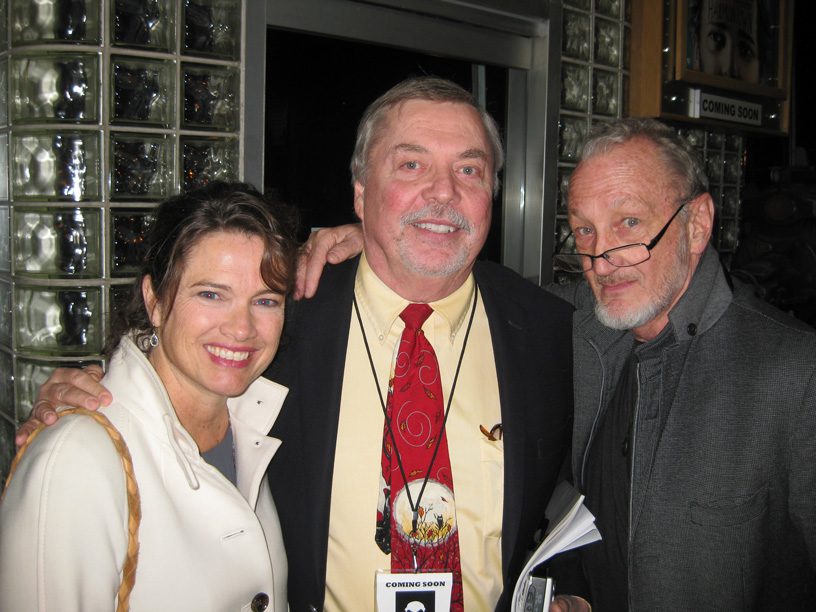
It was a gradual process, she says, happening as she began accepting more invitations to appear at film conventions and screenings of the picture, such as the highly successful benefit event at Tulsa’s Circle Cinema in early November, where she was joined by her Nightmare nemesis, Freddy Krueger portrayer Robert Englund.
Smart, sharp and articulate, Langenkamp separates her ongoing work in the film industry from what she calls her quasi-professional life as a horror-movie icon and convention guest. It’s the latter, she notes, that finally brought her to an acceptance of Nancy and her importance to untold numbers of movie fans.
“What I noticed in this other life I lead, the quasi-professional life, was the things people would say about this character and what she meant to them,” explains Langenkamp. “It was very mystifying at first and then flattering, and now it’s incredibly heartwarming, and I’m just really grateful that the fans have embraced this character as they have.
“It took 20 years, but now, when people want to see the movie and talk about it like it’s an important American film, I can stand in front of it and have a totally different kind of attitude than I had about it in the past. I just have to show up. I don’t have to do anything.” She says, laughing. “It’s really amazing. I can just talk about this character, and talk about Robert Englund – it’s one of the easiest, fun jobs you can have.”
Langenkamp was a student at Stanford University back in the early 1980s when she got the Nightmare role; at the time of the picture’s official release, in November 1984, she’d only been out of her teens for a few months. She was no movie rookie, though, having already played the female lead in Nickel Mountain – a drama adapted from a John Gardner novel – by the time the cameras rolled on Nightmare.
Perhaps Langenkamp’s entry into the movies can be traced back to an unlikely place: Tulsa’s Philbrook Museum of Art.
“They had a kids’ summer program, and I took acting there,” she recalls. “I remember playing a witch and painting on these crazy curlicue eyebrows in the bathroom and thinking to myself that I felt so powerful, being not only a strange character, but being a witch. I don’t remember even one line or what I did. I just remember putting on my makeup in that bathroom and loving the kind of feeling it gave me.”
That feeling persisted when the family moved to Washington, D.C., after her father, noted Tulsa attorney R. Dobie Langenkamp, was offered a job with the U.S. Department of Energy under the Carter administration.
“My drama teacher was strict, and she made us do things they probably wouldn’t make you do now. For example, if you were playing even the smallest part, you had to show up at every rehearsal,” she recalls. “You had to be there as part of the group. You did your homework in the aisle of the theater. You’re striking the sets at the end of the show, no excuses. So you learned a work ethic, and I really think that carried me through the hard work this business involves.”
The family arrived back in Tulsa in the early ‘80s, just in time for Langenkamp to get in on the excitement of director Francis Ford Coppola’s time in the city. Coppola and Tulsa author S.E. Hinton were then in the midst of working on two film adaptations of Hinton novels, The Outsiders and Rumble Fish, and Langenkamp visited the local casting office in hopes of getting a role.
“I was lucky enough to turn my photo in to Janet Hirschenson, who was the casting director for Francis,” she recalls. “We had a nice conversation, and she said, ‘Well, why don’t you read a line?’ They gave me a piece of dialogue, and I read it, and I think I must’ve done a pretty good job, because later on, when they were doing Rumble Fish, she saw me again.
“I was lucky to be on the set that night,” Langenkamp says. “A friend of mine had brought me along, because it was a night shoot in kind of a bad neighborhood, and her mom didn’t want her to go by herself. When I saw Janet, she said, ‘Oh, you’re here. That’s great. Francis wants someone to shout out from the wedding party, to [actor] Matt Dillon, ‘Come on up and join the party.’ So she gave me that line, and I got my SAG card that way. It didn’t make the cut, but who cares?”
That Screen Actors Guild card, identifying her as a working film professional, became a valuable possession with her move to the West Coast. Although she did earn a degree in English from Stanford, it took her seven years because movie and TV work kept getting in the way. Her resume includes two more appearances in the Nightmare franchise: Nightmare on Elm Street III: Dream Warriors (1987) and Wes Craven’s New Nightmare (1994), a film that took director Craven’s trademark self-referentialism to the outer limits – he, Englund and Langenkamp all played themselves, the director and two lead actors from the original Nightmare, who were somehow being stalked by a real Freddy Krueger.
Heather Langenkamp (from left), John Wooley and actor Robert Englund met up at the Circle Cinema screening of the movie in November. Photo courtesy circle cinema.
“People don’t realize what a unique idea Wes Craven had,” she says. “The character was me, and there was no place to go after that. I realized that I wouldn’t be playing Nancy anymore, and Wes realized that he wouldn’t be directing Freddy and Nancy anymore. That’s what makes the movie even more interesting.”
Following New Nightmare, Langenkamp and her husband, Academy Award-winning makeup-effects artist David Leroy Anderson, had a son and daughter, and, she says, “I realized that if I was going to spend time with my husband, we were going to have to work together. Otherwise, we’d always be traveling to different places. We’d always have different schedules.”
With Anderson getting ready to travel to Canada for the Dawn of the Dead remake, Langenkamp offered to accompany him as his office manager.
“I told him, ‘I’ll take care of all the bookkeeping, all the hiring and firing, and I’ll take care of all the meetings with production so you don’t have to go to those, either,’” she says.
That’s been their relationship ever since, as partners in AFX Studio, which specializes in special-effects makeup.
“He keeps thinking I’m going to go away and become an actor again,” she says, “and I might, but we’ve built our company to a great place now, and it can survive that.”
Although she hasn’t had to leave AFX, Langenkamp has nonetheless continued to amass screen credits, most recently with a supporting part in 2013’s Star Trek Into Darkness and a major role, alongside horror legend Barbara Steele, in the 2012 independent shocker The Butterfly Room.
“I take small roles that are offered to me that are good,” she says, “and the characters in the independent films I’ve played recently are so interesting and have really big parts.
“So many people ask me to do cameos in their movies, and I say, ‘You know, I have nothing to gain with a cameo in your low-budget independent film. But give me the lead, give me a part so that I can have something to show people, and I’ll do it in a minute.’”
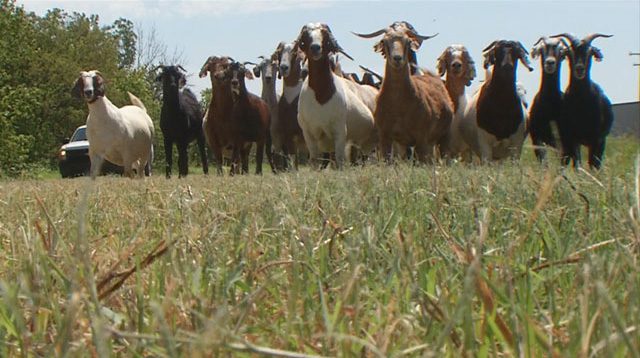
Langston University keeps goats on its campus as part of agricultural research. Photo courtesy Langston University.
Langston University, located about 20 miles southwest of Oklahoma State University, also has a thriving agricultural program, and it recently received a boost. The U.S. Department of Agriculture awarded Langston University $1.5 million to further agricultural research at the institution.
“We are ideally positioned to provide new insight into the rapidly developing field of agriculture,” Dr. Marvin Burns, dean of agriculture and applied sciences at Langston, says. “We are grateful for the financial support of this important research and look forward to sharing the results [in 2015].”
According to Langston University spokeswoman Christina Gray, the funds will go toward several research projects to mine data – including studies on sustainable control of greenhouse gas emission by ruminant livestock – as well as food and agricultural science career pathway awareness and opportunities and the creation of a state-of-the-art centralized agriculture laboratory. Other supported research will look at enhancing the health and productivity of dairy goats along with a comparison between goats and other biological control methods on Eastern red cedar, considered an invasive species in Oklahoma.
“Cattle” and “communication” aren’t two words that most people would necessarily link together. When used to describe Oklahoma State University’s award-winning animal science judging teams, however, the words together make perfect sense.
OSU’s meat animal evaluation team recently won the national championship at the 2014 Meat Animal Evaluation Contest in Lubbock, Texas, defeating the other 11 teams from universities all over the U.S. It was OSU’s second time in the last four years to claim the title.
Earlier in 2014, the OSU livestock judging team claimed the title of champion team at both the National Western Stock Show in Denver and the Dixie National Livestock Show and Rodeo in Jackson, Miss.
The OSU Department of Applied Animal Science sponsors four other judging teams in addition to the meat animal evaluation and livestock judging teams: the dairy cattle judging team, equine judging team, quadrathlon team and the meat judging team.
Each team has unique aspects when it comes to membership and competition, but all have several things in common. For example, those who participate must have a love of animals, the desire to work as a team, a capacity for analytical thinking and, most importantly, great communication skills, says Dr. Blake Bloomberg, OSU livestock judging team coach and assistant professor for the applied animal science department.
Many members join for job preparation and experience. Some of the most successful breeders and influential leaders in the livestock industry trace their roots back to participation on competitive livestock judging teams.
From a competition standpoint, the school’s livestock, meats and horse teams have finished in the top three teams in 79 percent of the contests they have participated in, winning more than $62,000 in academic scholarships and prize monies, says Bloomberg.
Accolades and scholarships are just a small part of membership; students also learn skills for life and gain advantages to further their professional ambitions. Lessons in responsibility, leadership, pride and dedication are all part of livestock judging, says Bloomberg.
“The students who graduate through our judging program learn and perfect the art of communication,” he says. “This is one of the biggest reasons our students are so heavily recruited into various job markets.”
Team members typically graduate with a degree in animal science, food science, agricultural education or agricultural communications.
“The judging team members at Oklahoma State are the absolute reason the team has received the success and recognition that it has,” Bloomberg says. “Oklahoma has always been full of talented students and we strive to recruit the top students from all parts of the U.S.”
Lots of people vow to change in the New Year, and most of those resolutions revolve around health: lose weight, exercise more, eat healthier. Other popular resolutions include spend less, volunteer more, quit smoking and manage stress. But according to research conducted by the University of Scranton in Pennsylvania, just eight percent of people who set new year’s resolutions actually achieve them.
John Norcross of the University of Scranton has said that it’s best to be concise and specific when setting resolutions.
“We say if you can’t measure it, it’s not a very good resolution, because vague goals beget vague resolutions,” he says in Forbes magazine.
According to the American Psychological Association, it’s best to start small and change one behavior at a time. Don’t be too hard on yourself if you slip up, and don’t be afraid to ask for support from friends and family to achieve goals.