The Gulf Coast Cardinals celebrate a victory, Lake Jackson, Texas, 2009.
Photo by Brenda Read Photography.
Hometown sports teams connect us all to the American and human experience and to one another, says Caroline Lowery, program officer at the Oklahoma Humanities Council.
“Sports are a way to educate, enlighten and empower Oklahomans to explore their own personal narrative,” she says. “Sports teach us about ourselves, our communities and our shared cultural experiences.”
These concepts are explored in the Smithsonian exhibit Hometown Teams: How Sports Shape America. Six Oklahoma towns will receive the privilege of hosting the interactive collection of sports history, culture and memorabilia.
The Bates College Team (rear) competes in the NCAA women’s rowing championships, 2012. Photos by Steve Johnson/Maac.
“The exhibit has ambient sports sounds in the background, TV monitors featuring sports stories, iPads that lead visitors on a question-and-answer scavenger hunt and even scented squeeze bottles that let you ‘smell the game,’” says Lowery. “Children and adults alike can experience how sports shape our lives through all five senses.”
Guests can also share their own sports stories on the supplemental app titled “Stories on Main Street.”
Lowery explains that sports have a way of shaping several aspects of our lives, including language – “throwin’ in the towel” – and ethics – “the cowboy code.” Each city will explore how sports have influenced its culture.
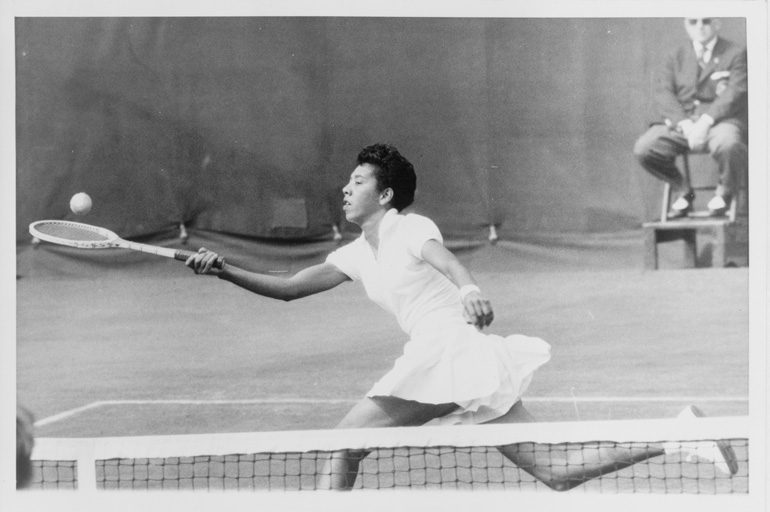
Althea Gibson shattered racial barriers in tennis and golf. She won both the u.s. open and Wimbledon in 1957 and 1958. In 1964, she became the first african-american to join the Ladies Professional Golf Association. Photo courtesy Library of Congress, prints and photographs division, NYWT&S Collection.
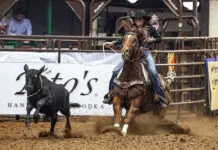
The six locations that will host the exhibit all have their own local story to tell, Lowery adds. The Guymon Public Library will showcase rodeo culture, Muskogee’s Five Civilized Tribes Museum will highlight the Native American sports legacy, and the Ralph Ellison Library in Oklahoma City will highlight African-American sports stories. The Miami Public Library will cover local sports heroes, Ponca City’s Pioneer Woman Museum will explore women in sports, and Weatherford’s Museum on Main Street exhibit will highlight various aspects of the community’s sports culture.
Hometown Teams hits Oklahoma City in March 2015. It will remain for six weeks before it moves to its next Oklahoma destination. Lowery says thousands are anticipated to turn out at each stop for this exhibit covering everything from football and baseball to skateboarding and surfing. Guests are sure to discover an aspect of the exhibit that appeals to their love of competition or community.
The Gulf Coast Cardinals celebrate a victory, Lake Jackson, Texas, 2009. Photo by Brenda Read Photography.
“We are so proud and honored to bring the Smithsonian to Oklahoma,” says Lowery. “I encourage everyone to go see the exhibit with their friends and families. Whether you are a sports enthusiast, a player, a fan, a cheerleader, a mascot, a band member, a soccer mom or a lover of history, this exhibit is for you.”
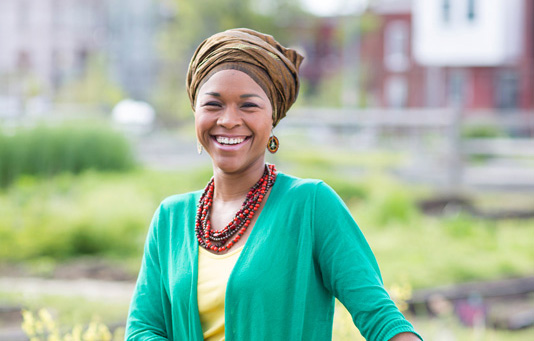
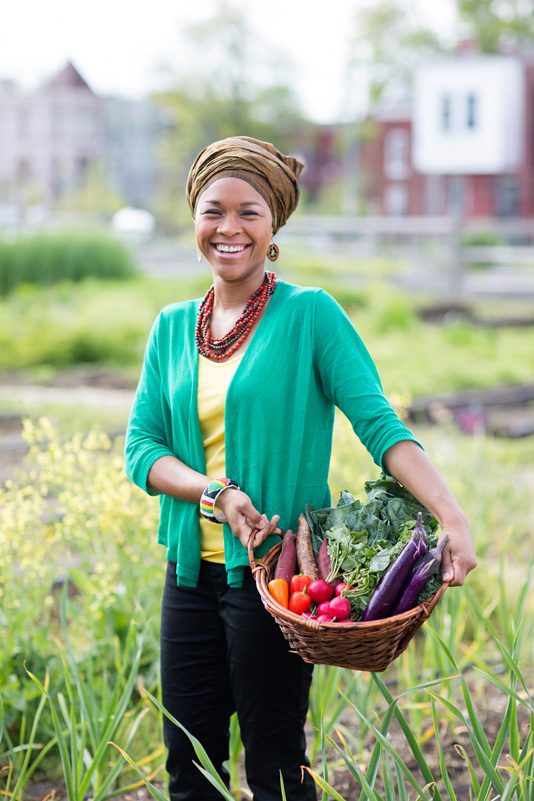
Native Oklahoman Tambra Raye Stevenson was named a National Geographic 2014 traveler of the year for her work with heritage foods. Photo by Scott Suchman.
Nutritionist and culinary historian Tambra Stevenson’s passion for food and health began early.
“I started a restaurant when I was a kid, and my sister was my loyal customer. The special of the day was always mom’s leftovers,” Stevenson recalls.
Stevenson was born in Oklahoma City and raised in Midwest City and attended Oklahoma State University.
“I originally went to Oklahoma State University as a biology pre-med major, but when a classmate heard how I was disgruntled with the path I was on, they recommended nutrition. It was a perfect fit.”
Stevenson now lives in Washington, D.C., where she runs a community kitchen project called NativSol. At NativSol, Stevenson teaches families about the power of creating health through heritage foods – foods eaten by a person’s ancestors. The idea for NativSol came through traveling and thinking deeply about purpose.
“After an outreach program I helped out with in Gulfport, Miss., I thought a lot about how I could impact my own community. My interest has always been in food, but I wanted to know my own role and how I could best help people,” she says. “The American diet is not working well for so many people, so I started looking for solutions.”
Part of that includes incorporating heritage foods. For those of African descent, Stevenson says, heritage foods include resilient crops like millet.
“If you want to be a strong and healthy person, you don’t need to look any further than these types of foods. I’m a food hunter; I’m always looking for different things that can help people become healthier,” Stevenson says. “I’m inspired by Julia Child and what she did to introduce French cuisine to the U.S. It’s similar to what I want to do with African heritage foods.”
Food hunting has taken Stevenson all over the world. Recently, it led to National Geographic Traveler magazine naming her a Traveler of the Year. She says she first caught the travel bug after visiting the Dominican Republic after college. She later went on to visit Ghana, Ethiopia, South America and more. Through it all, her Oklahoma heritage has been an integral part of her identity, Stevenson says.
“As I get older, and [after] having two children, I reflect more on Oklahoma and valuing where I came from. In Oklahoma, it’s all about faith, food, family and football, and you can find that all over the world – except it might be soccer instead of football,” she says. “Where I live now, it helps to have that Oklahoma mindset of not being impressed by job titles. In Oklahoma, it’s all about how grounded you are, and that’s been something that I’ve found has added value to many different situations. Even if you don’t think much about where you’re from, you have way more to offer than you can imagine.”
Stevenson contributed to the exhibit Food: Our Global Kitchen at the National Geographic Museum by offering several cooking classes (west African soups and stews and east African spices). She held a Kwanzaa class during the holidays.
“I’m also hoping to go to Nigeria and the northern region of Africa,” she says. “I want to learn more about their traditions.”
Able to pursue her passion every day, Stevenson says she believes everyone has a purpose.
“I feel sometimes that I’m not doing enough, but I try to appreciate each step of the journey,” she says. “Things have happened to me this year that I never thought would happen. I never thought I’d be in National Geographic, for one thing. But I hope others realize that it’s important to believe in what you do.”
I have been a bridesmaid a few times. Three, to be exact, and each time, I served as a maid of honor. The first time, my 21-year-old self stood next to my sister-in-law when she married my brother. I had no idea what was required of me, and I don’t think I did much more than attend showers and show up for dress fittings.
For my second tour, I was asked by my best friend, Lauren. This time, being 24 and a little more mature and responsible, I threw a shower, attended all mandatory functions and even wrote a speech (sorry it was so short, Lauren!) to deliver – with gusto – at the reception.
By my third time serving as a maid of honor – this time for my sorority sister, Heather – I was well prepared. I had learned that the maid of honor’s job is not only to be completely supportive of every decision the bride makes, but to also act as a security guard. As we drew closer to the big day, I grew increasingly protective. There’s a problem with the reception décor? Talk to me. I decided who was dispatched to handle the problem. The DJ has questions about what song to play when the newlyweds enter the reception hall? Ask me, then I’ll ask the ball-of-nerves bride in a kind and relaxed way. Nothing and no one got to Heather on her big day before they got to me. I stood in for the bride during the rehearsal, delivered not one, but two speeches – one at the rehearsal dinner, the other one quite emotionally at the reception. At 26, I came into my own as a maid of honor.
Afterward, I considered opening a maid of honor business. I have many dresses that would suit a wedding, all in a variety of colors. I have the experience and, more importantly, the speechwriting abilities to make a room full of people drop their forks and dab their teary eyes. Though my business venture never got off the ground, I still think it’s an idea that would easily sell on Shark Tank.
Planning a wedding isn’t an easy task. There’s lots of stress, money and time spent on pulling off the bride and groom’s perfect day. That’s why this month’s Oklahoma Wedding, a special section devoted to all things wedding, is so handy. Have a look at gowns, cakes, flowers and catering options available at local vendors. Take advantage of the service directory, which provides a comprehensive list of those who provide wedding services in the region. The Oklahoma Wedding Show (Jan. 17) will also bring many of these vendors together under one roof, which makes planning the special day a breeze.
Take as much stress out of your big day with our handy section. And while you may not see any businesses offering maids of honor for rent, just remember, you can always contact me.
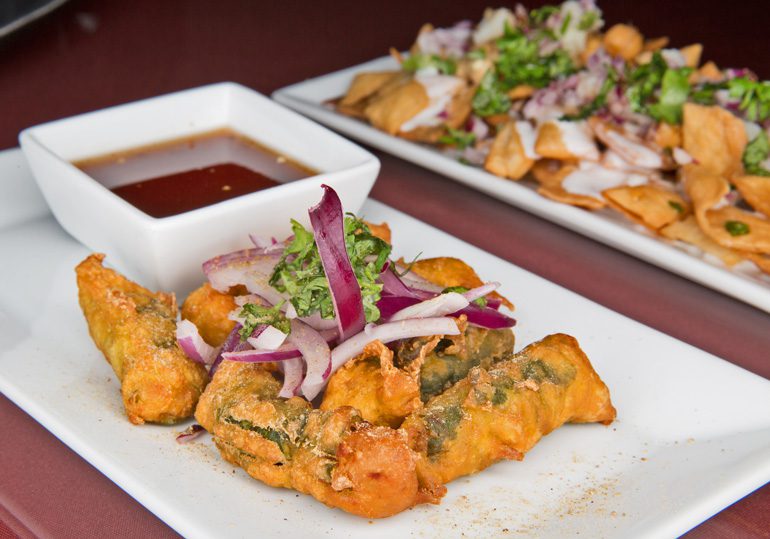
Flavorful chicken spinach rolls at cumin honor the tradition of indian cooking techniques and dishes straight from the home kitchen. Photo by Brandon Scott.
Flavorful chicken spinach rolls at cumin honor the tradition of indian cooking techniques and dishes straight from the home kitchen. Photo by Brandon Scott.
The best meals in India are served in private homes, behind closed doors the tourist can never enter; and the best chefs are women born in tiny villages, immersed in Indian food traditions from birth, taught by their mothers who learned from their mothers before them.
“What you find at home,” says Shifali Bhullar, chef at Cumin, “you can’t find at restaurants.”
Bhullar grew up in a family of foodies.
“My dad cooks, my mom cooks, my brother cooks; everyone cooks in my family,” she says.
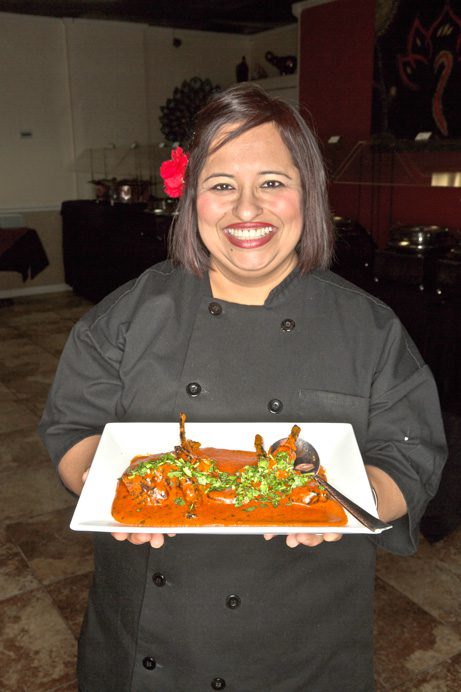
Chef Shifali Bhullar is no stranger to the Tulsa cuisine scene, but she’s making a new mark with cumin, her new restaurant, which specializes in homestyle indian cooking, such as the lamb chop masala. Photo by Brandon Scott.
Bhullar is standing in Cumin’s sparkling, new kitchen. Three pans, slick with oil, are heated on the stovetop. She throws mustard seeds and a sprig of curry leaves into one pan, cumin seeds in another, some garlic in the third. She tosses some onions in the first pan, stirs, then adds a pinch of ginger, a few ounces of pureed tomatoes, a bit of cayenne, then salt and sugar. Into the second pan, meanwhile, goes salt, cayenne and cumin seeds, each addition punctuated by a graceful stir and swirl. Finally, in goes an eggplant that has been roasting in a tandoor, the traditional Punjabi oven.
“It’s never-ending,” says Bhullar of helming the kitchen at Cumin. “I come to the kitchen at 7:30 in the morning to start work for the lunch buffet. That takes four hours. The minute the buffet is ready, I start work preparing dinner.”
The dishes for the lunch buffet are made fresh every day. Bhullar also cooks special dishes for the weekend buffet. You might find dum biryani, a paella-like rice dish that takes almost four hours to make. Even on weekdays, the buffet lineup changes daily.
“I’m just doing it the way I cook at home,” says Bhullar as she mixes roasted fenugreek leaves into the eggplant pan.
She’s happy now, immersed in the cooking, moving from pan to pan with a balletic grace. A swirl of creamy coconut milk goes into the first pan, followed by slices of fish fillet.
“That’s Goan fish curry,” she says.
It’s not a dish she grew up with, but, she says as she adds in a bit of tamarind paste, “it’s my take on it.”
Food is plated and carried into the dining room, where the somewhat sparse decor is livened by crimson tablecloths and paintings that Bhullar acquired on a special trip to India. They’re colorful and modern, vaguely abstract mosaic designs and sultry women in saris.
There are quite a few diners at the tables, and some of them have encountered Bhullar before. She and her family have been in Tulsa since the late 1990s, when they left India to join an uncle who emigrated to Broken Arrow decades before.
“I try to visit India every few years to show my children where they’re from,” Bhullar says, “but it’s not my home. I’m American now.”
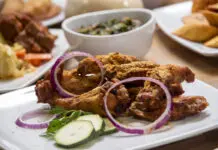
More plates come out of the kitchen, their bright colors forming a rainbow of epicurean delight. Lamb chop masala is covered in a fire-red sauce dappled with specks of brown. Bhullar is proud of this dish, which she says conveys the essence of Punjabi cuisine. Its mellow, toasty sauce enriched by the drippings from the lamb merit pride. Bright green plates of lamb saag and palak paneer are sprightly dishes with fresh vegetable flavor highlighted by notes of citrus and spice. Several of the dishes shine with a tawny, autumnal glow. Their colors blending amber and umber, butter chicken, chicken shahi korma and paneer pasanda may look alike, but they taste completely different. Each has a rich, complex blend of ineffable flavors. Some have a deep, nutty flavor from ground cashews. All the chicken is roasted in the traditional tandoor oven. In contrast with these bright sauces, many of the menu selections, including most of the extensive vegetarian lineup, have no gravy at all. Instead they’re studded with a medley of fresh herbs and spices.
All dishes are expertly cooked and efficiently served. Though Cumin is new, Bhullar isn’t a novice. For four years, she and her husband ran Tulsa’s Indian Corner. Bhullar had to close that restaurant to care for family. But, says her husband, “we couldn’t stay away from it; it’s a passion for both of us.” 8242 E. 71st St., Tulsa. 918.994.7404
Custom car pioneer Darryl Starbird looks forward to the 20th anniversary of the national rod and custom car hall of fame museum in June. Photos by Brandon Scott.
Darryl Starbird was just a kid when America began its deep love affair with the car. In the mid-20th century, Americans, finished with Europe and tired of war, returned home to play, and their favorite toy was the automobile. It rapidly became a steel symbol of the American dream, an emblem of hard work. Like America, it was full of possibilities, and Starbird and a handful of talented designers and builders were hell-bent on exploring every one of them.
The National Rod and Custom Car Hall of Fame Museum sits, fittingly, on Route 66 near Grand Lake. Home to more than 50 unique automobiles, its mission is two-fold: to recognize the best designers and builders on the custom car scene that exploded after World War II and to memorialize America’s love affair with the automobile.
Custom car pioneer Darryl Starbird looks forward to the 20th anniversary of the national rod and custom car hall of fame museum in June. Photos by Brandon Scott.
“I want people to appreciate not just the cars. I want them to appreciate the designers and the skill and effort it takes to build the cars,” says Starbird. “Mostly, I just want to keep the American love affair with the automobile alive and well. That’s really what it’s all about.”
Founded by Starbird and his wife, Donna Starbird, in 1994, the museum holds 52 custom vehicles at any given time. Twenty-six are Starbird creations, a snapshot of his five-decade career as a custom car builder. The rest of the specimens are on loan from other builders around the country.
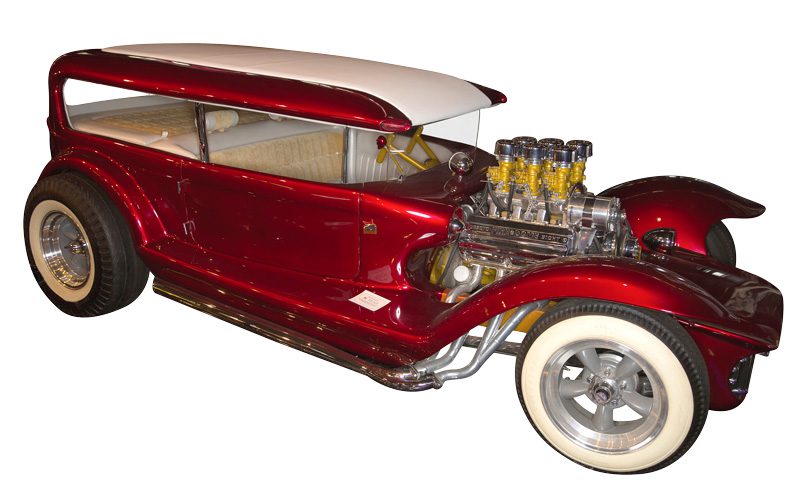
To be considered for display at the museum, a car must excel in one area: uniqueness. It must, above all other things, be one of a kind. The cars are stylistically wild, the futuristic imaginings of dreamers, who paid full attention in shop class. As unique as it gets, they’re named like horses: Predicta, Futurista, Debonair, Reactor Mach II.
“We have all types of cars in the museum,” says Starbird. “The main criteria is that they must be one-of-a-kind, exotic vehicles. We don’t display [cars from] even your average show car. They must be unique. We’ve only got room for 52 of them, so the cars must be well-known, as well; maybe they’ve gotten a lot of publicity or won awards.”
Starbird’s career began with tinkering. He had no formal training as an automobile designer but earned his chops doing bodywork in his hometown of Wichita, Kan. He picked up mentors along the way, heavy-hitters on the nascent custom car scene: George Barris, Sam Barris and Joe Bailon. In 1954, Starbird began customizing his own vehicles, a hobby financed by his fledgling business, the Star Kustom Shop.
After a couple of well-received entries at custom car shows, Starbird hit the big time in 1959 at the National Hot Rod Association’s National Custom Car Show in Detroit, then the automobile capital of the world. His entry, a 1957 Thunderbird lovingly named Le Perle, swept the top honors. With its smooth lines, accented fins and tubular styling, the car hinted at the aerodynamic designs that would become the Starbird trademark over the years.
“I went to school to be an aeronautical engineer. I worked at Boeing while I was in college. That background and being from Wichita, which was the airplane capital of the world back then, made an impact. The aerodynamic part of it, the aircraft influence of it, has affected my designs more than anything else,” says Starbird.
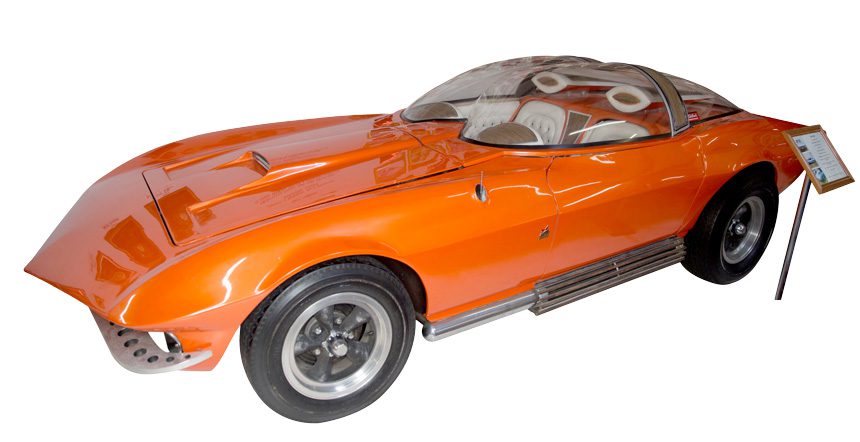
Starbird’s 1960 entry further wowed the auto world: the futuristic Predicta, a heavily modified 1956 Thunderbird that featured stick steering, a television, and most importantly, a bubble top – edge-to-edge glass with no support. The Predicta erased all suspicions that Starbird was just a flash in the pan and earned him the nickname of “The Bubble Top King.” Until Starbird put bubble tops on working cars, they were little more than sketches and drawings in the pages of Popular Mechanics. The Predicta was named “Car of the Future.”
Lil’ Coffin is among Starbird’s best known custom cars.
Custom car aficionados know Starbird’s name. They also know that his contributions to the popularization of the custom car scene weren’t limited to his unique creations. In 1957, he donned the promoter’s hat and hosted his own show in Wichita. It was a hit, and he expanded his repertoire to include 15 major cities across the country. His Tulsa show is the largest indoor car show in the nation.
“Darryl made two big contributions. One was producing car shows. It was significant because it brought a large number of people to see those beautiful automobiles. That’s one facet of his career. The other contribution is in the cars he built,” says Tom Vodele, editor of StreetScene magazine.
With these new and expanding outlets for creativity, the custom car scene exploded. As the shows drew in hundreds of thousands, Starbird and other creators focused solely on competition, rejecting lucrative orders from private collectors and auto enthusiasts.
Many of the popular draws for those shows live at the museum these days. Gene Winfield’s Reactor Mach II is a favorite for visitors. A modified 1956 Citroen DS, it found its way on to television shows like Bewitched, Star Trek and Batman. It proved that no Hollywood imagination of the future could fly without a serious imagination of the car, as well.
For Starbird and his colleagues, designing and building custom cars has taken on a cultural significance.
“I feel that it’s a sport because of the competition,” he says. “The guys actually build the cars to enter in the car shows around the country to win trophies. They’re competing with their skills, like you would in any sport. It takes real skill to build a car, and they’re definitely competing.”
As the audience grew, Starbird redoubled his efforts to inject custom cars into popular culture. In 1975, he founded the National Rod and Custom Association, an organization charged with spreading the enthusiasm for custom cars.
Starbird’s biggest pop culture coup sprang from the aisles of toy and hobby stores. A 1963 offering, the aptly named Futurista, was the first car built wholly by Starbird. The car body was handmade, and with stick steering, a double bubble top, fully electronic controls and a ton of other dream accessories, it’s considered futuristic even by today’s standards. It was also one of the first kits released by the Monogram model company with Starbird’s name on it. As a design consultant with the company, Starbird ultimately contributed 15 kits. Over the years Monogram has sold more than a million units of Starbird’s designs, and several are still available.
The bubble-topped Cosma Ray is just one of the more than 50 custom vehicles on display at the national rod and custom car hall of fame museum.
“Through his relationship with Monogram and his model car kits, he inspired many people. I hear so many people at our events tell Darryl, ‘I remember building that model car kit that you designed with Monogram!’ They inspired a lot of young people to get into this hobby,” says Vodele.
For his part, Starbird knew that custom cars had dented pop culture when his name popped up in George Lucas’s masterful teen epic, 1973’s American Graffiti. Though he served as a consultant on the film, Starbird wasn’t expecting to hear his name dropped in it.
“I thought it was just a B movie that would run at [drive-ins] and go away,” he says. “Lucas picked me over other designers because he, like me, was very much interested in futuristic things. My cars, of course, are futuristic. I felt really good about it. I probably got more mention from that one sentence in American Graffiti than I’ve gotten from all the cars I’ve built.”
Now 82 and theoretically retired, Starbird can still be found in his Grand Lake shop every day. He continues to add to the more than 200 cars he’s designed and built over five decades. The game has changed over the years as new technologies and materials become available. The emphasis these days, he says, is not so much on body styling. Contemporary enthusiasts are retooling engines and replacing interiors. The quest for singularity, however, remains.
The museum’s 20th anniversary celebration, set for June, will be big. Custom car designers from around the world will attend an award ceremony that’s garnered a reputation as the Oscars of the custom scene. Two new creators are slated for induction into the hall of fame, and a few of their cars will be on hand. Designers and builders from around the world will converge on Grand Lake, and they’ll bring some of their cars with them. More than 200 unique creations, past and present, will be on display for the public.
“The museum is the only place in the world that pays homage to these builders. There are museums for NASCAR. There are museums of drag racing. There are basically museums for all mainstream forms of motorsports. This is the only spot that pays homage to custom car builders and hot rodders. For that single reason, it’s important,” says Vodele.
When she was told she was to be inducted into the Oklahoma Hall of Fame, Alfre Woodard confesses that she understood little about the honor. But in November, as she stood beside Blake Shelton, Wanda Jackson and the rest of her 2014 class, Woodard suddenly was “gobsmacked.”
“Each of those people who have been inducted [through the years] are such strongly unique individuals and contributors to our state and to our world. It was like joining this sort of epic sorority/fraternity,” she says. “Yeah, it got deeper and deeper, the significance of it, for me, because it didn’t have to do with just the moment. It links me to the past, and it links me to the future.”
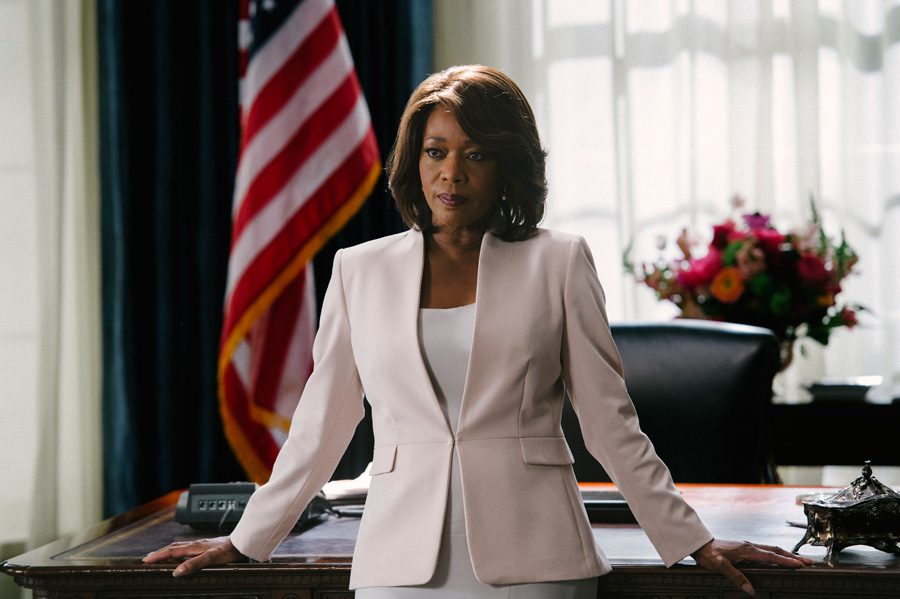
Photo by Michael Parmelee/NBC.
Even without such honors, however, Woodard, a Tulsa native, is and will be known as one of the most respected actors of her time. Endowed with numerous awards for her acting on television, film and stage, Woodard is still in hot pursuit of those creative projects offering a new experience. As U.S. President Constance Payton on NBC’s primetime hit State of Affairs, Woodard flexes the political savvy she first cultivated as a child.
“I walked to the [voting] precinct with my mom and dad there in north Tulsa when I was 10 years old,” she recalls, “and they always said to me, ‘This is Democracy.’ Everybody is responsible and has to get involved…it doesn’t work by itself. It works because people get in, and they work.”
Woodard continues to stay involved in the political machine by working on campaigns, participating in protests she deems necessary and visiting with elected leaders. On the State of Affairs set, her knowledge of Washington, D.C., and its protocol is a definite asset; and it’s made her more than capable of playing the tough, decisive Payton.
Yet, when asked about past accolades – four Emmy Awards, a Golden Globe Award, three SAG Awards, eight NAACP Image Awards, a nomination each for an Academy and Grammy award – Woodard would never say she is “proud” of them.
“I am happy and very satisfied about the things that I have done because of the feedback that different people have said – ‘This is why this touched me,’ ‘Oh, I recognize myself in that, ‘Oh, I recognize another
human being in that.’ All of those things are valid, because they don’t belong to me,” she says. “It’s something that I was meant to be a conduit for as a storyteller.
“I’ve enjoyed projects in very different ways, because they are very
different, just like your children are different, and there are no favorites. But I just do my work. Some experiences have been memorable for certain reasons, and I think of them that way…you keep yourself out of the equation altogether.”
As for the experience of playing the leader of the free world, it’s still a little early to summarize.
“We’re still stirring the soup, you know? People are just starting to say, ‘Mmm, smells like soup! Smells good,’” she says, laughing, of State of Affairs.
Others have made up their minds already: She is up for another Image Award for her role in the series.
Woodard lives in Santa Monica, Calif., with her family; and aside from visits, she’s been away from her old hometown and state since she left at 17 to attend Boston University.
“I’m going to be honest with you – I don’t think about being an African-American person during the day when I’m going about my life. I don’t think about being a woman every day. And I don’t think about having been born in Oklahoma and raised in Oklahoma, but it certainly…informs the way that I move about the world and how I interpret the world and how I interact in the world,” she says. “Do you know what I mean? I just am myself.”
But Woodard never hesitates to clear up any misconceptions or stereotypes about her old home state.
“Of course, anytime anybody says ‘Where are you from?’ I say, ‘Oklahoma,’ and there’s a big conversation,” she says. “It definitely flavors who I am.”
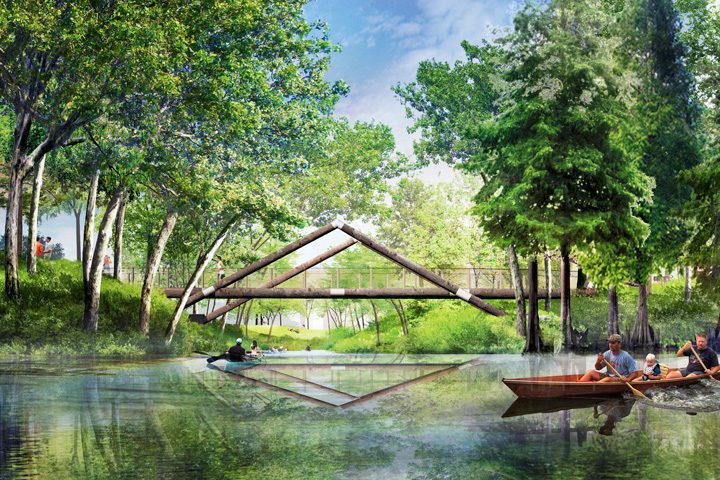
Renderings of the future riverfront park reveal the vision of a gathering place as a nature-rich environment for activities and community. Image courtesy A Gathering Place.
Renderings of the future riverfront park reveal the vision of a gathering place as a nature-rich environment for activities and community. Image courtesy A Gathering Place.
Thriving communities are anchored by centralized parks. It is this conclusion from the George Kaiser Family Foundation that became the basis for A Gathering Place, a large park under construction along Tulsa’s Arkansas River bank that will include more than 100 acres of riverfront space when complete.
The George Kaiser Family Foundation has partnered with numerous corporate and community philanthropists to fund the project, which the foundation hopes will have a positive cultural, economic and ecological impact on the city. The George Kaiser Family Foundation and its community partners will work together to create the $350 million park. With what is believed to be the largest gift to a public park in U.S. history, GKFF donated ownership of A Gathering Place to the Tulsa River Parks Authority; the River Parks Authority will be responsible for long-term operational and management responsibilities.
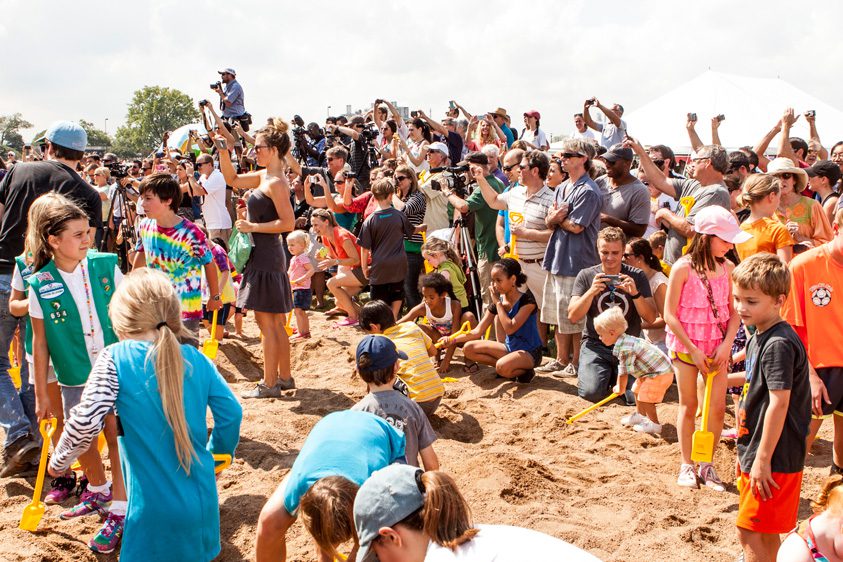
Children played a large part in September’s groundbreaking ceremony for a gathering place. Photo courtesy A Gathering Place.
The hope for the park, which runs along Riverside Drive from 26th Street to 33rd Place, is that it will complement existing urban amenities and strengthen the connections between Tulsa and the natural environment.
The model for the park was unveiled in June 2013. Ideas were submitted for the park from the public and are reflected in the design, which is by Michael Van Valkenburgh and Associates, a Brooklyn, N.Y.-based firm that
specializes in urban projects. Oklahoma-based Manhattan Construction will manage the construction of the park.
“The design for A Gathering Place was heavily influenced from public input gathered at public meetings early in project planning,” says Jeff Stava, executive director of Tulsa’s Gathering Place, LLC. “More than 1,400 ideas were submitted, and many are reflected in the final park design. This park will truly belong to Tulsans and will be an asset for the current and future generations. The diverse features in A Gathering Place will create a park that young Tulsans will grow and develop in. Our vision is for A Gathering Place to be an inclusive space that all citizens feel welcome to experience year after year.”
With park development underway since the September 2014 groundbreaking ceremony, the 66.5-acre Phase I is estimated to be completed near the end of 2017. Information regarding project updates, photos, upcoming events and renderings can be found online at agatheringplacefortulsa.com.
A Positive Impact
The current site provides opportunity in the form of property, green space and proximity to Tulsa’s Arkansas River riverfront, says Stava.
“The park design leverages these opportunities by seamlessly unifying three previously separate parcels of land with the existing River Parks system, creating a dynamic and active park space,” he says. “This unique, continuous space will be created by two massive land bridges that [will] provide the heart of the new park and serve as a recreational connection between the city and the riverfront park systems.
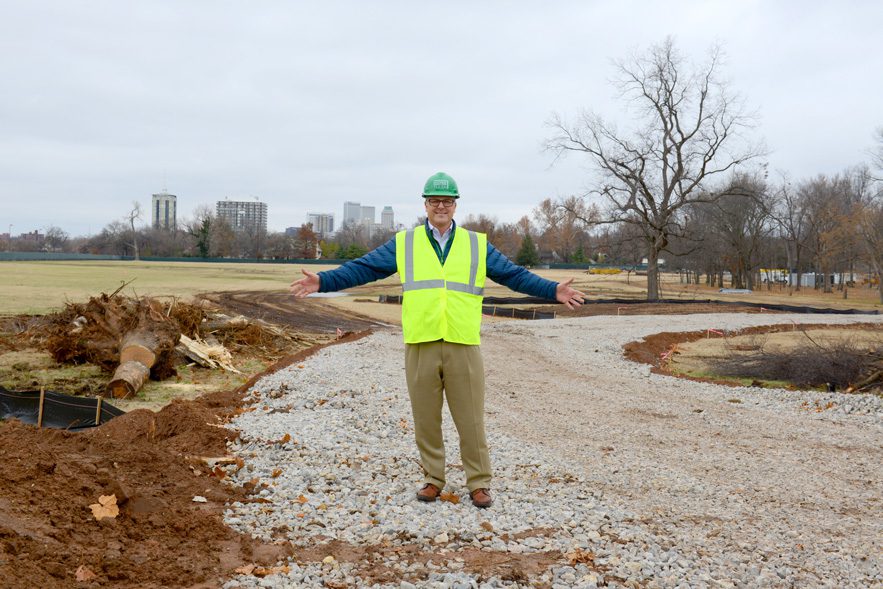
Jeff Stava, executive director of Tulsa’s Gathering Place, Llc, stands on land near riverside drive that eventually will be transformed into a gathering place. Photo by Natalie Green.
“Not only will this allow visitors to reach and experience all areas of the park safely, it will afford Tulsans access to the Arkansas Riverfront like never before. Every aspect of the park is designed to be built intentionally to create learning opportunities for children and visitors. Major playground equipment within the park will be designed by Monstrum, based in Denmark, and Richter based in Germany. A Gathering Place will be the first U.S. based project for Monstrum, [which] creates highly imaginative playground environments,” he adds.
No doubt A Gathering Place will provide new opportunities for Tulsa residents in terms of entertainment and outdoor activities, but the park is also expected to have a large economic impact, as well. In a 2013 study it was projected that 580,000 visitors will patronize and experience the park annually. During the construction phase, more than 1,600 local construction jobs will be supported, and an estimated $460 million will be spent locally as a result of construction. Once A Gathering Place is completed, the park will support approximately 35 permanent jobs; and annual economic output for park operations is estimated to be in excess of $3.4 million.
“George Kaiser Family Foundation, corporate and community philanthropists and the Tulsa River Parks Authority are committed to creating a vibrant park to serve as a cornerstone to our city,” says Stava. “With design developed from community input, every aspect of this project is meant to improve the life of Tulsans and citizens in the surrounding communities…Along with our partners, we feel confident in the project we have begun, and the end result will enhance our community for generations to come.”
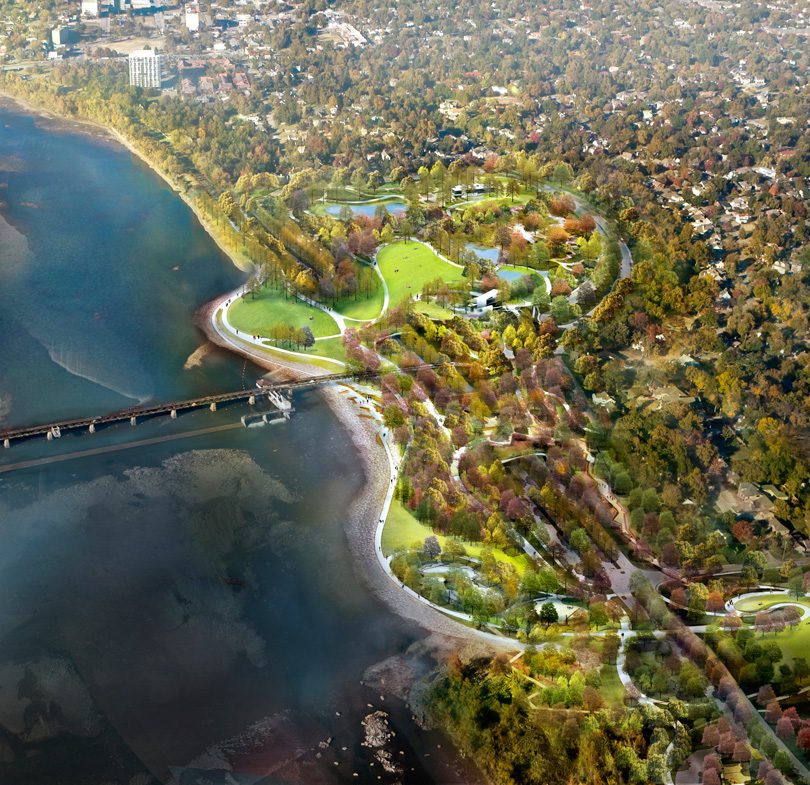
A rendering projects what A Gathering Place will look like within Tulsa’s existing structure. Image courtesy A Gathering Place.
Current Gathering Place Donors
Williams Companies, $16 million
QuikTrip, $12.5 million
Chapman Foundations, $10 million
ONEOK, $10 million
$5 million: Charles and Lynn Schusterman Family Foundation; Magellan Midstream Partners, L.P.; Nadel and Gussman Energy, LLC; F.W. Murphy Family Foundation; Peggy and Charles Stephenson; The Helmerich Trust; Joe Craft; The Zinke Family; SemGroup Corporation and Bank of Oklahoma.
$3 million: Kathy S. Craft, Unit Corporation, Laredo Petroleum, Manhattan Construction/Rooney Families and AAON, Inc.
$2 million: The Zarrow Foundations
$1.5 million: Thomas Families, Susan & William and Jill & Robert and John Steele Zink Foundation.
$1 million: Bumgarner Family Foundation, J.E. and L.E. Mabee Foundation, Stephen and Shelley Jackson Family Foundation, Linda & Stuart Price and Family, Pam and Tom Russell, Omni Air International, Bonnie Klein, Dekraai Family Fund and Grace and Franklin Bernsen Foundation.
Other significant donors to the Gathering Place project include Sarah and John Graves, Stuart Family Foundation, John Smith, Ernie Kivisto/Jane Ann Maconi Kivisto, Bryan Close, Peter M. Walter, Ed and Kathy Leinbach, Jackie and Bob Poe and Chickasaw Nation.
The excitement and leisure of a two-week honeymoon has virtually become a thing of the past. Though some couples can afford the expense and break from work that an extended, post-wedding vacation requires, more couples are opting for “mini-moons” – shorter trips that take less time and money. Though mini-moon destinations can be far-reaching, many locales in North America pack a great vacation into a short period of time.
Napa Valley, Calif.
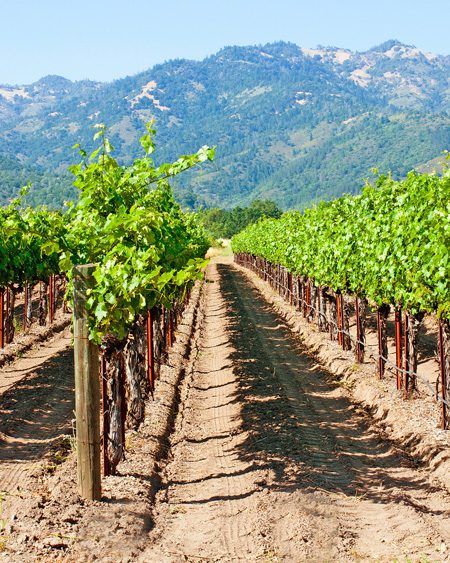
A trip to Napa lets the romance from the wedding continue. Upscale hotels, resorts and bed-and-breakfast spots offer a range of amenities depending on the season during which a couple visits. Napa is a great place for hiking and biking and even hot-air ballooning, but the star of Napa Valley, of course, is the plethora of wineries. Hundreds of wineries dot the landscape of Napa Valley, ready to welcome guests on tastings tours. Restaurants serve a variety of cuisines and range from small cafés to Michelin-starred establishments. The area is also renowned for golf and tennis and for its upscale shopping opportunities.
Perfect for: Wine aficionados
Be sure to: Take a wine tour, whether it’s by plane, train or automobile.
Stay at: Auberge du Soleil, a five-star hotel located in Rutherford, Calif.
New Orleans
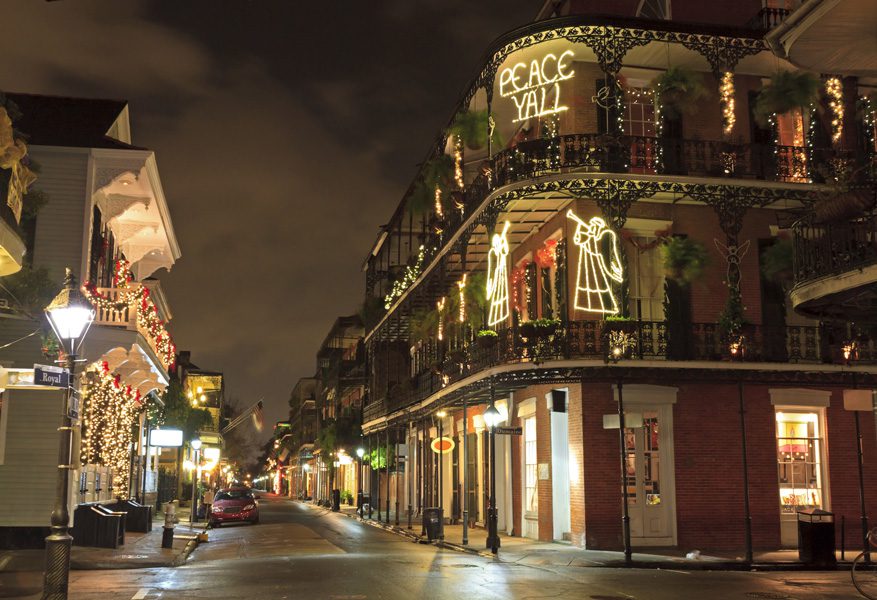
New Orleans offers varying experiences depending on the time of year: Mardi Gras, professional sports, festivals and art exhibits. But there are also some satsifying constants: food, drink and exciting nightlife. Traditional cuisine, including gumbo, po’ boys, muffalettas and beignets, can be found all around the city in small cafés. There’s also a wealth of five-star international cuisine for those who are looking for something a bit more adventurous. Tours of the city are available through various outlets, but perhaps the best way to take in New Orleans is by walking through the historic French Quarter. Soaking up the culture, music and nightlife of this great American icon provides entertainment, romance and a lifetime of memories.
Perfect for: Night owls
Be sure to: Stop into a French Quarter nightclub to hear the city’s music.
Stay at: The Roosevelt Hotel, just one block from the French Quarter.
Sugarloaf, Maine
An outdoor lover’s dream, Sugarloaf offers a wide variety of activities year round. It’s the largest ski resort and destination east of the Mississippi River, and the conditions are favorable for top-notch skiing from mid-November through May. It’s also a great place to people-watch; many notable Olympic skiers train at Sugarloaf. During summer months, the mountain provides hiking, golfing, zip lining and mountain climbing. Several restaurants occupy the mountainside, providing opportunities for both casual and upscale dining as well as hotspots for nightlife.
Perfect for: Outdoor enthusiasts
Be sure to: Try your hand at snowboarding in Sugarloaf’s newest expansion, Brackett Basin.
Stay at: Sugarloaf Mountain Hotel, a quaint, upscale hotel located just yards from chairlifts in the heart of Sugarloaf Village.
Victoria, B.C.
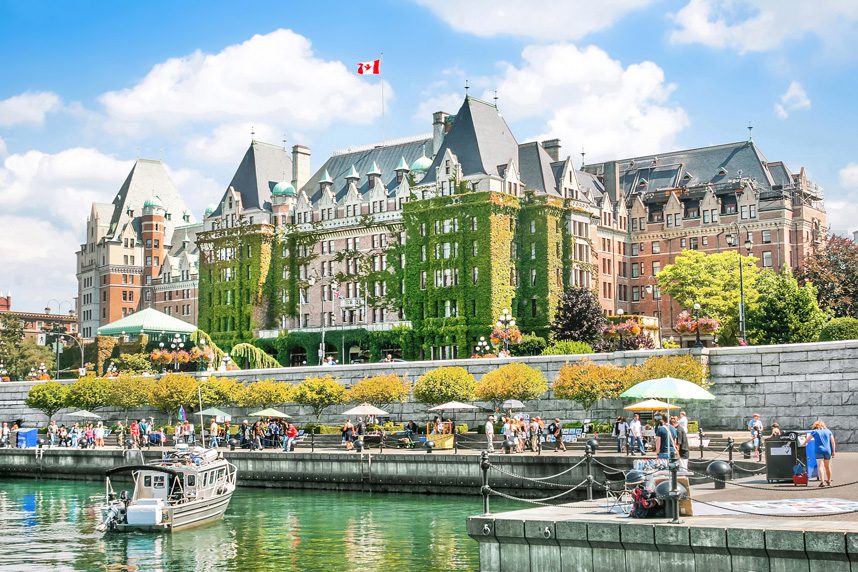
The oldest city in the Pacific Northwest, Victoria is located just north of the Canadian border with Washington state. The city is famed for its rich culture and abundance of museums, art galleries, festivals and cultural events. Tours of various historical venues, including castles, churches, temples and museums, are available. The Butchart Gardens, renowned for its floral show garden that draws nearly one million visitors each year, is a favorite among tourists. The garden is built upon land that was once an old limestone quarry.
Perfect for: History buffs
Be sure to: Tour the Craigdarroch Castle Historic House Museum, a great example of Victorian architecture.
Stay at: Clayoquot Wilderness Resort, an exclusive destination that combines luxury with traditional camping.
When tasting the barbecue stuffed chicken bomber from Southern Gentlemen Barbecue & Catering, focus on the explosion of flavor in every bite.
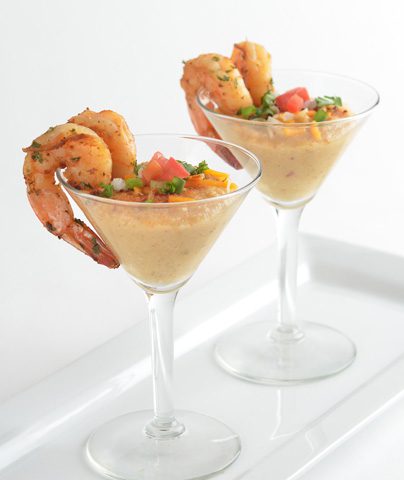
Always looking for new takes on culinary traditions, Southern Gentlemen offers the Cajun shrimp and grits martini, an inventive kick on a Southern favorite.
Polo Grill
Photo by Dan Morgan.
Never to be outdone, Polo Grill serves up seared scallops with roasted red pepper coulis and jalepeño poppers – a carousel of surprising flavors, texture and fun.
Aila’s Catering Kitchen
Photo by Dan Morgan.
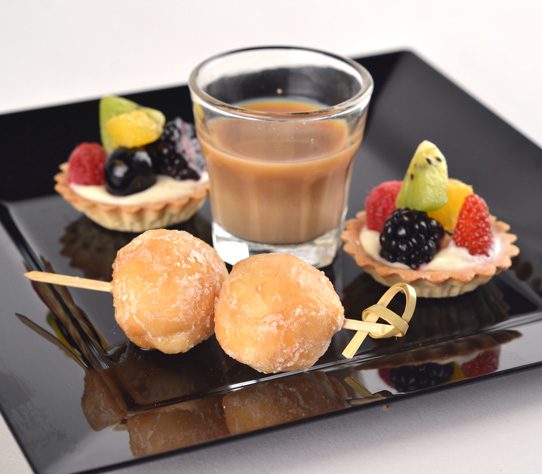
On the sweeter side of Aila’s Catering Kitchen, delicate fruit tarts topped with fresh kiwi, citrus and a berry assortment are paired with Bailey’s Irish coffee and doughnut holes
Beef Wellington – a beef filet coated in a blend of exquisite ingredients before it’s all wrapped in puff pastry and baked – is an extra special deluxe dish in richly flavorful bite sizes that are easy and fun to serve to many guests.
The Vault
Photo by Dan Morgan.
The Vault’s fried chicken and waffles sandwich is more than a mouthful of buttermilk-breaded and fried chicken breast stacked atop fresh veggies between two sections of a homemade waffle. Yep, that’s gourmet bacon on top!
The deviled eggs with salmon is a playfully decadent spin on a party favorite with beet-rich color and a smoky dollop of thin-sliced salmon.
Palace Café
Photo by Dan Morgan.
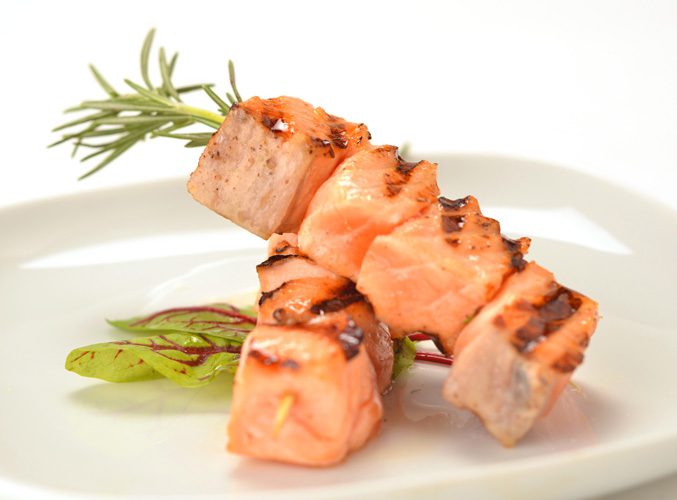
The grilled rosemary salmon skewers from Palace Café are perfection of color, aroma, texture and flavor for the most refined palates and wedding receptions.
Don’t expect the usual suspects on the grilled vegetable skewer. This tasty hors d’oeuvre includes gently roasted zucchini, peppers and fruity chanterelle mushrooms.
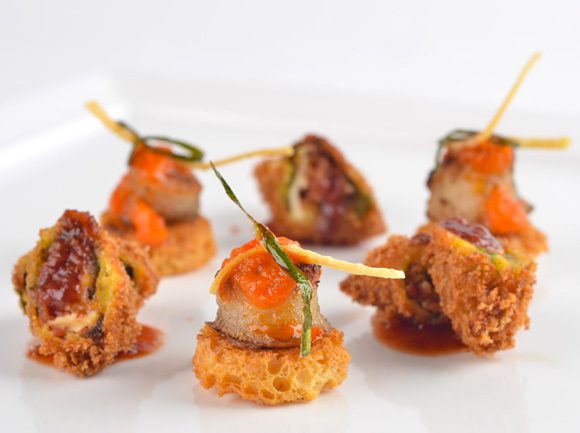
The grilled scallop with tomato chutney on top of a slice of Yukon gold potato is the height of creative eating.
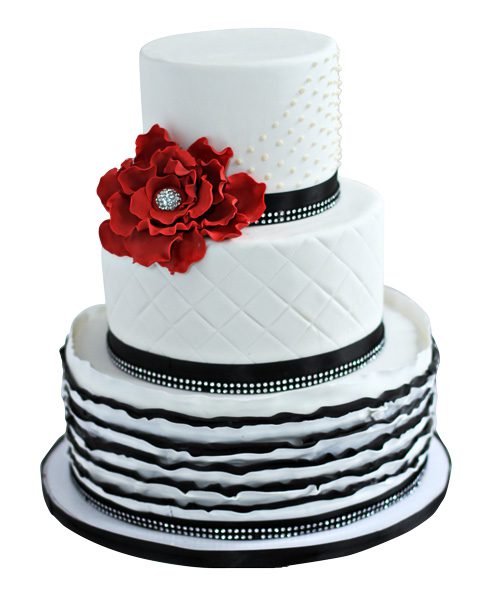
Three-tier cake with quilt and beadwork, rhinestones, ribbon and a flower. Andrea Howard Cakes. Photo by Andrea Howard.
Soft pink buttercream with fondant detail and gumpaste flowers. finished with pearl details. Brown Egg Bakery. Photo by Brent Fuchs.
Three-tier cake with quilt and beadwork, rhinestones, ribbon and a flower. Andrea Howard Cakes. Photo by Andrea Howard.
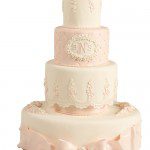
A mix of pink and white lace, flowers and pearls with a floral framed monogram. Icing On The Top. Photo by Scott Miller.
Three-tier, tropical-themed cake with ribbon, floral icing work and oversized flower and leaves. Mishelle Handy Cakes. Photo by Brent Fuchs.
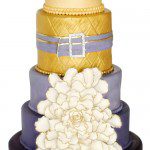
Five-tier cake with gold and purple saturation, rhinestone buckle and gilded flowers. Andrea Howard Cakes. Photo by Andrea Howard.
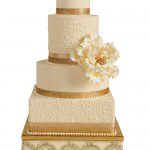
Gold accents and petite piping contrast with modern, multishaped tiers and a large sugar flower. All Things Cake. Photo by Scott Miller.
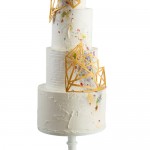
Abstract design cake focused on depth, texture and hand-painted, geometric fondant cages with edible pigmentation. brown egg bakery.
Photo by Brent Fuchs.
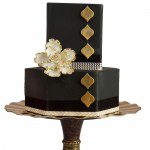
Black fondant with chevron detail and gumpaste flower. Mishelle Handy Cakes.
Photo by Brent Fuchs.
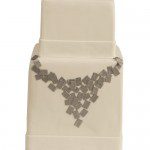
Inspired by a metal-work collar necklace and kept simple to showcase the beauty and complexity of the necklace. Icing on the Top. Photo by Scott Miller.
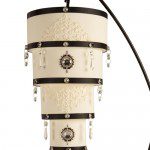
A four-tier, inverted chandelier cake with hand-piped scrolls and a simple palette of black and white is timeless. All Things Cake.
Photo by Scott Miller.
Three-tier cake with ornate lace and flower work. Rosebeary’s Designs in Baking. Photo by Brent Fuchs.