















Home Blog Page 650

A Grand Old Name

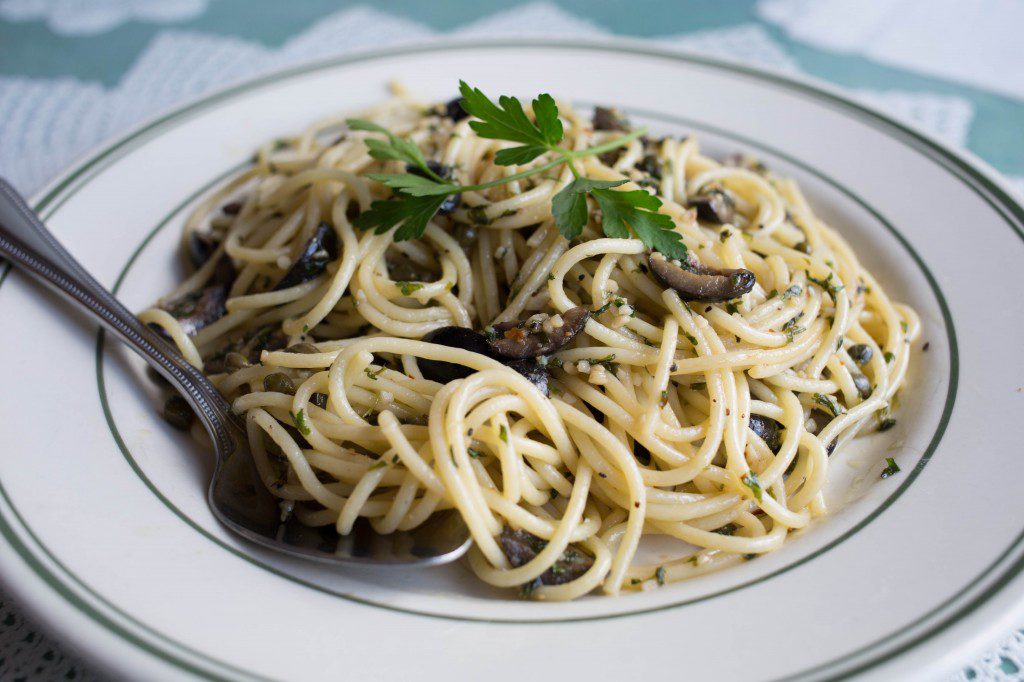
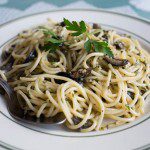
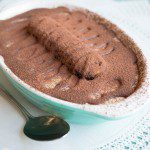
Pasta Puttanesca. Photo by Brandon Scott.

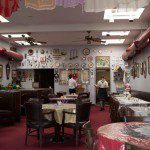
Italian restaurants are family affairs, and Mary’s, one of the oldest Italian restaurants continuously running in Tulsa, is no exception. Just walk around the old brick building and in through the back door – all the regulars do – and see why. In the tiny, spotless kitchen, you’ll find (if you’re lucky) owner Bruce Sternad stirring the long-simmering marinara. Everything you eat at Mary’s Italian Trattoria is cooked by Sternad, his wife, Sherry, or their son. Ahead is the bright, pleasant dining area. The walls, a welcoming gray pastel, are barely visible – every inch is covered with framed portraits and memorabilia, all family relics.

Sherry Sternad’s face lights up when you ask about the portraits.

“That’s my great-great-grandpa on his wedding day,” she says, pointing to a proud yet somewhat terrified-looking young man in one of the photos. “That was back around 1875. Now over there is my great-aunt Christina’s christening gown, and right next to it is my great-grandmother’s wedding gloves and shoes. Those doilies on the tables? My great-grandma crocheted them.

“And that old lady? She’s the only one not from our family,” Sherry Sternad continues. “When I was a girl I spent summers on my grandma’s farm just over the Kansas line. She was our neighbor, and I’d ride my pony over to see her.”

Aside from those pleasant Kansas summers, Sherry Sternad grew up overseas.

“My father sold mud,” she wryly says.

He was, in fact, a drilling fluids engineer, and wherever oil wells pierced the ground and needed “mud” to cool and lubricate the pumps, that’s where they lived – Libya, Iran, Australia, Singapore, Norway.[pullquote]There’ve been people who’ve traveled all over the world,” she says, “and they tell us our tiramisu is the best they’ve ever eaten.”[/pullquote]

“I was exposed to foreign cultures,” she says, “and meanwhile, I learned to cook from watching my mom.”

The last thing she expected was to end up running an Italian restaurant one day. When the Sternads moved to Tulsa, she looked for a part-time job and found Mary’s. This was around 1987, and in those days, Mary’s Italian Trattoria was run by an Italian woman named Mary, who learned all her recipes from her large family back in Providence, R.I. Working as wait staff, the Sternads bought the restaurant when its owner retired in 1991. Twenty years later, many customers mistakenly call Sherry Sternad “Mary,” but she doesn’t mind. Many of the dishes are still based on those original recipes, although, she says, “we’ve tweaked and improved them.”

Mary’s is a labor of love, heavy on the labor. Sherry Sternad does the prep work and desserts. She makes the salad dressing (a 19-ingredient secret recipe), she helps bake the bread, and she makes the sinfully fabulous tiramisu.

“There’ve been people who’ve traveled all over the world,” she says, “and they tell us our tiramisu is the best they’ve ever eaten.”

She supervises the front of the house, which means she knows most of the customers.

“Almost all of our customers are regulars,” she says. “Some come every week, and I make sure they have their favorite table. I’ve seen couples come in on their first date, and I’ve seen them a few years later when the man kneels and proposes marriage; and then I see them every year as they come here to celebrate their anniversary.”

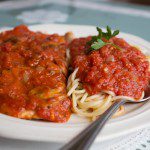
The menu is classic Italian, and, like any classic, the selection hasn’t changed much over the years. There’s the champagne chicken – pounded cutlets with a rich, complex cream sauce, served with fettucine alfredo. It’s Sherry Sternad’s favorite, but she’s also proud of the eggplant parmigiana. Even the simplest dishes, such as spaghetti and meatballs, are memorable thanks to the delicious, hearty red sauce.

Back in the kitchen, Sternad and the couple’s son stay busy making the creamy alfredo sauce several times every evening. They crank the bulky old pasta machine to make homemade fettuccine. They stir the simmering Bolognese. They cook each dish to order.

“Our food is not fast food,” says Sherry Sternad, “and when we’re busy, it takes a long time … sometimes people get upset at the wait, but we just can’t compromise our quality.” 1313 E. 15th St., Tulsa. 918.585.2495
Culture And Adventure

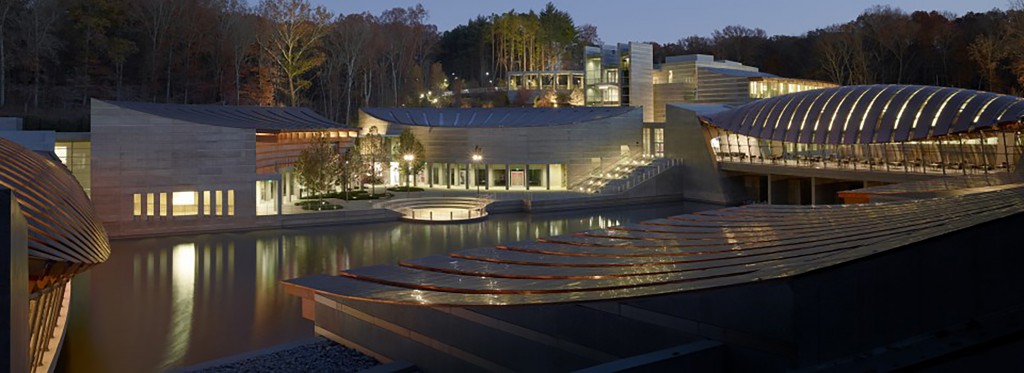
Crystal Bridges Museum of American Art.

Bentonville, Ark.

Bentonville is a growing metro area that regards culture as essential as commerce. Crystal Bridges Museum of American Art celebrates art and nature in a sprawling estate nestled in the foothills of the Ozark Mountains. The permanent collection highlights American works dating back to the Colonial era, and temporary exhibits include works from some of America’s most celebrated artists as well as those lesser known. The magnificence of Crystal Bridges’ architecture is matched only by the beautiful nature surrounding the museum. Several nature trails offer visitors the opportunity to take in flora.

While in Bentonville, stay in style at the 21c Museum Hotel. Combining a luxury hotel with a contemporary art space, the 21c is a boutique hotel offering a variety of suites and packages. The hotel also boasts a fine dining restaurant, The Hive, highlighting the best of Arkansas cuisine.

See where it all began for Sam Walton at the Walmart Museum. Visitors can shop at Walton’s 5&10 as well as take part in an interactive exhibit that tells the story of the evolution of Walmart from a small storefront to the international corporation it is today. Enjoy a scoop of ice cream from The Spark, an old-fashioned soda fountain.

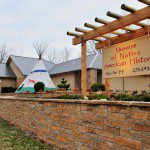
The Museum of Native American History pays homage to America’s indigenous cultures. With artifacts and relics dating back more than 14,000 years, the museum tells the story chronologically in its exhibits with an audio tour. Be sure to see the complete skeleton of a woolly mammoth.

Don’t forget to pack the bikes when heading to Bentonville. The Slaughter Pen Mountain Bike Trail offers more than 20 miles of singletrack trails that range from easy to moderately intense. If biking isn’t an option, hiking is also allowed on the scenic trails.

A Young Man’s Legacy

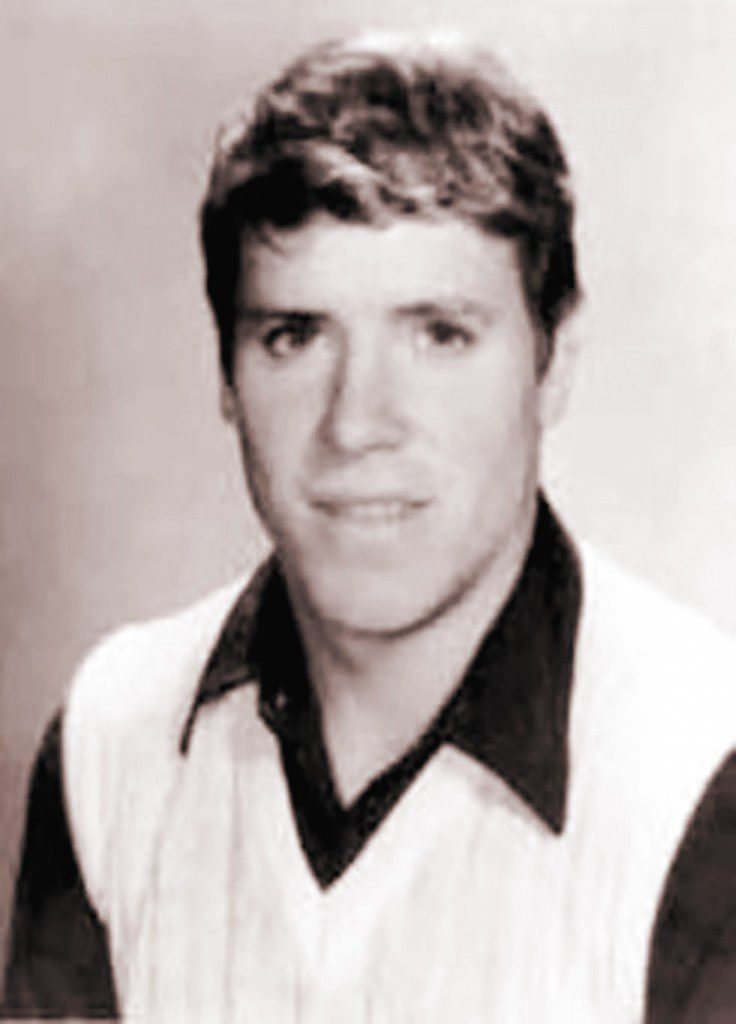
Sean Marsee, seen in a school yearbook photo, before his life was impacted by cancer of the mouth. Photo courtesy American Cancer Society.
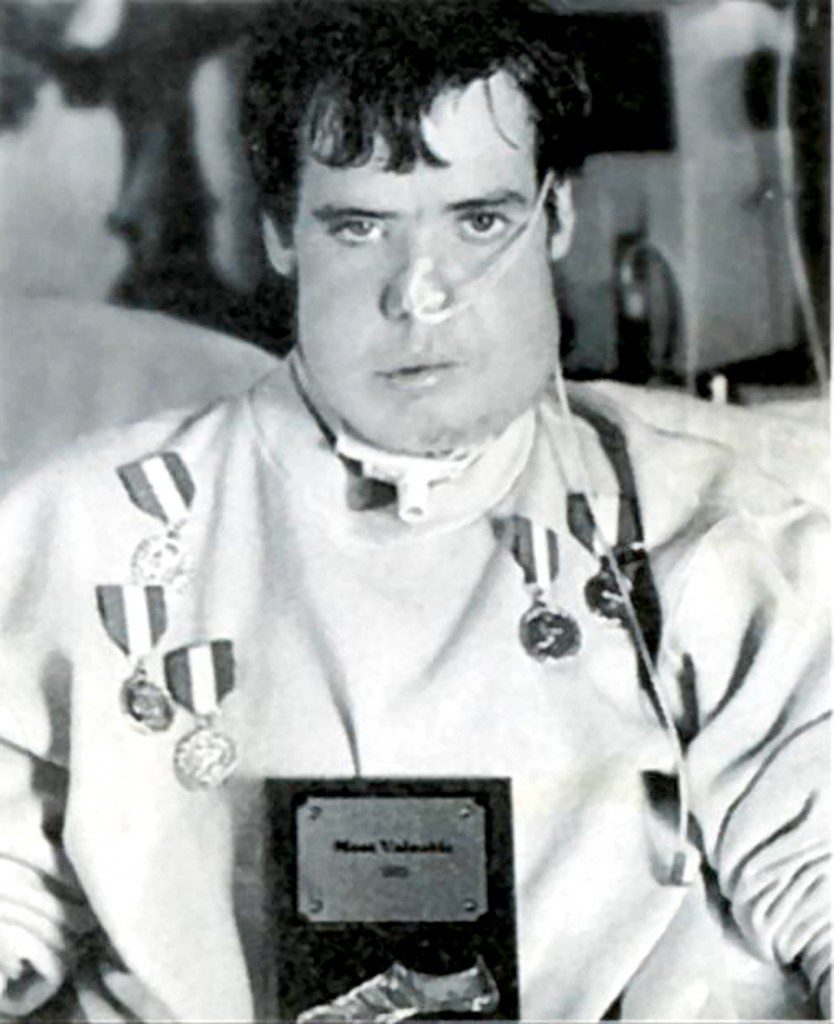
Talahina teen Sean Marsee took his last photo after multiple surgeries removed his tongue, lymph nodes, most of his bottom jaw, part of his neck and his pectoral muscles to prevent the spread of his cancer. Photo courtesy American Cancer Society.

In 1983 Sean Marsee had everything going for him. It was his senior year at Talihina High School, and he was a track star, winner of 28 medals in the sport. He looked forward to the state-level track competition and planned to join the U.S. Army after graduation. Then one day, he opened his mouth and discovered a small sore on the back of his tongue. He waited for the sore to heal, but it didn’t. As it became larger and more painful, he finally confessed to his mother that he had been dipping smokeless tobacco since he was 12 and that he was afraid.

Ten months later, at 19, Sean Marsee was dead.

The Cancer

At the time of Marsee’s death in 1984, nobody was talking about the dangers of smokeless tobacco or “snuff,” as it’s sometimes called. The notion that smoking was dangerous had only recently caught on with much of the public. Nobody gave much thought to dipping. In fact, smokeless tobacco was frequently advertised on television by celebrity athletes like Walt Garrison, running back for the Dallas Cowboys and rodeo star, and the celebrated baseball pitcher Catfish Hunter.

Dr. Carl Hook, however, knew plenty about the effects of snuff. Hook is the CEO of PLICO, a company that insures a large chunk of Oklahoma’s practicing physicians. At the time, however, he was a practicing otorhinolaryngologist at the hospital where Marsee’s mother worked.

“I was aware of the potential for smokeless tobacco to cause ulcerations, dental decay, gum disease and sometimes, unfortunately, cancer formation in the oral cavity,” Hook says. “I treated patients with that type of cancer a great deal during my residency training days at the University of Oklahoma Health Sciences Center, particularly at the VA. But all these patients who had oral cancer from using smokeless tobacco…most of them were in their 60s, 70s, 80s. They’d been doing it for years and years. Sean was the youngest patient with cancer from smokeless tobacco I had ever seen.” [pullquote] Sean was the youngest patient with cancer from smokeless tobacco I had ever seen.[/pullquote]

When Betty Marsee brought her son in to see Hook, the physician’s heart sank.

“When he opened his mouth and showed me…I’d seen cancers before, but people were 60 years older than him,” Hook says. “I was not accustomed to seeing that in a teenager. But there wasn’t much doubt in my mind about what it was.”

Hook didn’t even take a biopsy during the first office visit, so sure he was that Marsee had a dangerous malignancy. The surgeon’s training had taught him that in cases such as this – where the tumor could drain into the lymph nodes of the head and neck – removal of the tongue and lymph nodes and a radical neck dissection were usually necessary to stop the spread of the cancer. Marsee, however, was adamant that only his tongue be removed at the time. He knew that if he had any visible surgery to his neck and jaw, he would never pass the physical to enter the military.

“Betty allowed him to make that decision,” Hooks says. “Sean was mature and independent-thinking, and I told him what the recommendation was, and they listened, and he made his decision…She wanted him to get treated, but she wouldn’t force him to do anything he didn’t want to do.”

Betty Marsee was a registered nurse at Valley View Hospital in Ada and the mother of four other children. Marsee’s father had recently passed away, and she divided her time between Ada, where she worked nights and took care of her youngest children, and Talihina, where Marsee and his brother, Shannon Marsee, lived on their own while finishing high school. The family was already close to unraveling under the strain of poverty and, for some members, addiction. Marsee’s diagnosis threatened to send them careening over the edge. His younger brother, Jason Marsee, remembers clearly.

“When [Sean] was doing his first round of chemo, it didn’t seem like it was affecting him at all,” Jason Marsee says. “But he came to me midway through [treatment] and asked me to come with him.”
During the drive to and from Oklahoma City for chemotherapy treatment, Marsee would get so ill that he would pull to the side of the road to vomit and pass out, recalls Jason Marsee.

“We would stay away longer and longer so he could gather himself so no one knew how sick he was getting,” Jason Marsee says. “…He dipped all the way up to his second surgery; he was putting Copenhagen in his mouth when his mouth was nothing but an open sore. That’s the kind of thing we’re dealing with. I found Copenhagen in the dashboard when I dropped him at his chemotherapy. He wrote down, ‘Don’t tell mom, it’s all I’ve got left.’ The addiction where people pull cigarettes out of ashtrays so they can smoke – it’s desperation at that point.”

Marsee’s cancer had metastasized to his lymph nodes, his brain and his back. In a desperate attempt to stop the malignancy’s course, Hook first took Marsee’s tongue. Subsequent surgeries took part of his jaw and the lymph nodes under the jaw. Eventually, Marsee lost most of his bottom jaw, parts of his neck, the lymph nodes under his arms and his pectoral muscles. He had a tracheotomy and received nourishment through a feeding tube. Meanwhile, he practiced with weights to try and train what was left of his neck to hold up the weight of his head. His weight dramatically dropped from an athletic 140 pounds to almost 80.

“He didn’t even look like the same person,” Hook says.

When tentacles of the cancer were found wrapped around his spine and at the base of his brain, Marsee had enough.

“He said no more surgery,” his brother recalls, “and went home to die.”

Marsee’s last picture shows a barely recognizable, disfigured remnant of a boy surrounded by the medals and plaques commemorating his athletic achievements. Shortly after the picture was taken, his journey was over. Marsee died on Feb. 25, 1984.

“I don’t know what happened at the end,” Jason Marsee says. “…I heard a horrific wail, and I knew it was my sister finding him gone. I smiled when it first happened. I woke up thinking, ‘Thank God.’ That wasn’t the case for the rest of my family.”

100 Things To Do This Summer In Oklahoma

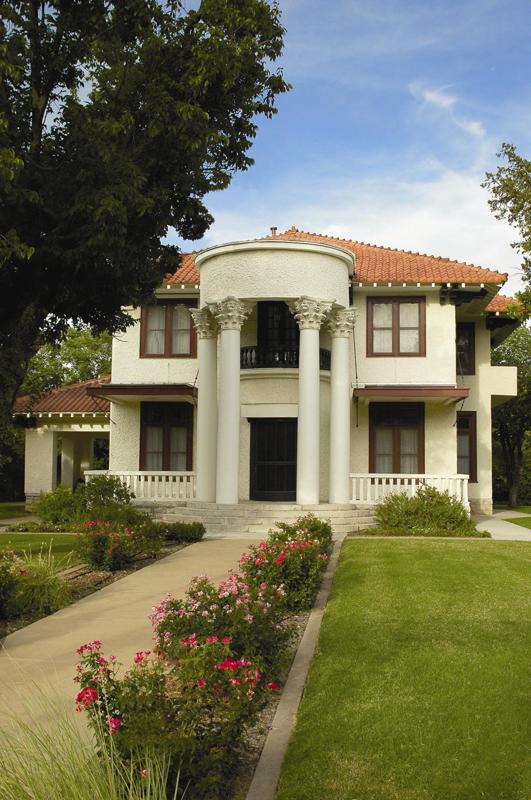
#45: The historic Mattie Beal home in Lawton. Photo courtesy Lawton Heritage association.
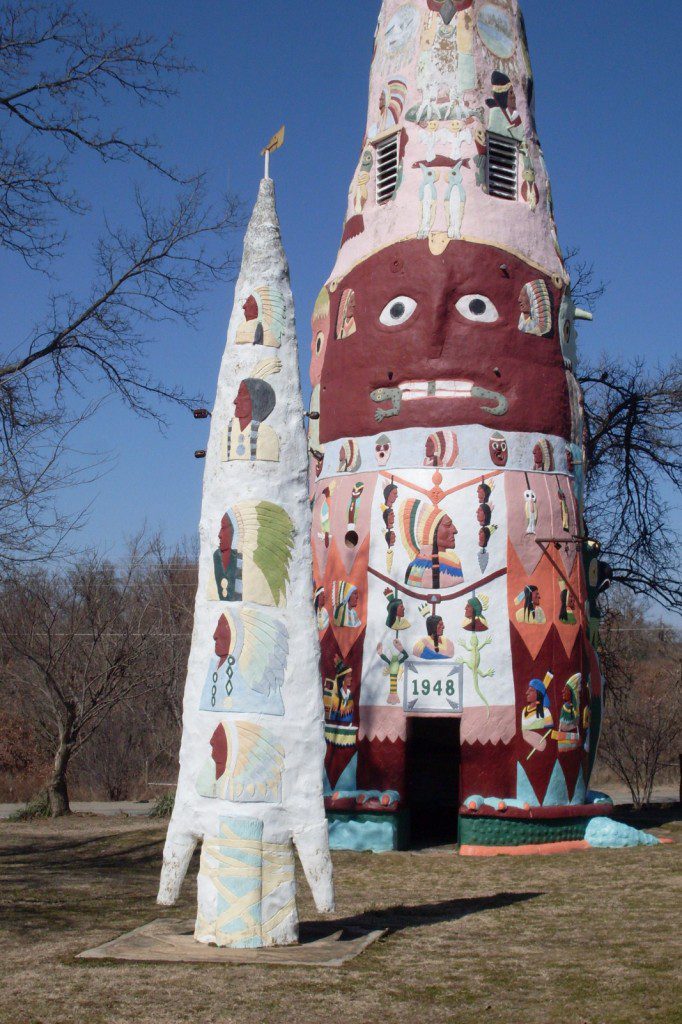
#19: Totem pole in Chelsea.
  • 1. Gaze at the fireworks over ONEOK Field and downtown after the Tulsa Drillers’ Friday night games.
  • 2. Cheer for contestants in the dance competition at the annual Red Earth Festival June 5-7 in Oklahoma City.
  • 3. Gnosh on goodies from the food trucks on Wednesdays at Guthrie Green in the Brady Arts District.
  • 4. Camp at Osage Hills State Park. Enjoy the hilly walking trails, water falls and wildlife.
  • 5. Oklahoma is home to a wealth of wineries. Spend a day visiting several in central Oklahoma, including Tres Suenos Vineyard and Winery in Luther, StableRidge Vineyards and Winery and Territory Cellars, both in Stroud.
  • 6. Celebrate Oklahoma’s native son at Woody Guthrie Folk Festival July 9-13 in Okemah.
  • 7. Hike the Black Mesa to enjoy the view from Oklahoma’s highest elevation point.
  • 8. Take a photo in front of Chaps My Ass, a motorcycle specialty store, in Medicine Park. While you’re in the town, take advantage of its quaint, locally owned shops, restaurants and lodging.
  • 9. Float along the Illinois River in a raft, inner tube or canoe.
  • 10. Enjoy a Big Country at one of the state’s many Hideaway Pizza locations.
  • 11. Take advantage of Oklahoma’s topography with a romantic weekend at Beaver’s Bend and Hochatown State Park in southeast Oklahoma’s picturesque Ouachita Mountains.
  • 12. Stay late on Saturdays at the Oklahoma City Zoo and take advantage of cooler temperatures while enjoying the zoo’s exhibits.
  • 13. Visit America’s only skeleton museum, the Museum of Osteology, in Oklahoma City.
  • 14. Cheer on athletes with physical disabilities at the annual UCO Endeavor Games June 5-8.
  • 15. Reserve a space to tour Once Upon a Time: Stories in Art About People, Animals and the Land at Gilcrease Museum.
  • 16. Ring in the start to summer with a summer solstice walk at Spiro Mounds. Hear about the history of these ancient mounds that were used to track the sun’s movements throughout the year.
  • 17. Drink a pop at Pops, which offers more than 600 flavors in its Soda Ranch in Arcadia.
  • 18. Regroup at Quartz Mountain Resort, a serene lodge and state park nestled in the Wichita Mountains in southwestern Oklahoma.
  • 19. Take a selfie with a totem pole in Chelsea.
  • 20. Cheer on the turbo-charged lawn mowers during El Reno’s Grascar season.

How Sweet It Is

It should be so simple. Sugar – it’s pure, it’s natural, has no fat and relatively few calories per teaspoon, yet we villainize it and cut it out of our diets with a variety of substitutes, including artificial sweeteners.

According to an article published in 2012 by Harvard Medical School, however, artificial sweeteners may actually contribute to weight gain by giving a false sense of security that says its all right to eat in excess as long as you’re drinking a diet soda. The article goes on to state that artificial sweeteners can make people crave even more sugar while making un-sweet foods less palatable.

shutterstock_148350959

Some people, including diabetics, should consult with a doctor about sugar substitutes, but if you’re looking for a natural replacement for processed sugar, choices such as maple syrup, molasses, honey, agave or date sugar are easily available. Used in moderation, a little sugar may be preferable to filling your body with artificial chemicals.

Mixed Berry Cobbler

Filling
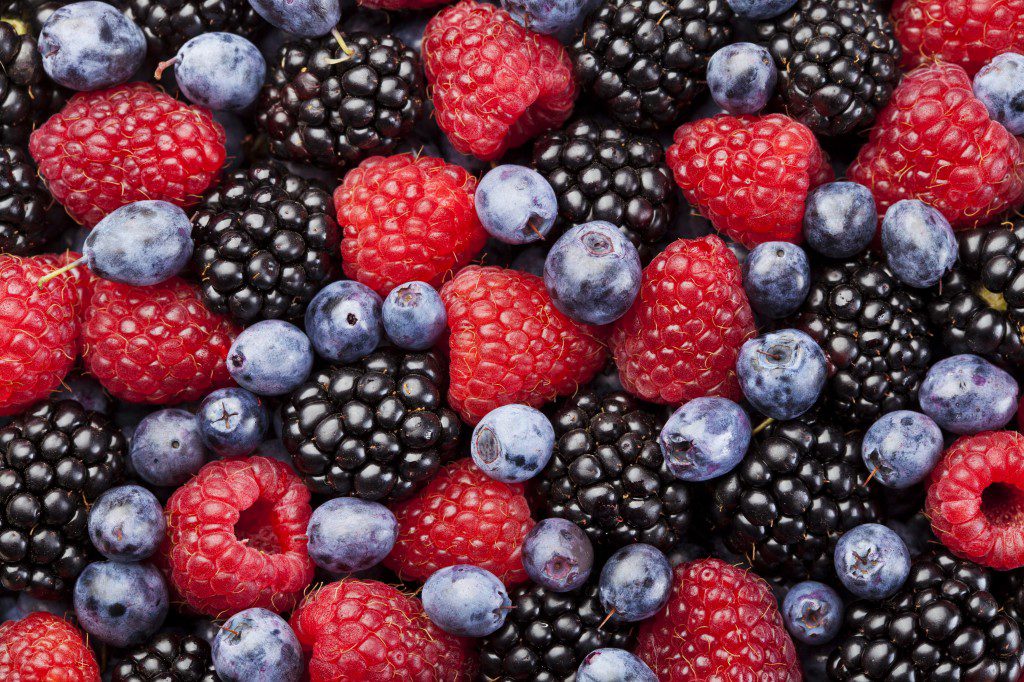
2 c. mixed berries (raspberries, blackberries, blueberries, etc.)
3-4 tbsp. honey
1 tbsp. cornstarch
2 tbsp. lemon juice

Crust
1/2 c. flour
1/4 c. sugar
3/4 tsp. baking powder
1/4 tsp. salt
1/4 c. low-fat milk
2 tbsp. softened butter
2 tbsp. sugar (set aside)

Preheat oven to 350 degrees. In a large bowl, combine berries, honey, cornstarch and lemon juice. Gently toss until berries are coated. In a separate bowl, combine flour, sugar, baking powder and salt. Blend in milk and butter until mixture is smooth. Butter bottom of a baking dish and pour in berry mixture. Pour batter over fruit and sprinkle top with set aside sugar. Bake for 40-50 minutes or until fruit is bubbly and crust is golden brown. When finished, remove to a cooling rack.

Oklahoma City Energy

Photo courtesy Oklahoma City Energy.

Saturday, June 14, 7 p.m.

Who’d have thought Oklahoma, a bastion of all-American sports like football, basketball and baseball, would be struck by that variety of football madness that incites a fervor for striped scarves? Oklahoma City is serious about its sports, and it seems the Oklahoma City Energy is about to become the Sooner state’s next game obsession. Also known as The Grid, the football club is the city’s pro soccer (alright, football) team in both the USL Pro and North American Soccer League. The Energy plays its home games at Pribil Stadium at Bishop McGuinness Catholic High School, 801 N.W. 50th St., Oklahoma City. This is the team’s first big season, but the Energy’s home opener last month proved to be a draw when the match sold out. The team may have lost that game, but soccer is known for its loyal supporters, and the Energy has them.

As the globe gathers in Brazil for the World Cup, the OKC Energy face the Sacramento Republic at Pribil Stadium, at 7 p.m. Saturday, June 14.

Single game tickets start at $7. For more, see www.energyfc.com.

Gods and Heroes: Masterpieces from the École des Beaux-Arts

Image courtesy American Federation of Arts.

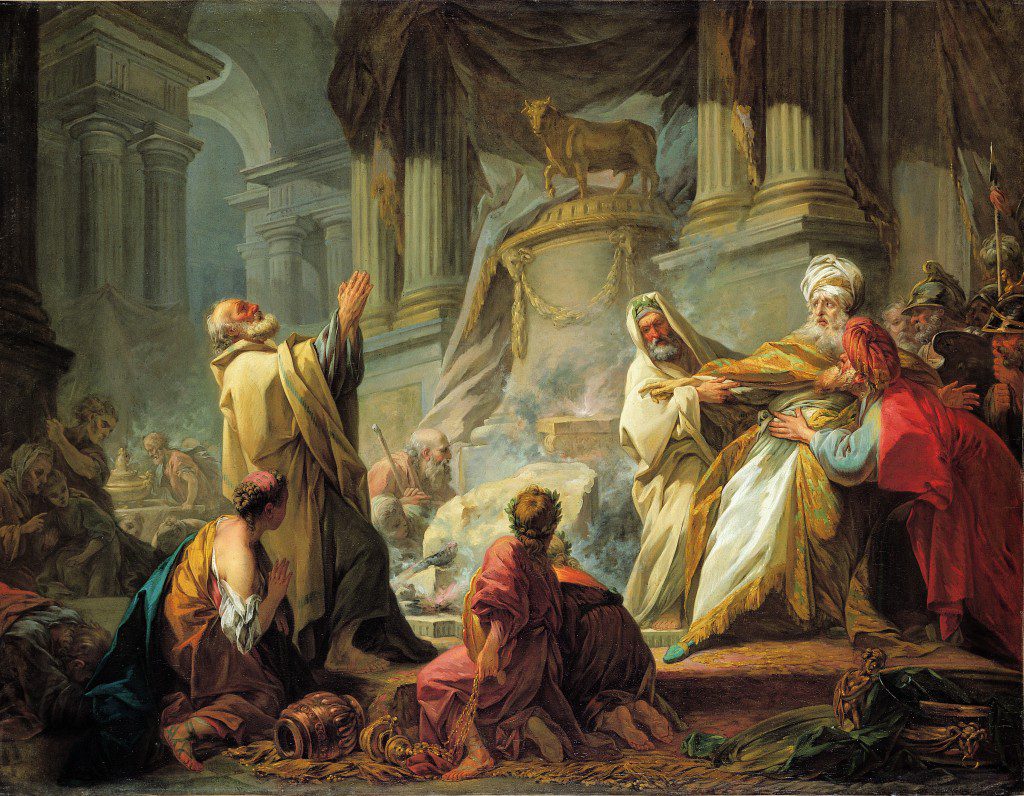
The artists who created the 140 paintings, sculptures and pieces on paper comprising Oklahoma City Museum of Art’s latest exhibit looked to the classical world with an ardor reserved for gods. Today, we look at those artists the same way – sources for inspiration on themes and creative execution. Among the artists represented in Gods and Heroes: Masterpieces from the École des Beaux-Arts are Rembrandt, Nicholas Poussin, Albrecht Dürer, Jacques-Louis David, Jean-Auguste-Dominique Ingres and François Boucher, and they’re some of the most famed “graduates” of the influence of École des Beaux-Arts, Paris’ original school of fine arts and a repository for works by European masters between the 17th and 19th centuries. Gods and Heroes goes on exhibit at 415 Couch Drive beginning Saturday, June 21, and continues through Sept. 14. For more, visit www.okcmoa.com.

So Delightfully Wicked

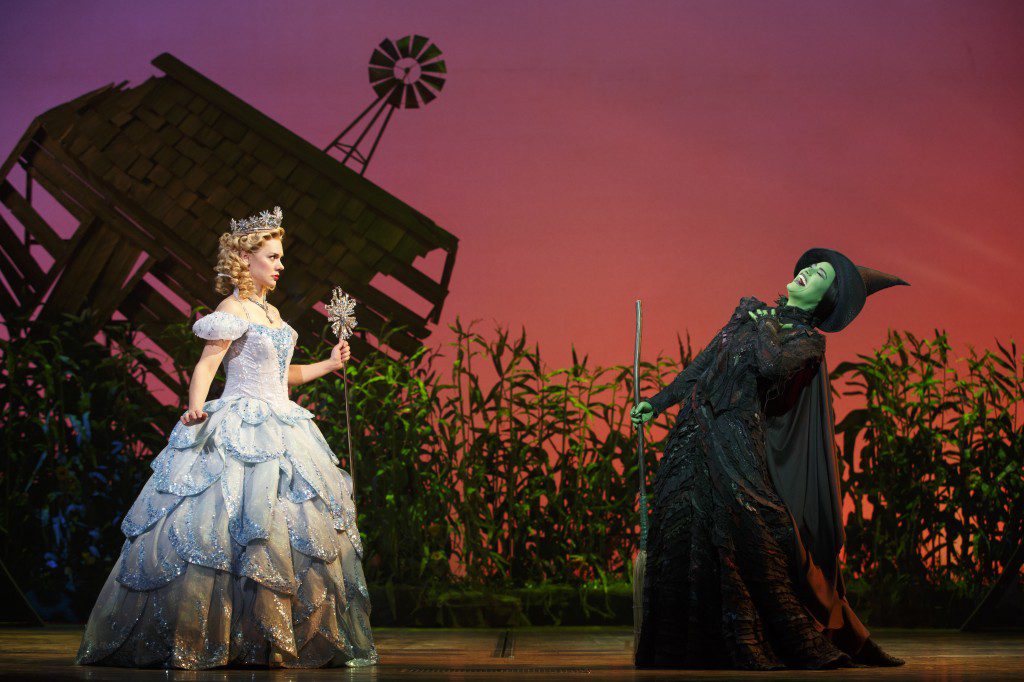
Gina Beck and Alison Luff are the witches of Oz in Wicked, returning to Tulsa this month. Photo by Joan Marcus, courtesy Celebrity Attractions.

Opens Wednesday, June 18

There’s something about a show that drums up big excitement even after it has played town more than a few times. Of course, not all musicals are truly Wicked.

The 2003 hit Broadway production that starred Broken Arrow sweetheart Kristin Chenoweth along with Frozen’s Idina Menzel in its original cast has toured the world a few times over and made its way to Oklahoma several times, but when it returns for a three-week engagement this month, it will be as if it was the first.

Celebrity Attractions brings the sparkling fantasy musical Wicked back to the Tulsa Performing Arts Center’s Chapman Music Hall.

Based on the 1995 novel Wicked: The Life and Times of the Wicked Witch of the West by Gregory Maguire, Wicked the musical tells a different side of Frank L. Baum’s classic The Wizard of Oz of how two unlikely friends, Elphaba and Galinda, grow to become the Wicked Witch of the West and Glinda the Good. While Elphaba is spirited and fiercely independent, Glinda is bubbly and popular. A love triangle drives a wedge between them, but it takes the political underpinnings of Oz to make them enemies. But there’s more to good and evil in this tale of friendship, power, loyalty and love.
Wicked reveals more about the characters of Oz and interjects the story with humor, lavish costumes, effects and sets along with the outstanding original music and lyrics by award-winning composer Stephen Schwartz.

Wicked plays the Tulsa PAC, 101 E. Third St., Tulsa, June 18-July 6. Tickets are $35-$175 at www.celebrityattractions.com. Visit the site to learn about Celebrity Attractions’ next season of shows headed for Tulsa and Oklahoma City.

June Scene

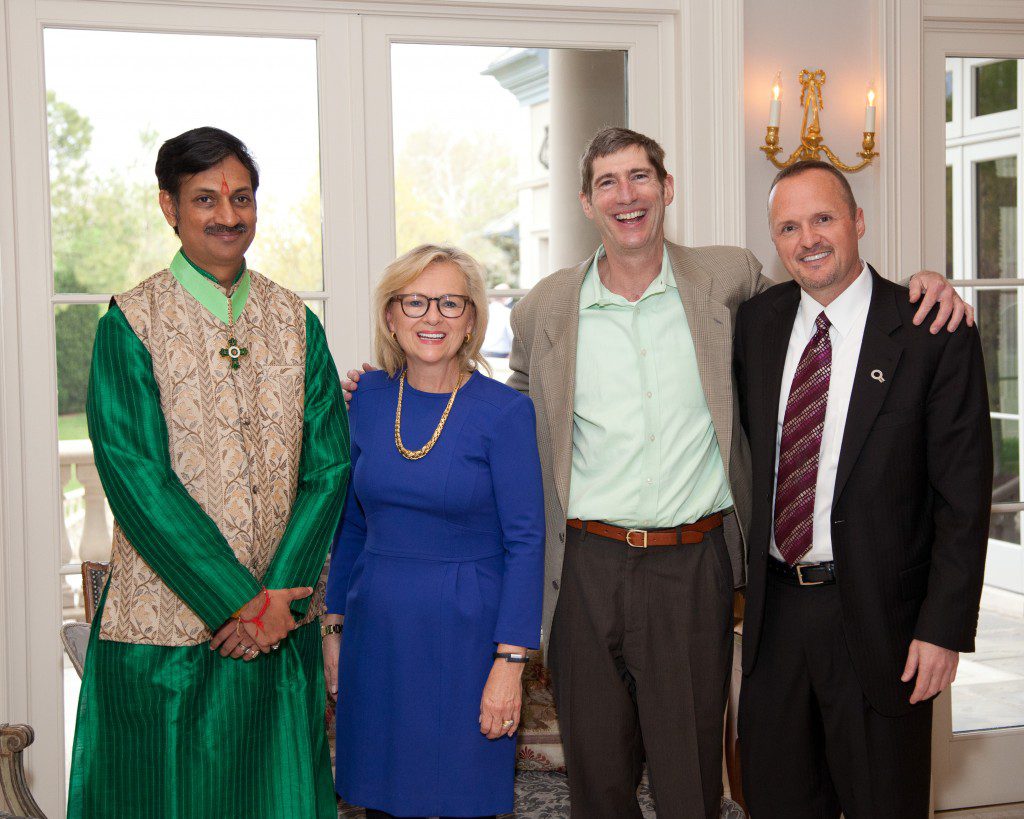
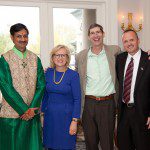
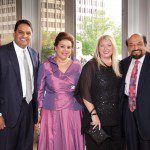
Prince Manvendra Singh Gohil, Kathy Taylor, Dennis R. Neill and Michael F. Smith, Equality Gala patron party.