On top of both home and away game performances and cheerleading, OSU Pom has practice three days a week with additional morning workouts twice a week. Photos by Bruce Waterfield, Oklahoma State Athletics
Pom dancers across various institutions and teams share a common dedication to their craft, showcasing their talents at events while managing the intricate balance between rigorous practices and academic commitments.
One might wonder about the sheer dedication required to be part of a dynamic dance squad. According to Beki Jackson, OSU spirit coordinator and pom coach, each member of OSU Pom invests two hours, three nights a week, in rigorous practice sessions. Members also engage in morning workouts twice a week.
However, their commitment goes beyond the studio, encompassing football games (both home and away), men’s and women’s basketball, as well as wrestling events. Post-season football and basketball commitments further highlight the demanding schedule that defines the life of a pom squad member.
How they manage it all is a balancing act, and time management is the most essential aspect.
“It is important to learn early how to handle academic, physical and mental stress,” Jackson says. “We try to prepare for busy seasons and offer as much help [as we can] during those times. They have access to the Academic Center in Gallagher Iba, a sports nutritionist, sports psychologist and team athletic trainer. We are not only working on the dancer, but their whole person as well. Giving them tools to be successful beyond college is key.”
On top of both home and away game performances and cheerleading, OSU Pom has practice three days a week with additional morning workouts twice a week. Photos by Bruce Waterfield, Oklahoma State Athletics
Tresley Kowalski, a member of Southmoore High School’s pom squad, echoes the sentiment that a hectic schedule is to be expected. She has found specific ways to manage her time.
“Maintaining discipline is crucial for me,” she explains. “I set a screen time limit on social media and aim to go to bed at 9:30 p.m., especially on homework-free nights. My phone is also set to ‘Do Not Disturb’ mode before bedtime. Sometimes, I must push through the week with grit and determination.”
While pom and dancing are year-long commitments for Kowalski, she still finds time to spend with her family and engage in activities she loves. Jackson emphasizes the diverse extracurricular engagements of OSU pom squad members as well, ranging from sororities and academic clubs to entrepreneurship opportunities.
While not all aim for professional dance careers, there are always a few who aspire to continue their journey.
“I have one or two a year that wish to try out for a professional dance/cheer team,” Jackson says.
OSU Pom alums have made significant strides in the professional arena, representing the program and university with distinction. Notable successes include appearances at the Super Bowl and being selected as a Pro Bowl cheerleader, exemplifying the squad’s enduring impact on its members’ futures.
For Kowalski, the journey in pom won’t lead to the pros, but her passion is undeniable.
“While I don’t aspire to become a professional dancer, the feeling of stepping on stage, knowing I’ve worked hard to perfect my routines, is truly inspiring,” she shares. “Being surrounded by so many talented individuals, including my coaches, dance instructors, teammates and fellow dancers is a constant source of motivation.”
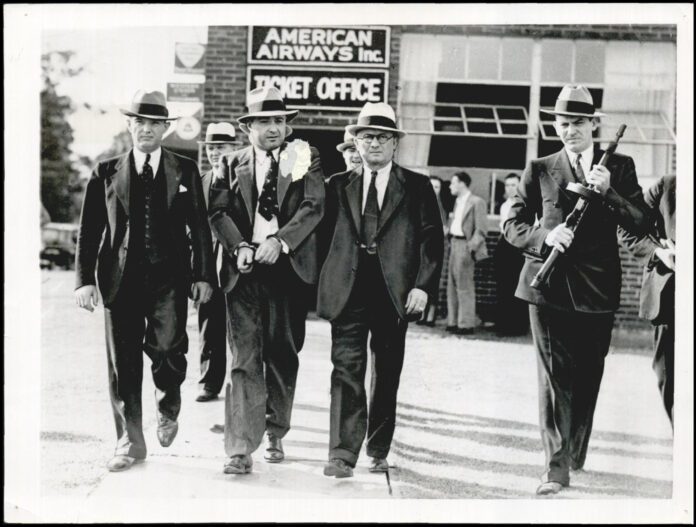
George Machine Gun Kelly (middle) was arrested for the kidnapping of Oklahoma City businessman Charles F. Urschel in 1933. Photo courtesy of the Oklahoma Historical Society
If you were looking for a place to go on a crime spree during the end of the 1800’s all the way through the Great Depression, Oklahoma was the place to be. After all, you certainly wouldn’t have been alone.
Oklahoma – and before statehood, Indian and Oklahoma Territories – held onto its wild and remote reputation for longer than many places in the nation. This created an opportunity for crime, conjuring some of history’s most notorious outlaws. We explore a few who either hailed from Oklahoma or committed some of their heinous deeds within our borders.
Dalton Gang
The Dalton boys started out as lawmen – U.S. marshals in Arkansas and Kansas. But brothers Emmett, Grat, Bob and Bill quickly turned to lives of crime. After cutting their teeth with train robberies in California, they moved to Oklahoma, near their birthplace of southern Kansas, to continue the trend. Their careers moved on to robbing banks until Bob and Grat were killed during an attempted bank heist in Coffeyville, Kan. Bill joined the Doolin gang and was later killed in a shootout. Emmett spent time in prison for his involvement in the Coffeyville bank robbery, then turned his life around to become an author, movie maker and businessman in California.
Marlow Brothers
Like many stories from the time, the Marlow brothers’ is a mixture of outlaw and hero. Brothers George, Lewellyn, Charlie and Alfred had been accused of stealing horses and were being transported for trial in 1889. A mob attacked them on the way. Alfred and Lewellyn were killed in the fight, but George and Charlie have gone down in history for fighting off the mob … despite being chained to their dead brothers. The two surviving brothers moved their families to Colorado where they both, ironically enough, became police officers. The town of Marlow in southwestern Oklahoma is named for this famous family.
Machine Gun Kelly
The kidnapping of Oklahoma City oilman Charles F. Urschel in 1933 rocketed to fame George Kelly Barnes – who would later become known as Machine Gun Kelly. Kelly worked together with his wife Kathryn Thorne to kidnap Urschel and hold him for ransom on Thorne’s parents’ farm in Texas. Once they received the ransom, they released Urschel as promised.
A year prior, Charles Lindbergh, Jr., 20-month-old son of the famous aviator, was kidnapped and found dead two months later. Due to an increased interest in kidnapping cases following that tragedy, FBI director J. Edgar Hoover took special interest in the case and was able to work with Urschel to track down the Kellys. Both were both convicted in October 1933 to life in prison. The trials were the first in the U.S. that allowed film cameras, and were also the first kidnapping trials after the passage of the Lindbergh Law, which made kidnapping a federal crime.
Pretty Boy Floyd
Charles Arthur “Pretty Boy” Floyd, born in Sallisaw, got his start in crime through bootlegging. He then created an illustrious career as a bank robber. He gained a “Robin Hood” reputation – robbing the rich to give to the poor, but ultimately ended up on the FBI’s Most Wanted list and was shot dead by law enforcement in 1934.
Belle Starr
While Belle Starr does not have much documented crime to her name, she ran with a notorious crowd and was known as the Bandit Queen. Myra Maybelle Shirley Starr married at least three criminals and may have associated with Jesse James – hiding out with him in the Robbers Cave State Park area in the 1880s. In 1889, Starr was shot dead while riding her horse; the murder remains unsolved.
Jackalope Comedy Theater in Tulsa hosts shows every Saturday, with classes throughout the week. Photo courtesy Jackalope Theater
Sketch theater – like Saturday Night Live – and improvisational comedy continue to draw both audience members to their seats and brave souls to the stage. Whichever avenue you choose, Oklahomans have plenty of choices.
OKC Improv, in the heart of the Plaza District, has shows every Friday and Saturday at 7:30 and 9:30 p.m.
“It’s a ton of fun; no show is ever the same, so it’s always a unique experience,” says Kendon Lacy, the group’s executive director, instructor and performer. “For those that are interested in performing, we also offer classes. We’ve had so many students call our classes the best part of their week. It’s a super supportive and empowering environment where classmates always become friends as they grow together. You’re also getting to meet new people.”
In Tulsa, Jackalope Comedy Theater is “the only dedicated sketch/improv venue in town,” says artistic director Jason Watts. Shows are every Saturday night and classes are held throughout the week. For youth and teens, there is an improv/sketch program at Clark Theater in Tulsa.
Jackalope Comedy Theater in Tulsa hosts shows every Saturday, with classes throughout the week. Photo courtesy Jackalope Theater
For those who haven’t experienced this live art form, “sketch comedy is a series of comedic scenes and vignettes put together to create a full entertaining show. Improv is creating scenes – typically comedic – completely without a script,” says Lacy. “On our stage, we have some shows that are musicals made up on the spot, and other shows that feel like plays or movies. Some shows even feel like a sitcom that was written with a script. But in the end, it was made up on the spot using the inspiration that the audience gives to the cast.”
Often, audience members get a feel for the form and get the improv bug.
“We have classes beginning all the time,” says Watts. “We have Intro to Improv Comedy, Sketch Writing and Intro to Comedic Storytelling. We also have free workshops, class audits and community jams for anyone to dip their toes in the water. We also offer various workshops throughout the year, like Play Date: an improv workshop for couples. In addition to classes for the public, we offer commissioned workshops and classes for companies or events.”
Audience Participation
Rules for audience participation at improv and sketch shows are simple.
“Number one, have fun! Have a great time, and do not judge yourself,” says Lacy. “Improv works best when you’re in a place of just accepting whatever phrase or sentence or action comes your way. To take it a step above that would be to not only accept it, but really appreciate it.”
Watts adds: “Improv performers are taught to ‘Yes, and.’ This is the formula used for creating scenes in the moment. An improv audience doesn’t have many rules outside of general courtesy. We don’t harass our audience into getting involved. We will ask, though.”
When teaching others, Lacy likes to share a quote from well-known improv coach and instructor Del Close who says: “If we treat each other as if we are geniuses, poets and artists, we have a better chance of becoming that on stage.”
Watts concludes: “Improv is a great hobby for busy adults who are displaced theater/comedy fans,” says Watts. “It is a low commitment activity that is social and helps with confidence and expression. As entertainment, it is an affordable option, about the same price as a movie and one of the best shows for dates. Expect tons of laughs!”
Many trained opera singers have advanced educational degrees and spend weeks, if not months, preparing for roles. Photos courtesy Tulsa Opera
The performance art of opera has a commanding presence in both Tulsa and Oklahoma City, but what exactly does it take to become an expert in the field?
Education
The vast majority of opera singers have a bachelor’s degree in music, with many opting to get a master’s, too.
“Music majors take individual voice lessons weekly, take courses in music theory and history, train in several different languages, take acting classes and participate in operas,” says Rob Glaubitz, the artistic director at Painted Sky Opera in OKC.
Alex Johnson, marketing manager at Tulsa Opera and a classically trained opera singer, went to the University of Oklahoma for her bachelor’s and the University of North Texas for her master’s.
“This allows for the training and experience necessary to start auditioning for Young Artist programs, which employ young singers to come do education programming, small roles in main stage performances and cover for larger roles in those performances,” she says.
Many trained opera singers have advanced educational degrees and spend weeks, if not months, preparing for roles. Photos courtesy Tulsa Opera
Preparation
Training is extensive both before and after auditions. Auditioning mostly happens in two parts: a pre-screening, usually a taped audition sent out ahead of time, and then the majors, that often involve flying to NYC, Chicago or Houston to audition live.
For performance prep, every singer has their own routine, but they are expected to come to rehearsals fully off-book, meaning all notes and lines are memorized.
“It’s often a shorter rehearsal period than a musical or a play since most companies bring in singers for the principal cast from out of town,” says Johnson.
Language is also a key factor.
“I always started with translating the opera if it was in a foreign language and nailing down any pronunciation issues,” says Glaubitz.
Johnson agrees.
“Singers work with coaches to learn the role they are cast in, including language, diction and style,” she says. “Sometimes, a singer can work with a dialect coach if it’s a very specific type of role.
Maintenance
Staying healthy and performance ready is also a major part of the process.
“These routines are similar to those of a professional athlete, including getting enough sleep, eating the right things to help us perform our best, warming up before singing and cooling down after, continuing to sharpen our technique though technical practice, and rehabbing injuries with medication or therapeutic routines as prescribed by a doctor,” says Glaubitz.
“There are several singer rituals like steaming, eating or avoiding certain foods, straw phonation, or yoga and stretching that come into play,” says Johnson. “There is a lot of daily maintenance that goes into making sure a performance goes smoothly!”
As for an off-season, they don’t really get one.
“Performances can happen at any time during the year, so there’s often a lot of juggling what a singer is doing in the moment and what they have coming up,” says Johnson.
“Some singers regularly work at universities as college professors, myself included,” adds Glaubitz. “Most singers are also learning new music and improving their own technical ability. The whole business is extremely entrepreneurial.”
A study conducted by the World Population Review for 2023 paints a distressing picture regarding the prevalence of domestic abuse in Oklahoma, revealing that 49.1% of women and 40.7% of men in the state have either experienced or are presently facing domestic abuse. This figure surpasses rates in any other state.
In Oklahoma, the fight against domestic violence requires a localized approach. Identifying the signs, supporting individuals in danger and finding assistance are crucial steps in combating this issue.
Where to Find Help
YWCA Oklahoma City (ywcaokc.org) provides emergency shelter, counseling and support services for victims of domestic violence.
Women’s Resource Center (wrcnormanok.org) offers a comprehensive range of services, including crisis intervention, counseling, legal advocacy, housing assistance, educational programs, resource navigation and empowerment initiatives.
While the Native Alliance Against Violence (oknaav.org) isn’t a direct service provider, it collaborates with over 25 tribal programs across the state. These programs offer vital services, including advocacy, safety planning, shelter assistance and essential resource referrals.
The Oklahoma Attorney General’s website has resources, including the Oklahoma Domestic Violence hotline: 1-800-522-SAFE (7233). You can access resources by visiting oag.ok.gov/victims-services-resources.
The National Domestic Violence Hotline can also provide assistance; visit thehotline.org or call 1-800-799-7233.
Recognizing An Unsafe Situation
According to Lacee Mouser, communications specialist at NAAV, identifying domestic violence isn’t confined to overt physical abuse.
“It encompasses a range of behaviors aimed at asserting power and control over victims,” she says. “These include sexual violence, economic coercion, cultural manipulation and psychological intimidation. Recognizing the signs isn’t always straightforward, but indicators like isolation from social circles, excessive partner control or jealousy could signal an abusive relationship.”
It’s crucial to approach situations with care and empathy, Mouser adds. Empowering victims means respecting their choices and not blaming them for their perpetrator’s actions. For those witnessing potential signs of abuse in others, it is best to provide information about available support systems in a non-threatening way.
Brandon Pasley, YWCA vice president, says control over finances can be essential in identifying unsafe situations.
“Between 94-99% of the clients we serve experience economic exploration and financial abuse,” says Pasley. “Whether that is not allowing them to work, go back to school or get an education, or not allowing them to get promotions, or being so controlling they get them fired from work.”
The Five Ds of Intervention
“It’s really difficult to know whether to get involved when you see something,” says Pasley. “Sometimes, depending on the situation, it could end in the injury or death of the victim/survivor or the good Samaritan.”
The “5 D’s” of intervention are often strategies recommended for bystanders or individuals seeking to help someone experiencing domestic abuse.
Direct: Address the situation by talking to the victim in a safe and private setting, expressing concern and offering support.
Distract: Divert the unsafe situation by changing the subject, inviting the victim to another location or creating a distraction to diffuse tension.
Delegate: Seek help from others, including professionals, by involving law enforcement, domestic violence hotlines or support organizations.
Delay: If intervening directly might escalate the situation, delay the interaction, but follow up later to offer support and resources.
Document: Write down/record any observed incidents or conversations in case they are needed later for legal purposes or protection orders.
These strategies are not always universally applicable and might need to be adapted based on specific circumstances. Prioritizing safety for both the victim and the intervening party is crucial in any intervention.
In Oklahoma, the battle against domestic violence necessitates leveraging local resources and community support. By recognizing the signs, offering help without judgment, and connecting individuals with Oklahoma-specific organizations, we can contribute to a safer environment for all.
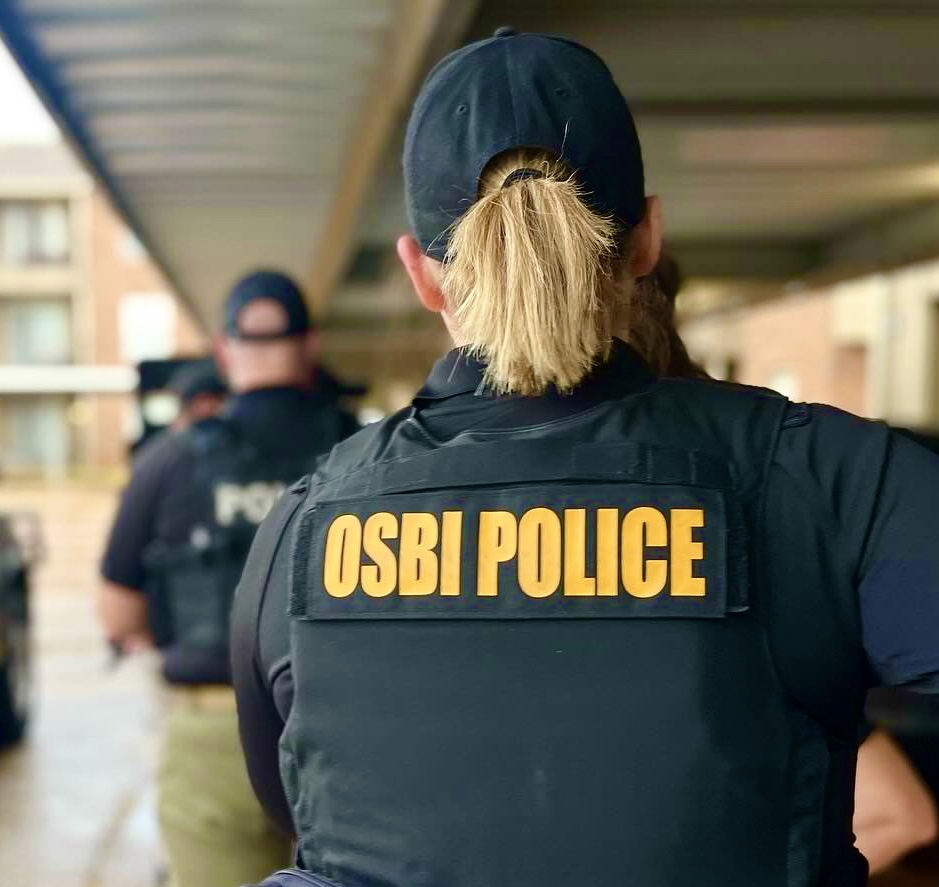
The Oklahoma State Bureau of Investigation solves specialized crimes, but also offers a bevy of helpful resources for Oklahomans. Photos courtesy the OSBI
Protecting Oklahoma one partnership at a time, the Oklahoma State Bureau of Investigation (OSBI) is the state’s premier law enforcement agency. The agency strives to set a new standard of excellence by providing unmatched investigative, intelligence, information and forensic services through core values of trust, integrity and respect.
Although the public often equates the OSBI only with special agents who investigate major crimes, the agency’s employees hold a wide variety of skill sets, with criminalists, information technology specialists and information services personnel on the payroll. The OSBI offers internships, practicums and temporary and student positions, as well.
The Oklahoma State Bureau of Investigation solves specialized crimes, but also offers a bevy of helpful resources for Oklahomans. Photos courtesy the OSBI
The OSBI utilizes the State Incident-Based Reporting System (SIBRS), which is part of a nationwide, cooperative statistical effort administered by the Federal Bureau of Investigation. Created to serve law enforcement for operational and administrative purposes, SIBRS data collects detailed information such as victim/offender demographics, victim-to-offender relationships, drug types, premise types, and property stolen and/or damaged.
The OSBI’s Criminal History Information Request Portal (CHIRP) is an online system allowing the public to request an electronic, name-based criminal history record check from anywhere in the world. CHIRP allows the public to access information about family, friends and employees, and is helpful to verify safety by accessing information about people like babysitters, eldercare workers, potential roommates, pet or house sitters. Anyone may request a criminal history background check for a small fee by visiting osbi.ok.gov/pages/chirp.
Assisting victims and survivors of violent crimes, the OSBI Victims Support Program helps to restore a sense of safety and security by connecting victims and their families with available Oklahoma resources. The service, which is connected to OSBI-handled crimes, engages with those impacted by the crimes, and also assists agents in communicating with victims. The program’s responsibilities include educating victims about the investigative and criminal justice processes, their rights, and the Crime Victim Compensation Program. The service also allows victims and/or family members to be accompanied to various court hearings.
The Oklahoma Missing Person Clearinghouse assists law enforcement agencies, and families of missing persons, with available resources to help locate those missing. The Clearinghouse is a state liaison with the National Center for Missing and Exploited Children, and also partners with other agencies. The public may report a missing person by contacting local law enforcement agencies and having a missing person entry made into the National Crimes Information Center database. The public may also contact the Oklahoma Missing Persons Coordinator through the OSBI.
In 2019, Francine’s Law redefined the definition of a missing person in Oklahoma, requiring entry of that missing person into the National Missing and Unidentified Persons System within 30 days.
Becoming an Agent
“To become an OSBI special agent, you must have at least two years of law enforcement experience and a bachelor’s degree,” says Hunter McKee, OSBI’s public information manager. “We look for hardworking and dedicated individuals. We have several requesters throughout the state. This includes law enforcement agencies, district attorneys and the governor. When requested, our agents can assist in a variety of cases, and we use our resources to investigate allegations of wrongdoing or crime.”
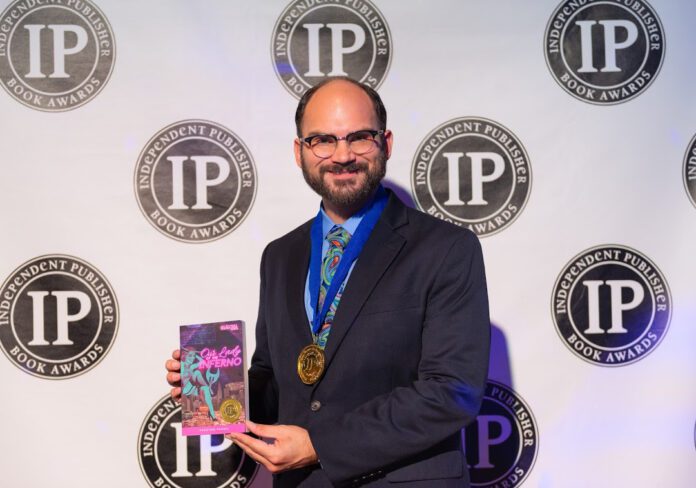
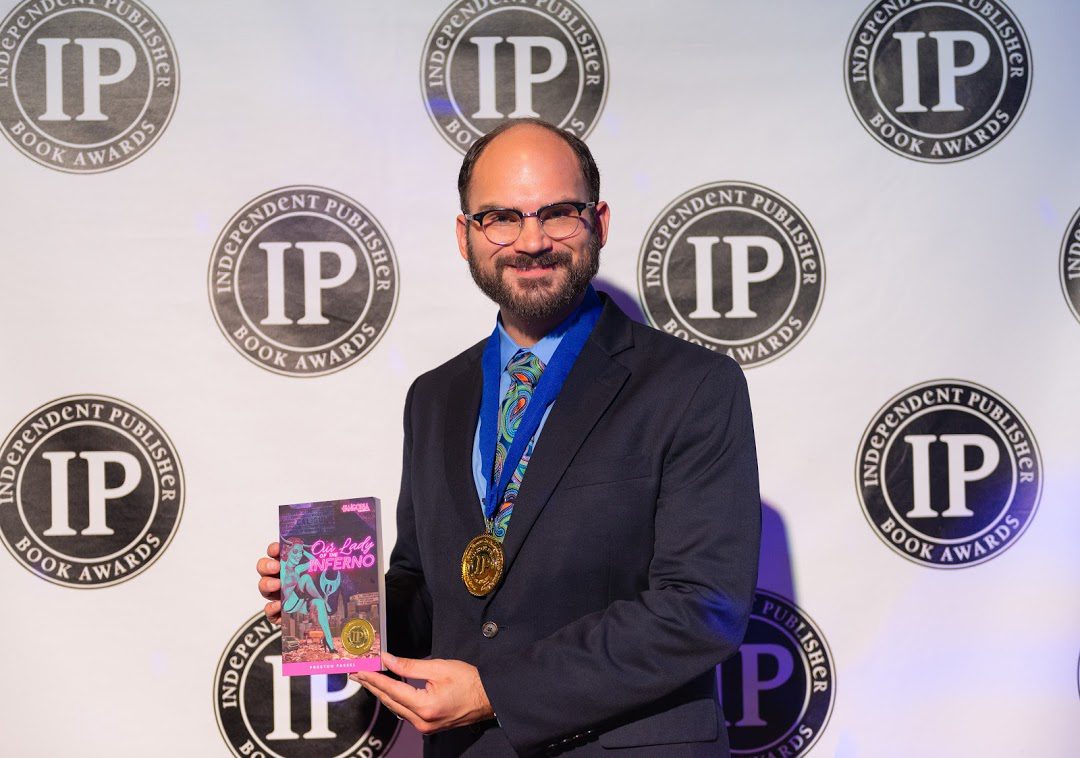
Author and Oklahoman Preston Fassel teamed up with Chris Grosso for a new book, Necessary Death. Photo courtesy Preston Fassel
In the summer of 1953, my father died of polio. I was four years old. A few years later, I was a full-blown fanatic for horror stories, devouring the work of Poe and every other author of terror tales I could get my hands on, regularly losing myself in scary movies and TV shows like Thriller and The Twilight Zone.
To her own dying day, my mother was convinced that my lifelong love of horror came about because of what happened to Dad when I was so young.
As it turns out, she may have been right.
“I feel like a lot of people who are really big fans of horror find that connection because of some sort of formative trauma,” says Preston Fassel, an author and journalist who grew up in Tulsa and Broken Arrow. “It becomes this identity for them, in the same way that, for some sports fans, the team they support becomes a defining thing. It gives them a grounding structure in their lives, a place to go to and turn to when the world feels too much for them. Horror becomes the safe space.”
For some, however, just escaping into frightening entertainment isn’t enough to sustain them. These individuals, Fassel explains, “don’t know how to look or ask for help, because horror is such a subculture. It has this ‘us vs. them’ mentality and underground lifestyle, while mental health and psychiatry can so often be seen as very consummately the Establishment. So how do you get people who see themselves as completely separated from and opposed to this thing [the Establishment] to acknowledge that they need to get some kind of help from it? That’s a reason it was important for Chris and me to write this book.”
Author and Oklahoman Preston Fassel teamed up with Chris Grosso for a new book, Necessary Death. Photo courtesy Preston Fassel
“Chris” is Chris Grosso, a San Diego-based drug and alcohol counselor, artist, writer and film producer who, like Fassel, is a horror fan of long standing. The two met a few years ago after Fassel’s first novel, Our Lady of the Inferno, began making some noise among genre aficionados. Grosso invited Fassel onto his podcast to talk about the book.
“After we were done recording,” recalls Fassel, “he asked me to stay on the line for a couple of minutes. He’d had this idea for a book for a couple of years, a book that would combine self-improvement and horror movies, but he wasn’t sure how to get it off the ground himself. And he said, ‘After reading your book, and especially now after talking to you, I think you’re the person that I’ve been looking for to help me bring this to fruition.’
“I went through Sam Houston University in Texas and hold a degree in psychology, but I just kind of burned out after I got it and decided not to pursue it as a career. So I thought this would be a fun and interesting way to actually use my academic background. We started working on it in 2019, through COVID and everything else that’s gone on in between, and we finally got it out there.”
“It” is a fascinating new book called Necessary Death, published by the Florida-based Health Communications, Inc. The subtitle, “What Horror Movies Teach Us About Navigating the Human Experience,” tells you a lot of what you need to know about its contents; essentially, it’s made up of 13 chapters (probably not a coincidence), each dealing with a famous horror-film figure – A Nightmare on Elm Street’s Freddy Krueger, for instance, Texas Chainsaw Massacre’s Leatherface, even Bruce the Shark from Jaws.
Each chapter is separated into two parts. The first, “Oh, the Horror!” looks at the film or films that spawned each character, mixing psychology with well-crafted synopses and sharp observations that often veer into the humorous. The second part of every chapter, under the general heading of “Oh, the Humanity,” plays off the first, offering pertinent self-help exercises and practices based on each horror icon and what he or she (or it) represents. The first sections are written by Fassel, the second ones by Grosso.
“Practically, it’s theory and practice, with me tackling theory and Chris tackling practice,” says Fassel. “I would write my portion first, then I would feed that on to Chris. He would read what I had written and then build his sections of the book around those portions. So it was a process of I write it, send it to him, he writes his, we review it together, and then that gets put into the book.
“In the early stages, I kind of struggled with how to structure and write my chapters,” he admits. “Then, I decided, ‘Let’s give a little rundown, kind of tongue-in-cheek, a little bit wry, with a couple of jokes, and give readers context if they haven’t seen the movie, or refresh their memories if they have.’
Once he found his structure, Fassel really took off with the whole concept – sometimes into unexpected places. For instance, in a footnote for the Texas Chainsaw Massacre chapter, he notes that under Texas law, Leatherface’s killing of three of his four victims in the original movie would “technically be justified,” since they were trespassing on his property at the time.
“That was the first footnote I put into the book,” he says with a chuckle. “And that’s when I realized I could have this fun, running commentary in it.”
At the same time, he acknowledges the greater purpose for Necessary Death.
“Anytime I’m writing, I want it to have an impact on the people who are reading it,” he says. “I want it to mean something. I want it to connect with a reader. And considering that one of the primary goals of this book is to help anyone who needs that help, it’s really important to make that connection and to get into the deeper and more philosophical and psychological and emotional components of what we’re discussing.”
The book, he adds, “is not a substitute for psychotherapy, or pharmaceutical intervention, if that’s what a person needs. But I hope that if there are people out there who are struggling, who don’t know about getting help, that this can be a stepping stone for them. If they can read this and recognize things they’ve been struggling with, and learn some coping mechanisms and some emotional strategies from Chris’s section, maybe they can then move forward in their journeys toward wellness.”
Although Fassel hasn’t lived in Oklahoma for years, he went through his school days in Broken Arrow and Tulsa, graduating from Broken Arrow High. He also received another form of education during his teen years, indulging his love of horror and grindhouse features (the latter named for low-end movie houses that specialize in exploitation-film fare) through the video-rental stores in his hometown.
“I would not be writing about what I write about, I would not have gone down the road to who I am as a writer now, if it had not been for the video stores of Broken Arrow and Tulsa at the turn of the millennium,” he says. “The video stores in Broken Arrow at that time were an unexpectedly wonderful resource for grindhouse movies. They had Super Video at the Warehouse [Market] supermarket, they had Hollywood Video – they had the greatest selection of exploitation and grindhouse movies. My whole origin story is there in the Broken Arrow video stores.”
It is tempting to call this story “Bean Town: Peruvian-Style” in recognition of the lima bean and the role it played in Peru’s agriculture. But the city of eleven million on Peru’s west coast wasn’t named after the moon-shaped bean, after all. It was the other way around. Invading Spaniards named the beans after the Peruvian capital – and that wasn’t until the 1500s. In truth, the lima bean is native to Peru. They’ve been grown in the country longer than corn.
Huaca Pucllana Site Museum
So where did Lima, Peru, get its name? Well, the city is located in the valleys of the Lurin, Rimac and Chillon rivers, and legend has it the name started out as Rimac. Over the years, though, through mispronunciation by conquering conquistadors and linguistic quirks, it became Lima.
Incidentally, etymologists are not exactly sure why the bean is pronounced ly-mah and the city is lee-mah. Further complicating things are the good people of Lima, Ohio, who insist on calling their town ly-mah … even though it’s named after lee-mah.
About a third of all Peruvians live in the cliff city of Lima, hemmed by the Andes to the east and the Pacific to the west. Eastward from the coast, the city slopes gradually into pleasant valleys and then up into the foothills and elevations of five thousand feet.
Peru’s most spectacular archaeological site is undoubtedly Machu Picchu, the 15th-century Inca citadel in a stunning tropical mountain forest high in the Andes. The mortarless walls of the buildings, terraces and ramps were thought to have aided the Incas in their study of astronomy, agriculture and religion. Most are still intact.
Back in Lima, pre-Incan civilizations are still being explored at the large Huaca Pucllana Site Museum in the beach front suburb of Miraflores. An 82-foot clay and adobe brick pyramid reflects the advanced skill of early residents. Dine al fresco overlooking the ruins.
Spend some time in Miraflores while you’re there. Top notch restaurants, shops and hotels line the beach, competing for space with waterfront mansions and high-rise towers. The fascinating Museo Amano is a pre-Columbian textile museum and Iglesia Virgen Milagrosa has become the region’s largest Catholic church.
A few klicks down the coast is Barranco, a rather Bohemian neighborhood known for its street art, hipster culture, old colonial buildings, boutiques and small cafes. When the sun goes down, the district fills with music and dance, accompanied by the unofficial national spirit of Peru, pisco – a high-proof liquor made from fermented grape juice. (Best enjoyed in a pisco sour.)
Miraflores District and Lacomar
As befitting the second-largest city in South America, Lima has evolved into a culinary mecca offering a fusion of indigenous, Spanish, African and Asian flavors. The nation’s signature dish is ceviche, a combo of straight-from-the-sea fish, chili peppers, sweet potato and red onion marinated in citrus and spices. Also try the anticuchos, grilled pork skewers.
Built into a cliff overlooking the ocean is Larcomar, a big shopping mall with dozens of restaurants, stores, parks and sunset viewpoints. Not too far away, an intriguing water fountain park called Parque de la Reserva serves up family-friendly hang outs plus food venues. At night, the park’s 13 captivating fountains light up in brilliant color.
For an extensive survey of Peruvian art, visit the 18th-century mansion that houses Museo Larco. The collections of silver, gold and pre-Columbian erotic pottery are excellent. Across town, historic catacombs beneath the bright yellow buildings of the Basilica and Convent of San Francisco served as a cemetery for hundreds of years. Today, besides bones, you’ll find 25,000 antique texts.
Stay at the luxurious JW Marriott in Miraflores. The seafront hotel boasts restaurants, a sushi bar, tea time buffets, beach access and is very close to Larcomar.
La Catedral MirafloresParque de la ReservaAnticuchos
Heart disease continues to be the No. 1 killer of women and men in the United States; someone dies every 33 seconds in the U.S. from cardiovascular disease, according to the Centers for Disease Control and Prevention.
“Coronary artery disease is the leading cause of heart disease in the United States,” says Usman Baber, M.D., OU Health Director of Interventional Cardiology and Chief of the Cardiovascular Section with the University of Oklahoma Health Sciences Center. “Simply put, coronary artery disease can be viewed as a progressive, inflammatory infiltration that consists of lipid particles and white blood cells that comprise the blood vessels feeding the heart muscles – coronary arteries. An important concept is that both inflammation and other risk factors [like] elevated cholesterol, smoking and diabetes mellitus, play a key role in the initiation and propagation of this condition. In addition, the process that leads to coronary artery disease – inflammation combined with other risk factors – can also be found in blood vessels that feed the brain and lower extremities.”
He says key risk factors for heart disease include one’s age – over 45 for men and over 55 for women – actively smoking, diabetes mellitus, elevated cholesterol and hypertension.
“Other factors include chronic inflammation, physical inactivity and a diet that is poor in fruits and vegetables,” says Baber.
However, if a family has a history of heart disease, one should also consider the genetic component.
“The more we learn about heart disease, the more we realize that it is in fact a combination of both lifestyle and genetic predisposition,” says Baber. “However, it is also true that the choices we make – i.e. lifestyle – can make a very large impact irrespective of genes. In other words, even if your genetic predisposition is towards heart disease, you can greatly lower your risk by strict control of risk factors.”
As obesity rates have continued to rise, there is the concern of heart disease affecting more young people.
“This really depends on race, ethnicity, sex and other risk factors,” says Baber. “In general, older individuals are more likely to manifest heart disease. However, we see heart disease at a much younger age among those with underlying diabetes, certain racial/ethnic groups – Native Americans and African Americans – and among those with less access to reliable healthcare. Addressing these disparities in care is a major focus of cardiovascular societies across the globe.”
The Essential Eight
To help individuals follow a heart-healthy lifestyle, the American Heart Association (AHA) created Life’s Essential 8 – key measures for improving and maintaining cardiovascular health.
The eight measures include health behaviors: eating better, being more active, quitting tobacco and getting healthy sleep, as well as health factors: managing weight, controlling cholesterol, and managing one’s blood sugar and blood pressure. The AHA has also created Life’s Essential 8 for kids and offers My Life Check – an online tool to assess your heart health and understand your risk for heart disease and stroke. To access these resources, visit heart.org.
With a new year upon us, many people are stopping to take inventory and formulate new goals. To achieve any objective, it is often necessary (not to mention easier) to first form new habits that will push us all in the right direction.
But how can lofty goals become second nature habits?
Psychology Today informs us of the obvious: as human beings, we formulate habits all our lives – both good and bad. Some we don’t even recognize as habits, yet they influence nearly every aspect of how we spend our time, energy and money.
Some researchers believe we develop habits out of a sense of efficiency: it saves us an internal debate every time we reach for a beverage (What kind of drink? What time of day and how much?) or how often we go out with friends to eat or see a new movie.
Our bad habits can also run the gamut from mildly disruptive ones, such as too much screen time, to those that truly hurt our health and well-being, like overeating, excessive drinking or indulging in recreational drugs. But worry not, those routines can be replaced with new, healthier habits – if we want it enough, that is.
Creating Incentives
One way to help ensure a successful path to new habit formation is to set up a method of providing incentives or rewards along the way. Want to motivate yourself to ride your stationary bike? Allow yourself to watch TV as you are doing it. Alternatively, restrict your phone or social media access until after a ride is done. Both will motivate you in different ways.
According to NPR, some habits become ingrained in our minds over time, until the behavior becomes routine and we no longer need to concentrate on it to make the action happen.
In some cases – both positive and negative – a cue triggers our desire to perform the habit, such as eating a meal and wanting to smoke a cigarette afterward.
But some good news is that changing our environment can hinder these unwanted triggers and subsequent habits from rearing their heads, allowing us to cultivate new routines that are more in line with current goals. In other words, take a vacation or deviate from your normal routine. The cues and rewards will not be as readily available or recognizable – and it should be an easier time to create more beneficial habits.
Coming Up With Goals
When coming up with your goals or preferred habits, Harvard Business Review suggests avoiding the bigger, lofty goals – or at least breaking them up into smaller ones. Starting out with a very small routine, perform it daily until your brain stops thinking about it and does it on auto-pilot.
Even then, add to the new habit by only 10% or so each time you’re ready to advance. Then stay at that level for longer than seems necessary.
Remember –it’s never too late to break a bad habit, no matter how big or small. So make a list of goals and know you can attain them with the right mindset.