

















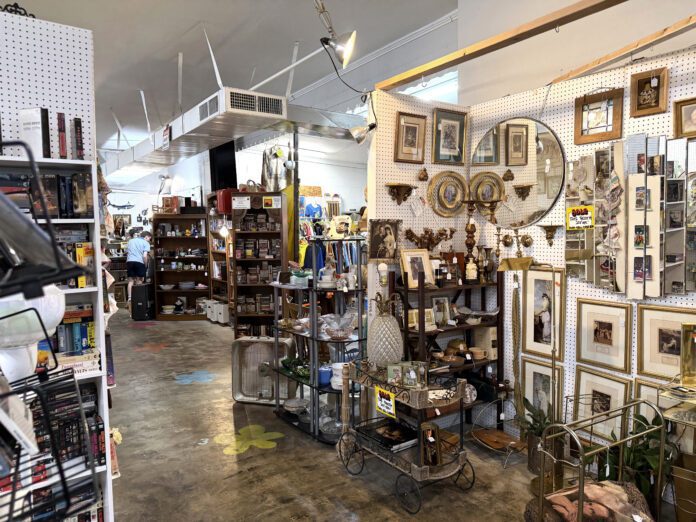
Vintage fashion is having a moment, and Oklahoma has long been home to the treasure hunters who know that the best finds are often the ones with a history.Secondhand shopping has evolved from a budget-friendly necessity into a style statement embraced by younger generations. And while fashion trends come and go, the appeal of authentic vintage has remained constant, proving that the most desirable styles are often the ones that have already stood the test of time.
“Thrifting and buying vintage as trends have been long watched by commercial production groups,” says Michael Easter of Love Me Two Times, a Tulsa vintage clothing boutique. “I remember in the early 2000’s when jeans began to hit the market that were frayed and made to look stained. But at that time, it was way cooler to buy the new item rather than wear an actual frayed and stained pair. That has flip-flopped now, and consumers actually want the vintage item – so manufacturers are scrambling to make really cheap and low-quality items that look vintage.”
The allure of buying clothing second-hand is somewhat dopamine-driven by the impulse to find treasure. However, there are plenty of benefits for the environment that come from thrifting, such as reducing consumption, according to Brittany and Dakota Lewallen of Dog Daze Vintage Boutique in Oklahoma City.
“We don’t necessarily need to follow trends – usually pushed on us to sell more new clothing – and constantly add to our wardrobes,” they say. “Finding your sense of style and unique vintage items that you feel good in can help to reduce the amount of items you bring home.”
That desire for authenticity is part of what has fueled the larger shift toward secondhand shopping, where many consumers are seeking not only unique styles but also more thoughtful ways to approach fashion.
“The number of garments purchased per capita between 2000 and 2014 increased by about 60 percent. However, consumers keep items for half as long as they did fifteen years ago. There are still only seven days in a week, and personally, we find ourselves gravitating to the same seven or eight outfits with some slight mixing and matching,” the Lewallens add.
The pair follows several organizations that share a common goal: increasing awareness about the environmental impact of fast fashion and general clothing production. From the creation of fabrics in factories to the transportation, use and eventual disposal of garments, every step of the fashion cycle carries an impact. Choosing vintage and secondhand pieces allows consumers to extend the life of existing clothing while reducing the demand for new production.
For many shoppers, that combination of sustainability and individuality is what makes vintage so appealing. A one-of-a-kind jacket, a perfectly worn-in pair of denim or a decades-old accessory can tell a story that a mass-produced item simply cannot. As more consumers rethink how and why they buy clothing, vintage continues to offer a way to embrace personal style while making more intentional choices.