




















Home Blog Page 110

The Frontiers
of Creativity

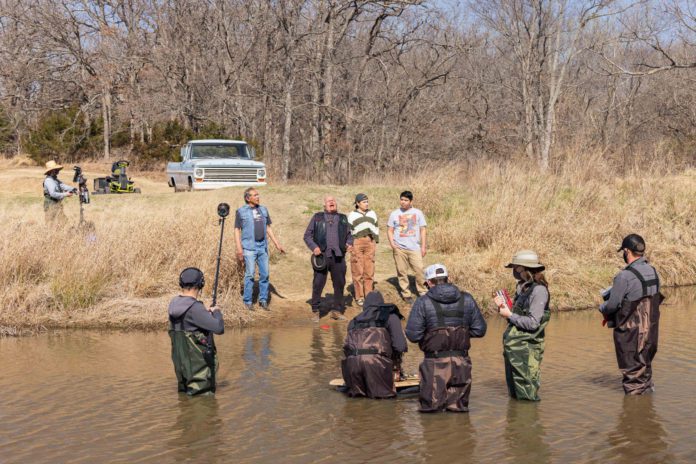
RESERVATION DOGS - BTS — Pictured: (l-r) Wes Studi, Gary Farmer, Paulina Alexis, Lane Factor. CR: Shane Brown/FX.

Encouraging Imagination 

Oklahoma is home to a rich history as it pertains to the film and music industries. Thankfully, several organizations have been established over the years to preserve this knowledge and heritage.

The Oklahoma Music Hall of Fame, located in Muskogee, boasts over 100 inducted members. Established in 1997, it holds live concerts every week and has a museum full of memorabilia donated by past inductees.

The Oklahoma Movie Hall of Fame, also located in Muskogee in the iconic Roxy district, is home to a plethora of Oklahoma movie chronicles. Situated inside the Roxy Theater, the museum has a special induction ceremony held each year to welcome new members to its elite ranks. 

Political biopic Reagan, starring Dennis Quaid, filmed many of its scenes in Oklahoma. Photo courtesy Matthew Little/MJM Group. Featured image: Reservation Dogs, a popular TV show following the exploits of four Indigenous teenagers in rural Oklahoma, films in-state. Photo courtesy FX/Shane Brown

The Oklahoma Film and Television Academy is a newly formed organization focusing on the development of a production-ready workforce for the state of Oklahoma. Located in Spencer, the academy has entry level classes such as ‘Film Crew 101’ and ‘Set Ready,’ and intermediate classes ranging from ‘Assistant Directing’ and ‘Set Decorating’ to ‘Production Coordinating’ and ‘Script Supervising.’ Staffers includes people working in the industry currently, such as:

Steve Mathis – A professional gaffer, or chief electrician on a movie or TV set. (Credits: Halloween, Mrs. Doubtfire, Thor: Ragnarock)

Dean Georgopoulos – A digital imaging technician. (Credits: Birdman, Gravity)

Alisha East – Assistant director and production assistant. (Credits: The Mandalorian, Conjuring 2, Modern Family

The Oklahoma Film and Music Office is a one-stop-shop to get all your Oklahoma filmmaking and music updates. The organization strives to support and connect local, national and international filmmakers with Oklahoma’s skilled and talented crew, production services and locations. Headquartered in Oklahoma City, the office touts a website (okfilmmusic.org) that’s full of helpful tools and resources to find/apply for local projects.
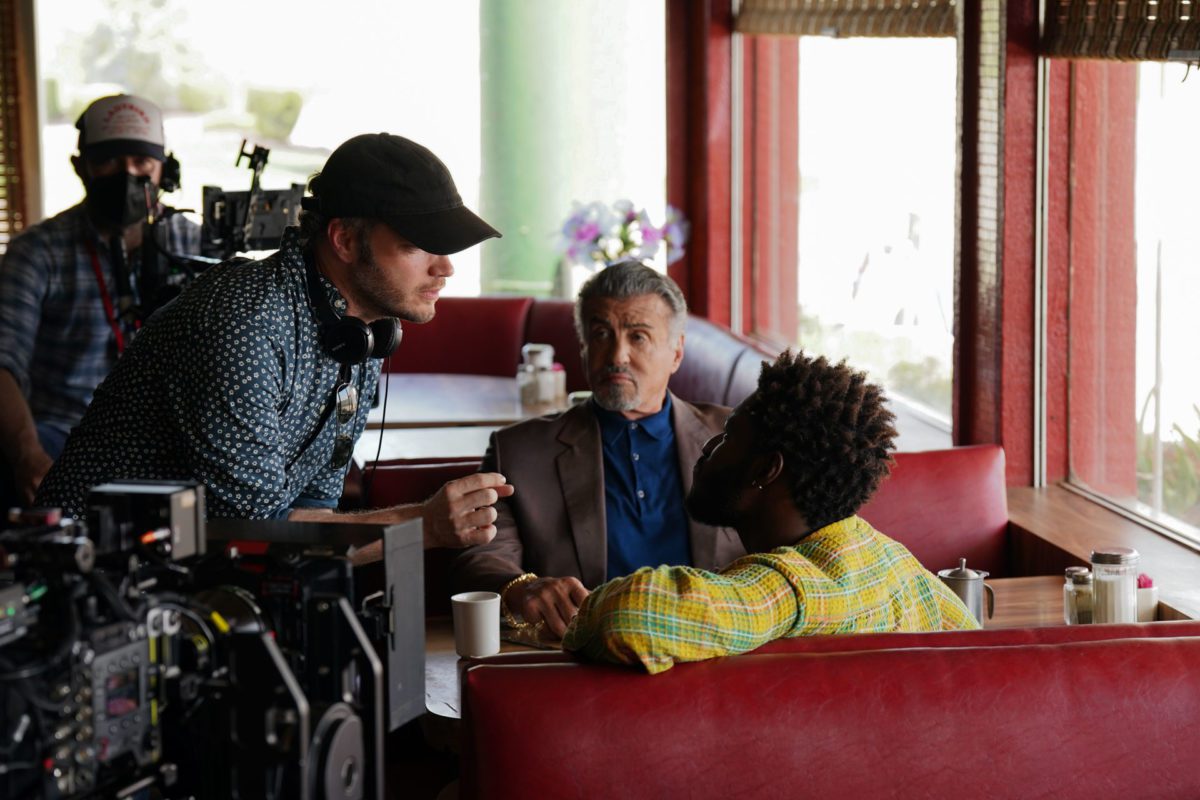
Tulsa King follows New York mafia capo Dwight Manfredi (Sylvester Stallone), who must set up shop in Tulsa following his 25-year stint in prison. 
Photo courtesy Brian Douglas/Paramount+

Oklahoma Music Genres

Music stemming from Oklahoma is vast and ever-changing. 

“What seems like the one genre of music that is strictly Oklahoman, at least in the country side, is called Red Dirt music,” says Tony Corbell, executive director at the Oklahoma Music HOF. A large number of musicians have worked under this umbrella term, including Bob Childers, often called the father of Red Dirt music, and Steve Ripley. 

Of course, Red Dirt isn’t the only genre of music Oklahoma is known for – we’ve got major stakes in country as well. Other native musicians include Blake Shelton, Carrie Underwood, Ronnie Dunn, Reba McEntire and Garth Brooks.

As for notable history moments from the state, Corbell says Merle Haggard’s song “Okie From Muskogee” is high on the list. 

“It was recorded here in Muskogee at our Civic Center in 1969,” he says. 

Another milestone moment came when Leon Russell founded the famous Church Studio in Tulsa. 

“It became the hangout of many, known for the Tulsa Sound and as a great place to play and collaborate,” he says.

A major slice of Oklahoma music history is found at Tulsa’s Church Studio, which recently underwent a massive reconstruction and is now open to the public. Photo courtesy Church Studio

Films of Note

Although the film industry in Oklahoma has been growing exponentially over the past decade, films about Oklahoma – or filmed in the state – have been getting created for a good while. Well known movies like Twister and The Outsiders, both shot in the state and containing stories centered on it, are highlights, both critically and financially. 

Twister created an annual stream of tourists, along with real and pseudo weather scientists and storm chasers traveling to the state as far as France, Japan, Korea, Australia and the UK,” says Oscar Ray, operations manager for Roxy Theater. 

More blockbuster films, like Martin Scorcese’s upcoming Killers of the Flower Moon starring Leonardo DiCaprio, wound up filming in the state because of projects like Twister

“That big budget Hollywood movie helped to encourage the growing number of independent motion picture producers and helped grow the state’s film festival circuit,” says Ray. 

Other notable films include Oklahoma!, The Grapes of Wrath, and Minari. 

“Obviously Killers of the Flower Moon spent the most money, but in reality, every movie shot in Oklahoma has a positive impact on the state’s bottom line,” says Ray. “And each new movie or television show produced here says: ‘Give Oklahoma a try.’”

A variety of resources exist for aspiring filmmakers, including the Film Education Institute of Oklahoma’s workshops. Photo courtesy Freestyle Creative + Nam Duong

Film and Music Education

If you’re looking to get educated in the arts, Oklahoma has quite the list of options. 

For music enthusiasts wanting to learn more about the craft, both the Oklahoma Music Academy and Academy of Contemporary Music at the University of Central Oklahoma (ACM@UCO) are solid choices. The Oklahoma Music Academy, located in Tulsa, has a wide variety of programs including violin, voice, bass, guitar and drums, along with summer programs. ACM@UCO, on the other hand, offers two fully accredited Bachelor of Applied Technology degrees and three associate degrees, all focused on preparing students for careers in the music industry. 

Major colleges with film and music programs in-state include Oklahoma City University, Oklahoma State University, the University of Oklahoma, the University of Central Oklahoma, and the University of Tulsa. 

On top of that, summer camps are great ways to get experience or enrichment in a condensed time frame. Oklahoma Children’s Theatre, which has been running out of OKC for over 35 years, has multiple camps for varying ages with workshops and lessons. For high school students, The Oklahoma Summer Arts Institute in Quartz Mountain State Park is a two week intensive that trains participants in the visual, literary and performing arts. Students are selected through blind auditions. Tim Blake Nelson (O Brother, Where Art Thou? and Holes) was a student from 1980-1982. 

Animation and the Rise of AI Art

If instead your focus is on TV and film animation, Oklahoma has plenty of opportunities. 

Oklahoma City University has a Game Design and Animation program, while Oklahoma Christian University offers its Gaming and Animation degree. The University of Central Oklahoma also has a Bachelor of Fine Arts in Graphic Design while the University of Tulsa has a Motion Graphics and Animation program. 

More recently, the world of animation has been rocked by artificial intelligence programs, which comb the internet for thousands of pieces of art and then generate something similar. This technology comes with complications for animators if a company is looking to improve its bottom line.

“AI art devalues the actual creation and value of artwork,” says Jessica Doll, an Oklahoma-based 2D animator working in the TV animation industry. “AI art relies on massive, large-scale art theft in order to exist. If it didn’t have that preexisting work to scrape from, we wouldn’t have AI art.”

As a person affected by this technology, Doll understands the future consequences AI art presents. 

“It feels innocent, but it steals and it takes away people’s livelihoods, and it doesn’t care about the ramifications of its actions,” she says. 

Oklahoma Film Projects

Oklahoma has become a hot spot for major motion pictures and television to shoot over the past several years. 

“Since the launch of the state’s new film initiative program in 2021, Oklahoma has recruited film and television projects from major production studios as well as supported local and independent filmmakers from across the globe, all of which contribute to the growth of our state’s film ecosystem,” says Jeanette Stanton, director of the Oklahoma Film and Music Office. 

Movies like Reagan (a Ronald Reagan biopic starring Dennis Quaid), Killers of the Flower Moon (a historical drama surrounding the killings of oil-rich Osage citizens), and American Underdog (a true story about an NFL MVP) all shot in the state within the last few years. 

High profile television shows like Reservations Dogs and Tulsa King also utilized the state recently, and employed hundreds in the process. 

According to the Oklahoma Film and Music website, both Oklahoma City and Tulsa rated high on the list for Best Places to Live and Work as a Moviemaker in 2022. 

“Oklahoma’s film industry is currently seeing an unprecedented appetite for film making, and the momentum is overwhelmingly positive,” says Stanton. “We hope to continue our upward trajectory in the year ahead with the continued support of our state, city and tribal leadership.”  

Scene May 2023

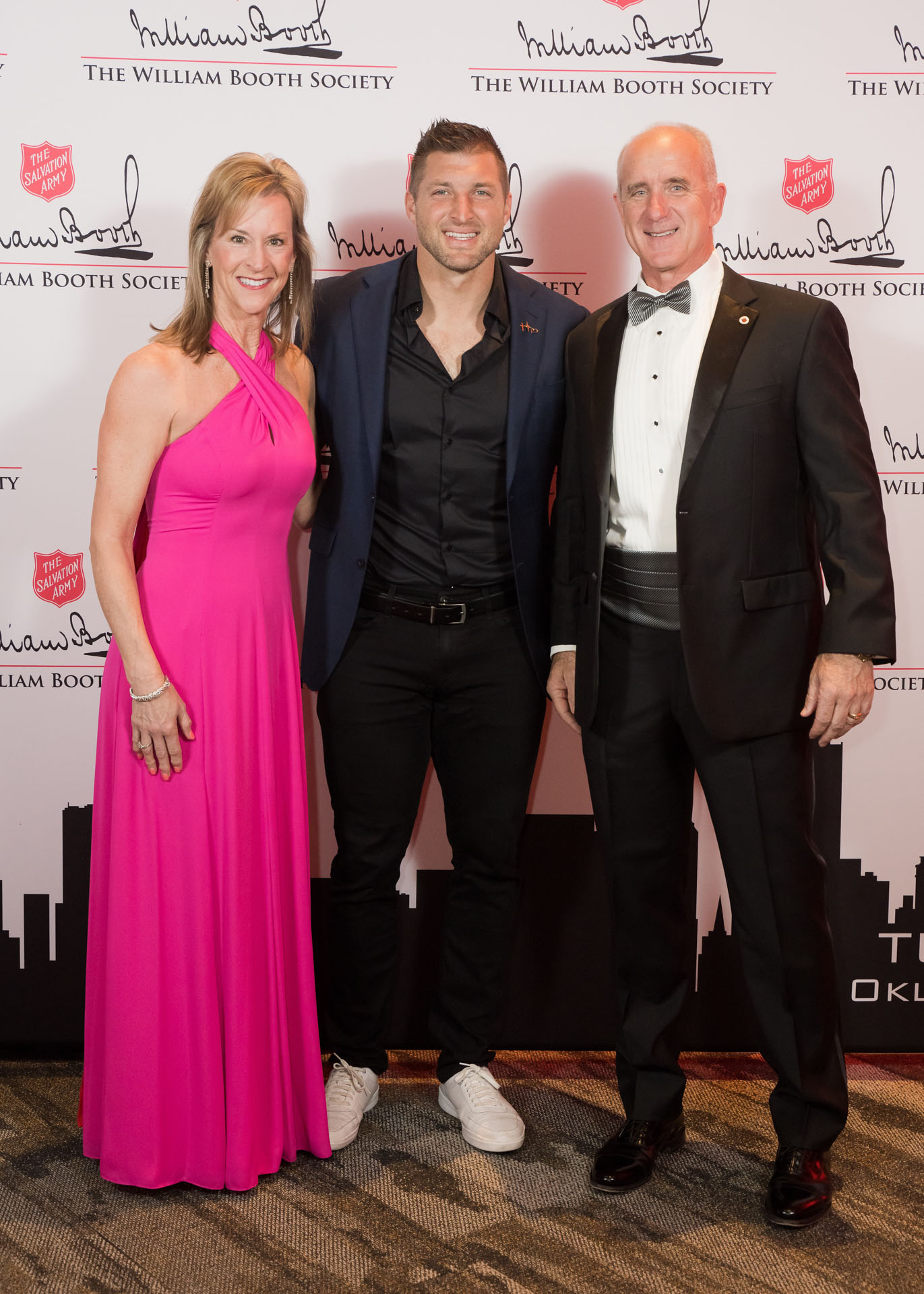
Angela & Sean Kouplen, Terri & Roger Ramseyer; 30th Annual William Booth Society Gala, The Salvation Army - Tulsa Area Command

Prepping for Aquatic Adventures

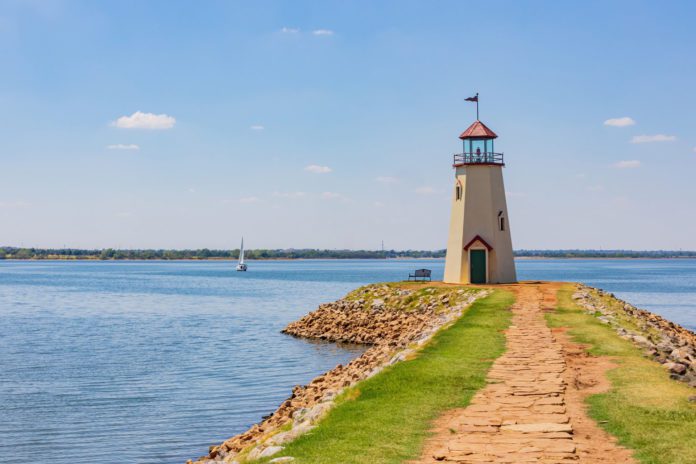
Sunny view of the Lake Hefner lighthouse with a sailing boat at Oklahoma

With Memorial Day fast approaching, it’s a good idea to review general boating and swimming safety rules before taking that first trip to the lake or pool. Mike Mize, Oklahoma’s Boating Law Administrator, offers some advice. 

1. Be aware of changing shoreline depths.

Mize says that one factor often overlooked as it pertains to water safety is the ever-changing shoreline depths and drop offs, especially when escorting young children to the state’s lakes.

“As the lake levels fluctuate due to rain or draw down, the amount of shallow shoreline also fluctuates,” says Mize. “Inevitably, the water will drop off into much deeper water, and it only takes a few seconds for a child to drop out of sight and be in serious trouble. Children should always wear a comfortable and proper fitting personal flotation device (PFD) while swimming or wading.”

Mize suggests adults take turns being the “designated person” to keep eyes on the youngsters while they are in the water, wherever that water may be.

2. Understand age and license restrictions for watercraft.

Oklahoma does not require people to have a license to drive a boat or other watercraft. However, a child under 12 may not operate any powered vessel over 10 horsepower, a personal watercraft (PWC) or a sail-powered vessel 16 feet or more in length. 

If a child is over 12 but under 16, he or she can complete a boating safety education course. If passed, the child can drive a craft on the water if accompanied and supervised by a competent person over the age of 18.

3. Remember the rules for drinking and boating.

Drinking and boating shouldn’t mix. 

“Obviously, the consumption of alcohol and/or drugs while boating can have serious consequences,” says Mize. “The boating rules mirror on-the-road-driving rules, in that a person is considered under the influence with an alcohol concentration of 0.08% or higher, measured in a person’s breath or blood.”

4. Use common sense.

Mize further suggests always wearing a PFD.

“Ninety percent of all drowning victims were not wearing a PFD,” he says. “Never gather and float or swim in the area of a running engine – carbon monoxide poisoning can happen quickly and overtake a person before they even realize it, and it can have fatal effects.”

Another danger at the back of a vessel is the potential for a propeller strike.

“Never jump off the back of a vessel while the engine is running, and never start the engine when any of the boat’s occupants are in the water,” he adds.

If you are planning alone time on the water, always let someone know where you’re going, when you plan to return and what boat ramp you’ll be using. 

“Utilize an engine cut-off switch,” says Mize. “If used properly, these devices will shut the engine down should the operator be thrown from the operator’s position.”

If an inflatable toy, raft or other item starts to drift away due to wind, do not attempt to swim after it.

“Many people risk their lives or drown trying to retrieve a $5 raft,” says Mize. “And never attempt to swim across a cove. Swimmers always underestimate the distance and overestimate their swimming ability.”

Honoring a Prolific Athlete

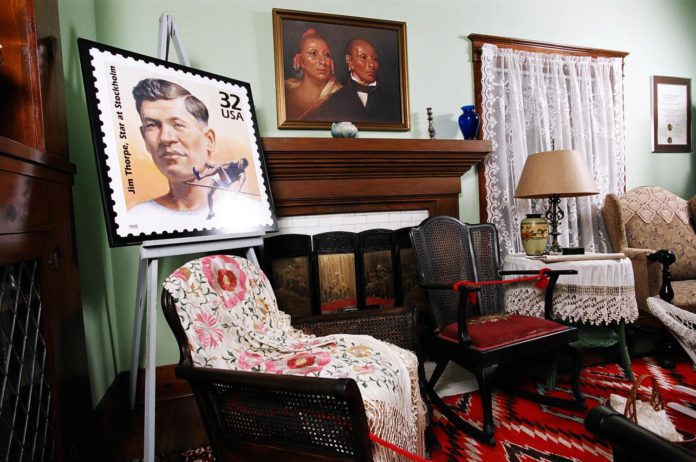
Yale’s Jim Thorpe home is listed on the National Register of Historic Places. Photo by Jim Argo courtesy Oklahoma Historical Society

A two-bedroom house that was onced owned by one of America’s greatest sports heroes brings more than the occasional visitor to Yale, a community of about 1,200 in Payne County.

The Jim Thorpe Home is listed on the National Register of Historic Places. It was the only home the acclaimed Olympian owned in his lifetime, says Cindy White, Yale’s Chamber of Commerce treasurer.

But the Thorpe Home isn’t the only thing that brings people to town, says Chamber president Brian Porter Jr. He and others are interested in seeing Yale succeed, pointing to the recent establishment of an economic development authority, a new tax structure and a couple of businesses, alongside housing construction.

“We’re starting to see some progress,” he says. “Our goal is to spur progress in our community.”

Yale marks the aforementioned athlete’s memory with the annual, family-friendly Jim Thorpe Day celebration in the city’s Jim Thorpe Park on the first Saturday in May. Porter says the Chamber-sponsored event annually draws a sizable crowd for the food trucks, games, street vendor sales and 5K fun run.

Visitors can also check out what is thought by some historians to be the site of the Civil War Battle of Round Mountain, just outside town. The 1861 battle, sometimes known as the Battle of Red Fork, was a key early skirmish in the Civil War as Union, Confederate and Native American factions fought for control of vital trade routes and Indian Territory itself.

Musical Roots

American jazz trumpeter, flugelhornist and vocalist Chet Baker was born in Yale in 1929. In recent years, Yale has hosted several Chet Baker jazz festivals honoring the musician, who died in 1988.

Yale was founded in 1895 on what had been Pawnee Reservation land, with the original town site 1½ miles east of the current location, when a general store owner named Sterling Underwood set up a post office inside his store.

Two stories explore the origin of the town’s name, according to a history on Yale’s official website. One has it that the name was taken after a lock in Underwood’s store, and the other holds that a traveling salesman from Yale, Iowa, named the town. Either way, the new town site was established on the Eastern Railway route, which began serving the town in 1902. It existed as a farm community until 1913 when oil was discovered in the area, briefly bringing prosperity.

Thorpe, a member of the Sac and Fox Nation, is believed to have been born May 28, 1888, in the Seminole County community of Econtuchka. He died March 28, 1953, in Lomita, Calif. He was considered one of the most versatile athletes of his time, and was the first Native American to win an Olympic gold medal, nabbing two top prizes in the 1912 Olympics, in classic pentathlon and decathlon. He also played collegiate and professional football, basketball and baseball.

He was controversially stripped of his Olympic medals because he briefly played semi-professional baseball before the Olympics. His wins were restored in 1983, and in 2022, Thorpe was again recognized as the sole champion in both events.

The Thorpe home now contains replicas of several of the athlete’s medals and trophies, and is preserved much as it was when Thorpe, his wife and his children lived there, says Linda Frick, president of the Jim Thorpe Memorial Foundation. She says the two-bedroom home receives a steady number of visitors annually.

“A lot of people from other states seem to know who Jim Thorpe was,” she says.

The museum grounds also include a log cabin that was the first homestead in Payne County. Thorpe sold the home in 1923, and in 1968 it was purchased by the Oklahoma Historical Society.

Thorpe’s athletic success has been a big influence of Yale youngsters through the years, says White – especially the boys.

 “All of the guys wanted to be like Jim Thorpe,” she says.

FOR MORE INFORMATION:

City of Yale
918-387-2405
yaleok.org

Jim Thorpe Home
706 E. Boston
918-387-2815

Yale Chamber of Commerce
405-714-4094
yaleok.org
facebook.com/yaleokchamber

Guyutes

Photo courtesy Guyutes

Described as serving “elevated street food,” Guyutes in Uptown OKC takes its name from a Phish song – a favorite band of the restaurant’s owners, Jarrod and Wayne. Aiming to offer a well-rounded menu, Guyutes has plenty of vegan and gluten-free options on its brunch, lunch and dinner menus. Brunch favorites include the wrapped steak and eggs, chilaquiles and breakfast burritos; lunch highlights are the bevy of sliders, street tacos and pizzas. Dinner, too, is a delicious affair, with such offerings as the Pip – a wrap with Cheeto-crusted chicken, black bean puree and avocado, as well as the Guyute – braised pork belly topped with chipotle honey glaze and finished with garlic basil whipped cream on a fried wonton. There are plenty of beers, wines and specialty cocktails at the ready, too. 730 N.W. 23rd St., OKC; guyutes.com

District Burger

Photo courtesy District Burger

If you’re on the hunt for a delicious burger in no-fuss digs, District Burger in Broken Arrow might be your new favorite spot. Serving up locally sourced, grass-fed beef, District is sure to satisfy. The star of the show, of course, is the range of burger options – from the classic Prime with American cheese, lettuce, mayo and caramelized onions, to the Sigma, topped with cheese, lettuce, bacon and eggs. For the omnivores, enjoy options like the black bean and ‘Impossible’ patties. Other offerings include loaded salads, chicken sandwiches and delicious shakes. Add rosemary garlic fries, onion straws or fried pickles, too. 219 S. Main St., Broken Arrow; facebook.com/dist.burger

Understanding ADHD

The Centers for Disease Control and Prevention cites attention-deficit/hyperactivity disorder (ADHD) as one of the most common neurodevelopmental disorders of childhood. A study by the National Survey of Children’s Health reported one in 11 school-aged children had a diagnosis of ADHD. 

However, Courtney Sauls, D.O., a pediatrician with Ascension St. John Health System in Tulsa, says this doesn’t necessarily mean that ADHD is increasing – but rather that the health community has become better at diagnosing and treating children at an early age. 

“ADHD is a neurodevelopmental disorder that affects higher executive functioning, like memory, organization, attention, impulsivity and decision making,” says Sauls. “Children are typically diagnosed as early as five or six years of age, but can be diagnosed at age four and up by a licensed psychologist or psychiatrist.” 

School-aged children, she says, are commonly diagnosed following a comprehensive evaluation with their pediatrician, parents and/or their school through a screening known as the Vanderbilt Assessment Scales. 

“ADHD is characterized by three subsets: inattentive, hyperactive or a combination of the two,” says Sauls. “Children must meet a criteria of at least six characteristics of at least one of the subtypes, and it must affect them across multiple environments, like school and home life.”

When navigating an ADHD diagnosis, she says it’s important to know that ADHD is a disorder – a real disease that deserves medical treatment when needed. 

“Untreated ADHD can cause distress at home, school and in social environments, can pair with anxiety or depression and prolong into adulthood,” she says.

Treatment Options

Research studies continue to try and determine what causes ADHD, but at this time there’s no known cause – although studies have shown genetics play an important role. Fortunately, there are many medications available now to help manage ADHD in children. While most people have heard of ‘stimulant’ medications such as Adderall or Ritalin, Sauls says there are once daily long acting variants of these medications that work well for children. 

“There are also newer ‘non-stimulant’ medications available that may work well for some children,” she says. “Typically, the pairing of medication and therapy and working with the school for an IEP [individualized education program] or 504 plan is the best comprehensive approach for a child who has ADHD.”

Due to production issues and higher demand, partly from an increase in adult ADHD diagnoses, there’s been a shortage of branded and generic versions of Adderall that has put a strain on patients. 

“This has posed a problem for many patients of mine, particularly older teens and college age students as they have transitioned to a short acting medication that may work better with a fluctuating schedule,” says Sauls.

She encourages parents or caregivers to discuss any concerns about ADHD with their pediatrician. 

“Hyperactivity and impulsivity are common for young children and toddlers, but your doctor can help you tease out if it’s out of the ordinary,” she says. “Your pediatrician can also be a resource for connecting you to local psychiatric resources and testing, and help guide you and your child on the next steps. 

Also, a great resource is CHADD.org, which is in the information website for the organization Children and Adults with Attention-Deficit/Hyperactivity Disorder.” 

The Allure of Athens

stock

This travel writer’s memories of former visits to Athens evoke graffiti, pollution, traffic and other details that major cities often include. However, a recent trip to Greece revealed details far more positive. Consider spending more time in Greece’s capital before connecting to islands and mainland cities. Immerse yourself in the enlivened metropolitan energy, which you’ll find to be contagious. Leave yourself time to absorb the museums while savoring the shopping and sumptuous cuisine of the enchanting Plaka – a popular Athenian neighborhood.

Lodging

Sofitel, the airport hotel, provides you with the ease of flying to other destinations quickly. When you return from the islands or the mainland, stay at Hotel Grande Bretagne on Syntagma Square in the center of it all. You quite literally step out onto Syntagma Square into the realm of all things Athenian. 

Footsteps away from the hotel is the Parliament building (and former palace) at the tomb of the unknown soldier, where the changing of the guard takes place hourly. The square is abuzz with people emerging from the subway stop. 

Endless blocks of chic shops and cafés adorn the sidewalks through the Plaka. The toasty smell of freshly baked pretzels from the kiosks wafts through the air. The graffiti looks more artistic than ever before. The aromas of grilled meats and seafood fill the cafés. A fresh Greek “horiatiki,” or salad with feta cheese chunks and oregano, is a perfectly refreshing lunch.

Dining and Shopping

Achillion Leather Sandals and Bags does custom fittings for gladiator sandals; it’s a cultural excursion in and of itself to simply watch the staff work their magic. Kolonaki is another shopping area of sophistication.

Dine at Giouvetsakia Greek Tavern on 144 Adrianou St., also in Plaka. For dinner, eat at Milton’s on Adrianou 91. Find the Hermion Restaurant at Pandrosou 15. 

Excursions

The National Gardens of Athens feature the palatial Zappeoin building. What Central Park is to New York, these gardens are to Athens. Duck ponds, trails and towering trees enhance this shady forest-feeling in the center of urbanity. 

The National Archeological Museum and the Acropolis Museum are stupendous. Drive a distance away to the Temple of Poseidon at Cape Sounion, which many people find more breathtaking than even the Parthenon – probably due to its sublime seaside view. 

However, right there in the center of Athens is the Benaki Museum, and to call it a must-see is an understatement. This multi-level museum is housed in a former mansion. Several floors of cultural artifacts are mesmerizing with their life-sized replicas. Ascending each level of this ornate building elevates your comprehension of the culture. 

The Hotel Grande Bretagne is not just a hotel – it’s an experience. You can dine there without being a guest. The hotel’s famous Alexander Bar is perfect for having champagne in the atrium to celebrate your arrival. This bar has been featured in Forbes for its historic tapestry of Alexander the Great; it’s a masterpiece of grandeur. The special touches of the hotel include a bedside treat of amaretto and truffles. Spend time in the cigar bar courtyard or the rooftop swimming pool. Enjoy an evening cocktail on the rooftop bar, or dine at the breakfast buffet. The rooftop view of the Parthenon at breakfast or at night is unforgettable.

Nearby Islands

Consider a day trip or extended time at the nearby Saronic islands of Hydra, Aegina, Poros or Spetses. 

An express train to the limestone cliff top monasteries of stunning Meteora is also accessible from Athens – but Athens alone is a destination!

Women in Business

Resources for Female Entrepreneurs 

Melanie Anthony can offer plenty of reasons why women should launch their own businesses.

“A woman who goes into business for herself has the opportunity to earn more,” says Anthony, who is the senior director of marketing and development for the nonprofit REI Oklahoma – an economic development agency. 

“A woman who owns her own business has more flexibility,” Anthony continues. “She can adapt her schedule.” 

And female business owners are more likely to put time and money back into their communities, says Jennifer Edwards, manager of REI’s Women’s Business Center. 

“They invest in keeping business local, especially with other women in business,” she says.

But entrepreneurship is seldom an easy path. The Women’s Business Center, established in 2002, addresses the particular challenges women face – including less access to capital as opposed to male business owners. There’s no membership fee at the WBC, and most workshops are free. Last year, 2,400 women were served.

When women come together for the workshops, Edwards says, “it’s a safe place to dig a little deeper and bounce ideas around.”

REI, based in Durant, provides services designed to stimulate economic growth in Oklahoma’s 77 counties.

Business consultant Audrey Hathorn has volunteered since 2015 with SCORE Oklahoma City, which offers educational services to entrepreneurs and small-business owners. 

“Most of my mentees have questions about finances and about overhead – which is employees,” says Hathorn. “They want to know how to get employees to stay, and how to boost morale.”

SCORE’S Women’s Entrepreneur Resource Hub focuses on empowering women by offering mentorship, education and networking opportunities.

“Women, more than ever, are leading the charge,” says Hathorn. “We are being vocal about our careers and our development.”

Oklahoma women are starting their own businesses in areas including financial services, internet technology and real estate, says Hathorn. Bookkeeping, event planning and environmental services are also growth areas for women entrepreneurs, says Edwards. 

“Service-based industries are where women are starting businesses,” says Edwards. “We are seeing a lot of professionals transition out of traditional workplaces and go into business for themselves.”

Edwards loves helping women with their business plans. Lenders like to see the business concept explained, and to see that potential business owners have put in the time to research their industries.

 “It’s one of my favorite purposes behind writing a business plan – getting that passion laid out on paper,” she says. “It ensures that I get to know where they want to go with the business.”

Recruiting Female Leadership

Hathorn doesn’t mind admitting there were some scary moments when she left her corporate job to launch Amplifly, a business consulting firm. But she also knew she had done certain things right. She paid her dues by working more than 20 years in human resources. She knew that small businesses, especially, could benefit from her expertise, having worked with many as a volunteer for SCORE. And she started her business as a side gig in 2018 before taking it full-time in December 2022.

Women are under-represented at the executive level in some of Oklahoma’s most important industries, and casting aside self-doubt can be one key to moving forward, business leaders say. That applies to moving up the corporate career ladder, as well as striking out on one’s own to help other women break the glass ceiling, just as Hathorn is doing.  

“Women, by our nature, are a little bit more risk-averse,” says Edwards. “We like having all our ducks in a row. We like to have the money in order, all the pieces in place, the business plan perfect. But things don’t have to be perfect. Sometimes you have to take that next step, to take that leap.”

When women aren’t present in management roles in industries such as energy, it makes it difficult for companies to attract a diverse workforce, according to the International Energy Agency, an intergovernmental organization that provides policy recommendations for the energy sector.

“If women are not advancing in the energy sector, there will be fewer role models and mentors to attract more women,” according to the IEA. “Furthermore, if women working in the energy sector are unable to advance in their careers, they will be motivated to change sectors.”

Saadia Zahidi, head of the World Economic Forum’s Center for the New Economy and Society, says industries with a poor track record of hiring and promoting women can acquire skills held by other companies that do better. Corporate training on unconscious gender bias is one example. Companies can also provide scholarships and mentoring for female STEM students.

“Businesses and governments need to take a much more customized approach to ensuring that the right talent is being developed for these industries,” says Zahidi.

Some Oklahoma companies have women’s groups, where female workers mentor one another and share ideas, says Hathorn.

“A lot of great things are said in those meetings,” she says, “but sometimes they are more aspirational. We need to get those ideas outside of those groups and make them policy.”

Not every woman wants to move into management, Hathorn says, “but they need to see that there is an opportunity for it, that there is room for development at that company.”

A Look at the Facts

In Oklahoma and across the business world, gender gaps in leadership persist. But some of the news is good as it pertains to female executive level representation; a recent analysis by Equilar, which provides corporate leadership data, determined that the growth of women in leadership roles accelerated to an average pace of 6.9% between 2016 and 2021. That’s up from a 3.8% growth rate in the prior five years. Women now hold about 14% of executive positions worldwide, up from 8% in 2010, according to a CNBC report.

But progress is not equal across industries, as in the energy sector, where women hold just 9% of executive officer roles.

That would suggest Oklahoma is short-changing itself, because firms with more women at the senior executive level outperform those with lower representation, according to Bank of America Global Research.

When an industry lags in gender diversity, it’s “damaging to economic growth, income equality and social inclusion,” says the IEA.

The outlook seems better for millennials, the IEA reports, with women in the 30-40 age group taking on leadership roles at a much higher rate than previous generations. That’s especially true for the natural gas utilities and renewable energy sectors. 

Some countries also do better than others, with Russia, Australia and the United Kingdom reporting the highest representation of women in energy. 

Women do dominate in representation and leadership roles in Oklahoma and elsewhere in industries such as education, healthcare, nutrition, the arts and social services. But the Spears School of Business at Oklahoma State University notes that those tend to be lower-paying occupations, and Oklahoma already has a gender earnings gap that’s about 5% higher than the national average. 

If equal pay were a reality in Oklahoma, the Spears school reports, women’s earnings would increase by about $5.4 billion annually, and the poverty rate for working women would be reduced by nearly 50%.

One bright spot is that the percentage of women-owned businesses in Oklahoma grew by nearly 10 percent between 2015 and 2019, the Spears school reports. 

Women-Owned Businesses

Women own a diverse set of businesses in Oklahoma. For those thinking of creating their own companies and are looking for inspiration, check out “women-owned certified businesses” on the Oklahoma Department of Commerce website – okcommerce.gov.

Women who obtain the certification make the selection process easier for companies and state agencies seeking diversity in their hiring of contractors, vendors and suppliers, according to the Commerce department website.

Listed in alphabetical order, the certified businesses range from A-1 Staffing and Recruiting, owned by Gale Parker of Oklahoma City, to Zyzer LLC, an asphalt contractor owned by Starla Wittrock of Kingfisher.

There’s also Carrell Trucking in Ardmore, owned by Brenda Carrell, and Rosie Lowe’s Micro Machine in Tulsa, which, since 1982, has machined small parts for the aerospace, geophysical, firearms and electrical industries.

Based in Edmond, Watkins-Conti Products is owned by Allison Conti and develops solutions for life-altering healthcare difficulties.

With a slogan of “Because Chatter Matters,” Chatter Marketing of Tulsa is owned by Heather Berryhill and specializes in advertising, marketing, branding and digital services. Clients there have included Merry Maids, Andy’s Frozen Custard, ONE Gas and the city of Sapulpa.

If your goal is to open a women-owned business in Oklahoma, resources exist to help you, and the sky’s the limit. 

Understanding Film Noir

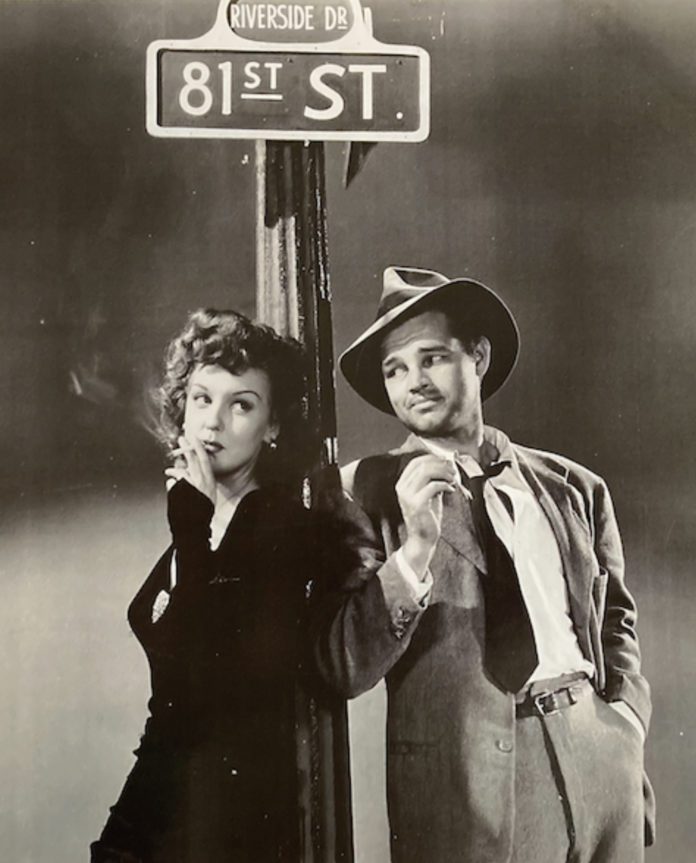
The film noir creation Detour (above) is one of several movies discussed during the Film Noir Theatre program, hosted by John Wooley and Ana Berry (facing page). Photos courtesy John Wooley

For eight years now, I’ve been writing, co-producing and co-hosting a television show called Film Noir Theatre. From the beginning, it’s aired on RSU TV, Channel 35 – northeastern Oklahoma’s public-television station, headquartered on the Rogers State University campus in Claremore. For the first two seasons, RSU TV’s then-program manager, Jennifer Sterling, was on the air with me. When she left for another state, I was afraid the show might be over. But Royal Aills, the station’s general manager, had other ideas.

As it turned out, he also had a new co-host in mind.  

First, a little backstory: In the late ’90s, director Leo Evans and I did a movie called Cafe Purgatory, signing up a number of top-drawer Tulsa-area actors for the project. Based on a one-act play I’d written, the picture was set in a greasy-spoon diner, which turned out to be a way station in the afterlife where recently deceased people waited to see where they might be going next. Among them was Elvis (played wonderfully by Presley tribute artist Darwin Warner), and our script called for him to befriend a teenage girl who was also marking time in the cafe.

Leo and I knew whom we wanted for just about every role, but we were stumped when it came to casting the teen. Then, Milton Berry, who played a cold hearted criminal in the film, suggested his barely teenage daughter, Ana.  

I believe it was the first film Ana Berry ever did, and Leo and I immediately saw that she was a natural.

Despite our best efforts, some good reviews and publicity, and its being given the Crowd Pleaser Award at the 1999 Fort Worth Film Festival, Cafe Purgatory never received a major-label home-video release. Ana, however, went on from that debut to a career in television, movies and internet programming on both coasts, ultimately returning to Tulsa, where her continuing media work came to include hosting original shows for RSU TV. She, as you probably have surmised, was the person Royal Aills had in mind for my new co-host. Of course, in the nearly 20 years since I’d seen her, she’d grown up, but she continued to radiate the kind of talent and presence that had made her such a Cafe Purgatory standout.  

Our reunion happened back in 2017, and Ana and I have been doing Film Noir Theatre together ever since. Not only has she brought beauty, energy and humor to our commentaries – she’s also the only one of the two of us who can pronounce “film noir” without a trace of what a college instructor once called my “Okie French.”

Which leads us to a question: Just exactly what is this film noir we’re presenting?

The literal translation is “dark movie.” That appellation was coined by French critics in the late 1940s to describe a certain style of feature film that was being made in Hollywood following World War II. During that time, these pictures wouldn’t have been known as films noir – the term didn’t really catch on in America until some time later. Instead, they would’ve been called melodramas, or thrillers, or maybe crime stories. It was their dark, or noir, elements that caused the French critics to begin gathering them under one umbrella.

Nearly 80 years later, students and aficionados of the genre still don’t entirely agree on what qualifies as a film noir. Some, for instance, feel that the look of the film is the most important thing – that there must be lots of shadows and darkness (preferably with rain) and neon-lit urban streets. However, it seems to me that if noirs share a common theme, it’s that the unpredictability of life, the vagaries of fate, trump everything else in a person’s life, and if fate chooses to throw you for a loop, through little or no fault of your own, there’s not a damn thing you can do about it.

One of the great examples of this approach is a wonderful low-budget picture called Detour, which was released by the tiny Hollywood company PRC in 1945. In it, B-picture leading man Tom Neal plays Al Roberts, a New York club pianist who decides to hitchhike to the West Coast to see his vocalist girlfriend, who’s gone out to try her luck in the movies. From the very first of the picture, the scenes are imbued with a sense of hopelessness; it’s not giving away anything to say that you’ll know, very early on, his quest is not going to end with a joyous reunion.

Getting a ride with a garrulous bookie who’s driving all the way to L.A., Al thinks that maybe things are finally going to break his way. Unfortunately for him, he couldn’t be more wrong. When his benefactor dies suddenly on the road, Al decides to appropriate his car and money and drive on toward the Pacific, setting into motion a sequence of events that includes an ill-advised relationship with a fellow hitchhiker, memorably played by another B-movie star, Ann Savage.

At the conclusion of the picture, in a voiceover, Al sums up what I think is the driving force behind all true films noir. “Fate,” he muses, “or some mysterious force, can put the finger on you or me for no reason at all.”

Some have said that this emphasis on fate was a part of the American mindset following World War II, when a lot of military personnel returned home from combat weary, disillusioned and questioning why the things they thought they’d been fighting for and the realities of their post-war lives just didn’t mesh. It’s an idea that would help account for the fatalism in these pictures, as well as for the liberal doses of fatalism’s first cousin, cynicism. Many if not most film noir protagonists, Neal’s Al Roberts included, are wrapped in a shroud of world-weariness that comes out not only in their encounters with others, but also in the actions they choose to take.  

Detour also highlights several other noir touches, including the element of alienation, of a gulf between people that can never be successfully bridged. Al never really connects meaningfully with anyone in the film; even his girlfriend, whom he plans to marry, leaves only a few days before they’re to wed, leaving him with a less-than-passionate kiss.

Then, there’s the femme fatale character, a staple of many of these features – and, indeed, of literature in general for a good long time. Essentially, she’s a symbol for bad choices, a mysterious woman who gets involved with the male protagonist and ends up doing him no good whatsoever. In Detour, it’s perhaps fated for Al to make the mistake of picking up a snappish female hitchhiker. Ann Savage is brilliantly creepy in the part; her character of Vera is recognized by a lot of noir fans as one of the greatest of the noir femme fatales.

While most films noir came out in the waning years of Hollywood’s Golden Era, they usually weren’t big-budget productions. Instead, they were crafted by the major studios’ B-picture units or, as is the case with Detour, filmed and released by smaller outfits. With Detour, as with many others of its kind, the lack of production money actually enhances the look of the picture, giving it a threadbare quality that works perfectly with the down-and-out lead character. (One of the touches that characterized director Edgar G. Ulmer was his use of fog machines in his low-budget epics – not only to provide atmosphere, but also to help cover up the cheapness of his sets.)

In addition to Detour – which clocks in at a little over an hour’s running time – this year’s edition of Film Noir Theater includes five other vintage movies, any of which should give you a pretty good idea of what noir is all about. The series airs every Sunday at 7 p.m. over RSU TV, Channel 35.