The USA BMX Grand Nationals will bring professional BMX bike racers and teams from across the country to Tulsa and Expo Square’s River Spirit Expo. Beginning Friday, Nov. 27, the extravaganza of BMX bike racing continues through Sunday, Nov. 30, at 4145 E. 21st St. An event for all ages, the grand nationals will be presented by the Tulsa Sports Commission. Look for the big events – including the 2014 Pro Championship Finals on Saturday, Nov. 29 – all throughout the weekend. Visit www.usabmx.com for all the details.
If you haven’t had a look at the exhibition Alexandre Hogue: An American Visionary , Gilcrease Museum will hold this show of paintings and drawings for one more weekend. This collection of more than 50 works by the revolutionary artist who made his name in painting scenes of the Dust Bowl-ravaged southwest and Midwest has been on display since since August. It features the sensual, undulating lines that are Hogue’s signature, but the show also includes works that may surprise some for its subject. Gilcrease Museum is located at 1400 N. Gilcrease Museum Road. For more, visit www.gilcrease.utulsa.edu.
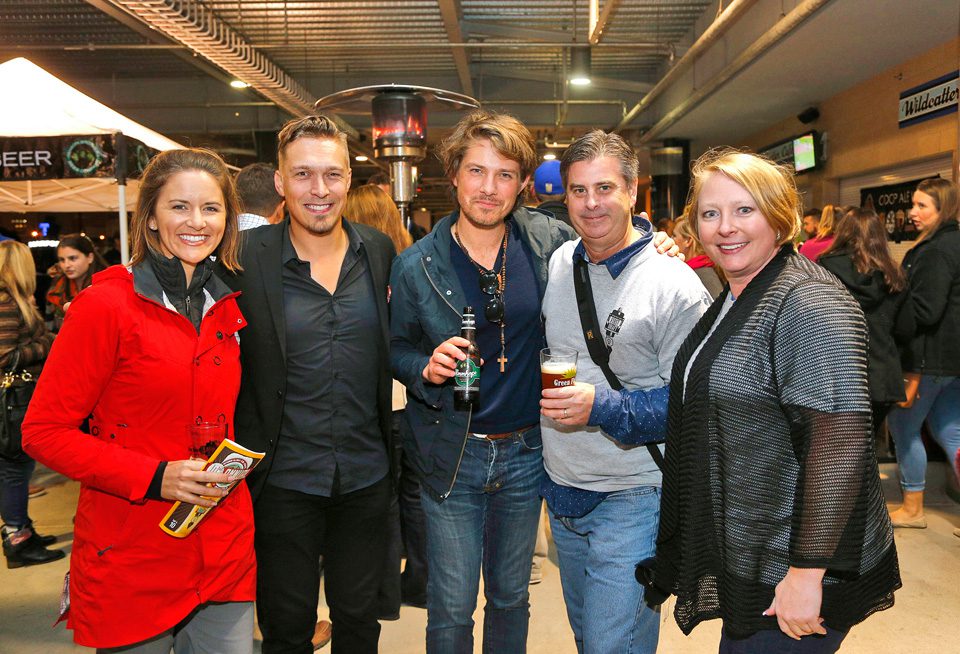
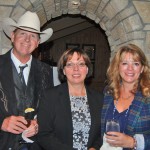
Kristin Dickerson, Isaac and Taylor Hanson, Tom Gilbert and Nicole Burgin enjoyed the suds at the 10th annual First Draft fundraiser for the Tulsa Press Club.
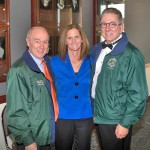
Mary Shaw received the Charles Chibitty Family Community Contributor Award from Greater Tulsa Area Indian Affairs Commission Chairman Robert Anquoe during the Dream Keepers 2014 awards banquet.
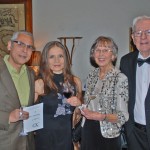
Sheldon Berger, Molly Berger, Jay Black and Julie Black attended the kickoff party for 2015 Winterset, which will be held Feb. 21.
Marla Carter and April Hill enjoyed Uncorking the Cure, a fundraiser for the National Multiple Sclerosis Society.
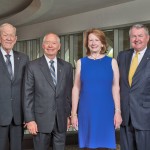
Russ Florence, Emily Dukes, Steadman Upham and Jayme Cox attended the Oklahoma Center for Community and Justice’s annual awards dinner, which honor Upham.
Kristin Dickerson, Isaac and Taylor Hanson, Tom Gilbert and Nicole Burgin enjoyed the suds at the 10th annual First Draft fundraiser for the Tulsa Press Club.
Myra Kaiser, Terri Higgs, Christy Fell and Glacier Confection owner Bill Copeland prepare for the 20th annual Champagne & Chocolate Fundraiser on Dec. 4 for Living Arts of Tulsa.
Oklahoma Heart Institute cardiologist Dr. Kamran Muhammad met with transaortic valve replacement (TAVR) patients Carole Finnell, John Seratt and Jim Meehan at the OHI 100th TAVR Celebration.
Johnny Clark, Karen Clark and Lucy Willis enjoyed an event at Southern Hills Country Club to benefit Tulsa Boys Home.
Tom Allen, Meg Haizlip and A.L. Haizlip attended the induction ceremony of the Oklahoma chapter of the National Wrestling Hall of Fame.
Jen Alden, Jonna Baker, Lauren Harned and Camille Nassar were chairs of Tulsa’s Young Professionals Next/Now Art Fashion Show.
Carlos and Claudia Martinez and Marian and Max Vowel enjoyed the 24th annual Hispanic American Foundation Gala & Auction at Southern Hills Country Club.
Cal McKee, Michael Graves, Kathie Coyle and Nevyle Cable were honored as 2014 Distinguished Alumni by The University of Tulsa Alumni Association during TU’s Homecoming Week.
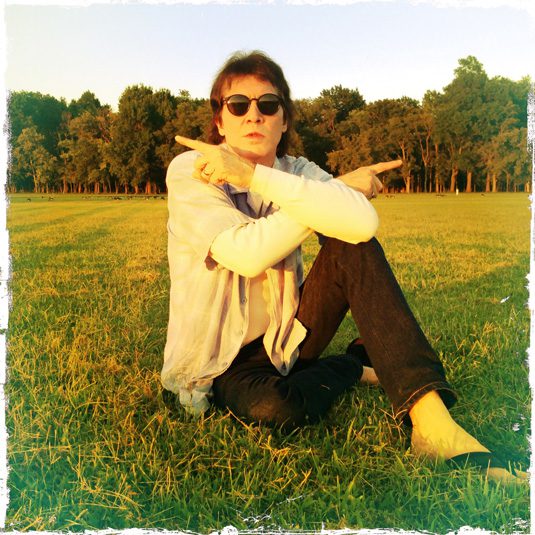
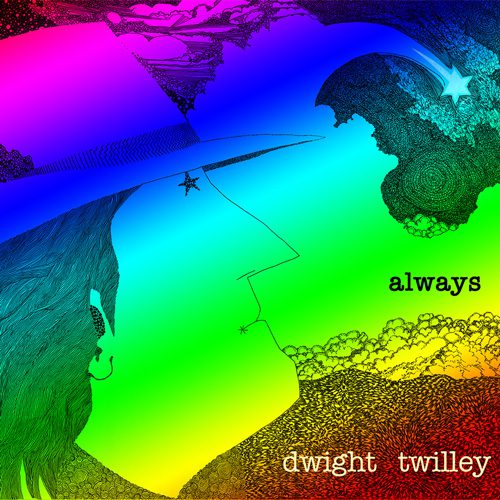
Dwight Twilley’s newest album marks more than four decades in rock. Photos courtesy Dwight Twilley.
The just-released Always is Dwight Twilley’s first new disc in a little over three years, and one listen tells you that he put a lot of thought into every track. This thoughtfulness extends to its title – seemingly straightforward, but the way Twilley sees it, nuanced as well.
“If you think about it, ‘always’ is kind of a magical word,” explains the Tulsa-based pop-music star. “In the first place, it’s a lie. Nothing is always. And yet, while it’s completely fictional because there is no ‘always,’ people still put so much value and emotion into the thought of ‘always.’”
By way of stirring the “always” pot a little more, Twilley’s new disc includes a photo of him pointing in two different directions, which, he says with a laugh, “we call the international sign of ‘always.’”
Whether you interpret that as “always” or “all ways” – or, for that matter, whether you feel like interpreting it at all – semantics shouldn’t get in the way of enjoyment when it comes to this record. Rock-solid and engaging from start to finish, it features a dozen new Twilley compositions, ranging from the oldies-influenced, piano-triplet-driven “Fools Like Me” to the aggressively big-beat “Till the Jukebox Dies,” all further cementing his reputation as standard-bearer for the musical genre known as power-pop.
While “power-pop” means different things to different people, what it amounts to in Twilley’s case is crisp, melodic singing, songwriting and playing influenced by the British Invasion groups of the 1960s as well as American rockabilly and rock ‘n’ roll. Twilley has worn the power-pop mantle for decades; as recently as 2010, a writer for the magazine Sound & Vision wrote, “If we’re going to have a king of power-pop, Dwight Twilley may be the man.”
“Well, you know, that [classification] changes every four or five years,” Twilley notes. “I was the father of New Wave once, back in the ‘80s. But think about the power-pop thing. What would be the ultimate power-pop band that ever existed?”
He is, of course, referring to the four moptops from Liverpool responsible for starting the pop-music revolution known as the British Invasion.
“There you go,” he says with another laugh. “So if anybody’s going to compare me to the Beatles, then I just absolutely have no problem with it.”
Had the Beatles continued to exist, they might well have been traveling through the same kind of musical territory Twilley explores in Always, which is full of layered, upbeat harmonies; evocative lyrics; and sparse and satisfying instrumentation (including a backwards-guitar track or two), all pulled together by Twilley’s confident vocal work. Beginning with the line, “How long you gonna make me feel like I’m on fire?” – which appears to be a nod to his first national hit, 1975’s “I’m on Fire” – the disc ends with the words, “there’s always tomorrow.” Taken together, those phrases seem to point toward a theme for Always: a consciousness of the past, but an eye on the future.
Then again, maybe not.
“Well, I was trying not to have a theme,” Twilley says, chuckling. “The last album, Soundtrack, was a totally autobiographical album, so when we started work on this, my big effort was just to make Dwight Twilley songs. That was my plan. Anytime you do anything, you can’t help but be a little bit autobiographical; it probably slides in there whether you like it or not. But what I was trying to do was say, ‘Here are some Dwight Twilley songs. Don’t think about ‘em too much.’”
Still, from that very first line on the title track, it’s hard not to find a past-consciousness flowing throughout much of the disc. And there would be a good reason for it. Exactly 40 years ago – on Nov. 27, 1974 – Twilley and his bandmates Phil Seymour (drums and vocals) and Bill Pitcock IV (lead guitar) went into Tulsa’s Church Studio to record “I’m on Fire.” The Dwight Twilley Band had just signed its first recording contract with Shelter Records, headed by local-boy-made-good Leon Russell and British producer Denny Cordell.
There’s another man from that long-ago session on the new disc, too: James Barth, who’s responsible for the string arrangements.
“He co-engineered ‘I’m on Fire’ and was with the Twilley Band,” says Twilley. “Besides myself, he’s the only living person left who was on that session.”
Those who have passed include Roger Harris, the other engineer who worked on “I’m on Fire,” as well as Seymour (in 1993) and Pitcock (2011), both of whom died of cancer. And while Twilley’s longtime musical comrade Pitcock left behind some licks that can be heard on “Happy Birthday,” a wistful ballad from the new album, his loss led to the large roster of guest musicians featured on Always.
“While we were cutting it, we were kind of in this weird void, because we’d been working so closely with Bill [Pitcock] for so many years, and now we were starting a new album, and there was no Bill,” explains Twilley. “A lot of people said, ‘Well, you should get some of your pals and friends to start chipping in and maybe give it a different sound.’ That seemed like a good idea to me. Most of the time we were so self-contained, there was never any reason to call up anybody and say, ‘You want to play on something?’ Occasionally, a friend would be in town, and of course we’d have ‘em play, but we never spent any real thought on it.
“One of the guys we’ve got who’s really interesting is Roger Linn, the guy who played all the backward guitars on [the 1976 Twilley song] ‘Sincerely,’” he continues. “He invented the LinnDrum [drum machine], and he used to play for Leon Russell; that’s where we met him. He was engineering for Leon. And actually, that song was Phil and me – just us and Roger Linn went into the studio. I wrote the song, and we recorded it and mixed it in one day. But people still talk about that guitar part.”
Other contributing musicians include guitarist Aaron “Slimquik” Failes, bassist Dave Armstrong and drummer-percussionist Jeff Smith – all members of Twilley’s touring band – as well as area players with international reputations like Steve Ripley (guitar) and Jimmy Karstein (drums). They join a group of guest stars that includes vocalist Susan Cowsill, fellow power-pop star Tommy Keene and noted studio bassist and composer Leland Sklar. Steve Allen (guitar) and Ron Flynt (bass and organ) are former Tulsans who put together another major-label power-pop band, 20/20, in the 1970s, while guitarist Mitch Easter is a well-known musician and producer. Other nationally and internationally known players on the disc include bassists Timm Buechler and Ken Stringfellow, guitarist J.B. Meijers and drummer Doug Wiley.
Always was produced, recorded and mixed by Twilley and his wife, Jan, at their Big Oak Studio in Tulsa. And while any number of tunes on the disc seems “radio-friendly,” to use an old term, don’t look for any singles to be released.
“For the last couple of records, we put a lot of effort into that, and a lot of money, and it just goes nowhere,” Twilley says. “Radio’s as screwed up as the record business. Once something’s released, everybody steals it anyway, and really, the only people who are going to buy it are the people who are your fans. That’s what gives us the satisfaction of working so hard, because we absolutely know there are people all over the world who will just really be happy to hear a new Dwight Twilley song.”
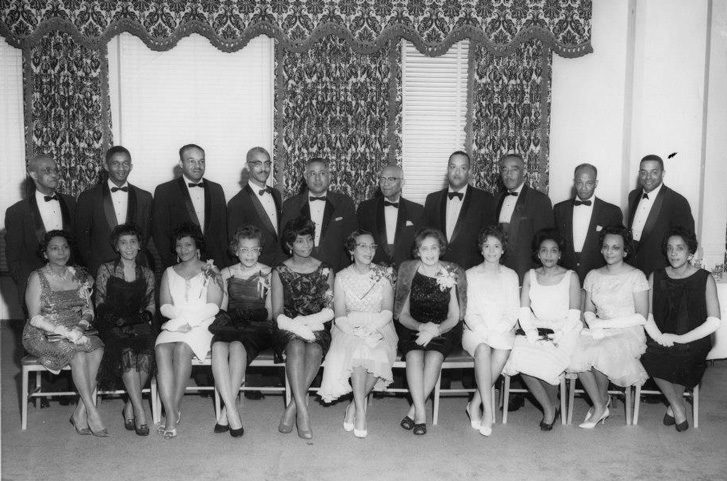
The Tulsa chapter of The Links, Inc., celebrates its history in the community, which began with its charter members in 1964.
Photo courtesy The Links, Inc., Tulsa chapter.
The Tulsa chapter of The Links, Inc., celebrates its history in the community, which began with its charter members in 1964. Photo courtesy The Links, Inc., Tulsa chapter.
Fifty years ago this month, a handful of Tulsa female civic leaders formed the city’s chapter of The Links, Inc., a national organization that focuses on giving back to the community through service and donation.[pullquote]It is one of the nation’s oldest and largest volunteer service organizations of extraordinary women.[/pullquote]
“Over the past 50 years, we have contributed more than 60,000 hours in service hours and hundreds of thousands of dollars in monetary and in-kind contributions throughout the Tulsa community,” says Libby Johnson, a member of the Tulsa Chapter of The Links, Inc.
The Tulsa chapter is made up of 25 members – all women. The organization’s members are business and civic leaders, role models, mentors, activists and volunteers working toward a common vision by engaging like-minded organizations and individuals for partnership, explains Eleanor Payne, the president of the local chapter.
“who are committed to enriching, sustaining and ensuring the culture and economic survival of African-Americans and other persons of African ancestry,” Payne says.
Last year alone the Tulsa chapter gave more than 1,200 service hours to community projects that focus on five areas: service to youth, national trends and services, the arts, international trends and services and health and human services. Each category is designed with a particular goal in mind, says Johnson.
For example, in 2013 the Tulsa chapter developed a mentoring program called My Sister, My Self, which endeavors to build self-esteem and self-efficacy among area elementary students – specifically, young black women, adds Payne.
“This mentoring program began in the 2012-2013 program year and earned the chapter the Tulsa Regional Chamber Partners in Education Champions Award,” Payne says.
Partnering with education is not the organization’s only endeavor. In the past, the chapter has joined forces with several other nonprofit organizations in the area to meet community needs. Members have teamed up with Tulsa Habitat for Humanity and the American Heart Association for various projects, explains Johnson.
In the next 50 years, the Tulsa chapter plans not only continuing to meet current needs, but to face new challenges, says Payne.
“We now have a National Childhood Obesity Initiative targeting the health needs of African-American children,” she says. “We are working on closing the achievement gap in reading and math for third graders. We are working to increase literacy for kindergarten through 12th grade students in science, technology, engineering and mathematics (STEM) education; and of course providing programs to help deal with health issues that continue to be prevalent among African-American women.”
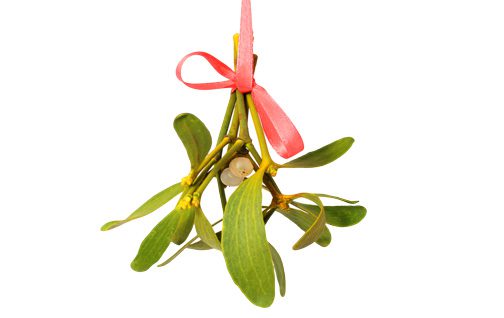
Hanging berry-studded sprigs of mistletoe over doorways during the holidays is fine for most of the Western world, but in Oklahoma, the humble evergreen is well regarded year-round.
Technically parasitic, the state’s floral emblem was widely considered by many as a nuisance pest that damaged trees. Today we know it as an active player in sustaining ecosystems worldwide and a necessary food source for bird species. That importance brought it prominence in Oklahoma. The mistletoe received its representative honor first in 1893 when the pre-statehood territorial legislature passed a bill making it official, states the Oklahoma Historical Society’s online encyclopedia.
After 1907, the new state’s legislators revisited the question. Some wanted the exotic passionflower to symbolize Oklahoma, but a Guthrie newsman staunchly defended the mistletoe, reminding his fellow ‘89ers (participants of the 1889 land run) of the struggles and heavy costs of settling the territory. That first winter was particularly harsh, and families decorated the graves of loved ones with mistletoe, the only greenery tough enough to survive. The state bill passed in 1910.
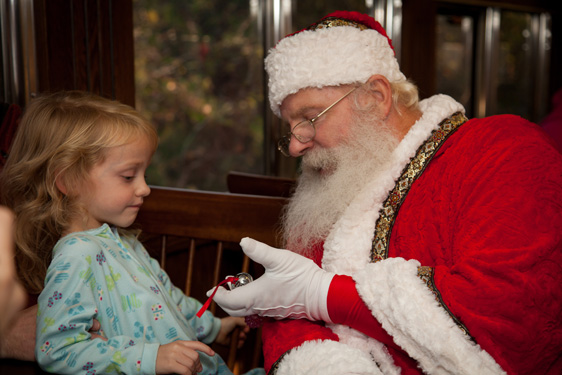
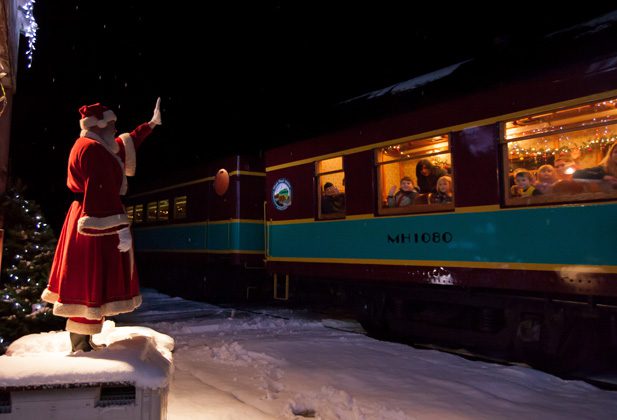
As Oklahoma considers the prospect of passenger train service between its two largest cities, rail’s most ardent proponents may soon be its youngest. The Eastern Flyer, a passenger train proposed to run between Midwest City and Sapulpa, has been transformed into the Polar Express, boarding most days through Dec. 28 from Bristow.
This is the first year Iowa Pacific (which owns the Eastern Flyer) has brought this official train ride event to Oklahoma, says Angela Arias, vice president of sales and marketing for the Premier Rail Collection, the passenger division of Iowa Pacific.
“We’re delighted to be in Oklahoma, and we’ve been embraced by the community,” Arias says. “I know everyone is going to be thrilled by this experience.”
The Polar Express is a classic children’s picture book by Chris Van Allburg about a boy, who one winter night hears a train whistle. From his bedroom window, he sees a magical train outside of his house. On board, he meets other children in their pajamas headed for the North Pole. On the journey, the children drink hot chocolate, listen to music and play. In 2004, Robert Zemeckis created a computer-animated feature film based on the book with Tom Hanks as the voice of the conductor.
The story and film have inspired many holiday passenger train events, but the Eastern Flyer’s Polar Express is one of a handful of official Polar Express Train Rides operating in the U.S., Canada and the U.K.
Arias says the Eastern Flyer’s trial run in February was part of the reason Premier Rail and Iowa Pacific decided to bring the attraction to Oklahoma.
“It was so successful, and the community [of Bristow] embraced it so whole-heartedly,” says Arias.
The Eastern Flyer Polar Express will board from the Bristow Historical Museum, a restored 1923 train depot operated by the Bristow Historical Society. The group rearranged its collection to accommodate the 2,000 people per day anticipated to visit, says Trudi Barnett, historical society secretary.
Barnett says the town was chosen for an additional reason.
“We found out Bristow was selected because we kept our history,” she says. “We renovated our depot…We’re just thrilled that [the Polar Express] is coming. I know there were several other cities that wanted it, and we were lucky enough to get it.”
Children are encouraged to wear their pajamas and experience the story with their families. The Polar Express, which began its runs in late November, continues most nights through December with afternoon and evening departure times. Excursions are about one hour round-trip. Visit www.easternflyerpolarexpressride.com for ticket information, purchases and a detailed schedule.
Nearly a decade ago, Tulsa artist Steve Cluck had an idea for how to promote his hometown. Now, Cluck is on a mission to photograph people – 918, to be exact –wearing his famed “Don’t Hate The 918” T-shirt line. So far, Cluck has photographed about 300 people who live in the northeastern Oklahoma area code.
“The coolest surprise is that people are very excited to be in the project,” Cluck says. I have not had to do much recruiting. People are approaching me.”
Cluck hopes that the project will showcase the diversity of the Tulsa area. He also wants to highlight the quality of people in Tulsa.
“People here are nice and compassionate,” he says. “So I wanted to do something that puts the spotlight on the people of the 918 that illustrates how great the people really are.”
This is the largest project Cluck has tackled in his 10 years of amateur photography, he says. He anticipates that it will take about a year to finish the project. To be considered for the project, contact Cluck through Facebook, Twitter or www.donthatethe918.com.
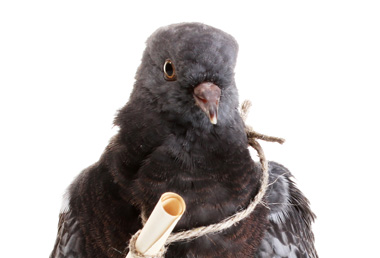
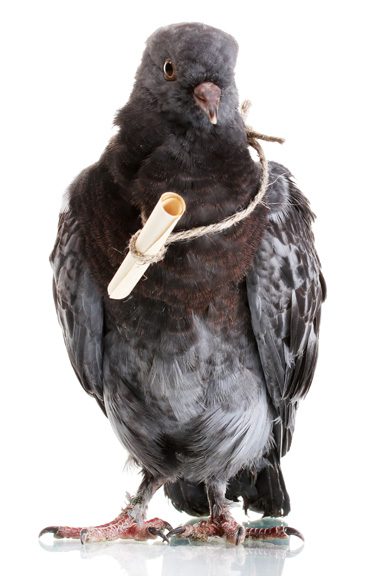
“First and foremost, they are not rats with wings,” explains Lorrie Monteiro, the curator of the American Pigeon Museum. “They are social, gentle birds that have had a symbiotic relationship with humans for thousands of years.”
Monteiro says the Oklahoma City museum seeks to preserve the history of the domestic pigeon and share its story with the public.
Founded in 1973, the museum was originally housed inside an old home; but in June, the museum was able to open a larger facility with the support of pigeon fanciers from all over the country.
Exhibits feature the many facets of pigeon history, including racing homers (a breed of pigeon), performance birds and war pigeons used in the U.S. Army Signal Corp Pigeon Service during World War I and World War II.
“They have served humans well, especially in times of conflicts,” says Monteiro. “These birds have been steadfast and heroic in delivering important messages and saving hundreds of lives in the process.”
To some, pigeons are seen as an urban nuisance, but what most people don’t realize is that they are the same species as a bird that is held in much higher regard.
“Those lovely white doves that people like to see during ceremonies are white racing homers – domestic pigeons,” Monteiro says.
“Pigeon” and “dove” are interchangeable terms. They make up the family Columbidae, and there are many different kinds.
“All are one species but hundreds of breeds,” she clarifies.
The domestic pigeon highlighted at the museum is a descendent of the wild rock dove, also known as the rock pigeon.
“Wild rock doves are still found in cliff sides of England and the Mediterranean,” says Monteiro. “This bird is not native to the United States.”
Fancy pigeons come in many forms and appear in bird shows across the country.
“We have a number of the fancy breeds here, so visitors can see the different standards of what they are judged on in shows,” Monteiro says.
There are 22 varieties of performance pigeons – birds “that can tumble mid-flight or roll on the ground or even fly for hours on end,” she adds.
The flying performers do their stunts in the air, while the parlor types do theirs on the ground.
The museum also contains a racing clock
collection that spans between 1903 and the 1980s, artistic depictions of pigeons and an exhibit of donations from the royal race loft.
“There is so much more to this bird that most people don’t know, and we are hoping people will visit so they can see how amazing they are,” Monteiro says.




























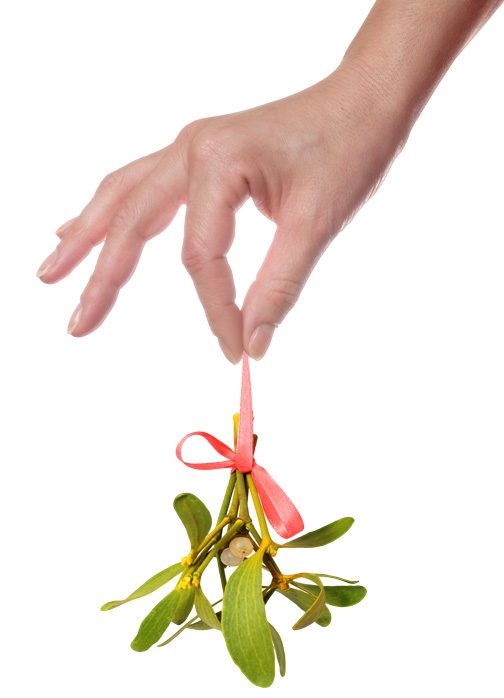 Hanging berry-studded sprigs of mistletoe over doorways during the holidays is fine for most of the Western world, but in Oklahoma, the humble evergreen is well regarded year-round.