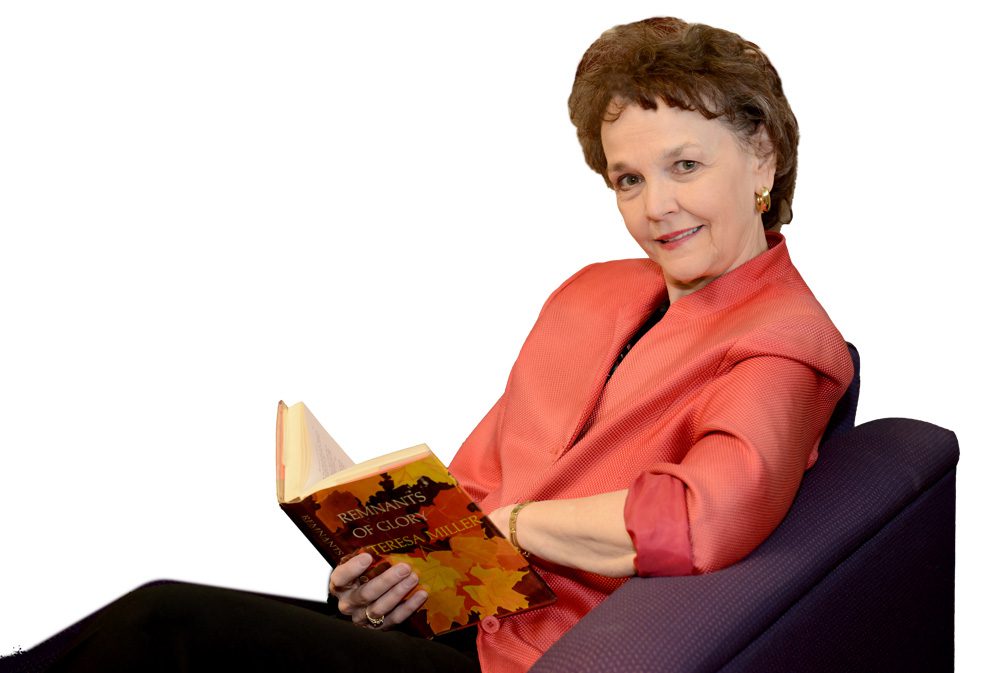
Teresa Miller is a writer and the executive director for the Oklahoma Center for Poets and Writers. Photo by Natalie Green.
Teresa Miller is a connoisseur of all things literary and all things Oklahoma. As the executive director of the Oklahoma Center for Poets and Writers at Oklahoma State University-Tulsa and the host of the OETA-produced television show Writing Out Loud (on which she interviews prominent authors), Miller is heavily invested in the world of creative writing. She’s also an author with several works to her name, including Remnants of Glory, a novel, and Means of Transit, her memoir published in 2008. We sat down with Miller to discuss the immense role that literature and fiction have played in Oklahoma’s history and in her own life.
In what ways has Oklahoma been shaped by literature?
It’s been shaped by literature probably as much, if not more, than any state in the union. For instance, The Grapes of Wrath had a huge impact on the state and promoted an image of Oklahoma throughout the world that is very different than the image Oklahoma has of itself. That’s not taking anything away from John Steinbeck (the novel’s author), but at the same time, Oklahoma is much more than the literary portrait that we get in The Grapes of Wrath.
Then on the other extreme, we have the musical Oklahoma! where the state is depicted as a place of great opportunity. And so there were these two extremes in the national consciousness when it came to Oklahoma in its early days. It was either a Dust Bowl or a place that was so lush that corn was higher than you can imagine. Neither image was completely true.
Which author or authors have left the greatest impression on you?
I am a fourth generation Oklahoman, but when I was growing up, ironically, the authors who had the most influence on me were Southern women authors like Flannery O’Connor. They were the writers who I looked up to. Then as I grew older and my eyes turned toward home and I became more comfortable with my surroundings, I began to celebrate Oklahoma authors and the great literary legacy that we have here.
Share with us your experience in writing. Also, what are you working on these days?
I wrote my first novel when I was in my 20s, and it was a wonderful experience. But what happened to me after that was what happens to so many writers on their first book – I developed a writer’s block that lasted a number of years. It was during that time period that I felt the need for the company and inspiration of other writers. That’s when I created the Oklahoma Center for Poets and Writers. I eventually wrote another novel many years later and then a memoir shortly after that. I’m currently working on a new novel.
How has the Oklahoma Center for Writers and Poets evolved over the years?
One way is that now we look for books to do more than just provide literary enrichment. We see books as talking points that can help us deal with important social issues. Our motto has become “using books to broaden our thinking and enlarge our hearts to build a better community.” So, we find great satisfaction in using literature as a means to get to know each other better.
What advice would you give to a young writer who wants to remain creative and passionate about literature?
Stay true to your voice. I think what derailed me early on was that my voice became less authentic, and I think I was trying too much to have the voice of other people and other writers and trying to please people too much, rather than owning my words and my experiences. The most important thing anyone can do as a writer is to be authentic…yet it’s probably the part that’s the hardest.
For a person who really didn’t like hanging Christmas lights when he was a child, Chuck Downs has made a big turnaround. His family’s holiday lights display in Norman has become such a huge event that it was featured in ABC’s Great Christmas Light Fight in 2013.
Chuck Downs is ready for another year of dazzling holiday lights at his Norman home. Photo by Brent Fuchs.
Downs enjoyed participating in the show, but says it was hectic.
“It really didn’t seem like a competition, but was geared more towards showing the TV audience how crazy ‘Christmas people’ like us truly can be,” he says.
“Crazy” is debatable; “charitable” is not. The Downs family’s light display has raised money and food for the Regional Food Bank of Oklahoma since 2008. That first year, guests contributed enough canned goods for 8,201 meals and $598 in cash. Last year, the Downs family turned over more than $38,000 in donations (thanks to matching funds from Chesapeake Energy) and 9,588 pounds of food.
Since the Downs family began collecting for the food bank, the funds and food contributions to date have produced 911,695 meals. This year, the Downs family hopes to break the one-million-meals mark.
Downs says he and his wife, Kim, chose the Regional Food Bank as beneficiary “primarily because we knew they had the capacity to handle the food and cash that our donations will generate, and that they are the food source for so many other local charities.”
Community is important to Downs, and it’s one of the main reasons he goes through the time-consuming ritual of building displays each year.[pullquote]“Christmas memories are timeless, and we want to create special memories for our community,”[/pullquote]
“We want to provide an outlet in which our community can come together and help one another during the holiday season,” he says.
The Downs’ lights display features more than 280,000 lights, 18 miles of light strands and 13 miles of extension cords. In the yard, 70-feet-tall trees are lit with light strands weighing in total around 800 pounds. All the lights and features are synchronized by software and hardware controls spread throughout the yard. Plus, there’s music.
The intricate home holiday lights display
attracts onlookers not only in the local community and Norman, but visitors from around the region.
“Christmas memories are timeless, and we want to create special memories for our community,” Downs says. “We don’t really know why, but the combination of lights and music creates a lasting memory for everybody who has seen the display.”
Although his childhood Christmas displays were nothing like what Downs puts on now, he says he and his family have grown to enjoy the extensive task and surpassing expectations. They also like to see what others create each year.
“I think each year we appreciate Christmas lights more and more. And the displays don’t have to be crazy like ours, either,” he says. “We simply love seeing houses decorated for the season. It’s definitely the best time of the year to be out driving around town.”
The Downs Christmas lights display switched on Nov. 27 and runs through Jan. 3. The display is on from 6 p.m. to midnight every night (except on New Year’s Eve, when the display runs until 1 a.m.). The Downs home is located at 2900 72nd Ave. SE in Norman. As always, onlookers are asked to bring canned food items, which will be donated to help fellow Oklahomans.
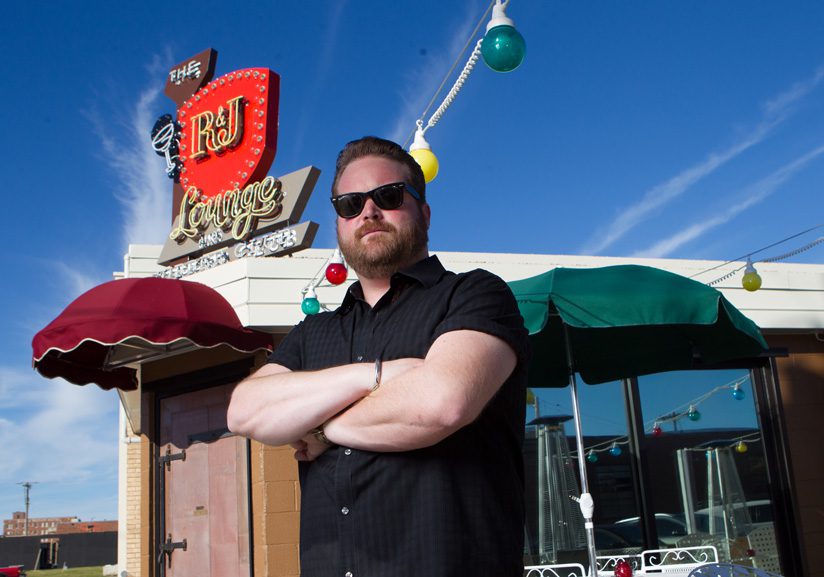
Chef Russ Johnson is half of the team behind R&J Lounge and Supper Club. Photo by Brent Fuchs.
Cheesy crab toasts are a classic starter at R&J Lounge and Supper Club. Below: Smoky Mac & Cheese. Photos by Brent Fuchs.
My childhood fare was far from fancy, but I miss it every time I need comfort. My mom’s specialty was stroganoff with canned cream of mushroom soup and hamburger, a dish I haven’t had since I was a teenager, but it haunts my dreams to this day. Luckily for Oklahoma City diners who miss what mom used to make, Ludivine chefs Russ Johnson and Jonathan Stranger offer this very meal along with other family favorites from ages past at R&J Lounge and Supper Club.
The offerings are culled from the chefs’ family recipes and childhood favorites. Think this is a renovated, edgy take on down-home, back-of-the-box classics? Think again. The recipes at R&J are what Johnson calls “no tricks, no pulled punches. The stroganoff has canned mushrooms, ground beef and Campbell’s condensed cream of mushroom soup because that’s what was in my thermos when I went sledding as a kid, and my attempts over the years to elevate it with things like tenderloin, exotic mushrooms and bechamel [sauce] have always come up short. There’s something to be said for restraint and not trying to fix that which ain’t broke.”
Add to the menu old-school favorites like the lobster roll, the Southern favorite chicken and dumplings and several lamb dishes, along with dated cocktails like the whiskey sour and Old-fashioned, and it’s clear that despite the decline of the supper club venue in Oklahoma, true classics never go out of style. Do you miss your grandma’s banana pudding with Nilla wafers? Miss it no more.
Photo by Brent Fuchs.
“To me, a supper club is a casual elegance that would remind one of their own dining room, where you go to relax and dine either with the family during the week, happy hour with people from the office or late at night to celebrate good times in general,” Stranger says. “It provides a satisfying menu with good drinks that isn’t going to break the bank but will leave you satisfied every time. It really is about the atmosphere and good times with good company. There are similar places around OKC that are reminiscent of a supper club, but nothing downtown anymore. We didn’t create something new; we are bringing back something that was lost in the past that we believe was great and should never have gone away.”
“Supper clubs, to me, are all about nostalgia,” Johnson adds. “They harken back to a time before the celebrity chef or ego in cuisine. They often offered a nearly standardized bill of fare. The menu did not change from decade to decade, let alone season to season. They were a place to go and spend the whole evening. You got dinner, libations and often some sort of entertainment all in one package, eliminating the need to bounce around from place to place, and these thrived in the Midwest between towns, where they likely were the only place. They have a certain style about them – sort of simultaneously utilitarian and swank…there used to be a lot of these great old spots dotted throughout OKC, and one by one, year by year, we’re losing them. We have but a precious few remaining, and almost none in the downtown area. We always think about these places, ‘There’s just no way to recreate this.’ R&J is our effort to say, ‘Well, maybe you kind of can.’”
While the atmosphere is “unapologetically old-school,” says Johnson, the focus is on inviting people to relive their family dinner memories through classic, filling fare.
Chef Russ Johnson is half of the team behind R&J Lounge and Supper Club. Photo by Brent Fuchs.
“A lot of these dishes made me feel good, not just by how they tasted, but by the memories I associate them with,” Stranger says. “There is a sentimental side to the menu for us, and the more we talked to people, we realized a lot of people share those same memories of being at family gatherings when they where young and eating these same dishes…the R&J is about the experience and where the whole place takes you.” 320 NW 10th St., Oklahoma City. www.rjsupperclub.com
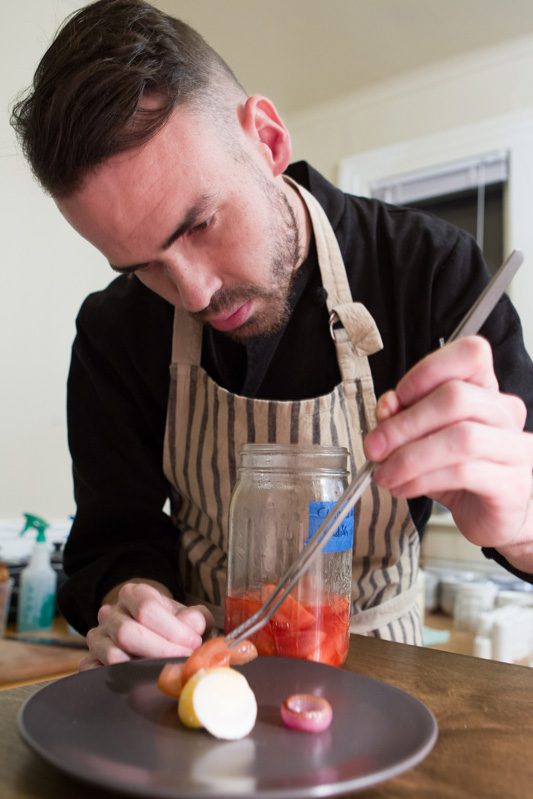
Chef Colin Stringer plates pickled radish for a course at nani. Photo by Brent Fuchs.
You might think that Choctaw Indian and Japanese cultures have little in common, but Andon Whitehorn and Colin Stringer, chefs and co-owners of Nani Japanese-Choctaw Kitchen in Oklahoma City, respectfully disagree. And they’ll prove it, one dish at a time.
Nani began as a pop-up dining experience, conceived by self-taught cooks Stringer and Whitehorn, serving Oklahoma City diners unique and satisfying dinner adventures six times a year. Whitehorn says that he has always been in love with cooking, especially with Japanese cuisine and sushi. Part Choctaw, Whitehorn and Stringer began to notice surprising similarities between the two cooking cultures.
When Whitehorn discovered that the Choctaw word for fish, nani, also meant “What?” in Japanese, he felt it was a fortuitous sign that his dream was meant to be. And while the fare may sound exotic to some, it couldn’t be more Oklahoman at heart.
“I don’t think it’s as much about the two cuisines as much as it’s about the sensibilities that exist within both,” Stringer says. “They are actually really similar. We primarily focus on three things: sustainability, seasonality and preservation methods. We think these things are super important to our own culinary ambitions and also to creating the most delicious and ethical food possible. Food has to make sense from all angles, and focusing on these sensibilities makes our food cohesive and, hopefully, something fresh and inspiring to OKC.”[pullquote]“OKC is rapidly becoming a market that can support and recognize quality and craft. We are thrilled to be where we are and honored that we get to see OKC’s transformation in this exciting time.”[/pullquote]
“Right now in Oklahoma City really feels like the perfect time and place for a concept like Nani,” Whitehorn adds. “Even though the overall concept is a meeting of Japanese and Native American cuisine, it’s more about taking the sensibilities of both cuisines and using them as reference points for showcasing what we feel are very Oklahoman ingredients. It allows us to show guests the very best of what this state has to offer by offering what’s been around us all along. Nani is a very Oklahoman concept, and while the sensibilities could be practiced and applied elsewhere, Nani couldn’t exist anywhere else but here.”
It’s not only the choice of cultural fusions that makes Nani unique; it’s the dining experience itself. When asked if the moniker of “supper club” was accurate to describe Nani, Whitehorn agrees, emphasizing what he calls the communal dining experience.
“Nani is a relatively new concept,” Whitehorn says, “and it’s constantly changing as we all learn and grow through it. We chose this style of dining to bridge the divide between the kitchen and the diner and to better relate to our guests and to give them a sense of context for their meal. We encourage interaction not only between the dinner guests and the staff, but between each other as well; we want this to be a dialogue rather than a monologue. Rather than what you might have at a traditional restaurant, where you enjoy a great meal but with often impersonal service, we want our guests to feel a connection not only between one another and what they’re enjoying, but with the venue as well.”
A Nani chef smokes a piece of sushi. Photo by Brent Fuchs.
Diners at Nani do not receive a standard menu from which to choose dishes. Instead, each small group of diners – 14 each evening – enjoys the same 8-10 course meal, as well as several amuse-bouches, turning the dining experience into a culinary community. No two menus are ever the same, but creations have included dishes like poached garlic cloves, Thai basil and basil-infused oil, and sushi zu; fried okra with toasted sesame, scallions and tuna; and the “quail-ity thyme” – half of a quail cooked and cured in buttermilk and juniper, then seared with thyme and served with a soft-poached quail egg, a crisp of fried sushi rice, juniper vinegar, pumpkin oil and grown and foraged greens. And of course, in a nod to Whitehorn’s passion for making sushi, Nani offers rolls like “The Rumble” with cedar-smoked bison, tempura negi (green onion), rosemary caramel, horseradish aioli and citrus zest.
“Everyone also eats each course at the same time, which adds another dimension of context and enjoyment to the meal,” Whitehorn says. “When everyone is experiencing everything at the same time, it not only gives what might be complete strangers something to talk about, but it also fulfills that very social desire to connect and belong. Eating is a very social practice, and a meal is one of the few singular experiences that not only fulfills the need to nourish yourself, but also the need to interact socially.”
“All these things make this experience a much different one from anything else going on in OKC,” Stringer says. “We hope that our role in the Oklahoma culinary world is one of a catalyst. We know we can’t change it ourselves; we just want people to come eat at Nani and go out and start even better restaurants. Those are the places we want to eat at. There needs to be fewer competitive minds in OKC’s cooks and chefs. True progression won’t happen until that happens. We have no secret recipes at Nani. We’ll tell you how to do it all.”
“Nani stands to challenge OKC to view food differently,” says co-owner and barista Paul Zimmerman. “We have a conception that to experience great quality food or art or culture, we need to fly to a coast. That simply isn’t the case. We have culture and quality and an abundance of beautiful resources all around us…Nani may be novel and unique right now, but our hope and expectation is that it won’t be for long. OKC is rapidly becoming a market that can support and recognize quality and craft. We are thrilled to be where we are and honored that we get to see OKC’s transformation in this exciting time.”
Most of Nani’s vegetables are either foraged or grown by the chefs or sourced locally with the help of Urban Agrarian, an Oklahoma City farm-to-table grocery, and the farmers market at the Oklahoma State University-Oklahoma City campus. In keeping with their commitment to their home city, the proprietors of Nani have taken their concept a step further: Five percent of all proceeds go to local charities, such as the Regional Food Bank of Oklahoma or the Oklahoma City YWCA.
Squid is served on beet foam at Nani. Photo by Brent Fuchs.
While diners are eager to try Nani’s one-of-a-kind offerings and are appreciative of the altruistic sensibilities of the owners, no one could be more elated about the rebirth of the Oklahoma culinary scene than the proprietors themselves.
“Oklahoma City has always had really great food,” Whitehorn says, “if only with a little less variety, but in recent years we’ve seen people become excited about food and becoming more involved and aware of their dining habits and choices. The potential for Oklahoma City is enormous.”
In this new atmosphere of conscious dining, patrons are as likely to “discover” a restaurant that’s been in business for years as they are to encounter a new and novel establishment.
“We’re very excited for what this city has to offer,” Whitehorn continues, “and we feel very fortunate to be where we are at the forefront of this culinary renaissance.”
Nani is open for dinner Wednesday through Saturday. To book a place at the table, visit www.naniokc.com.
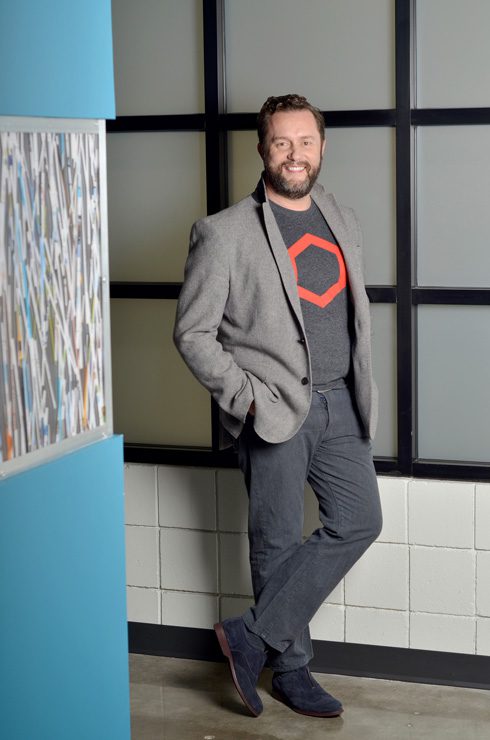
Creative director and principal at TPC – Todd Pyland Creative/Talmadge Powell Creative, a boutique ad agency and event planning company.
Wearing: Jacket, pants and shoes by Paul Smith; a T-shirt by BetterBoxProject.org, a campaign to end chronic homelessness by Mental Health Association Oklahoma, whose mission is to provide sustainable, affordable housing for people who have been living on the streets.
Is there a fashion icon or someone whose style you admire most? Tom Ford is one of my favorite fashion icons. He came from humble beginnings in Texas and eventually rose to fame as the creative director of Gucci. He then created his own fashion label and continuously pushes the envelope in all things luxury, design and style.
What is your favorite accessory? Vintage cufflinks from an antique shop in Abilene, Texas, called Fabulous Finds.
When you want to look great with little effort, what’s your go-to outfit? Dark blue J. Brand jeans and a blue blazer from Banana Republic with a cotton button-down oxford from Uniqlo, with Tod’s driving moccasins. Add a ball cap if it’s a Saturday.
Photo by Brandon Scott
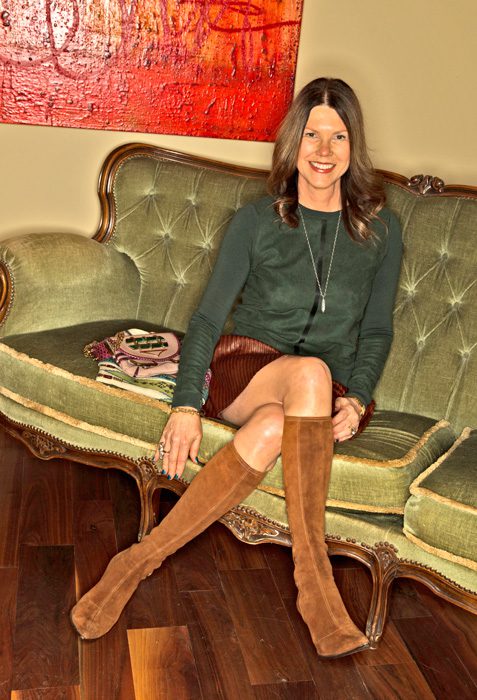
Lisa Bennett Antry
Recently retired
Wearing: Isabel Marant leather skirt, Zara green suede top, vintage Sergio Rossi suede boots, Chloe Runway bag, Etro scarf.
Is there a fashion icon or someone whose style you admire most? I admire anyone who has a style that suits his or her lifestyle and personality. But I do favor friends that add a surprise element now and then. I like a biker look with pearls or a “Jackie O” in Ray-Bans every once in a while.
What is your favorite article of clothing? A large scarf, usually from Etro or Hermes, because they are so beautiful and versatile and I’m always on a plane.
What is your favorite accessory? The right watch. A friend told me recently she was positive watches would soon be passé. I hope she is correct. I will start a serious collection.
When you want to look great with little effort, what’s your go-to outfit? J. Brand leather skinnies with a white T-shirt in summer, or an oversized sweater in winter, with heels or boots and a scarf.
Do you prefer to dress up or dress down? When I dress up, I feel fun immediately. Like the way you feel energized just because you step on a plane to New York City.
Photo by Brandon Scott.
Taft Welch
Business development manager, TEKsystems Global Services
Wearing: Blue Saks Fifth Avenue New York suit; Saks Fifth Avenue Italian tie; Tag Heuer Carrera watch.
Is there a fashion icon or someone whose style you admire most? I remember when my Papa Welch got me knee high socks for Christmas. I thought, “That was nice, they ought to keep me warm.” Later I learned that it was a pet peeve of his to see other businessmen’s ankles/legs when they crossed their legs. Since then I’ve found myself being critical of the same thing. My grandpa also had a lot of very nice business suits. They were all tailored professionally and had his initials hand-stitched inside. They were always neatly hung up with a matching vest and tie. The man had class.
What is your favorite article of clothing? The shoes. Forrest Gump was right – you can judge a man by his shoes.
What is your favorite accessory? My watch. I feel naked without one.
Do you prefer to dress up or dress down? I want to say “down” because I love jeans, but I’ve got to be honest – similar to my dad’s habit of over-packing for trips, I’d rather be overdressed than under.
Photo by Dan Morgan.
Cheena Pazzo
Director, Community and Physician Relations, St. John Health System
Wearing: Okie Grown shirt (sold at Dwelling Spaces); Rag & Bone jeans; Prada wedge sneakers; Michael Kors watch; Dita Mach-One sunglasses; Oklahoma bracelet from REC-Collection (at Dwelling Spaces).
Is there a fashion icon or someone whose style you admire most? My favorite at the moment is Olivia Palermo. She has such an exquisitely upscale, casual style and flawlessly mixes the classics with contemporary and vintage pieces. I appreciate a versatile and creative sense of self and fashion.
What was your first fashion moment? In kindergarten I wore the most awful, ill-fitting maroon corduroy pants and white sweater. I was furious all day. During recess we had a free throw contest (which I was convinced I would win), but I was so upset about my outfit that I couldn’t focus. I cried and explained to my gym teacher that my terrible pants ruined everything. She wasn’t amused. To this day I’ll never wear something that makes me unhappy.
What is your favorite article of clothing? My Alice + Olivia purple dress. It has a fit-and-flare cut with a cutout back and leather waistband. It’s both pretty and a little edgy.
What song best describes your fashion sense or sense of style? “I Walk the Line” by Johnny Cash.
Fortune favors the prepared and well versed in finance and growth, although a little luck and timing helps, too. So when the financial rewards reaped from hard work begin to fall into place, there are infinite possibilities on what to purchase and where to invest. But no matter where you are in your career and monetary goals for both yourself and your family, there are some luxuries that are worthwhile to include along the way. A good wardrobe, good health, wise investing and experience-expanding travel all can help build achievement. They can even help further define what is most important and essential in life. Whether its adding value to real estate property, setting boundaries for personal time or contributing to a charitable organization, some luxuries are not only for the very wealthy among us, but are worth the time, effort and expenditure to make life better for both the present and future. More than Rolex watches and high thread counts, these are the luxuries we can’t afford to do without.
A Classic Wardrobe
There is much more to a person’s wardrobe than fabric hanging in a closet. Some pieces recall a special occasion, but in order to be worn over the years, clothes need to be timeless.
“Clothes that are not too trendy – they can last a long time,” says Steve Aberson, manager of Abersons. “I have clients who bought clothes ten years ago, and they still wear them.”
Having a few perfectly fitted, classic pieces that can be mixed and matched with other elements is far more beneficial than a closet crammed with average clothing items.
“A great wardrobe helps with a person’s confidence,” says Aberson. “A wardrobe that is well thought out makes it easier to concentrate on more important matters.”
When a person wears something they aren’t completely comfortable in, they spend the day fidgeting and tugging at hemlines and fabrics rather than staying focused on work or enjoying good company. Aberson suggests ditching the disappointing deals and shifting emphasis to quality, not quantity.
A woman, he adds, needs five items for a classic wardrobe: a black pencil skirt, a simple black dress, a short black cardigan, a white shirt, and slim jeans. Those basics, however, can depend on a person’s lifestyle.
“Everyone has his or her own personal style, but as we move through life, there are many experiences that influence us to change,” he says.
Interpreting fashion and personal style is the specialty of boutique stores like Abersons.
“Once you start wearing luxury clothing, you get spoiled and can’t wear anything else,” he says. “[The] clothes will fit better because they take more time to make them. They might go through four or five fittings before the final product is produced.”
Money Management
The clients Todd Hofmann often sees in his office are usually classified as “affluent,” but wealth management is a service from which many can benefit. Meeting financial goals starts with a good foundation.
“Having the proper allocation of assets is fundamental,” says Hofmann, client advisor and senior vice-president at Bank of Oklahoma.
Having the right mix of stocks, fixed income bonds and alternative assets (such as energy or real estate assets) is the surest way to create a portfolio geared for growth. Of course, an individual could approach the world of investing alone through any number of brokering companies offering online tools and information to make informed investments.
Jeremy Johnson, also a BOK client advisor and senior vice-president, says a wealth management service can provide customized planning for meeting financial goals beyond investing, including estate planning and philanthropic giving.
“The old world was about delivering the transaction. Today’s world is about delivering advice,” Johnson says.
Wealth management and planning helps clients weather the terrain and transitions of financial positioning in a way that is mindful of savings and tax-efficiency, Hofmann says.
While attorneys draw up trusts and wills, wealth managers look out for the most cost-effective ways to accumulate income that will be used later for retirement, education funding and other long-term goals.
For those just beginning the road to financial success, it starts with a few important steps that will lead to better security.
“Wealth management starts with establishing your assets, so you start off with an emergency fund,” Johnson adds.
Putting away enough liquid assets to cover your projected expenses for six to eight months is valuable in case of a job loss, extensive car repairs, illness or other sudden and costly changes. An emergency fund helps avoid the use of credit cards and loans, he says. Paying down liabilities, such as credit card and loan debt, is also a must.
“From then on, you start to look at investing other dollars to achieve what objective you want to invest in [such as] retirement or education,” Johnson says.
The easiest ways to start investing, he adds, is a company retirement plan, most advantageous when the employee contributes the maximum allowed and when the employer matches it.
“You always begin with the end in mind,” Johnson says.
Real Estate, Real Value
It’s been said time and again that one of the best ways to invest is in real estate. Kurt Barron, owner of Barron and McClary general contractors in Tulsa, says there are many ways a homeowner can build value in a residence whether the intention is to sell or stay.
Not surprising, bathroom and kitchen upgrades are the most popular home remodel projects because they earn back their cost in the appraisal value of a home, he says. But there are other projects – cosmetic painting, refinishing wood floors – that can make a big impact as well.
An open concept layout opens the flow of a home making it conducive to visibility and tying together multiple functions into the communal spaces of a house.
“Without a doubt, I think it’s a new way of thinking. It’s not like clothes, always changing. I think open concept is going to stay.”
Other wise investments are mechanical and equipment upgrades. Upgrading heat and air units along with larger appliances in the home can save money not only because they are efficient and can lower energy costs, but tax incentives are often available to make the sale more enticing.
Speaking of efficiency, one of the best installations in a home is spray insulation – foam, cellulose or fiberglass, says Barron.
This closet space designed by Judy Claudette Williams is the height of luxury and the ultimate successful remodel. Photo by Nathan Harmon.
“The best thing some people can do is blowing insulation in the attic,” he says. “It’s one product that pays itself back in the short term.”
And considering that it stays around forever, it’ll never need to be replaced, which make it a worthy expense, he adds.
Homeowners can’t go wrong with a little curb appeal. Painting the house’s exterior can help keep value in the home along with some tasteful landscaping. With that landscaping comes lawn sprinkler systems to keep the grounds lush and beautiful.
Lawn sprinkler heads and systems can contribute to wood rot when water penetrates through worn or improperly sealed or fitted windowsills. The result is damage around windows inside the walls, Barron says.
“Simply take a walk around your house, and take a look and see how your windowsills look,” he says. “Too many clients call us when there’s a problem and [they] have damage.”
Taking the time to invest in a few upgrades and renovations that are attractive to today’s housing market are great choices for building equity in the home for both the short and long term.
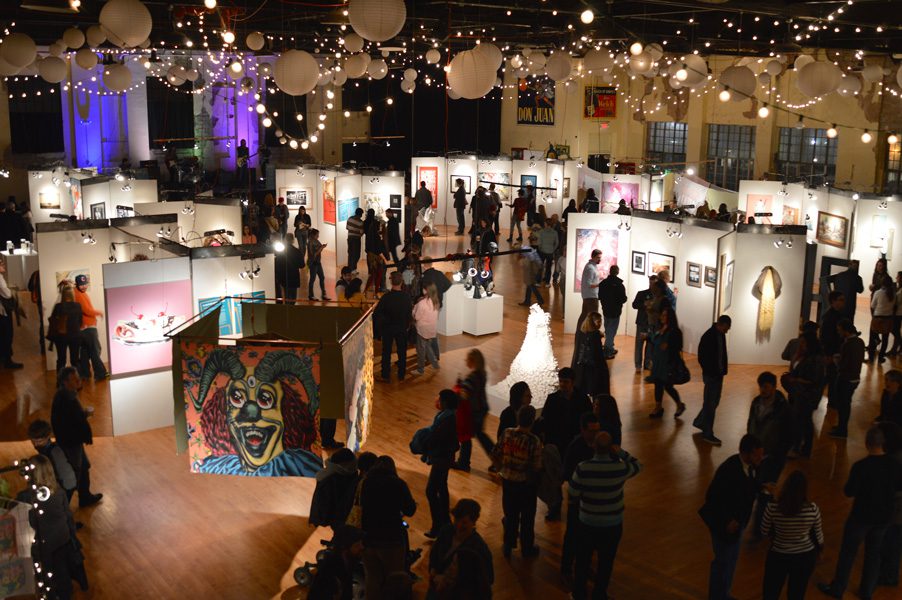
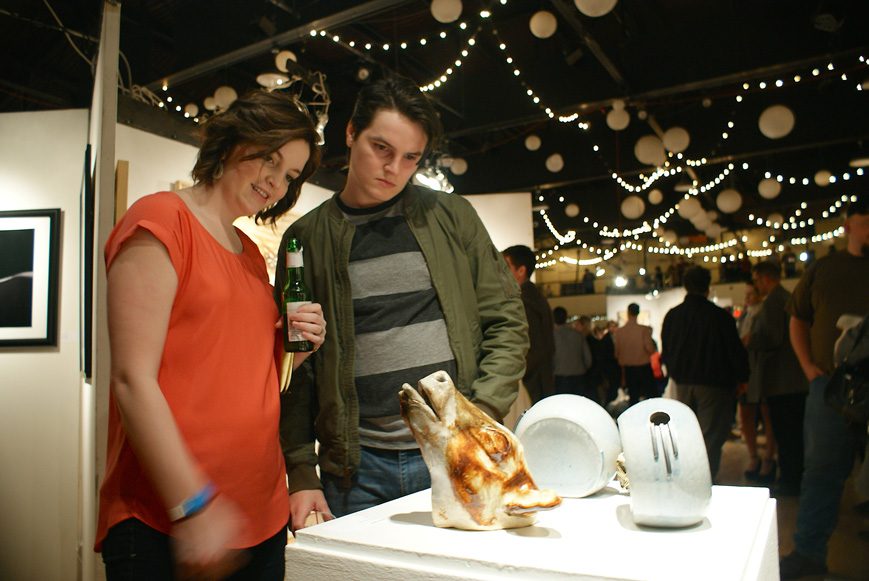
Commerce, innovation and art blend at events such as Oklahoma Visual Arts Coalition’s Momentum 2014 in Oklahoma City. Photo courtesy Oklahoma Visual Arts Coalition.
Guests of oklahoma visual arts coalition’s momentum 2014 in oklahoma city live the culture of oklahoma’s art scene. Photo courtesy Oklahoma Visual Arts Coalition.
When one encounters a successful and thriving business economy, often not much credit is given to the arts. But, according to Holly Moye, executive director of Oklahoma Visual Arts Coalition, the two are definitely connected.
[pullquote]Oklahoma’s economy ranked as the fourth fastest growing in the U.S. from 2012 to 2013, according to a report published this year by the U.S. Bureau of Economic Analysis.[/pullquote]“Business development is a sign of a healthy community, and the arts are certainly a part of that,” she says. “Where arts and culture thrive, new businesses are more likely to be attracted. Businesses, likewise, are becoming increasingly reliant on the arts. The arts can inspire creative thinking and innovative approaches amongst their employees. And when businesses thrive, they are more likely to give back to their communities, and that often means investing in quality of life, such as the arts.
“There are many examples of this happening here in Oklahoma, like the support from the energy sector in Chesapeake, Devon and Continental Resources, the great investments of the Kaiser family in Tulsa, as well as smaller local businesses like Dunlap Codding in Oklahoma City,” she continues.
Ken Busby, executive director and CEO of the Arts & Humanities Council of Tulsa, agrees.
Commerce, innovation and art blend at events such as Oklahoma Visual Arts Coalition’s Momentum 2014 in Oklahoma City. Photo courtesy Oklahoma Visual Arts Coalition.
“[The arts are] extremely important, if you look at arts in a broader context,” he says. “It’s a symbiotic relationship. Businesses are looking for people who are creative and have analytical skills…you have to have a thriving arts scene with visual arts, music, etc., to nourish that group of people that is employed [in the business sector]. It’s a constant back-and-forth, symbiotic relationship. One feeds the other. Economies that thrive feed into an arts scene.”
Oklahoma’s two major metro areas – both Oklahoma City and Tulsa – are currently experiencing booming economies. And with these booms have come flourishing arts scenes. Arts districts have continued to grow, with new pockets popping up. Artists are finding increasing support in the form of expanded arts organizations, new museums and gallery space and affordable studio space.
Busby says that the growing support of the arts is par for the course for this state.
“Oklahoma is a state of creativity,” he says. “We have a spirit of entrepreneurism in the state. I think that this [growth] is recognition of the quality of arts, but we also have a rich art and cultural heritage and vibrancy.
[pullquote]The best city to own a home in Oklahoma, according to NerdWallet, is the Oklahoma City suburb of Piedmont. Tulsa suburbs Jenks and Owasso follow at Nos. 2 and 3.[/pullquote]
“The Brady Arts District is thriving, and the same is true in Bricktown and other creative areas around the state. Using arts as a catalyst, these are where the cool, hip people are hanging out and opening interesting restaurants, shops and boutiques…livable, walkable communities are being built and thriving,” he adds.
Moye says that the booming arts scene right now is the result of work that has been years in the making.
“The state of Oklahoma is experiencing growth in so many areas right now, and the arts are no exception. Many people and organizations have been working for years to build our state’s arts and cultural communities, but recently there has been a real emphasis on working together to make significant and lasting change,” she says. “We are lucky to have an arts community that is supportive of each other, rather than feeling competitive. We also have the relatively recent additions of opportunities for networking amongst artists and arts leaders, such as the Oklahoma Arts Council’s annual statewide arts conference. This kind of convening is so important for working together toward a common goal, and I think the results of this interaction are now coming to fruition.”
Busby says he expects to continue to see growth in existing arts neighborhoods as well as new pockets popping up in both metro areas as well as around the state.
“Obviously, it depends on real estate for Paseo and Brady [arts districts]. It depends on how much land is available, what buildings will be rehabbed,” he says. “What I think will happen is that there will be additional areas developed and pockets will continue to pop up. Someone will pick an area that is neglected and say, ‘Hey, we can start an artist colony here.’ All of a sudden, there’s people hanging out there…all the district will continue to grow, and others will use that as a springboard.”
[pullquote]In September 2014, Oklahoma’s unemployment rate registered at 4.7 percent, a full point lower than the national average of 5.9 percent.[/pullquote]
Moye believes that the continuous growth of business will propel the arts.
“When businesses grow, they have the potential to impact their local communities. In Oklahoma, we are lucky to have many businesses that share their success by giving back, whether that is through funding, promotion, [community] capacity building or other support,” she says. “Each has their own desired outcomes, but a common thread seems to be community improvement and increased quality of life. Arts organizations and artists can respond to these things directly in ways that foster an environment of inclusion and creativity. Together, business and art are building collaborative communities that push the boundaries of possibility.”
What makes a great company is different for each person. For some, working for a great company may mean a comprehensive benefits package that provides health care for a family. A generous 401(k) match program could woo others. Paid time off, maternity and paternity leave, telecommuting, a creative work environment and on-site day care and medical clinics go a long way to attracting talented and creative employees. And the desire for an employer to attract the best and brightest is one that can create an employee’s market.
[pullquote]In 2014, CNN Money named Oklahoma City the best city in America to launch a startup company, based on a NerdWallet study.[/pullquote]“A great company to work for is one that totally embraces the fact that its talent is the most crucial part of its business success,” says Roy Williams, president and CEO of the Greater Oklahoma City Chamber. “That fact then manifests itself in the way the company treats its people. As well, great companies to work for also appreciate and support the communities in which they reside.”
Happy employees translate to happy residents, says Williams.
“[Happy employees] believe in their community, and they are engaged in facets of it,” he says. “So great companies to work for embrace their employees, embrace their community, support community initiatives and create and encourage employees to support their communities as well.”
In the most recent job satisfaction survey of The Conference Board, less than half of workers in the U.S. are satisfied with their jobs, a trend that has continued for eight straight years. The large percentage of dissatisfied employees should be a wake-up call for employers as well as community and business leaders.
“Employers must continually remember that the talent of today and tomorrow is different than the talent of yesterday,” Williams says. “They have new priorities, new values, and they don’t expect to be a life-long employee.”[pullquote]According to Inc. magazine’s 2014 report, 30 of the country’s 5,000 fastest growing private companies are located in Oklahoma.[/pullquote]
The so-called Millennial generation is having a significant impact on how employers run business. According to a recent survey conducted by Millennial Branding, a research and management consulting firm, the generation accounts for 36 percent of the American workforce; more than 60 percent of those plan on leaving their company in less than three years. This conundrum causes headaches for companies in terms of recruiting and retention of talented Millennials.
“Many companies have different philosophies about how they attract and retain talent,” says Williams. “Some companies strictly use an employee intern program to recruit employees. Some work strictly with employment agencies, others work with education institutions, and others recruit in cities across the country. Basically, they do what works best for them in recruiting the type of talent they need.”
Companies are also diverse in how they strategize to retain that talent.
[pullquote]In addition to being the Aviation Capital, Oklahoma City is also the Energy Capital with industry leaders such as Devon Energy, Chesapeake Energy, Continental Resources and SandRidge Energy. – Greater Oklahoma City Chamber[/pullquote]“They range from innovative financial incentives, to wide-ranging benefits, to innovative working environments, to new education opportunities, to flexible work times and environments,” says Williams.
He adds that Oklahoma City has plenty of great companies that offer attractive benefits and incentives that can both entice and retain the best and brightest.
“Oklahoma City is a great place because it has become rich with quality of opportunity,” he says. “People can pursue a wide variety of interests here, people and organizations are very open and welcoming to others and the cost of living here is well below the national average.”
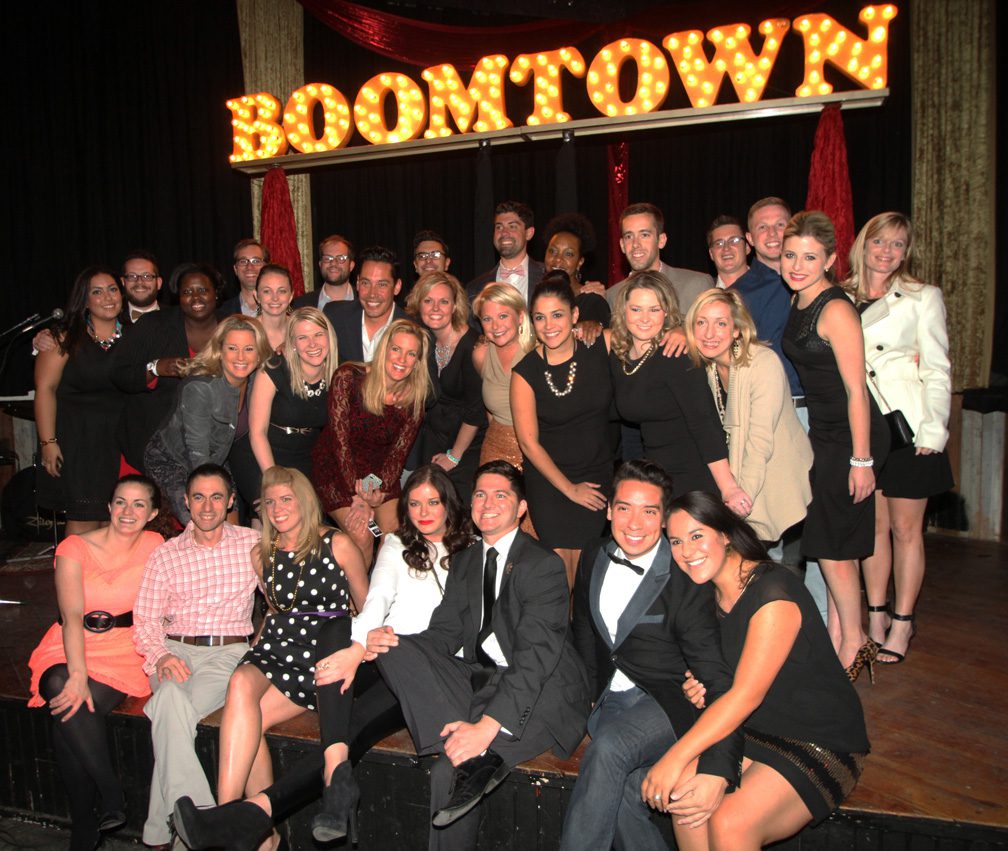
Members of TYpros recently took part in the organization’s annual Boomtown Awards. Photo courtesy Tulsa’s Young Professionals.
Forbes recently named Oklahoma City as one of America’s best cities for young professionals due to the city’s growth and opportunities. What specifically attracts and retains these workers to the state?
Public Information Officer of the Department of Commerce Don Hackler says he believes Oklahoma’s healthy economics attract and keep young professionals.
“Our strong economy and employment opportunities keep people here. Jobs are first; they are key,” Hackler says.
The fields of aerospace and energy seem to have the most draw, he says.
“People are coming from all over the state into cities here because of the attractive wages and benefits these growing industries provide,” Hackler says. “People are going to go where they are paid well and where they can get great benefits.”
But these workers are not just coming from around the state.
“If you drive around Oklahoma City or Tulsa, you see license plates from all over the U.S. These industries are attracting young people from all over the country,” Hackler says.
Shagah Zakerion, executive director of Tulsa’s Young Professionals, says one reason young professionals are attracted to these areas is the quick impact they can have.
Members of TYpros recently took part in the organization’s annual Boomtown Awards. Photo courtesy Tulsa’s Young Professionals.
“Young people can make their mark here faster than they can elsewhere,” Zakerion says. “This is the place to write your story with unrivaled access to leaders and resources.”
Drew Dugan, vice president of education and work force development for the Greater Oklahoma City Chamber, adds that in addition to great employers and jobs, which are important, Oklahoma City has enjoyed a recent renaissance while also keeping costs low.
“OKC is just a cool place to live these days. With all the amenities from MAPS, central city growth and the [Oklahoma City] Thunder, the city has a cool and hip vibe that we have not had in my lifetime,” Dugan says. “Young professionals are smart and recognize the value of low-cost living. If they can afford a place that is fun and has everything else, then why go anywhere else?”
Dugan generally agrees with Hackler about the types of jobs attracting young professionals’ attention.[pullquote]Oklahoma City’s top three employers are the State of Oklahoma, Tinker Air Force Base and the University of Oklahoma-Norman. – Greater Oklahoma City Chamber[/pullquote]
“There is demand for young workers in all areas, ranging from engineers and tech workers to bio and health workers all the way down to highly skilled trade and industrial workers,” Dugan said. “There is truly opportunity everywhere. However, the highest demand right now is in the engineering and technical fields.”
In Tulsa, Zakerion cites aerospace, engineering, advanced manufacturing and professional services as growing fields, but adds another aspect.
“There is also a growing creative class in our community that provides a rich and diverse culture to Tulsa,” she says. “Unlike cities like Chicago, New York or [Los Angeles], Tulsa is in its growth phase now, and its young people are at the helm of community development. You can be a part of building a city from the ground up here.”
Looking long-term, Dugan says because metro areas are growing and changing so much, there are also great leadership prospects in other areas.
“It is a place you can not only get involved, but that young professionals can also earn leadership positions in both the professional and volunteer communities. They see themselves as being lucky to be here during the early stages of dramatic community growth. They can easily be the future leaders of business, the arts, religious life or anything they want to be,” Dugan says.
He adds that because life isn’t always about leadership roles, and most people prefer to also live in the city where they work, Oklahoma City offers unique types of recreation, such as the Oklahoma River for rowing and the rock-climbing gym. Zakerion adds that Tulsa also offers cultural and professional amenities for all passions.
“Whether it is our strong sense of place through venues that foster community like Guthrie Green, or celebrating new music in the historical Cain’s Ballroom downtown, arts abound across the region,” she says.
Metropolitan areas of Oklahoma are undeniably growing, but what could be done to further improve the rate of young professionals living and working in Oklahoma?
“Our region must continue the momentum towards creating a strong urban core all young professionals can be excited about. Increasing downtown housing and transportation options will propel the Tulsa region forward in its quest to attract young talent,” Zakerion says. “The next generation of Tulsans craves density, walkability and ‘bikeability’ that pulses with energy.”
Dugan believes that recruitment must start at younger and younger ages.
“I think even more of our employers need to be reaching out to students in Oklahoma and other states,” Dugan says. “And, our employers need to be communicating with college students when they are freshmen and sophomores. In the past, we could wait until they were juniors or seniors but now we must begin to recruit at early ages. It is like an arms race. Companies keep recruiting younger and younger students so we (as cities) need to do that as well.”
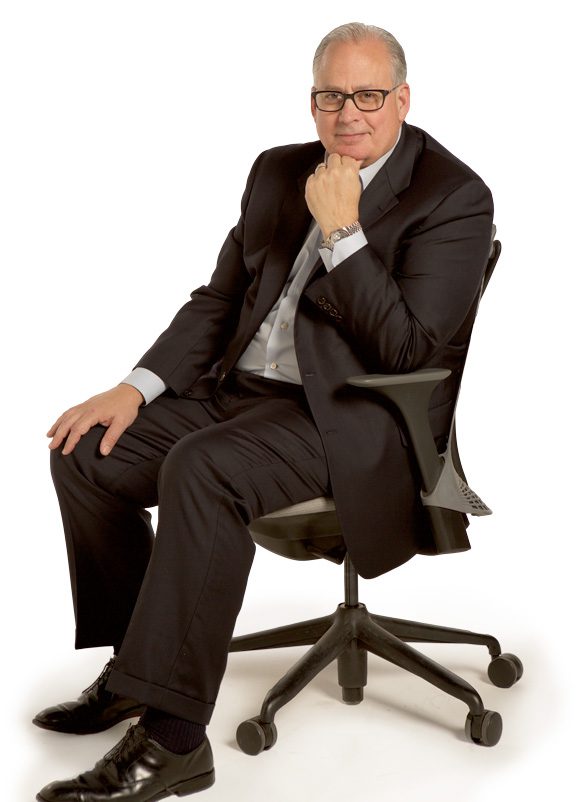
Steve Bradshaw is CEO of BOK Financial, a position he assumed in January. Photography by Scott Miller.
Steve Bradshaw is president and CEO of BOK Financial Corporation. Based in Tulsa, BOK Financial provides commercial and consumer banking, investment and trust services, mortgage origination and servicing and the TransFund electronic funds transfer network. He took the position in January.
Bradshaw joined BOK Financial in 1991 and became president of BancOklahoma Investment Center and BOSC Inc. He then served as senior vice president/private financial services manager responsible for a sales, marketing, and support unit comprised of private banking, personal trust and estates, retail brokerage, insurance services, fiduciary tax, real estate and minerals management.
Bradshaw earned his bachelor’s degree in business finance from the University of Central Oklahoma and graduated with distinction from the Southwestern Graduate School of Banking at Southern Methodist University in Dallas.
Bradshaw currently serves on the board of the Tulsa Regional Chamber and is former chairman of Visit Tulsa, the chamber’s convention and visitor’s bureau. Bradshaw is a past board member of the Tulsa Community Foundation, Tulsa River Parks Authority, the Metropolitan Tulsa Urban League, YWCA Tulsa, Tulsa Habitat for Humanity, Domestic Violence Intervention Services and Junior Achievement of Oklahoma.
What makes Bank of Oklahoma a great place to work?
Our people. Every company says they have the best people, but we really do. Our business strategy relies heavily on teamwork and collaboration, and to do those well you have to have the best talent. We attract people who like to come together to solve problems and provide solutions for customers. Accomplishing goals as a team and enjoying the people you work with every day results in a very engaged and forward thinking workforce.
What are examples of programs and incentives that employees at BOK are offered?
We have employee development programs at virtually every level of the company. It starts with an expectation for managers to identify development opportunities jointly with their employees and commit to a plan of action to accomplish it. We want to see employees competing effectively for more responsibility and moving easily between departments and even geography. Some of our most successful programs bring groups of employees with diverse backgrounds together to work on a large corporate project. These could include improving aspects of the company and the work environment, invigorating an existing business or product, compelling the creation of a new business or product or providing feedback to executive management on priorities within the company. We encourage open dialogue, which translates into action and accountability.
We encourage our employees to actively participate in the community, and I think that’s something that makes us stand out. It’s a selling point for our recruiters as they talk to potential new hires, and something our current employees feel pride and fulfillment in.
How have BOK employees made the most of the encouragement and these programs?
There are so many great examples of employees who’ve worked for the company a long time and have made good careers for themselves, and who have made positive impacts for the company. We have a very successful management training program for new college graduates called Accelerated Career Track (ACT). It’s a great way to engage new employees in our organization, give them broad experience across the company and then place them in positions that best fit their abilities and potential career path. There are a number of examples of ACT grads moving up and around in the company. For example, our OKC bank CEO, Marc Maun, is an ACT graduate who started in Tulsa and has held a number of roles over the years in Tulsa, Kansas City and now Oklahoma City. Mickey Coats heads up energy banking for the corporation, and he’s an ACT grad. And the list goes on and on.
I think the ability to move up and around within the company is a very compelling benefit we offer our employees. I joined the bank in 1991 when it purchased my small investment firm. At that time, Scott Grauer, who today leads all our wealth management business, worked for me and came to BOK Financial with me. Today I’m in my role, and he’s on the executive leadership team. That’s the kind of opportunity you find here at BOK Financial.
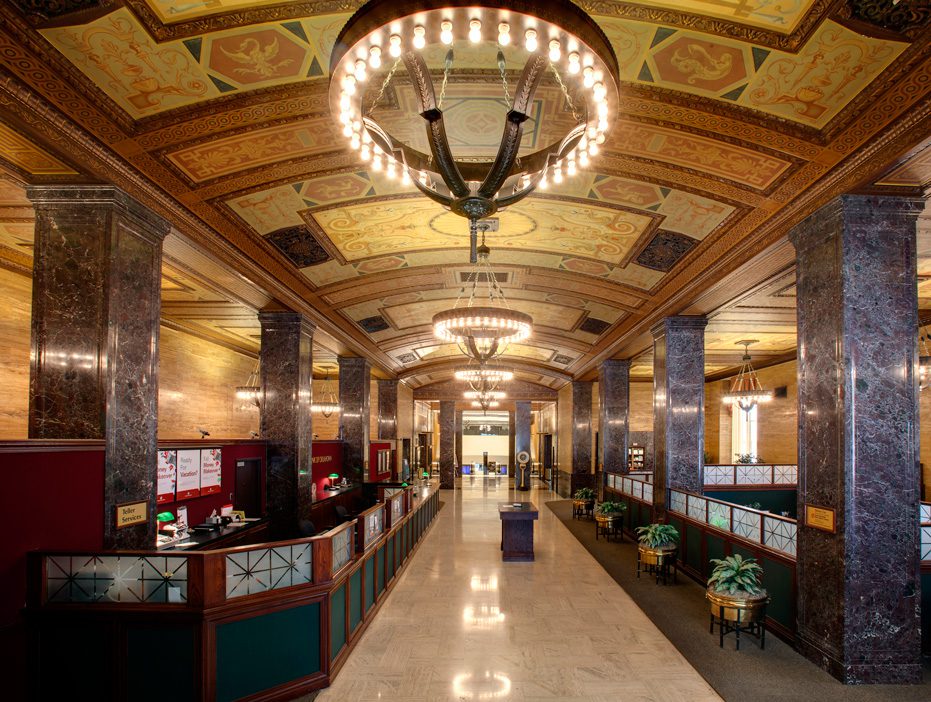
The corporate culture of Bank of Oklahoma is one of high quality, encouragement and tradition. Photo by Shane Bevel.
What is most important in promoting a positive corporate culture?
A positive attitude. It’s important that we never lose sight of our obligations to customers and the desire to fulfill their expectations. I enjoy celebrating the many successes our employees have every day in delighting customers, both internally and externally. It’s the best part of my job.
How would you characterize your own management style?
It’s hard to attribute a style to yourself; that’s probably a better question for others. I’m a positive, forward-thinking person. It’s important to have a leadership team that is diverse in terms of style and thought process. It’s my job to make sure that the team collaborates well and produces optimal results. And then stay out of the way when they do.
What advice would you give to someone who is beginning to climb the ladder in corporate management?
Take some risk. Don’t predispose your career path. No career progresses at the exact pace and direction that one anticipates. When you see an opportunity to learn something new and improve results, jump on it. Otherwise, you will limit your potential and value to yourself and your company.
In what ways do you encourage communication between employees and managers in such a large corporation?
I try to set a strong example. It starts with clear communication around goals and vision with my direct reports and setting expectation or how we will work together, solve problems and make decisions. Then working to cascade those goals and vision to our nearly 5,000 employees. We try many different ways to do that, including small employee group meetings, large scale regional meetings, videos, emails and more. Effectively communicating who we are, what our values and priorities are and what needs to be accomplished to continue to improve and enhance the workplace for employees is critical to keeping and attracting the best talent, which we strongly believe we have at our company today.