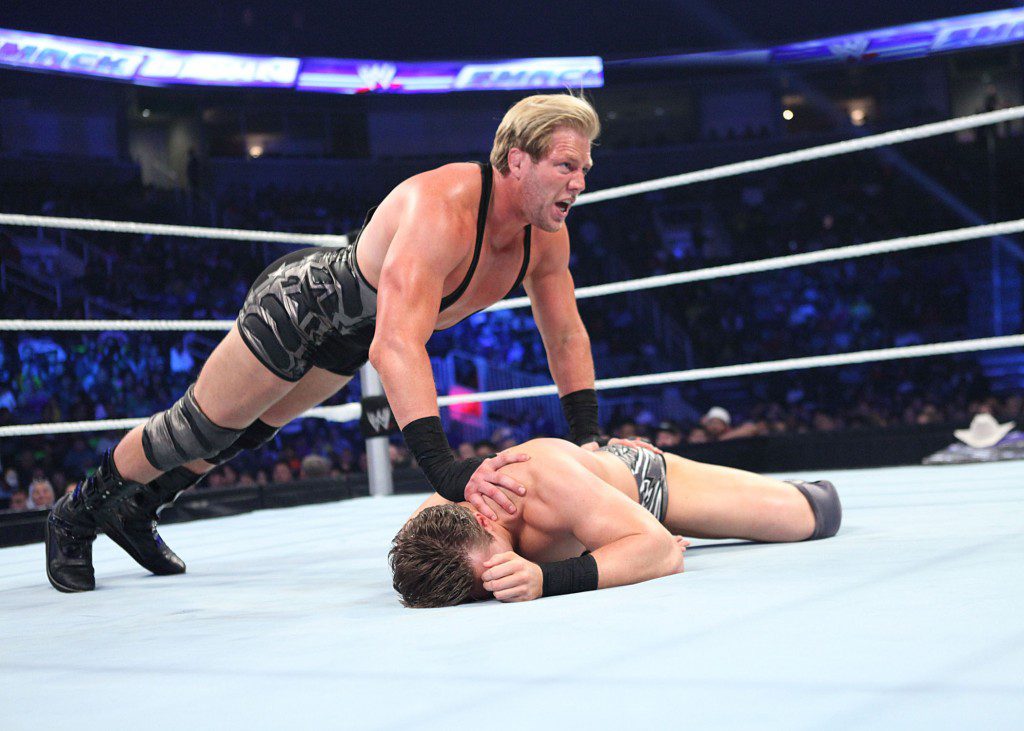
Perry, Okla., native Jack Swagger. Photo courtesy WWE Inc.
Perry, Okla., native and WWE champ Jack Swagger. Courtesy WWE Inc.
Friday, July 25-Saturday, July 26
WWE Live’s Summerslam Heatwave Tour brings pro wrestling stars to both Tulsa and Oklahoma City for one action-packed weekend. Stars like Alberto Del Rio, Dolph Ziggler, Stardust and Goldust and more bring their best game to square-off at the BOK Center, 200 S. Denver Ave., at 7:30 p.m. Friday, July 25. Tickets are $17-$97 each at www.bokcenter.com. The action next moves to the Chesapeake Energy Arena, 500 W. Reno Ave., in Oklahoma City. Seth Rollins, Roman Reigns and others are on the bill for a night beginning at 7:30 p.m. Saturday, July 26. Tickets for the Oklahoma City stop are $18-$98 at www.chesapeakearena.com.
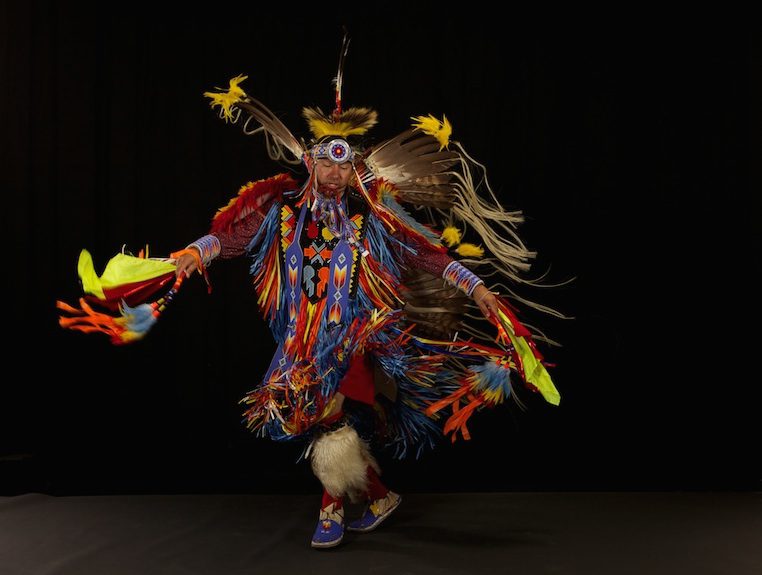
It’s been too long since Tulsa saw a good powwow, but the Tulsa Indian Club can always be relied upon to make up for it. The 62nd Annual Tulsa Powwow will be at the Green Country Event Center, 12000 E. 31st St., Tulsa, on Saturday, July 26. Vendors – food, arts, crafts and gifts – will set up in the morning before the 10 a.m. blessings are given to open the event. Gourd dancing for war veterans and their proxy takes place at noon with the first grand entry – in which all dance competitors must participate – is set for 3 p.m. Following the 5 p.m. supper break, the evening grand entry takes place at 7 p.m. before dancers split into their respective categories. Also look for drum contests and more. Tickets are available at the door. For more, visit www.tulsapowwow.org.
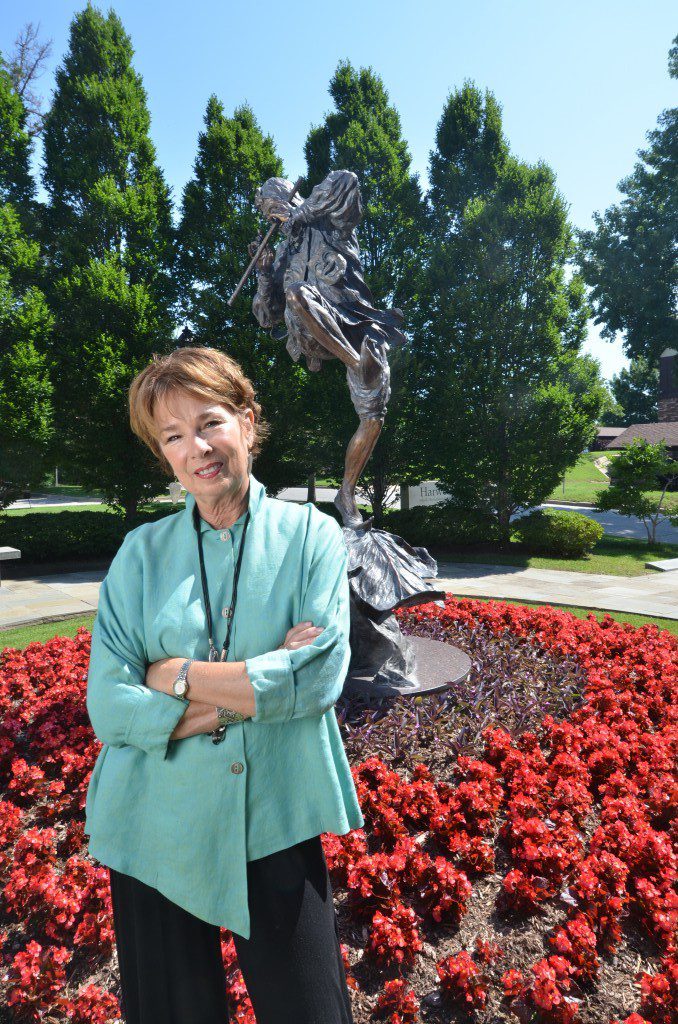
Sculptor Rosalind Cook is pictured with her piece titled Celebrating the Arts, installed in 1990 displayed at Harwelden Mansion. Photo by Dan Morgan.
Sculptor Rosalind Cook is pictured with her piece titled Celebrating the Arts, installed in 1990 displayed at Harwelden Mansion. Photo by Dan Morgan.
Most Tulsa residents have seen a sculpture by Rosalind Cook, an artist with more than 30 public works in the city who will be inducted into the Tulsa Hall of Fame in October. Her bronze sculptures line Riverside Park and Utica Square and are features at Woodward Park, the Peggy V. Helmerich Library and Saint Francis Hospital, among other places.
Capturing the Spirit in Bronze, a book penned by Cook is scheduled for release this month. The book, she says, is a “thank you” to the people of Tulsa who have made her public sculptures possible.
The book “documents many of the stories behind the commissioning and creating of these sculptures,” says Cook. “Raising a family and building a career in Tulsa has been an amazing adventure.”[pullquote]“God has truly blessed my career with success, and I saw an opportunity to perhaps be a catalyst for budding artists,”[/pullquote]
As she transitions into retirement, Cook wants to encourage Tulsans to use their gifts to benefit others, which she says is one purpose of her book.
“God has truly blessed my career with success, and I saw an opportunity to perhaps be a catalyst for budding artists,” Cook says.
She also recently created a foundation for Tulsa’s art teachers and art projects.
A beneficiary of her foundation, Booker T. Washington High School art teacher Jennifer Dix Brown, received one of the 2013 Rosalind Cook Encouragement Awards, making possible a mixed media show at the Hardesty Arts Center featuring work by Dix’s students. Awards have also gone to TRACE Academy for art supplies and to Jenks High School for photographic equipment.
Cook majored in special education in college, a choice that she says shaped her career as a sculptor.
“There was a great emphasis in working with the younger students on shape, form and texture,” Cook says of her training with visually impaired and blind students. “Often, my eyes were covered as we explored everything from toys to food and insides of buildings. This developed in me a keen sense of form and texture, which has added greatly to my skill when I finally did move into sculpture.”
Sculpting as a practice came later to Cook, who first explored painting and more manageable forms of art while she and her husband, Hal, raised three children.
“In our early marriage,” Cook says, “I had many garage sales and would become so flattered at selling my oils that I would pull the paintings off of our apartment wall, and [I]even sold one of Hal’s favorites, which he still misses today.”
Many of Cook’s sculptures depict children at play, but others bear a somber tone. While working on a sculpture for World Vision near Tacoma, Wash., the Alfred P. Murrah Federal Building was bombed. Her sculpture of Jesus holding out bread to the children of the world was shaped by that horrific event.
“I was sculpting the children for the monument in my studio as the rescuers were finding bodies of the victims,” says Cook. “My heart was heavy with grief. This grief was my new motivation to capture life in the faces and movements of the children I was working on in clay.”
The experience of making this sculpture taught Cook how to capture the spirit of her subjects in bronze.
Capturing the Spirit in Bronze is available for sale on Cook’s website, www.rosalindcook.com, and she will hold several book signings in Tulsa in September.
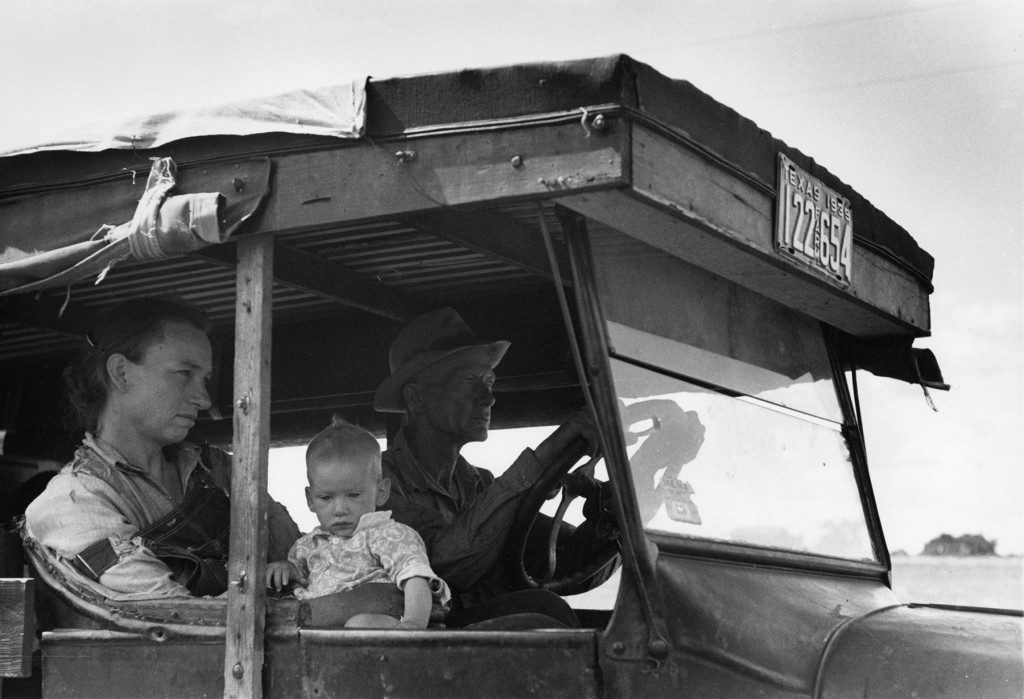
Photo by Russell Lee. Image courtesy Philbrook Museum of Art.
Photo by Russell Lee. Image courtesy Philbrook Museum of Art.
Opens Sunday, July 27
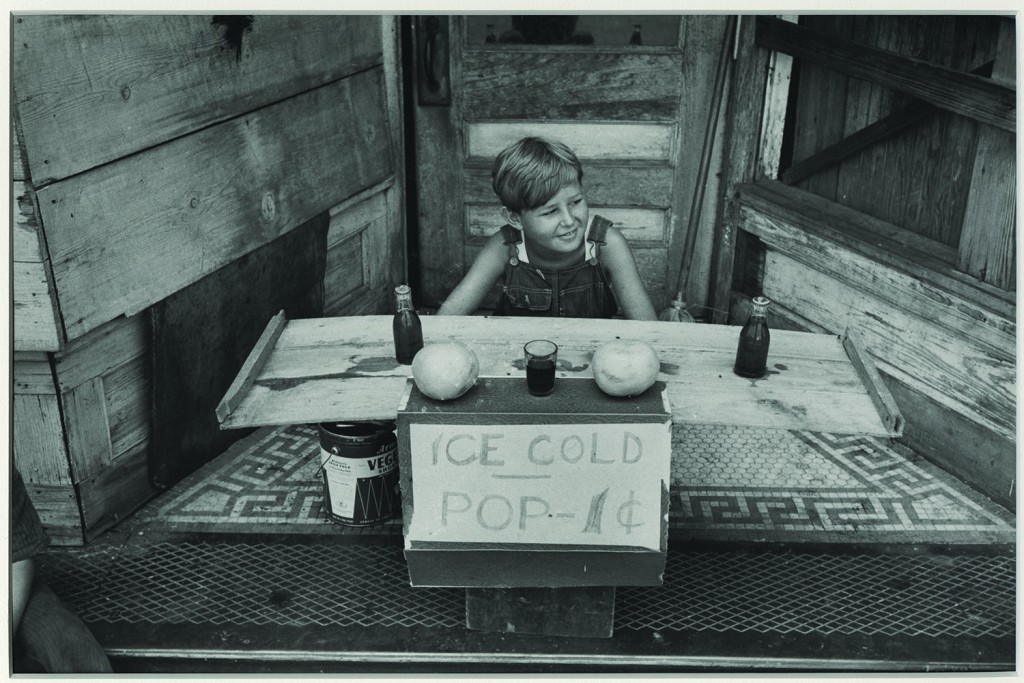
The hardships of Oklahomans and their Dust Bowl brethren, forced to migrate to California during the Great Depression, are the powerful subjects of Hard Times, Oklahoma, 1939-40, a new photo exhibition opening Sunday, July 27, at Philbrook Museum of Art. Russell Lee documented the plight of farmers and their families, who went west because of economic, environmental and social turmoil. Beginning in 1936, he photographed for the Farm Security Administration. This collection was shot primarily in Oklahoma and makes plain the reality of “hard times” as families struggle for food, shelter and dignity in a world that seemed to turn its back on them. The exhibit continues through Oct. 26 at 2727 S. Rockford Road, Tulsa. For more, visit www.philbrook.org.
“The City,” 1952, by J. Jay McVicker. Image courtesy OSU Museum of Art.
Most of us can recall things in Oklahoma that hold great meaning for us. It may be the bridge on the outskirts of town you visited on Halloween nights – the one covered in graffiti and rumored to be haunted. It could also be the high school that provided a great education, a first love and best friends. Perhaps you’ve visited the hometown of your relatives, the one where your grandparents were raised, and found a hardware store and oil wells that bear your family name.
We all have memories surrounding objects in Oklahoma. It was in this spirit that we contacted more than 100 museums, all members of the Oklahoma Museum Association, and asked them to submit objects from their permanent collections that they feel represent a specific place, time or event in Oklahoma’s history.
We received a tremendous response. Dozens of museums submitted objects that have historical significance, from works of art to a desk upon which the Choctaw Constitution was signed. The state’s largest institutions, along with smaller museums and local historical societies, all gave us their best, and we narrowed them down.
In “20 Objects That Shape Oklahoma,” you will find everything from fossils unearthed in southern Oklahoma to ancient rune stones, historical buildings and evidence from the worst attack of terror to ever occur in Oklahoma. We have curated a collection of items that can be found all over the state and that contributed to shaping Oklahoma’s identity into what it is today.
Of course, we’d like to share all the submissions we received with our readers. Log on to www.okmag.com to find a slideshow of objects along with information regarding where to find them. Perhaps this will nudge you to visit museums that are a little bit out of the way but hold precious treasures. For instance: I admit to having never visited Museum of the Red River in Idabel, Okla., but after seeing photos of the dinosaur skeleton cast housed in the building, along with works of art from nearly every continent, I am planning a cultural weekend in the southeast corner of Oklahoma.
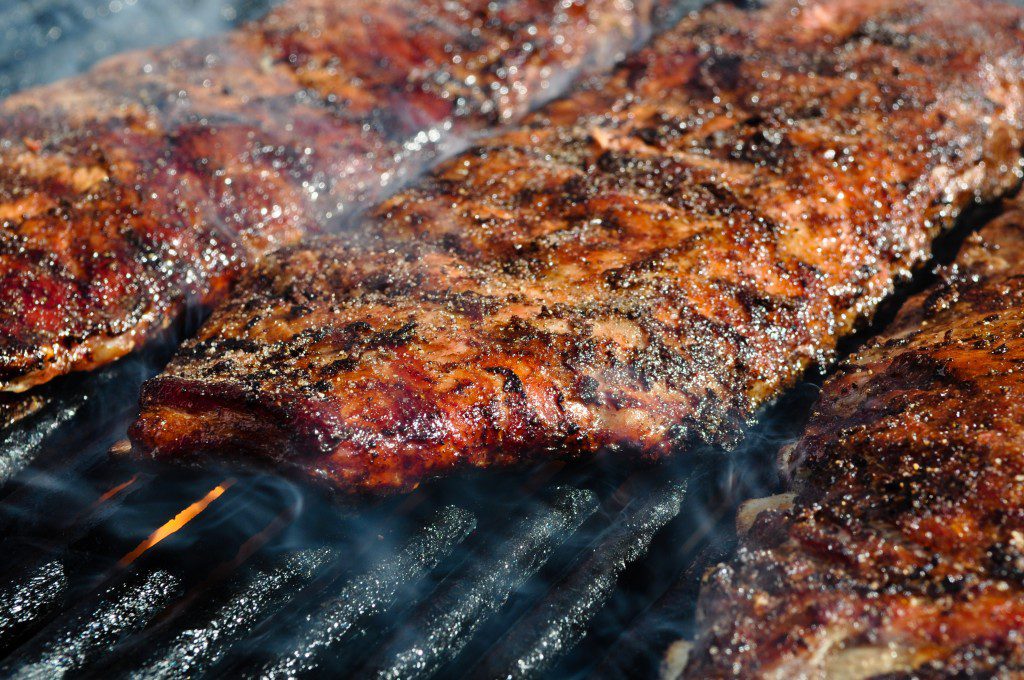
Summer is for grilling, and getting that superb all-day-in-the-smoker flavor doesn’t necessarily require special equipment. With just a few essentials, anyone can be a pro at smoking on a gas or charcoal grill.
Celebrity chef and Oklahoma City native Rick Bayless is known for his flair with Mexican cuisine. According to his website, www.rickbayless.com, the key to achieving smoky flavor on a grill is using wood chips and indirect heat. He suggests soaking two cups of mesquite wood chips (not chunks) in enough water to cover them for at least 30 minutes. Soaking will prevent the chips from burning out quickly.
For a gas grill, turn burners to medium-high to preheat. When ready to use, turn the center burner(s) to medium-low and add the drained wood chips to the smoker attachment box. In lieu of an attachment box, fold chips into a piece of aluminum foil, fold the edges and puncture packet with several holes. Place packet beneath the grate to the side during preheating and allow it to begin smoking before adding food over the center burner.
For a charcoal grill, allow charcoals to burn until they turn gray and are very hot. Carefully push coals to the sides for indirect cooking and place soaked chips on the coals. Put cooking grate in place. Chips can also be placed in a foil packet and put on grate.
Other methods to achieve “smoke,” according to www.thekitchn.com, include adding bacon or bacon drippings, liquid smoke, smoked spices (such as smoked paprika or smoked salt) or a smoky beer like Guinness.
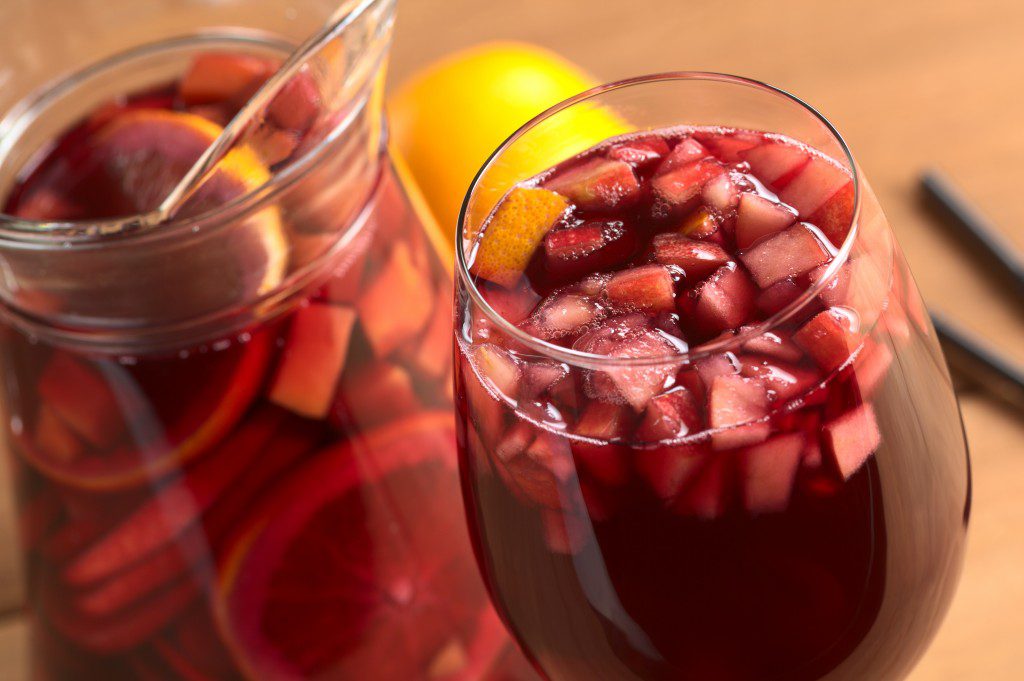
When the weather gets hot, chilled, fruity sangria is a great way to cool off.
Sangria is a red-wine-and-fruit-based concoction that traditionally contains brandy and orange liqueur.
Jared Jordan, owner of Mixed Company in downtown Tulsa, says that fresh ingredients and the type of wine used are key factors in making great sangria. He recommends staying away from frozen fruit, which can dilute the final product.
“Finding a good balance between the fruit, wine and sugar is also important,” he says.
There isn’t a right or wrong way to make sangria, he emphasizes, but there are a few guidelines that can make it better. Use an inexpensive brandy and red wine that costs less than $10. Jordan suggests trying a Garnacha, Rioja, Pinot Noir or Malbec red wine variety.
“You don’t want to spend a lot of money on wine that you are just going to cover up with a bunch of other flavors,” he says.
For orange liqueur, Triple Sec, Cointreau or Curaçao are good choices.
“Since Grand Marnier contains cognac, it can be a little overpowering in conjunction with the brandy,” he adds.
Jordan uses one completely non-traditional ingredient in his sangria recipe: arugula.
“It provides a little contrasting spice,” he says.
For a little fizz, add a nice splash of club soda.
Sangria
2 750-milliliter bottles red wine
1 c. brandy
1/3 c. cane sugar
1/4 c. orange liqueur
1 lb. strawberries, hulled and halved
3 oranges, thinly sliced
3 limes, thinly sliced
2 lemons, thinly sliced
2 apples, cored and sliced
2 cups fresh arugula (optional)
lemon-lime or club soda (optional)
Blend and stir wine, brandy, sugar and orange liqueur in a large pitcher until sugar is dissolved. Add arugula, if desired, and muddle with a wooden spoon to release flavor. Add strawberry, lime, lemon, apple and orange slices to the mix and lightly muddle the fruit to release juices. Cover and refrigerate for at least two hours and up to 24 hours. If desired, stir in soda to taste and strain before serving over ice. Makes 8-12 servings.
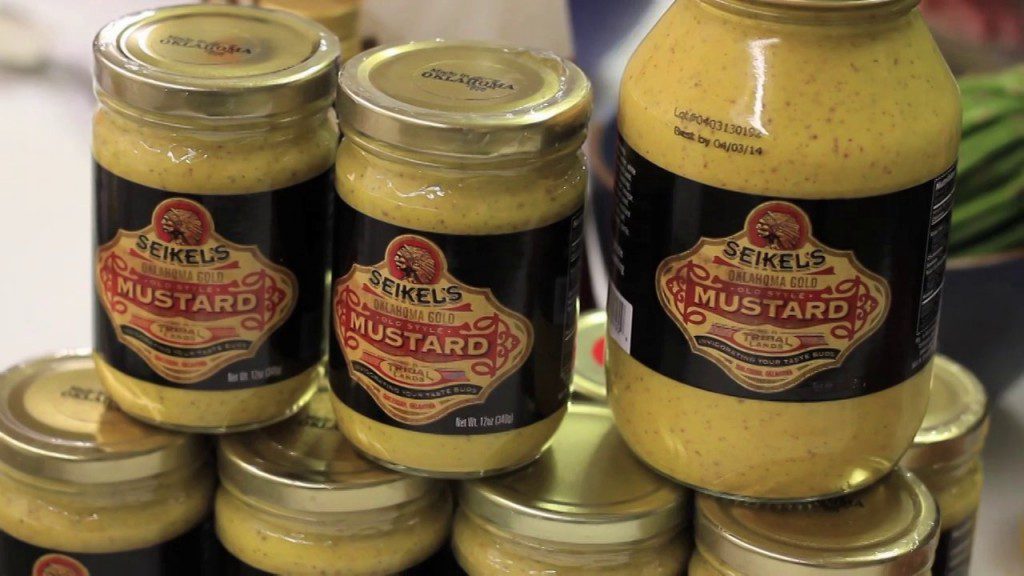
Steve Seikel has always loved mustard, but he was never able to find a brand he loved until he made his own.
“Every mustard that I tried was either too thick or contained corn syrup,” he says.
Coming from a corporate background, he began tinkering with his own mustard recipe in his home kitchen. He often gave it to family and friends as gifts.
He then gave some to a friend who worked for Backwoods Foods in Tahlequah, and the gift turned into a partnership with the food manufacturer.
“We started with one batch (about 20 cases) just to see how it would do,” Seikel says.
The recipe was a hit, and Seikel’s Oklahoma Gold Mustard was born.
“Our first account was Reasor’s 17 stores, and it grew from there,” he adds.
Today, Seikel’s can be found at Whole Foods, Uptown Market, Sprouts Farmers Market and Homeland store locations.
“When a new product goes into Whole Foods for the first time, they do a taste testing with the employees, and we got 100 percent approval rating,” Seikel says.
Seikel’s mustard is also served at several local restaurants and is distributed regionally from Kansas City, Mo., to Dallas.
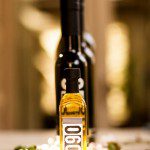
For a while, it seemed as if all oil was bad for you. Facial cleansers and cosmetics went “oil-free,” and we were told to avoid eating foods with oil in them. Today, however, we know that some oils can actually be good for you.
As part of a balanced diet, coupled with regular exercise, high-quality olive oil has been shown to help people with arthritis and high blood pressure and to prevent cardiovascular disease, says Maggie Kite, co-owner of Olive and Co.
At Olive and Co., educating customers about good foods is part of what Kite enjoys most in her work.
“It’s been fun and a learning experience,” she says.
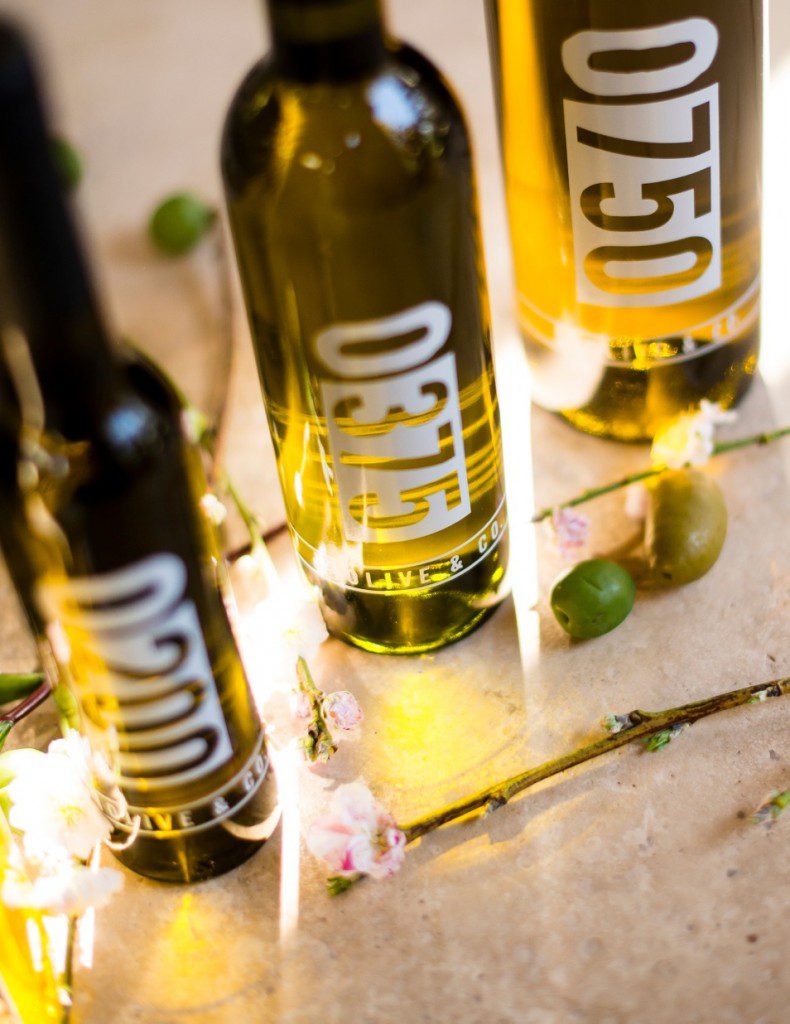
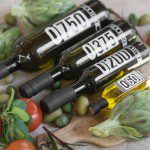
Kite and fiancé Rane Peterson opened the Oklahoma City store in 2012 selling gourmet balsamic vinegars, silicone cookware, natural skin care products, gourmet condiments, jams, spices and sauces. But it’s the olive oils that have made the business a standout enterprise.
Selling a range of premium oils sourced from olive growers in Spain, Italy, Portugal and other countries in the Mediterranean region as well as from California, Olive and Co. can vouch for the quality of its products. Not every merchant selling olive oil can do the same in an increasingly complicated market.
“Olive oil is touched by organized crime, and [crime] is putting multigenerational families out of business,” Peterson says. “Some are taking a tiny amount of extra virgin olive oil and adding other [non-olive] oils to it.”
Stocked with a number of varietals, Olive and Co. is serious about making fresh olive oil a staple of every kitchen and home. 7602 N. May Ave., Oklahoma City. www.oliveokc.com
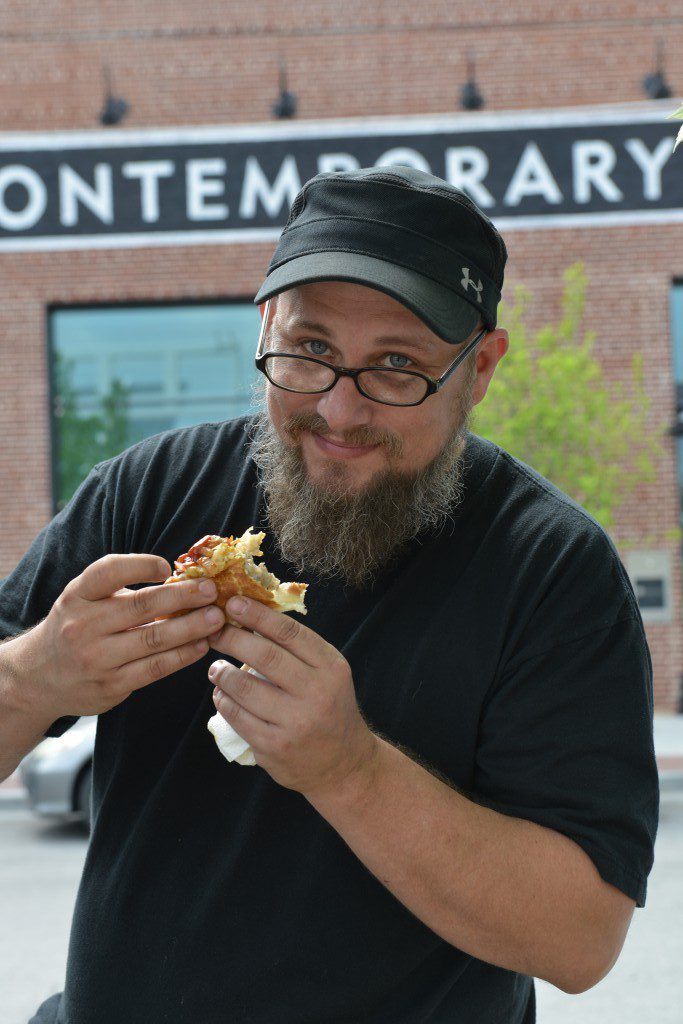
Greg Shocklee enjoys a sausage at lunchtime from The Wurst. Photo by Natalie Green.
Greg Shocklee enjoys a sausage at lunchtime from The Wurst. Photo by Natalie Green.
If you’ve ever been to the Guthrie Green for lunch during Food Truck Wednesday, you know the flurry of activity around the huge selection of food trucks that abounds. Scattered among the trucks, food cart vendors are ready for business, too, and The Wurst is easily among the best. In 2011, Lyndsi Baggett, along with her two business partners – her fiancé and her brother – built a mobile food cart out of a trailer. A Tulsa native who has lived in New York City and Austin, Texas, Baggett is back home grilling delicious beer-and-butter-soaked bratwurst served with onions, curry ketchup, spicy mustard and sauerkraut wherever she can haul her cart.
“Currently, we have a regular white brat, a cheese-filled brat and also a spicy brat,” she says. “Eventually, we plan on making our own buns, too.”
The brats are from Siegi’s Sausage Factory in Tulsa, but Baggett has plans to produce The Wurst’s own specialty sausages. And to really drive home the local angle, the beer she uses to marinate her brats is from Oklahoma’s Mustang Brewing Company. In addition to the Guthrie Green, Baggett and The Wurst can often be found parked outside of Sound Pony and Cain’s Ballroom in the Brady Arts District on concert nights. Follow The Wurst at www.thewursttulsa.com.