From cainsballroom.com – At the beginning there were two of them – Avey Tare and Panda Bear – banging drums and tweaking synths in their bedrooms, singing strange and sometimes heartbreaking songs about imaginary friends and childhood pets. Carried along by washes of squalling feedback, the music was noisy, and it was weird, but it was, at heart, pop music. This was the start of Animal Collective. For fifteen years Dave Porter (Tare), Noah Lennox (Bear), Brian “Geologist” Weitz and Josh “Deakin” Dibb have been rewriting the musical map, their line-up and aesthetic shifting with each astonishing release as they continue their pursuit of a new psychedelia. Their wild path has taken them from cramped concrete basement shows and forest floor singalongs to immersive installations at the Guggenheim and performances to millions on national television. So where now from here?
“Caveman circles”, says Lennox, discussing the vision for their eleventh full-length album, Painting With; “Caveman circles, the first Ramones record, early Beatles and electronically produced. I think that was kind of our starting point”. Dizzyingly upbeat and gloriously realised, their latest LP bounces and pops with an urgent, ecstatic energy, propelled by polyrhythmic beats and gurgling modular synth, with Lennox and Portner’s vocals gleefully falling in and out of syncopation and off-kilter harmony. The songs are as experimental and deeply textured as anything that has come before but sound as sharp and snappy as chart hits, finding the band at both their most minimal and most ambitious: “The idea with cavemen was about being more primitive – the way we sounded when we were first playing together in New York” says Portner. “I feel like what we were doing with the last record [2012’s Centipede Hz] was something a little more complicated. This time we wanted to strip it down and simplify it, like techno and punk… And then put the Animal Collective filter on it all.”
[dropcap]As[/dropcap] state director for Dream It Do It Oklahoma and OK2Grow, Stephanie Cameron, community affairs director for APSCO Manufacturing, has taken a strong role in the community with helping students in Oklahoma. One of the primary goals of OK2Grow is to create connections and open doors for students, providing students with career awareness experiences and opportunities to help retain or bring them back to the Tulsa area. Cameron is also chair-elect of TYPros (Tulsa’s Young Professionals), which she says is a “great vehicle to learn more about the community and discover where you can connect and make an impact.” We recently spoke to Cameron and talked about her thoughts on…
…getting Tulsans under 40 involved in voting on the Vision 2025 package and future initiatives and elections.
Under the astute leadership of TYPros Chair, Daniel Regan, I participated in the Get Out the Vote efforts and education on the Vision package targeted to the under 40 population. This demographic has been criticized for not participating in civic engagement, and I think we are going to see a positive impact on the under 40 voter turnout in Tulsa through this campaign.
…the impact Vision 2025
will have on Tulsa.
I think [the announcement USA BMX is moving its headquarters to Tulsa] is only the beginning of the announcements and plans we will see after this vote. With the development of The Gathering Place, The Route 66 Experience and OKPop Museum, I think we are going to see a snowball effect of great things happening in Tulsa.
…working with Oklahoma students
with OK2Grow.
My hope is that students will realize that they are needed and important to Tulsa’s future. Tulsa has been ranked as one of the top cities to start a career, and there are so many leadership opportunities available for people early in their employment. I have been fortunate to have had a number of these experiences thanks to great mentors in my life, and it’s something I find very rewarding to share with others.
…attracting the younger
generation to Oklahoma.
I think young people need to see our city and state continuing to grow and evolve. I think they are attracted to cities where the leaders are making bold decisions in order to stay competitive with surrounding cities, including increasing available transportation options, developing the urban core and enhancing the quality of life for citizens.
…Tulsa’s future.
Tulsa’s future is looking incredibly bright. Working with students, I feel inspired and confident in the momentum we are building. I see the city becoming a creative hub and nationally recognized in many positive ways. We have a thriving entrepreneur community, a rapidly expanding arts community, a strong economic base and vibrant workforce.
…her favorite thing about Tulsa.
I love that people matter here. One person still has the ability to make a difference. Tulsa is a place where if someone has an idea or a dream, they can make it a reality here.
Each month Oklahoma Magazine highlights exciting Oklahoma film events and gives some guidance on films coming out on home video and those currently playing in theaters.
May traditionally marks the beginning of summer movie season, meaning that theaters will be filled to bursting with explosive spectacles: some good, some wincingly bad. To forestall the inevitable for a few more weeks, your May best bets are certified 100 percent blockbuster free.
ABOUT TOWN
As colleges around Oklahoma wrap up their school year, film students are scrambling to finish their pet projects. The Sooner State may not immediately leap to mind as a hub for film production, but in recent years strong programs have emerged across the state, working to educate students who go on to thriving careers in Hollywood and beyond.
If you live near one of the state’s major universities, there’s a good chance you can get a preview of the future of film by attending a screening of student films – these usually occur at the end of the semester to give students the best chance to polish their work. Sure, there’s a roughness to the films on display, but also a vital energy that’s often missing from films with bigger budgets. There are two of special note happening in late April and early May. University of Oklahoma hosts their annual Redbud Film Festival, which showcases a wide array of student films, on Friday, April 29. The following week, on Friday, May 6, the Film Studies department at The University of Tulsa has its Senior Film Night. Here you can get the chance to see the best of the best of these student films.
Photo courtesy Roadside Attractions.
IN THEATERS
If you need a break from superheroes and explosions, consider checking out the sweet indie comedy Hello, My Name Is Doris, directed by former The State comedian Michael Showalter with wryness and sensitivity. The titular heroine (Sally Field) is painfully shy, but she dreams of a romance with a much younger coworker. In a bid to win his love, she reinvents herself as an energetic extrovert with vintage style. The film does not hold too many surprises – if you have seen an indie comedy recently (think Little Miss Sunshine and the like), you can probably guess most of the film’s plot points. It excels in two regards, however. First, its genuine love for its characters, who are funny but never mocked. Second, it gives a welcome showcase for Fields, who is absolutely electric in the title role.
The Witch; Photo by Rafy, courtesy of A24.
AT HOME
If you’re already itching for Halloween and need a good film to drum up some scares at home this month, I highly recommend Robert Eggers’ period horror film The Witch, out on DVD May 17th. Set in Puritan New England, the film uses extreme attention to accurate detail to build a whole world around its protagonists, a family who have cut themselves off from their neighbors. The film builds with a slow burn, and the scares are more existential that primal (though you’ll never look at goats the same way again), but the film sticks with you afterwards, offering a lot to ponder.
[dropcap]Oklahomans[/dropcap] hoping to see some art, listen to live music or try new food will have plenty of opportunities this month in both Tulsa and Oklahoma City. Three different festivals will be held in the two cities during May, giving people plenty of entertainment options.
The Paseo Arts Festival, held on May 28 through May 30 in the Paseo Arts District located on NW 30th Street and Dewey Avenue in Oklahoma City, will be celebrating its 40th anniversary this year. The festival will host more than 85 artists from Oklahoma and across the country and three stages of live music and dancing.
In addition to the restaurants in the district, there will also be a food court with a variety of options.
“We want people to come down here and spend the day,” Paseo Arts Association Executive Director Amanda Bleakley said. “It’s a great way to let people know the district is here and invite them to come back another day.”
The festival began with a group of local artists and has grown into a true fine arts festival, Bleakley says. The festival uses jurors from across Oklahoma to help select the art displayed at the festival, which includes paintings, ceramics, photography, leather goods and sculptures.
“We do lean toward Oklahoma artists, but we want to have a good variety,” she says. “It’s kind of a natural progression, because we also want the best artists.”
Paseo is the oldest shopping district north of downtown Oklahoma City, and people attending the festival will not only have the opportunity to see art set up for the festival but also to shop at the art galleries and retail stores that are located in the district all year.
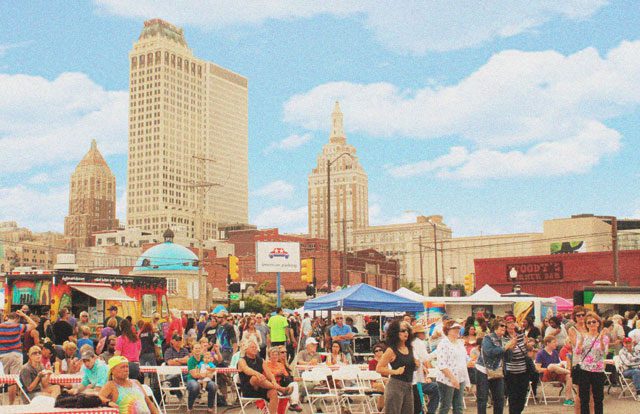
Downtown Tulsa will also be hosting two major arts festivals this month. Mayfest will be held from May 19 to May 22, and the Blue Dome Arts Festival is running from May 20 to May 22.
Mayfest will have dozens of booths showcasing artists from across the country. The artists will be displaying examples of their work, and the festival includes a Market Artist section with a selection of handmade goods. More than 100 musicians and dancers will be performing at the festival over four stages, featuring not only local musicians but headline musicians from all over the country.
The festival also hosts an indoor Invitational Gallery, which will have art from more than 100 of Tulsa’s best artists in oil, metal, photography and other specialties. All works in the Invitational Gallery are available for sale.
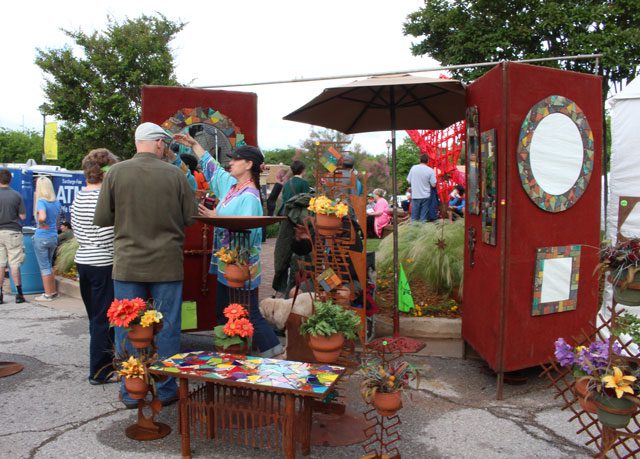
The Paseo Arts Festival features 85 artists and live performances. Photo courtesy The Paseo Arts association.
The Blue Dome Arts Festival will be held a short walk away from Mayfest, allowing people to easily walk from one to the other. Blue Dome Arts Festival Director Jo Armstrong says there are several new additions to the Blue Dome Arts Festival this year, including a PetZone, that will feature some of Tulsa’s local pet businesses. The PetZone will be held on a fenced-in portion of the street covered with sod, giving it a “backyard feel,” Armstrong says.
“Blue Dome has always been a festival where people have felt good about bringing their pets, so we thought, ‘Why not make a fun zone for them to go to?’” she says.
The festival has added the Philbrook Family Zone, expanding the former Kids Zone from previous festivals with collaborative art projects children can work on with the entire family. Armstrong says the festival has also added some fun features to the handprint wall, which will continue artwork created on the same wall at last year’s festival.
Armstrong says one of her goals for the Blue Dome Arts Festival is to make sure there would be something for everyone who attends while still keeping the focus on local artists – the festival originally started because local artists were looking for a space to share their artwork.
“I’m always just continually amazed by the talent here in Oklahoma,” she says. “I think it’s a really eye-opening experience for people to realize that.”
Being held at the same time as Mayfest allows people to visit both festivals, which provides even more options for people,
“I think that’s part of the fun of it,” she says. “If you’re not in downtown Tulsa that weekend, you’re missing a huge weekend.”
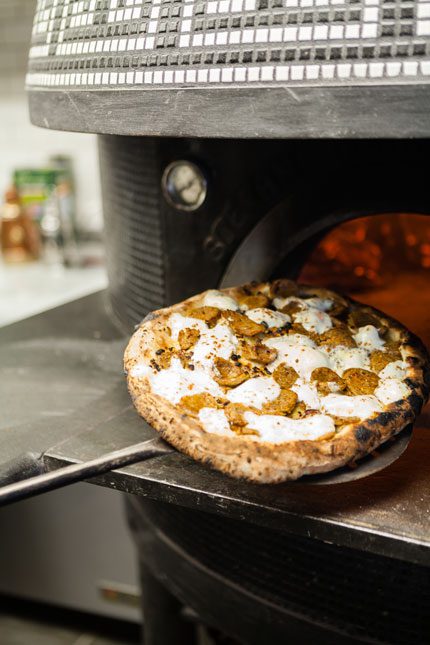
The new broken arrow location offers two distinct pizza styles.
photo by Chris Humphrey Photographer
[dropcap]Andolini’s[/dropcap] Pizzeria has continued to grow in the Tulsa metro area, and the restaurant’s newest location, which opened in Broken Arrow’s Rose District last fall, has met the same level of success as the other locations.
“It has definitely exceeded all of our high expectations and all our performance numbers,” Andolini’s co-owner Mike Bausch says. “We’re very happy and proud of what we’re bringing to BA, and also thankful to the Broken Arrow Chamber of Commerce for what they facilitated in creating the Main Street Rose District we’re part of now.”
The new Broken Arrow location offers two distinct pizza styles. Photo by Chris Humphrey Photographer
Bausch and his brother, Jim Bausch, own three Andolini’s Pizzerias in the Tulsa area – besides the location in Broken Arrow, the company also has a restaurant on Cherry Street, the original location in Owasso and a food truck. The brothers also own STG Pizzeria & Gelateria in Downtown Tulsa and Gelateria – STG on South Sheridan Road.
The Broken Arrow location is unique because it serves two styles of pizza. The restaurant’s locations in Owasso and on Cherry Street use RotoFlex ovens to create what Bausch describes as their take on Italian classics, while STG Pizzeria & Gelateria uses an imported wood-fired oven to create “exactly what you get in Italy,” Bausch says. The Broken Arrow location uses both types of ovens to give customers a choice of either style.
“We like the idea of having both styles under one roof,” Bausch says. “We’re the only place in Oklahoma I know of that serves these two very different styles of pizza.”
The Broken Arrow location is also larger than the other locations, but Bausch says the restaurants strive for consistency so people have the same experience in all locations. That includes the same innovation that drives the menu selection and variety of pizza for which Andolini’s is known.
“Our mentality on food is to make the best product possible and let the cards fall,” he says. “We want to be ahead of the curve, not just to be trendsetters, but to make the best, most interesting, unique foods possible. We draw inspiration from places, but we always want to make it our own.”
Bausch says they take the same approach to creating new pizzas, coming up with multiple ideas and combining the best parts of each until they find something they think is unique, special and great.
The constant search for new menu selections, as well as the company’s growth strategy of placing restaurants wherever people like to walk, is likely to pay off for years to come.
“From the business side, we’re set to grow,” Bausch says. “From a food and culinary side, we could completely not make another new pizza and be OK. But that’s not we’re about. We’re too excited about pizza to stop.”
Tequila sunfryz is Guyutes most popular menu item: waffle fries, tequila pulled pork and a sunny-side egg, topped with cilantro crema.
photos by Brent Fuchs.
Tequila sunfryz is Guyutes most popular menu item: waffle fries, tequila pulled pork and a sunny-side egg, topped with cilantro cream.Photos by Brent Fuchs.
[dropcap]A[/dropcap] little more than a year ago, the building on the southeast corner of NW 23rd Street and Shartel Avenue in Oklahoma City was just another vacant eyesore. The renaissance that was slowly encroaching west through the increasingly popular neighborhood – even directly across the street from the abandoned structure – seemed to have passed that corner by. Now, locals can stroll to that once isolated area and enjoy a rooftop cocktail, creative street food and an atmosphere that, with weekly events like live-streamed concerts, music trivia and the upcoming Inebriated Spelling Bee, puts the “fun” in “funky.”
Wayne Peroka, co-owner of Guyutes with Jarrod Friedel, says that a sense of freedom and variety is what inspired the two Phish fans to open the restaurant and bar.
“I traveled for a living in my 20s and had the opportunity to experience different food, drinks and atmospheres all across the country,” Peroka says. “It gave me a fresh perspective on the industry and I quickly developed a passion for it. When I moved back to Oklahoma City, I decided I wanted to be my own boss. One of my first serving jobs was in Colorado. I really loved the camaraderie among the entire staff. We worked together and played together and it was a great environment to work in. When Jarrod and I started talking about creating this venue, I wanted to emulate that kind of feeling and atmosphere. The idea for Guyutes just evolved naturally from who Jarrod and I are. We wanted to create a space and menu that was approachable, artistic and creative.”
Creativity indeed seems to be precisely what the food at Guyutes is all about. An affordable array of choices awaits customers of all stripes, all a bit surprising (in a good way). The Traffic Light, for example, sounds like just another take on a chips-and-dip appetizer — until you taste it. A mysteriously smoky and thick salsa, queso (with flavor!) and house-made guacamole arrive top to bottom, red-yellow-green. The Disco Biscuit, a fried chicken breast served open-faced on a cheddar biscuit with honey butter and green onions, was just the right amount of elegant to make you feel fancy, and just the right amount of comfort to feel satisfying. On the upcoming spring menu, Peroka and company will be serving a yet-to-be named stack of tender, sriracha-sweet chicken with layers of Yukon gold mashed potatoes, as well as a new dessert menu, including a chocolate-covered disc of ice creams called a tuxedo.
We tried a lot at Guyutes, but we came away with an even larger “to-eat” list for the next visit.
Co-owners of OKC’s Guyutes Jarrod Friedel and Wayne Perk. Photo by Brent Fuchs
“Our most popular menu item is the Tequila Sunfryz,” Peroka says. “I think people are really drawn to its uniqueness and eye-catching presentation.” We saw this being ordered everywhere around us – a generous order of waffle fries, tequila pulled pork and a sunny-side egg topped with cilantro crema. Peroka’s personal favorites include the Pip and the WuPlantang, two of Guyutes’s wrap options. For a cocktail on the roof, he likes the spicy margarita he calls the Fire in the Pineapple.
Uptown 23rd is the perfect neighborhood for Guyutes to call home, with more and more local businesses, eateries and nightlife spots rapidly retaking this once vital area of Oklahoma City.
“There are so many new and eclectic options in the neighborhood since the revitalization,” Peroka says. “We’re so fortunate to have other businesses and individuals pouring love and passion into this area. We actually purchased this building before the revitalization really took off and consider ourselves incredibly lucky to play a part in the renaissance of Uptown 23rd.”
In keeping with the mindfulness that seems to characterize many of the businesses in the area, every second Tuesday of the month Guyutes holds Helping Friendly Tuesday, giving 10 percent of their earnings to a charity.
“It’s really great to see Oklahoma City stepping out of the box for both restaurant owners and patrons,” he says of the blossoming OKC eating scene. “I think the culinary scene is rapidly transforming and coming into its own. There are so many different options and opportunities and that’s exciting for everyone.”
When asked how he most wants diners to feel when they leave Guyutes, he says, “I want people to walk away thinking ‘I’ve never seen a staff that enjoys what they do so much.’ People are happy here. I think that kind of takeaway speaks volumes about what we’re trying to accomplish. I want people’s experience to be memorable because of our atmosphere as well as our menu offerings.”
After a Violent Pimm’s – Pimm’s, ginger beer, lemon and orange mint – on the rooftop overlooking the bustling sidewalks of N.W. 23rd Street and the historic neighborhood of Mesta Park, and a meal that warm, fuzzy memories are made of, we have two words for Peroka: mission accomplished.
Guyutes is located at 730 NW 23rd St. in Oklahoma City. Menu, hours and other information are available at www.guyutes.com.
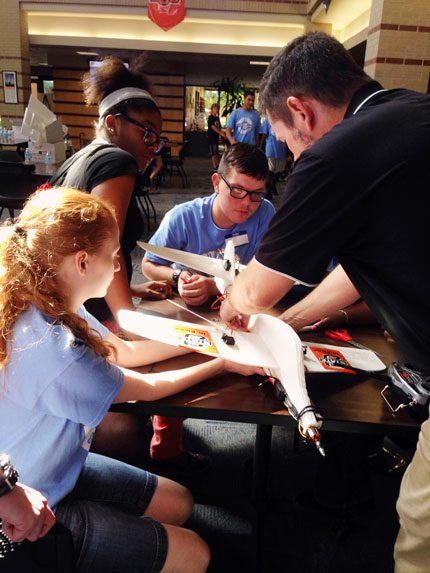
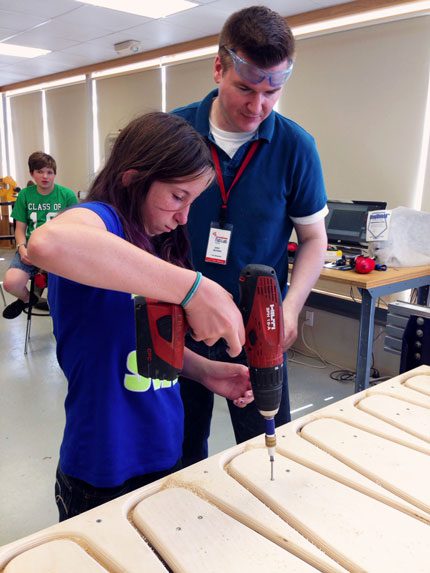
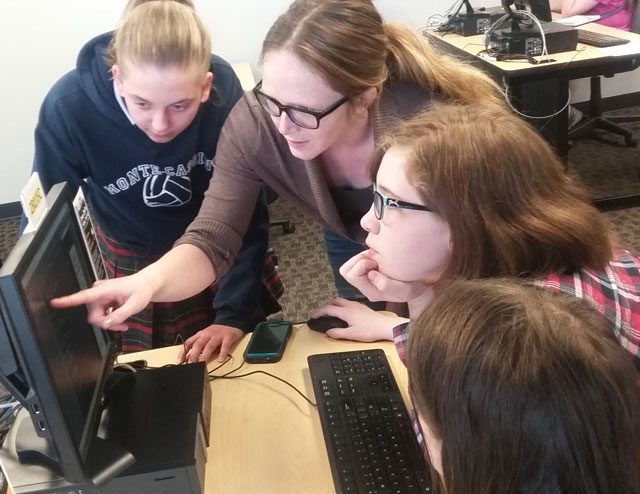
One goal of the Tulsa Regional STEM Alliance is to engage with girls at younger ages to encourage interest in high-impact STEM fields. Photo courtesy Tulsa Regional Stem Alliance
One goal of the Tulsa Regional STEM Alliance is to engage with girls at younger ages to encourage interest in high-impact STEM fields. Photo courtesy Tulsa Regional Stem Alliance
[dropcap]According[/dropcap] to census data, women comprise more than half of Oklahoma’s workforce. But in certain fields – specifically, science, technology, engineering and math (STEM) – women are highly underrepresented.
“Depending on the specific STEM career, women frequently make up less than 20 percent of STEM professionals in these critical fields,” says Xan Black, program director of Tulsa Regional STEM Alliance.
Yet at the same time, our economy desperately needs workers in these fields. Black says the country is on track to produce one million STEM workers by 2018, but more than two million additional STEM professionals are needed in these industries.
“If we overlook or don’t prepare half of our potential workforce by not introducing young girls to possibilities in STEM careers, we are really seriously undermining the potential for our nation to build the robust STEM workforce that we need,” Black says.
Specifically, a recent report from the American Association of University Women (AAUW) found that just 12 percent of engineers are women, and the number of women in computing has fallen from 35 percent in 1990 to 26 percent in 2013.
“Women made up a majority of computer science professionals in the early ’80s, but in recent times there has been a decline in the number of women in this innovative field,” Black says. “It’s a challenge that the Tulsa Regional STEM Alliance and a host of others in Oklahoma are working hard to overcome.”
Closing the Gap
This outlook appears grim on the surface, but, despite the current severe shortage of women in STEM fields, things are beginning to change – both on a statewide and national level – thanks to groups such as the Tulsa Regional STEM Alliance.
TRSA is committed to building broad, deep and innovative pathways for students to access high-impact STEM careers, Black says. The group works to achieve this specifically for girls and women in several different ways, including the all-girls, all-day, all-math event called Sonia Kovalevsky Day and a Code of Their Own coding camp for girls. TRSA also hosted Tulsa ZooSTEM this past November for middle school and high schools girls as well as female STEM professionals.
“[The event] put the participants behind the scenes working alongside Tulsa Zoo scientists in thinking through real challenges faced in various areas of the zoo,” Black says. “The girls loved solving real-world problems and having immediate feedback on their proposed solutions.”
This year, the total expected targeted outreach for TRSA to women in STEM is 1,600 participants, Black says.
[pullquote]Money aside, for women, working in STEM areas specifically means intellectual equity and the continuing elimination of gender barriers,” Sarani says. “That means more prosperity for the states with higher numbers of STEM-educated employees in the workforce.”[/pullquote]“We are now seeing growing numbers of females enrolled in engineering, science, computer science and advanced mathematics careers,” Black says. “As we engage girls at younger ages, inspire them with all of the interesting and world-changing problems that are out there to be solved, we are seeing lots of ‘Rosie the Riveters’ rising to the challenge.”
Other organizations – and individuals – are working to close this gap as well. Saeed Sarani is deeply entrenched in this subject, serving as President and Executive Director of CASMEO (Coalition for the Advancement of Science and Mathematics Education in Oklahoma) and as the 0resident of Oklahoma Women in STEM, both nonprofit organizations.
“Early on [in my career], I noticed the majority of STEM-related faculty were predominately male, as were the majority of STEM-related majors such as engineering and technology,” Sarani says. “By having daughters of my own, I made it my mission to make STEM a tangible pathway for women in Oklahoma.”
This mission also manifested itself on a larger scale after Sarani attended Gov. Mary Fallin’s first STEM summit. Sarani says the event highlighted Oklahoma’s current state of potential STEM employment opportunities, but didn’t mention one of the state’s greatest potential assets: women to fill these employment opportunities.
“I was aware of the tendency of academia to pass over female students in the mathematics and sciences; this was the first time I was faced with how the community at large has a tendency to do the same,” Sarani says.
Soon after, Oklahoma Women in STEM began as a pilot project in early 2014 to test the interest of female middle school students in STEM degrees and professions. Then in the spring of 2014, the first Oklahoma Women in STEM conference was held in Tulsa.
“The attendees were given the opportunity to hear from professional women from across the state, as well as government officials and educational personnel, to emphasize their options pertaining to STEM majors and the impact on their future job potential,” Sarani says.
But why is it important to establish a “tangible pathway” for women entering STEM fields? Sarani echoes Black’s point that STEM jobs are increasing at double the rate that STEM professionals are entering the workforce.
In addition, the National Association of Colleges and Employers reports that the starting salary offered to STEM majors ranges from $35-$65K annually. Students with a STEM-related major or certification have a better living wage and more opportunities for advancement.
“Money aside, for women, working in STEM areas specifically means intellectual equity and the continuing elimination of gender barriers,” Sarani says. “That means more prosperity for the states with higher numbers of STEM-educated employees in the workforce.”
Tatiana Rozzell, founder and CEO of Learn to Code Inc., was also inspired to close the gap of women in STEM careers through personal experiences. Rozzell says that she herself was already fascinated by programming from an early age while attending school in Russia, but even after moving to the United States, Rozzell wanted her children to have opportunities in STEM fields.
“When my friends back in Russia started bragging about having their kids learn to code, I decided to give mine the same opportunity. And this is where I got stuck, because there weren’t any,” Rozzell says. “After some extensive research I came across Girls Who Code and found that we could set up a club of our own.”
After tracking down volunteer instructors, the first classes were offered free of charge to 32 students.
“By the end of the semester I realized how big the need was for classes like ours and how big of a potential this field holds for the growing generation,” Rozzell says. “So I decided to start a nonprofit in the hopes that, with the help of some sponsors, we can offer more classes to more kids and keep them free of charge.”
The Girls Who Code Tulsa club became Learn to Code Inc. while still maintaining the mission to “inspire girls to dive into computer science and become developers down the road,” Rozzell says.
Assigning young girls with STEM Mentors can help overcome a belief that the predominance of males in STEM classes means females do not belong, according to Xan Black of the Tulsa Regional STEM Alliance. Photo courtesy tulsa Regional STEM Alliance.
Root of the Issue
But what is it, exactly, that is causing the shortage of women in science, technology, engineering and mathematics fields? There are many different reasons, Black explains.
“Some of the issues trace back to biases that are expressed to young women, some perhaps unconsciously … messages that girls aren’t as good at math and science as boys,” Black, of Tulsa Regional STEM Alliance, says. “Often times there is an inherent bias that girls are good at reading and boys are good at math. Unfortunately, until very recently this type of implicit and sometimes explicit bias spilled over even into the corporate workplace.”
With the current shortage of women in STEM, the women who do follow these career paths sometimes experience what Black refers to as “imposter syndrome.”
“Since young girls are typically outnumbered in STEM coursework and perhaps pick up on unspoken biases, some female students take on the belief that they don’t really belong in STEM careers,” Black says. “Young women may believe that even though they are in a STEM class and perhaps excel in math and science, they don’t really belong there. Most young women do not have a STEM mentor or role model. They see themselves as not being smart enough, technical enough, you-fill-in-the-blank enough.”
Among these challenges, STEM coursework is also difficult.
“When young women have grown up in an environment that contends that boys are naturally good at math and science and girls are good at reading, when they find themselves one of one or two women in their classes, when they have an inner voice that tells them that they shouldn’t be pursuing a STEM career, and then they find the coursework extremely challenging, many of our young women look for other majors and careers to pursue,” Black says.
Oklahoma School of Science and Mathematics (OSSM) teacher (and OSSM alumna) Sara Bodenstein also outlined the difference in expectations for young boys and girls.
“I do think it is unfortunate that many STEM programs have few girls in them. But what is more unfortunate is that girls are being led to believe that they cannot succeed in those fields or that they won’t enjoy them,” Bodenstein says. “What is sad is the fact that some girls who may possess great gifts for physics or computer science are passively or actively discouraged from studying such topics because of their gender. If she’s told, or shown, that a field is only for boys, she may miss out on what could have been a lifelong passion.
“The idea that gender stereotypes may prevent a future Marie Curie, Jane Goodall or Maria Mayar is tragic. Any girl should be free to study and encouraged to pursue fields about which she is most passionate.”
Tatiana Rozzell, founder and CEO of Learn to Code Inc., started the organization when she realized there were few opportunities for her children to learn computer programming. Photo courtesy Learn To Code Inc.
Looking Ahead
The company Ambler|Architects of Bartlesville is one of many companies and organizations that sits on TRSA’s Advisory Council. Ambler|Architects weighed in on the issue of the shortage of women in STEM fields and why the company wanted to get involved with TRSA’s mission in the first place.
“The future of Ambler|Architects likely lies with the youth and with the youth involved in and around STEM programming,” says Joseph Evans of Ambler|Architects, who represents the company on the TRSA Advisory Council. “Personally, I wanted to sit as an advisory council member because I firmly believe that as an organized strategic group we should work together to make a difference in the education of our local youth and future leaders.”
For anyone, male and female alike, entering a STEM career there are very clear benefits, Evans says.
“Anyone working in a STEM-related field has a tremendous amount of opportunity,” he says. “These opportunities provide an abundance of flexibility to help an individual truly find something they are happy doing for the rest of their life.”
Evans adds that he has seen public perception shift around the topic of recruiting women to STEM careers.
“There has definitely been a shift around the topic of recruiting women to STEM careers and programs – most of the women I have met in and around my field are typically quite inspiring, and I think that helps to serve as good role models for the younger generations,” Evans says. “Few things are more powerful in a youth than instilling the ‘I can do that’ attitude.”
Bodenstein, of OSSM, says it’s important to encourage young girls to pursue STEM career paths (if their interests align) because of the way the nature of work is changing.
“It’s undeniable that we are living in the technological age,” Bodenstein says. “Most professional job opportunities will be in computer science and technology development. If young women at OSSM were to choose any of their science classes and follow those to the natural culminations of each topic, they will find careers waiting for them. If they choose a subject that interests them, they will be successful and satisfied.”
So that while the shortage of women in STEM fields might seem a daunting problem to overcome, the overall outlook is shifting.
“I remain positive that supporting women in STEM fields is going to be the greatest resource Oklahoma could provide to improve our state’s economy and outlook for our future,” says Sarani of CASMEO and Oklahoma Women in STEM. “It is no secret that STEM fields have a reputation of being unwelcoming toward women and that women are underrepresented within these career paths. However, this is slowly beginning to change.”
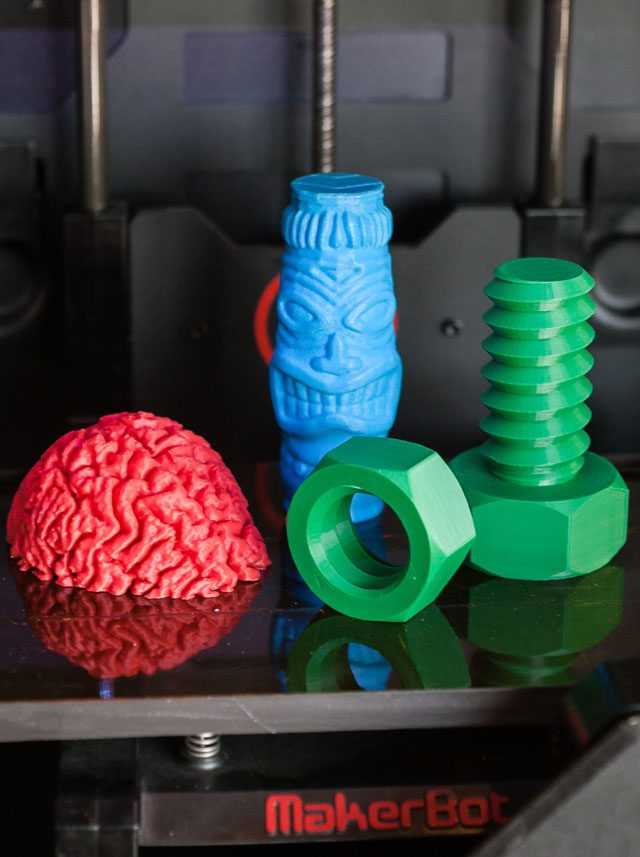
Fab Lab Tulsa allows its members access to 3D printing technology.
photo by Chris Humphrey Photographer
Fab Lab Tulsa allows its members access to 3D printing technology. photo by Chris Humphrey Photographer
[dropcap]Professional[/dropcap] Image 3D started its venture into 3D printing out of the necessity to solve a problem with packaging a chocolate sculpture.
“We had a huge, hollow chocolate turkey, and the head kept breaking off in packaging,” says Rick Radford, director of operations for Professional Image 3D. “They needed a way to package that. We couldn’t do it with our software program, but we knew where we needed to get to.”
Since then, the company has expanded what it does with 3D printing, using the technology to create packaging, provide 3D scanning, blueprints and printing for customers, and even modify their own equipment.
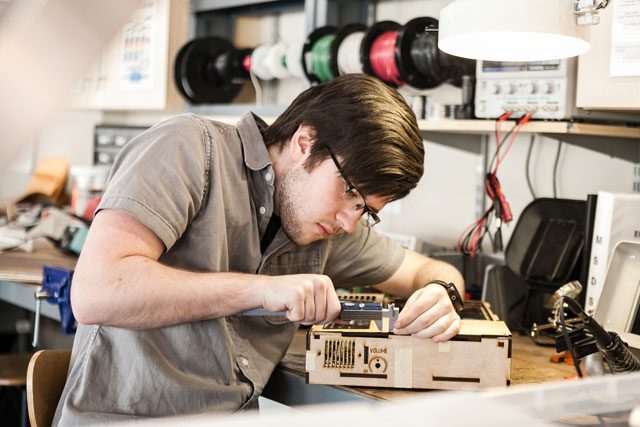
Fab Lab Tulsa has a wide variety of people who use the workshop for different purposes. Photo by Chris Humphrey Photographer.
The Science of 3D Printing
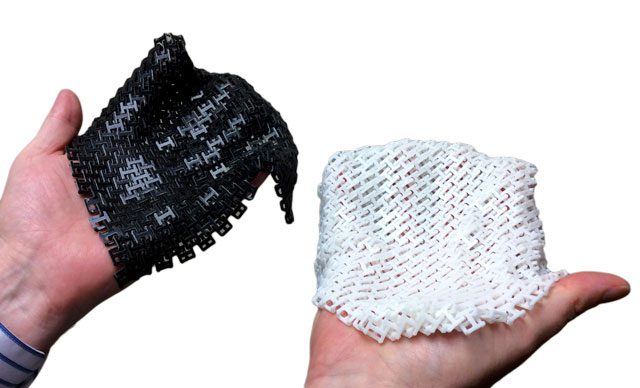
3D printing uses a variety of techniques and materials to create objects – the process may use UV light, lasers or cooling of a heated material – but the basic principle remains the same. Unlike traditional manufacturing, which is subtractive manufacturing that takes a block of material and cuts away at it, 3D printing uses additive manufacturing.
“Additive manufacturing is where you take that model that’s in 3D view, slice it into really thin sections and build it layer by layer,” Radford says. “You’re not cutting anything away. You’re actually adding to each layer as it builds up.”
The technique allows for the manufacturing of parts that would be difficult or impossible by traditional means, such as honeycombed materials, because of the geometry inside the object.
The types of 3D printers available are varied, and Radford says each has its own use depending on the item being created and the quality needed.
“Some of them do some things really well, some of them can do a hybrid of things, but for the most part each one has its own niche,” he says.
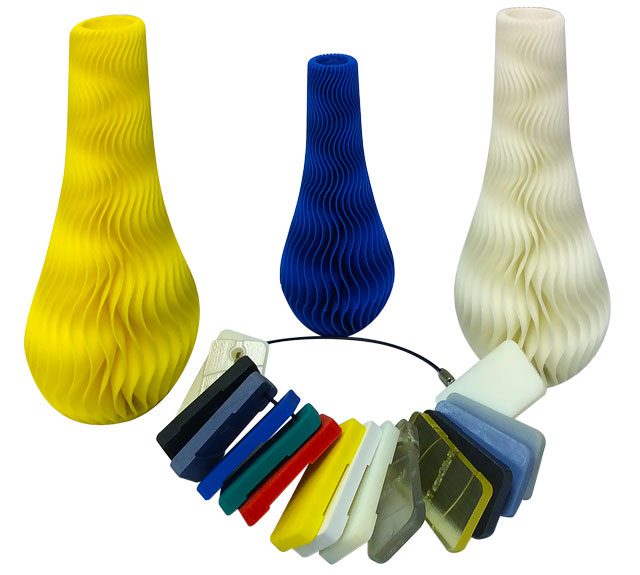
Technology for 3D printing is used in virtually every industry. Photos courtesy Professional Images 3D.
Uses for 3D Printing Technology
While the techniques used in 3D printing may be varied, the applications of the technology are even more diverse. Radford says the technology is used for everything from creating castings of clay sculptures to medical purposes.
Radford says the technology can be used to create models of CT scan data or MRI data, and there are studies where conjoined twins have been scanned to create a 3D model surgeons can practice on before beginning surgery.
The company even uses the printers to fix or upgrade its own equipment, printing and replacing knobs or fixtures for the equipment or creating new parts.
“We actually created a piece for our equipment,” he says. “We modeled it, which took about 45 minutes, put it on a 3D printer and by lunchtime we had a new piece to try out on the equipment, and it worked fantastic. If you think about trying to get all that done through traditional ways, it would be a week to have it machined, bring it back, to see if it works.”
In the future, Radford says he can picture people contacting a manufacturer for a replacement part for a machine and having the option of being sent a replacement or downloading a file and printing it themselves.
“There’s not an industry I can think of that 3D printing has not touched in some form or fashion,” he says.
Doing it Yourself
High-end 3D printing systems may carry price tags ranging from five figures up to millions of dollars, but smaller, consumer 3D printers are available in many stores. For many people, those may be good enough for what they need to do.
Another way to gain access to 3D printing is through the Hardesty Center for Fab Lab Tulsa, a nonprofit workshop that allows members to use 3D printing technology. Memberships range from $80 to $225 annually and include some training.
“With about two hours of instruction, we can have you up and running,” says Nathan Pritchett, executive director of Fab Lab Tulsa. “Part of our mission is specifically access. There are other models that would charge you that each month.”
Pritchett says the workshop’s members include a wide variety of people such as entrepreneurs, hobbyists, tinkerers and students, and the workshop has been used to create everything from jewelry to a prosthetic hand.
“It’s really a massive spectrum of Tulsa, and that’s what makes it interesting,” he says. “From moment to moment, we never know what’s coming in the door next.
Inspiring Innovation
By providing accessible 3D printing to Oklahoma, Fab Lab Tulsa is helping inspire new uses for the technology. Whether someone downloads a blueprint and takes it into the lab or uses software to create their own, Oklahoma has hit a point where 3D technology is available to everyone though consumer products, workshops like Fab Lab or commercial services.
Radford says he constantly sees his company’s clients finding new uses for the technology or using 3D printing to create things no one has thought of previously – including one client who brought in an idea sketched on a napkin.
Photo by Chris Humphrey Photographer.
“I’m amazed at times,” Radford says. “We get people coming in all the time, and they say, ‘I have this idea.’ And it’s something I’ve seen, and everyone just accepts it. But if we make this change, we can change everything.
“People everywhere see things and think, ‘If that was just a little bit different, it would help me,’ and that’s what we try to do. Once it’s digitized, you can do just about anything you can think of with it. If you think about it, you can do it. Our motto is we want to inspire innovation.”
The case tennis center has hosted three NCAA championships since 2004.
Photo courtesy The University of Tulsa.
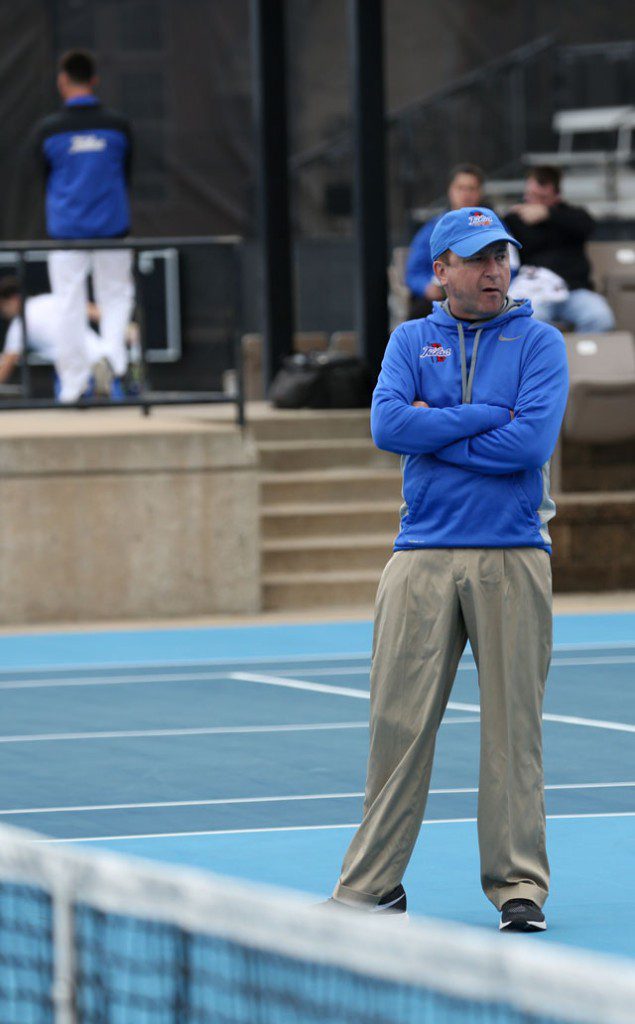
Vince Westbrook, head men’s hennis coach, has 25 years of coaching experience with The University of Tulsa. Photo courtesy The University of Tulsa.
[dropcap]“[/dropcap][dropcap]Tulsa[/dropcap] is a great tennis city.”
These are Vince Westbrook’s words, and he should know.
Westbrook, head men’s tennis coach at the University of Tulsa, is the face of tennis in Tulsa, with 25 years of experience coaching at TU and a 375-263 career record. From May 19 through 30, TU will be host to the NCAA Division I Tennis Championships.
This will be the third such championship held at TU’s premier facility, the Michael D. Case Tennis Center, as the university also hosted the men’s championship in 2004 and the combined men’s and women’s championships in 2008.
Westbrook was part of a team instrumental in bringing the NCAA tennis championship to Tulsa for the first time in 2004. Westbrook says the process was started in 2002, and the Case Center itself was the major playing chip in getting the championship.
“The reason it was built was to bring national championships to Tulsa, and since we’ve built it we’ve had more national tournaments than anyone else in the country,” Westbrook says.
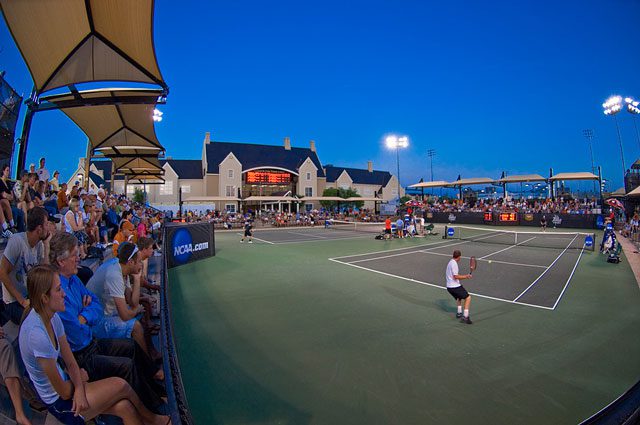
The Case Center, completed in late 2001, is considered one of the finest tennis facilities in the country. It has 12 outdoor courts with abundant seating, large scoreboards and live streaming.
“We also have six courts in the indoor facility in case we run into any kind of weather,” Westbrook added.
Vince Trinidad, executive director of the Tulsa Sports Commission (TSC), also noted the Case Center as one of the finest athletic competition facilities in the country.
“You can see matches up close and personal, and it has great seating capacity,” Trinidad says.
The TSC, which is a division of the Tulsa Regional Chamber, is a founding member of the National Association of Sports Commissions and also helped bring the national championships to Tulsa.
“Coach Westbrook is very knowledgeable in the tennis world. Having him and the athletic department have a great rapport with the NCAA was a dealmaker,” Trinidad says. “You want the right players to put together a successful bid, and our hard efforts were rewarded.”
“We work closely with TU,” Trinidad says. “They really help us make sure the student athletes have a great experience. The championship is a great way to showcase the tennis center we have here in the community.”
[pullquote]The NCAA just doesn’t award these championships to anyone,” Salis says. “The NCAA understands and acknowledges Tulsa’s passion and commitment for tennis.”[/pullquote]The Case Center has 69,000 square feet and a capacity of 2,000 people. Its first match was held on January 19, 2002, when TU defeated Oral Roberts University in men’s tennis. The Center is named for Michael D. Case, a developer and philanthropist, and was designed by architect Larry Kester of Architects Collective and built by the Lowry & Hemphill Construction Company.
“Like any athletic competition facility, you want to make sure you have a high level quality of play, and it’s available here,” Trinidad says.
“What can a student athlete or their family members or fans experience at this kind of event?” Trinidad asked. “It should look nice, have a quality feel, and so, when they go to compete, they can perform at their best.”
Trinidad noted that the Case Center has room for people to enter and leave at ease, “shaded areas to sit in, viewable scoreboards and an indoor facility right next to it. Plus, you have the opportunity to be centrally-located in terms of the TU area with recreational opportunities, shopping and more all right there.”
“These types of events we host are extremely important for us overall, as citizens of Oklahoma, to see competition but also aspire to be a part of these competitions,” Trinidad says. “You can’t be a NCAA tennis champion overnight. The student athlete makes the commitment, along with those who support them, to compete, and when you have a championship like this, it highlights the great things happening in our state.”
Nick Salis, TU’s associate athletic director, served as the championships’ co-director for the 2008 NCAA championship and is again in charge as the liaison between the NCAA and TU. Because of his previous experience, Salis says, “I have a better understanding of what was successful and what areas need tweaking this time around. I think the participants, coaches and fans will be very pleased with the championship’s setup this year.”
“The NCAA just doesn’t award these championships to anyone,” Salis says. “The NCAA understands and acknowledges Tulsa’s passion and commitment for tennis.”
“We are grateful to have such a supportive and knowledgeable fan base. Is Tulsa a ‘Tennis Town’? Absolutely!” Salis says. “We have many families already lined up and eager to serve as team hosts. Many community partners have graciously stepped up to provide items for our sponsorship gift baskets. Lastly, but equally as important, we will have over 200 volunteers sign up to help during the championships. These championships cannot happen without a supportive tennis town.”
The NCAA Championship will involve 16 men’s and women’s teams that will compete for the first six days for the team championship. After that, 64 singles players and 32 doubles teams in both men’s and women’s divisions will compete for the remainder of the tournament.
Women’s head coach Dean Orford doesn’t have quite as many years at TU as Westbrook, but he also has an impressive record. In his first 10 years at TU, Orford posted an overall 263-66 record, and he is now in his 11th year.
Orford’s teams have made it to the NCAA tournament in each of the last nine years. They have won six conference championships, and Orford has more wins than any other women’s tennis coach at TU.
[pullquote]The players make it a lot of fun and they make the job easier,” he says. “We’re keeping focused on each match, one at a time, and are trying not to get too excited and get ahead of ourselves.”[/pullquote]Neither Westbrook nor Orford could comment on individual players making it to the tournament, since that had not been determined at press time. However, Westbrook says, “There are 64 teams on each side to get in, and that starts the tournament. Unless something crazy happens, we make the tournament, and the final 16 is like the final four of basketball.”
At press time, TU’s men’s team had just defeated No. 8-ranked Oklahoma State University and were playing strong overall.
In the OSU match, TU players Dominic Bechard and Dylan McCloskey won their doubles match, as did Carlos Bautista and Majed Kilani. Singles players Francois Kellerman, Kilani and Daniel Santos won their singles matches.
Two days after the OSU match, the team also beat Tulane, ranked 21, with impressive wins from Kilani and Bautista again, along with Bechard and McCloskey.
In singles play, TU’s highest ranked player, Or Ram-Harel lost to No. 1-ranked player Dominik Koepfer. Juan Matias Gonzales defeated one of Tulane’s ranked players, and Coach Westbrook said of him in a TU press release, “Gonzalez picked up a big win for us today. Gonzalez has lost some tough matches, but he has won sets against the best players in college and today he finished it off.”
While the women’s team did not fare so well against OSU, they made up for it with Tulane. OSU, ranked 17, beat both of TU’s doubles teams and continued the streak in singles play, with TU either losing each match or having the match not finish.
TU’s Rongrong Leenabanchong, Martha Matoula and Renata Kuricova all won their singles matches, while doubles teams Leenabanchong and Matoula and Saana Saarteinen and Mahitha Dadireddy also won.
Saarteinen, who entered her senior year with a 65-33 singles record and a 56-29 doubles record, tells Oklahoma Magazine, “We are obviously extremely excited about hosting the NCAA championships here at Tulsa. On a personal note, it’s my senior year, and I couldn’t think of a better way to finish my college tennis here in Tulsa.”
Women’s coach Orford says that lots of fortunate happenings have contributed to the success of his tennis team. Mainly, he says, it’s simply the good players.
“The players make it a lot of fun and they make the job easier,” he says. “We’re keeping focused on each match, one at a time, and are trying not to get too excited and get ahead of ourselves.”
Westbrook says of his team, “We’re proud we have made the tournament 15 times. Both our men’s and women’s teams have been nationally ranked among the best U.S. teams.”
“This is a talented group of guys we have,” Westbrook says. We play eight of the top 10 teams day in and day out and have unbelievable schedules. Our whole hope is to peak at the end of the year. Right now we have played 10 straight tennis championships and have won seven of them.
“We are always considered one of the top three teams in the conference to make a run at the championship at the end of the year,” Westbrook adds.
Women’s coach Orford says of TU, “Being a small university, it’s very family oriented – from our teams to our administrative people to our staff. It’s a gratifying place to work. You have the opportunity to succeed at the very highest level.”
“It’s our job to make sure we’re connected to our community, too,” Westbrook says. “We probably raise as much money as any program in the country. We have the support of the Tulsa community, which has given us the advantage to do this competition on a national level. Tulsa is the best place by far for this championship.”
The case tennis center has hosted three NCAA championships since 2004. Photo courtesy The University of Tulsa.
“The neat thing about the NCAA being here for twelve days is they’re going to fill up four or five hotels downtown, and you can imagine the economic impact of that. It will be huge. We will probably quadruple what businesses normally average just because of the NCAA being here,” Westbrook says.
The staff at the Tulsa Sports Commission will also be working to see that the NCAA officials, players, families and fans have a great experience in Tulsa.
“We have a good experience when it comes to joint meetings, where we get to create opportunities outside the courts for people to take advantage of what Tulsa has to offer,” Trinidad says. “We might have a dinner or some other function that highlights something special about Tulsa. We want to make sure they get a chance to see some of the different things that are uniquely Tulsa.”
TU associate athletic director Salis also notes some things his staff is doing to entertain athletes and guests.
“We will be hosting the team celebration at historic Cain’s Ballroom, an evening filled with live entertainment, local barbeque and dancing. But not too much dancing since teams need to compete early the next morning,” Salis says.
Trinidad says that the TSC is continually working to bring other NCAA championships to Tulsa, and in 2017, it has worked with TU scheduled to host the first and second round NCAA tournament in men’s basketball.
“We routinely bid on these kinds of championships, and with TU as an institution that is also a member, we combine its strengths with our own staff strengths to be successful,” Trinidad says.
“When you get to an NCAA event of this magnitude, the competition will be great,” Trinidad says of the tennis championship. “You are going to see some really good matches when you go out there. Towards the end of the May, you can go out there, buy a ticket and watch a super tennis championship.”
“That’s what I love about the Tulsa community – it’s very supportive of collegiate athletics,” Trinidad says. “You may take a grade school child somewhat interested in tennis and have them see this level of competition with this type of facility, and the hope is that it will inspire them to play at any level they want.”
Westbrook noted the Tulsa Sports Commission’s help in getting major sporting events in Tulsa. “The thing about it is to go back to the whole preface for why the facility [the Case Center] was built: People put up the money to bring other people to the city.”
“For the city, this is a great opportunity to watch kids who are going to go on the circuit, perhaps the pro circuit eventually,” Westbrook says. “But for the pro circuit you have to be 26 or 27, so college has become a minor league system for the pros. College is now like a semi-pro tennis league. And Tulsa is a great tennis city.”
Tickets to the championship can be purchased online at tulsahurricane.com. Adult tickets for the entire 12-day event are $125 and children’s tickets are $75. Individual session tickets can be purchased on the day of the event and are $15 for adults and $8 for children.
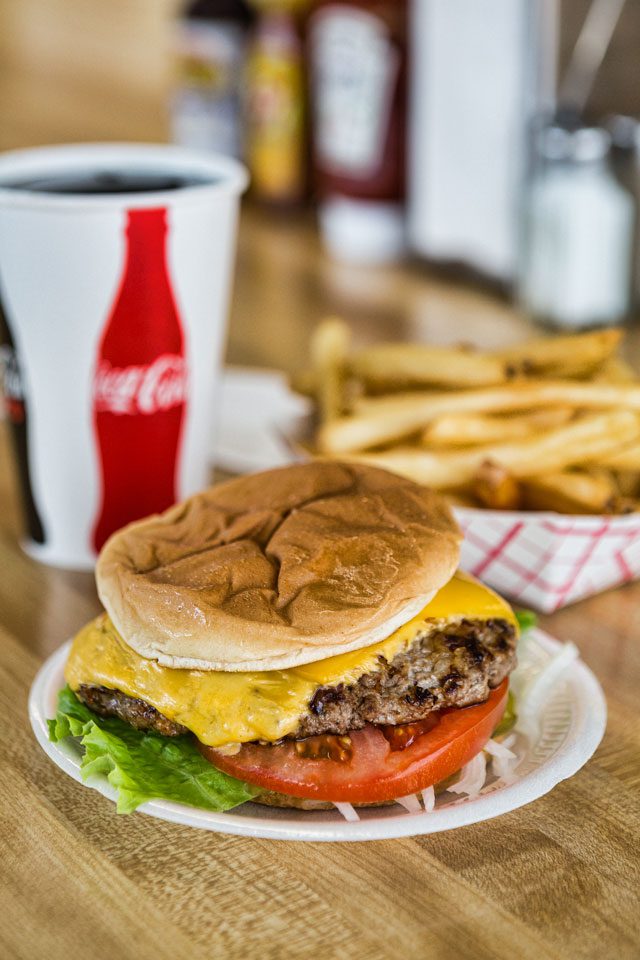
Claud’s Hamburgers has the distinction of not only being in business for more than 60 years, but also of being owned by the same family for all that time.
Claud’s Hamburgers.
The restaurant was originally opened by Claud Hobson in October 1954 on Admiral Place and moved to its current location in 1965, where it has remained since. The restaurant is now run by Claud’s son Robert Hobson, who took over from his brother Cliff around two years ago.
Robert Hobson says the restaurant works to keep the food at Claud’s as consistent as the ownership, working with vendors to try to keep the same ingredients in the burgers.
“The consistency of the product we’ve been putting out over the years is an asset,” Robert Hobson says. “We kind of pride ourselves on the fact someone can come in here and eat something their grandparents ate, or something very similar.”
That sort of consistency is important to some people whose memories of the restaurants may stretch back to when they were children and ate at the restaurant with their grandparents.
“Almost daily we hear something like that,” Hobson says. “I hear a lot of conversations about it. You’ll hear a 50-year-old guy talk about how his grandpa brought him here, and you realize you’ve been here a long time.”
Jamil’s Steakhouse
3823 E. 51st St., Tulsa
Jamil’s is one of Tulsa most legendary restaurants – and possibly its oldest steakhouse. It was opened by Jim “Jamil” Elias in 1945, and it continues on today by his son Tyrone Elias. The restaurant is best-known for its thick hickory-grilled steaks and seafood all served with their famous Lebanese hors d’oeuvres.
J. Bruner’s Haunted House
7101 Miramar Blvd., Oklahoma City
The original owners, Marian and Arthur Thibault opened The Haunted House restaurant in1964 – one of the original fine dining establishments in Oklahoma City. For more than 50 years, unrivaled steaks and seafood have been served in the dimly lit 1935 mansion alleged to have been the site of three murders. Located seven miles from Downtown in the middle of the woods, the restaurant has always celebrated its spooky atmosphere.
Hank’s Hamburgers
8933 E. Admiral Pl., Tulsa
This tiny restaurant has been making the exact same secretly-seasoned, grill-pressed burgers since 1949. Many of Hank’s hungry patrons enjoy their burger patties piled four high on the famous Big Okie, weighing in at a solid pound. For dessert, try one of Hank’s chocolate covered peanut butter balls.
Old Plantation Restaurant
Medicine Park Town Center
Built in 1910, the Old Plantation was a popular place for the vacationing rich during the Roaring Twenties. In 1966, Rex and Ruby Leath reopened the restaurant and ran it for nearly 35 years. The restaurant was restored and again reopened in 2008 and has become known for their steaks, seafood and a great selection of sandwiches, salads and appetizers. Don’t forget to visit The Tap Room – the Old Plantation’s original bar.
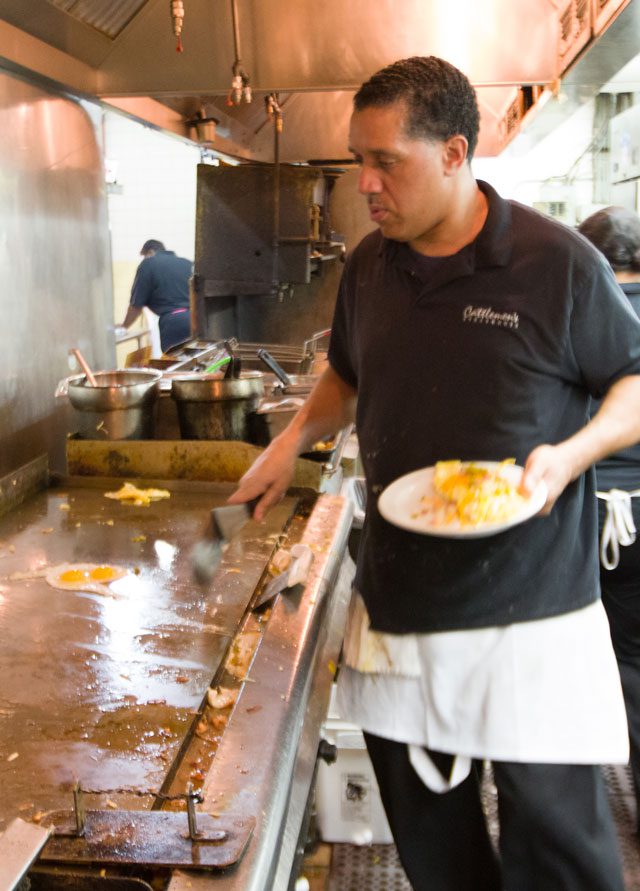
Cattlemen’s Steakhouse. Photo by Brent Fuchs.
Cattlemen’s Steakhouse
1309 S. Agnew Ave., OKC
Oklahoma’s oldest continually-operating restaurant, Cattlemen’s Steakhouse was opened in 1910 and has been in the same location ever since. With a history spanning more than 100 years, Cattlemen’s has its share of interesting history – including a previous owner acquiring the restaurant over a throw of the dice.
Although current owner Dick Stubbs purchased the restaurant in 1990 by more traditional means, he feels he has some of the same luck that helped out the previous owners.
“I do feel like a winner because the restaurant has grown every single year since we got it,” he says.
Cattlemen’s Steakhouse. Photo by Brent Fuchs.
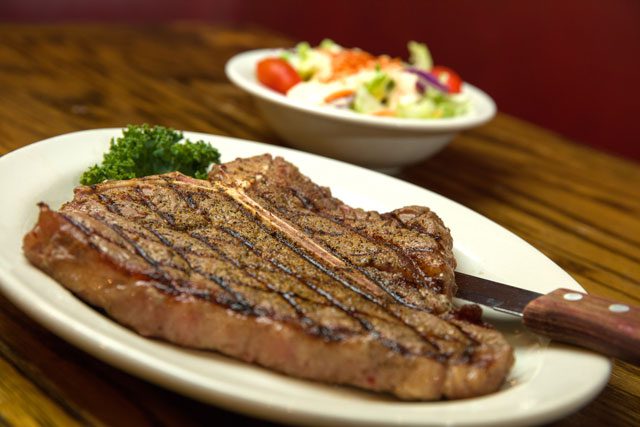
When Stubbs bought the restaurant, which was always known as a steakhouse, he changed the name from Cattlemen’s Café to Cattlemen’s Steakhouse and began featuring steak more than café food. The restaurant has 10 different steaks on its breakfast menu alone, and also it offers more unusual items like brains and eggs on the breakfast menu and lamb fries, which are mostly sold as appetizers.
The restaurant has had its share of celebrity diners, including President George H.W. Bush, who visited while he was in office. It has also been featured on several television shows and has been mentioned in at least six different books, Stubbs says. About 27 percent of Cattlemen’s customers are from out of state, but the steakhouse’s new reputation as a destination restaurant for some people hasn’t changed Stubbs’ focus.
“We still cater to the Oklahoma customer,” he says. “We have some customers who eat with us every single day. We do breakfast, lunch and dinner, so we’re pretty much satisfying all walks of life here in our restaurant.”
Click’s Steakhouse
409 Harrison St., Pawnee
In 1962, Clifton “Click” Nelson opened a bar and grill originally named Click’s Alamo Club. Besides being known for his outstanding steaks, Click was also known for his colorful language and tirades. Over the course of years, and several different owners, the building has undergone numerous changes, and the menu has expanded. However, the quality of the steaks and the unique aging and preparation technique has remained the same.
Coney I-lander
2838 E. 11th St., Tulsa
The Tulsa chain dates back to 1926 when Greek immigrant Christ Economou opened the first location in Downtown Tulsa. Who can resist the Coney I-Lander’s signature dish of a slow-grilled hot dog topped with chili, onions and mustard in a steamed bun? At the Downtown restaurant rows of coneys cooking on the grill are visible to hungry sidewalk viewers – luring them in for a bite.
My Place Bar-B-Q
2021 Gibson St., Muskogee
A Muskogee staple since 1927, My Place Bar-B-Q may have lost a bit of its charm when it said goodbye to its original, tiny building, but it still serves up the same mouthwatering ribs, smoked meats and tasty side items that they have been famous for since the beginning. Don’t forget to pick up a bottle of their famous sauce on your way out!
Meers Store & Restaurant
Hwy 115, Meers
Once a busy mining town in the Wichita Mountains, all that remains now is the Meers Store and Restaurant, home of the Meersburger, a burger seven inches in diameter made exclusively from prize-winning Texas Longhorn beef raised on the family’s own ranch. The restaurant has served a delicious selection of steaks, barbecue, home-baked bread and desserts since 1901.
Pete’s Place
120 SW 8th St., Krebs
Authentic Italian cooking has been luring travelers to Pete’s Place since 1925. In addition to the family-style helpings of homemade spaghetti, meatballs, ravioli and sausage, hungry patrons will also enjoy the handcrafted Choc beer served at the onsite brewery, all made with the same recipes that have been passed down from generation to generation.
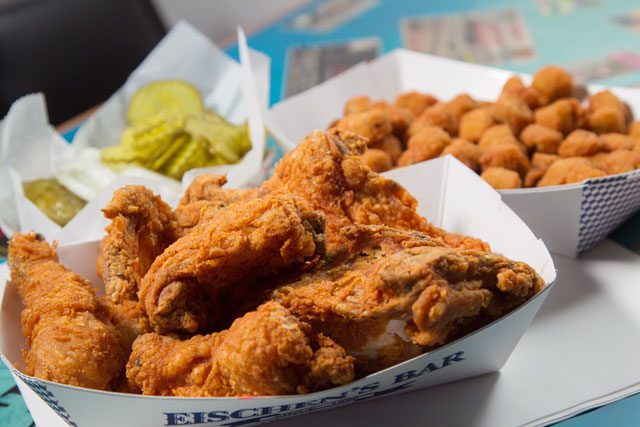
Eischen’s Bar.
Eischen’s Bar
109 S. 2nd St., Okarche
If you ever get a hankering for some great fried chicken, stop by the oldest bar in Oklahoma. Originally known as Eischen’s Saloon, the restaurant was established in 1896 by Peter Eischen and was open until statehood. Shortly after prohibition in 1906, it was reopened as Eischen’s Bar by Nick and Jack Eischen, son and grandson of Peter Eischen.
The “oldest bar” recognition comes from the actual ornate bar that was carved in Spain in the 1800s. Nick “Curly” Eischen won the bar on a hunting trip in the 1940s. Although much of the building was destroyed in a 1993 fire, a piece of the antique, hand-carved back bar was preserved and remains on display today.
“There’s a lot of memories here,” says Edward Eischen, one of the current owners. “Back in the day we had a grocery store, too.” Although the store eventually closed, the restaurant and bar lived on.
“After the fire, the reopening was amazing,” Eischen says. “Lots of TV shows, radio stations, etc. created a lot of buzz and more and more people heard about the great chicken. We just keep on making the best chicken around, and people come from everywhere to eat it.”
The fried chicken is made using George (Boog) Eischen’s 1960 recipe. It’s so popular they can go through 900 to 1,200 pieces of fried chicken just on Saturday, Eischen says.
If you order the chicken, come hungry because a regular order consists of eight pieces; two breasts, two thighs, two wings and two legs. It is served with sliced white bread, sweet pickles, dill pickles and onion slices.
People also come in to buy the colorful T-shirts and the chance to brag they have eaten in one of Oklahoma’s oldest, family-oriented establishments.
Waylan’s Ku-Ku Burger
915 N. Main St., Miami
Waylan’s Ku-Ku Burger may be the last of its kind. Although owner Gene Waylan estimates there were as many as 200 Ku-Ku Burger restaurants around the U.S in the early-to-mid ’60s, Waylan’s restaurant is the only one still operating.
“It’s the only one I can find, and I’ve looked all over,” Waylan says.
Located off Route 66 in Miami, it’s hard to miss the restaurant with its large green-and-yellow neon sign and fiberglass cuckoo bird positioned on the front wall. Although the Ku-Ku burger was part of a fast-food chain in the era of 15 cent burgers, it has become unique and distinctive.
The restaurant’s reputation has given Waylan a chance to meet people he otherwise never would have. While the restaurant used to be a hangout for teenagers in Miami, it’s now a hangout for people from as far as way as Australia and Brazil. Waylan says he talks to all the people who visit the restaurant and gives out key chains to people so they have a memento of their visit – and Waylan gets to keep the stories from people from places he may never see himself.
“That’s the reason I’m still here,” he says. “It’s interesting. It’s better than retiring and traveling.”
Clanton’s Café
319 E. Illinois Ave., Vinita
Clanton’s Café, located off Route 66 in Vinita, is the oldest continuous family-owned restaurant on Route 66, according to Dennis Patrick, who owns the restaurant along with his wife, Melissa.
The restaurant opened in 1927, and has been in its current location since 1947.
Patrick says Route 66 is “the big draw,” although the restaurant has been in magazines and road books all over the world and is known for its chicken-fried steak. That reputation has helped it gain a diverse customer base from all areas of the globe.
“We have a book up here where we have people sign in, and we have them from every continent and all different areas in the world,” Patrick says. “It’s pretty amazing, and it’s a lot of fun because you get to talk to them. They’re excited about experiencing Route 66, and we’re really unique because we’re a mom and pop operation that has been around for a while. We have a personality they really enjoy, and it’s fun talking to them and hearing their stories.”
Patrick and his wife took over the restaurant’s ownership from Melissa’s parents, Tom and Linda Clanton, 17 years ago. A Denver native, he says moving to Vinita was his first experience with life in a smaller town and was a nice change.
“The people are just so genuine and very open and hospitable,” he says. “It was real easy for me to get attached to Vinita.”
Beverly’s Pancake House.Beverly’s Pancake House.
Beverly’s Pancake House
3315 Northwest Expressway, Oklahoma City
Founded by Beverly Osborne and his wife, Rubye, Beverly’s Pancake House has been an Oklahoma City tradition since 1936. At one time, Oklahoma City was home to as many as eight Beverly’s restaurants, however, this location is the only survivor. Beverly’s is famous for “Chicken in the Rough,” a dish of fried chicken, shoestring potatoes and a biscuit with honey. The top of the original neon sign, complete with the Chicken in the Rough logo, was saved from a previous location and is proudly displayed in the restaurant’s front window.
The Rock Café
114 W. Main St., Stroud
The Rock Café opened in 1939 and is another Route 66 favorite. The restaurant gets its name from the local sandstone used on the outside walls. The Rock Café takes pride in the fact that they are still using the original 1939 kitchen grill. Betsy the grill has seared over five million burgers and chicken fries. The grill survived a 2008 fire at the restaurant that left only Betsy and the four rock walls standing.
Baker’s Fish House
3606 W. 90th St. N., Porter
Located off highway 69, east of Porter and north of Muskogee, Baker’s Fish House opened in 1947. The restaurant has gained a loyal, word-of-mouth following despite its out-of-the-way location and is known for its famous fried catfish, fried chicken, mounds of onion rings and homemade pie.
Nelson’s Buffeteria
4401 S. Memorial Dr., Tulsa
Nelson’s Buffeteria was a landmark in downtown Tulsa for years after its opening in 1929, serving as a lunch hot spot for downtown employees. The restaurant closed in 2003 and reopened in its new location nearly 10 years later. While the location may be new, the owners renovated the original neon sign and moved it from the former location on South Boston Avenue. The restaurant is open for breakfast and lunch only and is closed on weekends.
Anne’s Chicken Fry House
4106 NW 39th St., Oklahoma City
Ann’s Chicken Fry in Oklahoma City has served tasty, home-style food since 1948. Try what they are famous for – chicken fried steak with mashed potatoes and cream gravy, ordered with a side item of your choice. Located in a one-time gas station, the restaurant has a cozy, back-in-time feel. It is also a Route 66 landmark full of nostalgia – a pink Cadillac and vintage police car adorn the front lawn.
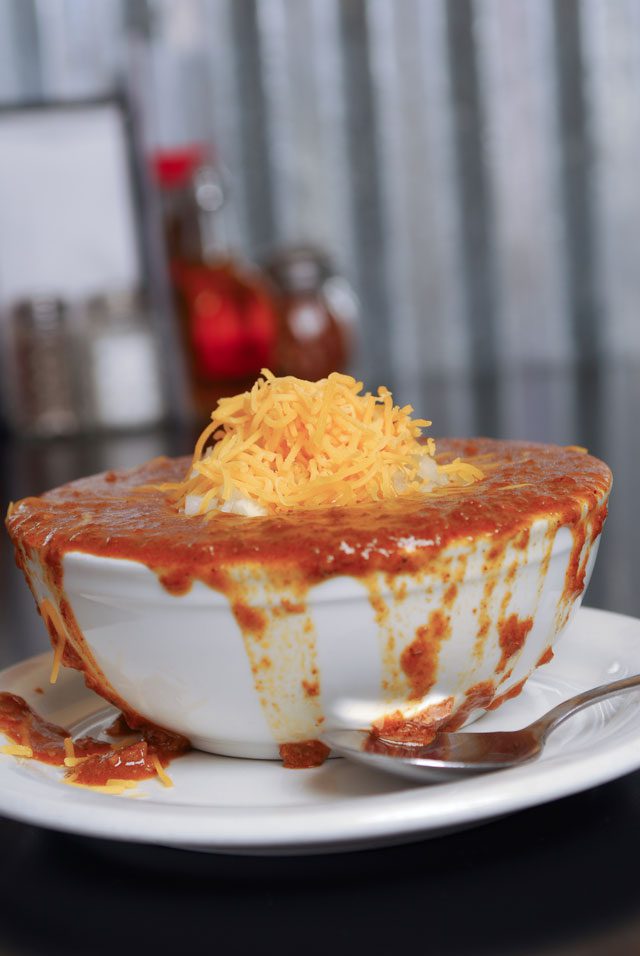
Ike’s Chili. Photo by Chris Humphrey Photographer.
Ike’s Chili
1503 E. 11th St., Tulsa
In 1908, Ike’s Chili opened in Tulsa and quickly became known for their top-rate chili – with or without all of the fixings. The same recipe that keeps people coming back for more has been around for a century. The landmark is the best place on Route 66 to have what Will Rogers called a “Bowl of Blessedness.”
El Rancho Grande
1629 E. 11th St., Tulsa
El Rancho Grande has been open since 1950. Nestled on the outskirts of Downtown Tulsa on Route 66, the historic neon sign has become a familiar landmark for locals and visitors alike looking for a great meal.
John Walden says he has worked at the restaurant on and off since he was 21. He now co-owns it with his brother, Jeff.
El Rancho Grande. Photo by Chris Humphrey Photographer.
“There’s so many memories here,” Walden says. “I don’t know where to begin. I ate here for the first time when I was 13 years old.” It was his birthday, and his family had gathered at the restaurant for the celebration. “They had a Mariachi Band that wanted me to get up and lead a ‘Happy Birthday’ line dance through the restaurant. I just couldn’t do it, so I cried.”
The Walden family took over the restaurant in 1984. Since then, running the restaurant has been a family affair.
“I have served, I have cooked all the food, you name it,” says Walden. He says he fondly remembers the time he learned to make tamales with one of the original cooks. Back then, the tamales were made with a big, industrial piece of equipment.
“All I remember was that it was big, and it spit out tamales really fast,” Walden says. “And I had trouble keeping up – tamales were everywhere. So I’ve cried, laughed and everything in between at this restaurant.”
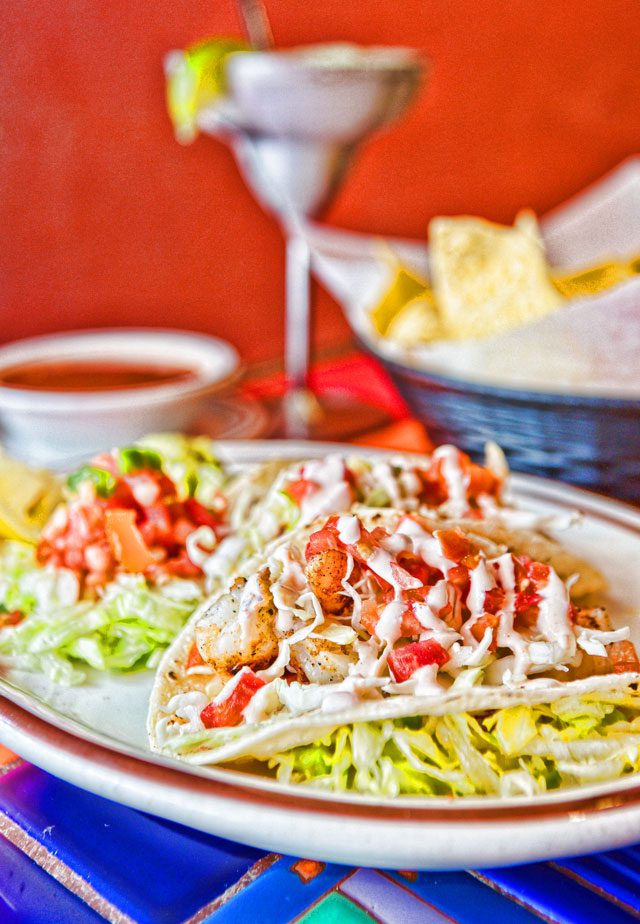
These days the customers come in for a yummy cheese enchilada and an icy margarita, or for a more substantial dish the crew calls the Night Hawk. It consists of two cheese and onion enchiladas covered with chili con carne and cheddar and one soft cheddar cheese taco topped with queso. It was named one of the “Five Greatest Mexican Meals in the U.S.” in Gustavo Arellano’s book Taco USA, Walden says.
























![shutterstock_128432069-[Converted]](https://b1523572.smushcdn.com/1523572/wp-content/uploads/2016/04/shutterstock_128432069-Converted.jpg?lossy=1&strip=0&webp=1)